
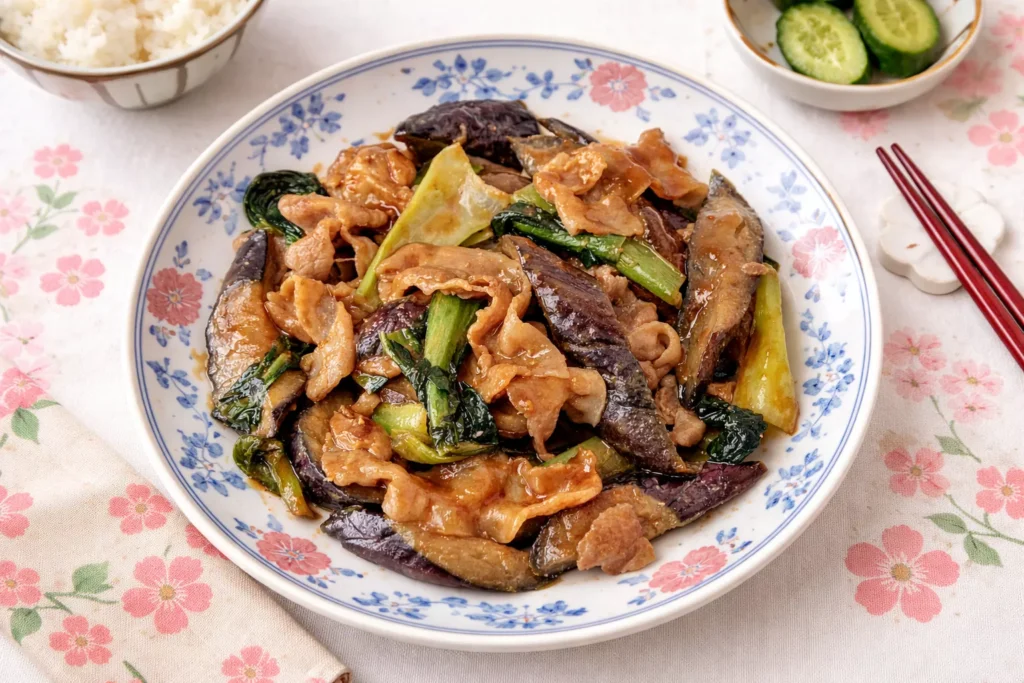
Have you ever tasted eggplant that was so rich and savory that it made you forget it was a vegetable? Many people think eggplant is bland or too soft. But what if the secret to turning it into something bold and exciting is hiding in your pantry right now?
Today, you will learn how to make Stir-Fried Miso Eggplant (ナスの味噌炒め) — a simple, sweet, and savory Japanese dish that is packed with flavor. This recipe is quick, easy, and perfect for busy days. It is also very flexible, so you can adjust it to your taste.
Let’s dive in.
Overview
Stir-Fried Miso Eggplant (ナスの味噌炒め) is a classic Japanese home-style dish. It combines tender eggplant, savory pork belly, fresh komatsuna greens, and a rich miso-based sauce. The sauce is sweet, salty, and slightly spicy, which makes it perfect with warm rice.
What Makes This Recipe Special?
- Deep umami flavor from miso
- Balanced sweetness and spice
- Quick cooking time
- Easy ingredients
- Perfect as a side dish or main dish
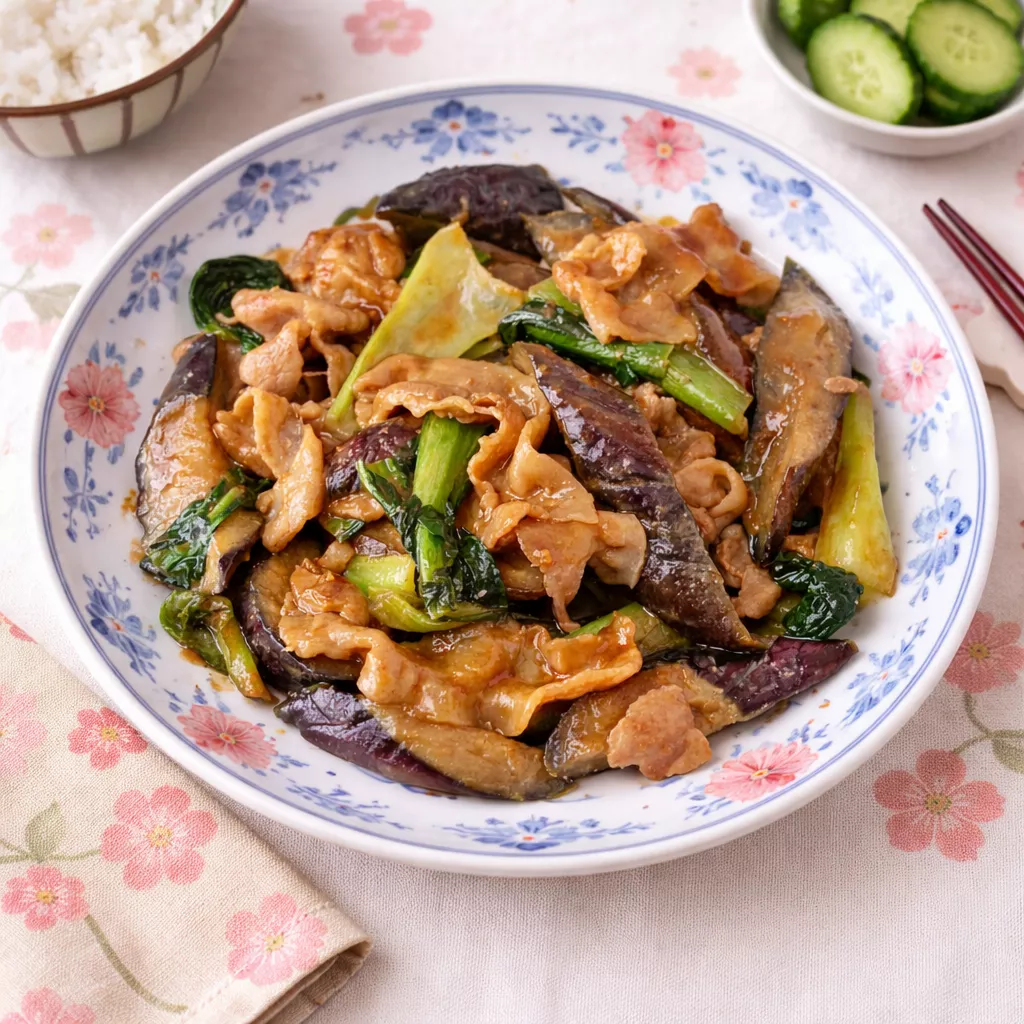
What Is Stir-Fried Miso Eggplant?
Stir-Fried Miso Eggplant, known in Japanese as ナスの味噌炒め, is a dish where eggplant is quickly cooked in a pan with meat or vegetables and coated in a miso-based sauce. The miso gives the dish depth and richness. The eggplant becomes soft and absorbs the sauce, creating a melt-in-your-mouth texture. It is commonly served in Japanese homes as a comforting everyday meal.
Essential Ingredients
Key Ingredients (材料)
Stir-Fried Miso Eggplant ナスの味噌炒めThese simple ingredients create the rich, sweet and savory flavor of classic Stir-Fried Miso Eggplant. Each card explains why the ingredient matters and how you can adjust it if needed.
Step-by-Step Instructions
Step 1: Prepare the Ingredients
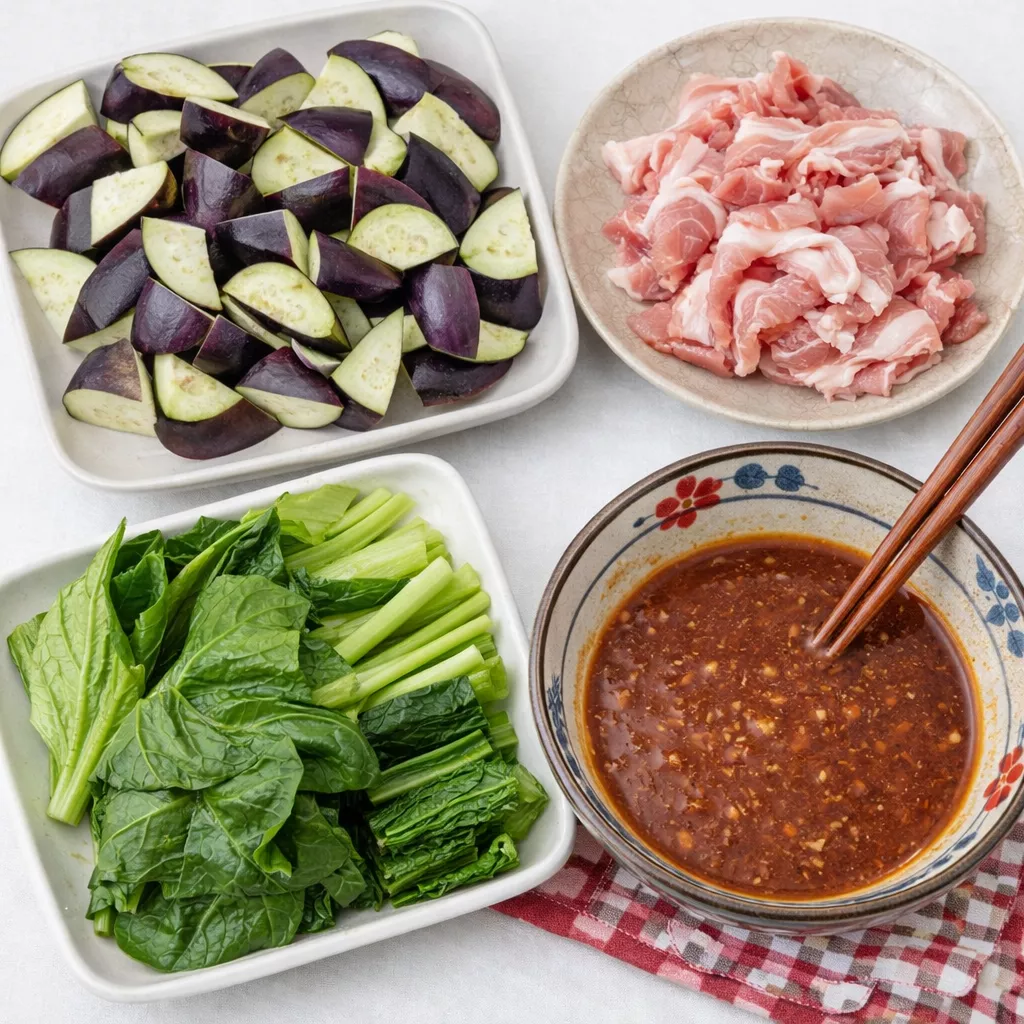
Cut the eggplant in half lengthwise. Then slice diagonally into 1.5 cm pieces. Cut komatsuna into 3 cm pieces. Separate stems from leaves. Cut pork belly into bite-sized pieces.
Mix all sauce ingredients (miso, sake, mirin, sugar, soy sauce, gochujang, and ginger) in a small bowl until smooth.
Step 2: Cook the Pork and Eggplant
Heat salad oil in a frying pan over medium heat. Add the pork belly and cook until it starts to change color.
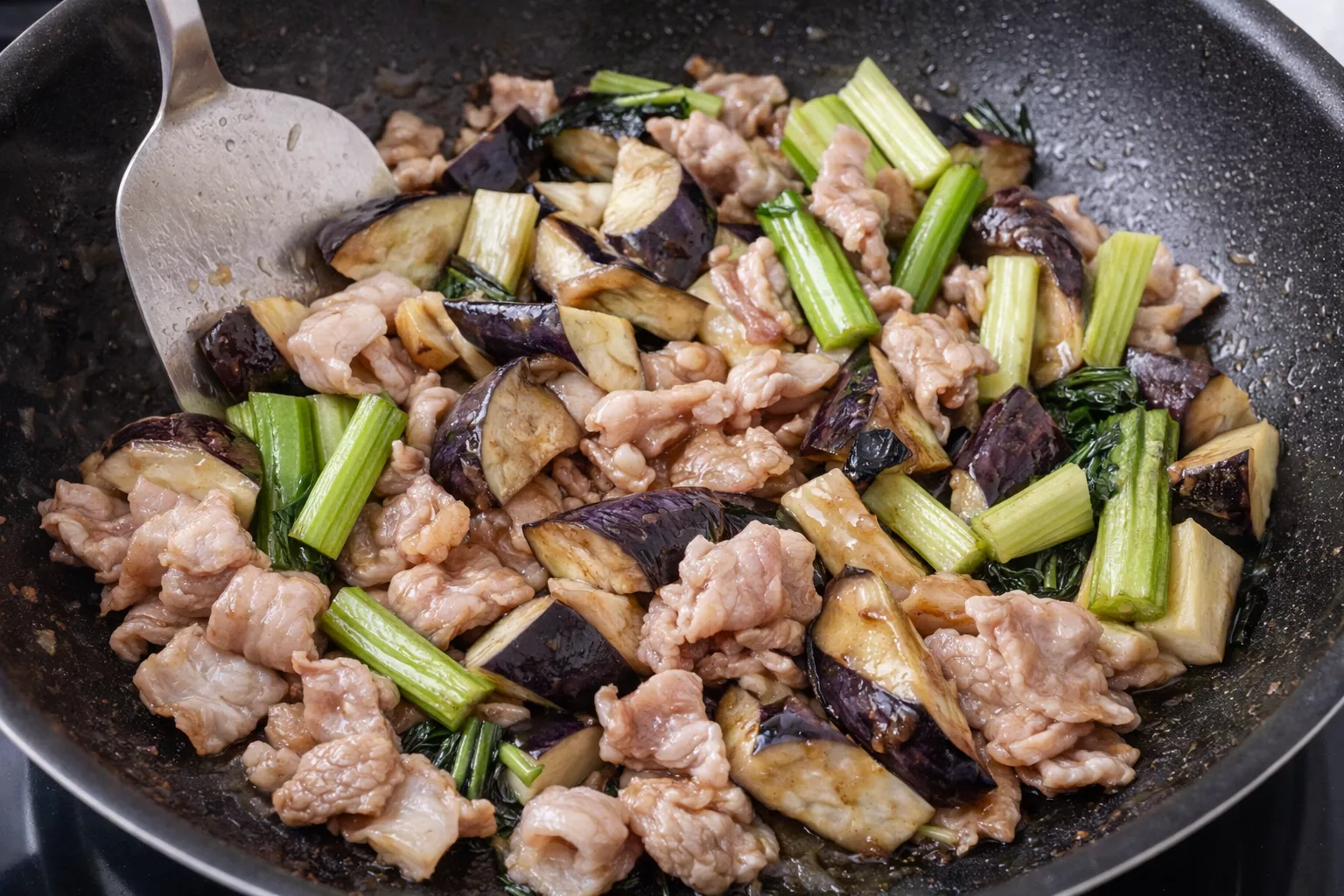
Add the eggplant and komatsuna stems. Stir-fry together. Cook until eggplant begins to soften and absorb the oil.
Step 3: Add the Greens
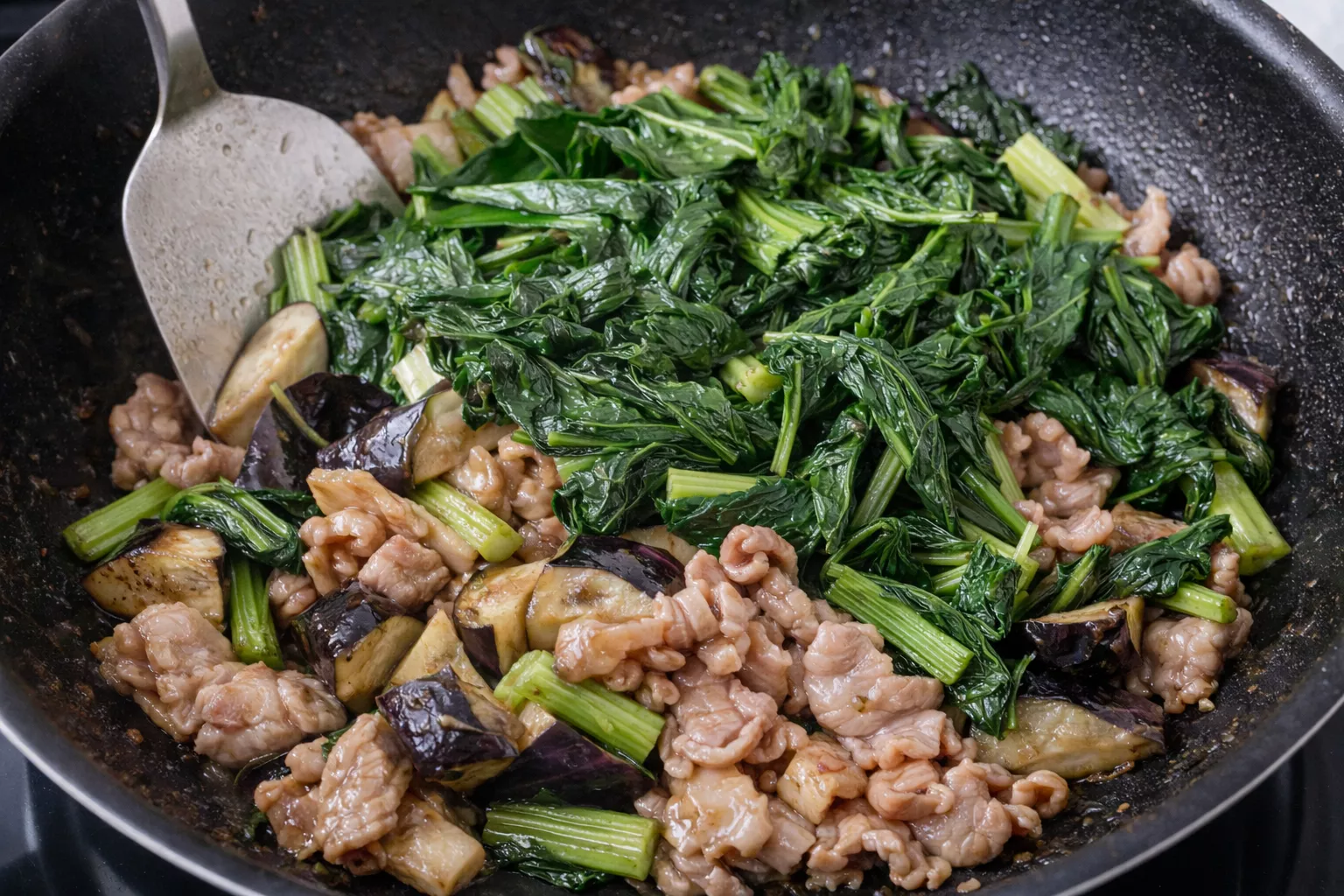
Add the komatsuna leaves. Stir-fry lightly until wilted and tender. Do not overcook the greens.
Step 4: Add the Sauce and Simmer
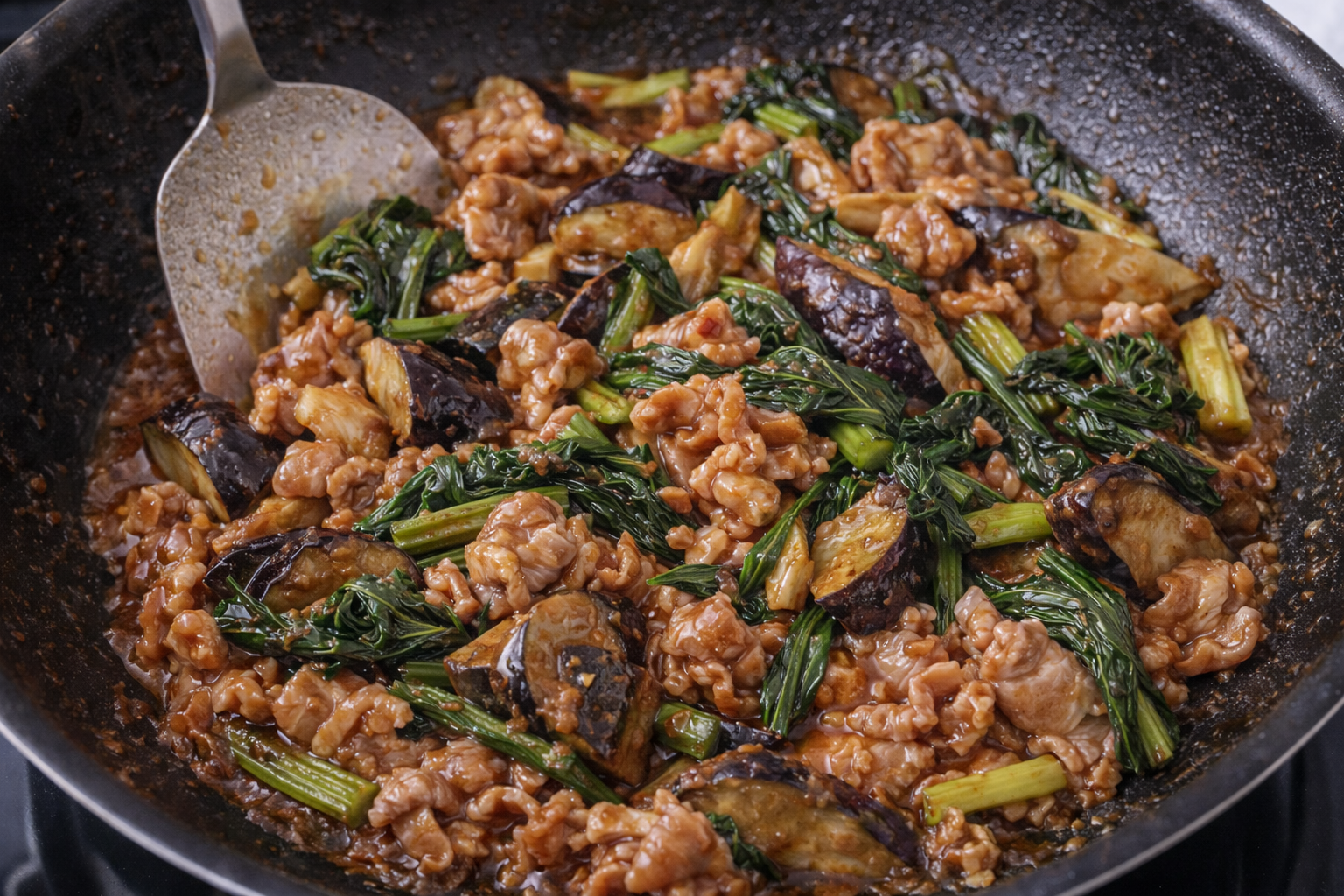
Pour in the prepared miso sauce. Stir well to coat everything evenly. Simmer for a few minutes until the sauce thickens slightly and clings to the ingredients.
Turn off heat and serve.
Secrets to Success and Expert Tips
These simple but important tips will help you make rich, glossy, and perfectly balanced Stir-Fried Miso Eggplant every time:
-
♥
Cut the eggplant evenly
Uniform slices cook at the same speed. If pieces are too thick, they may stay firm inside. Thin, even cuts help the eggplant turn soft and tender. -
♥
Cook the pork first
Let the pork belly release its natural fat before adding vegetables. This gives deeper flavor and helps coat the eggplant evenly. -
♥
Do not rush the eggplant
Eggplant absorbs oil quickly. Stir gently and allow it to soften before adding the sauce. This creates a silky texture instead of a dry one. -
♥
Add the miso sauce at the end
Miso can burn if cooked too long on high heat. Lower the heat before adding the sauce and simmer briefly to keep the flavor smooth and rich. -
♥
Taste and adjust before serving
If the dish tastes too salty, add a small splash of water. If you want more sweetness, add a pinch of sugar. Small adjustments make a big difference.
Assembly and Presentation
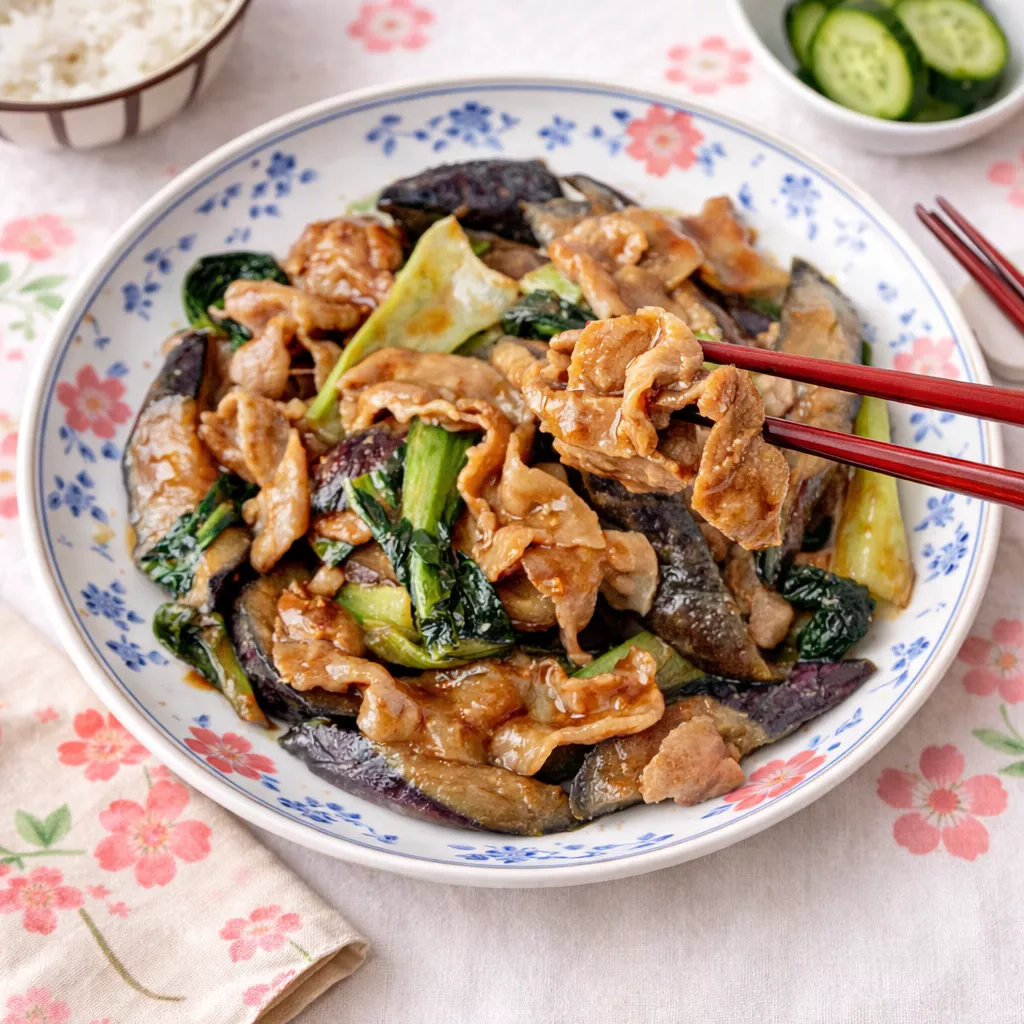
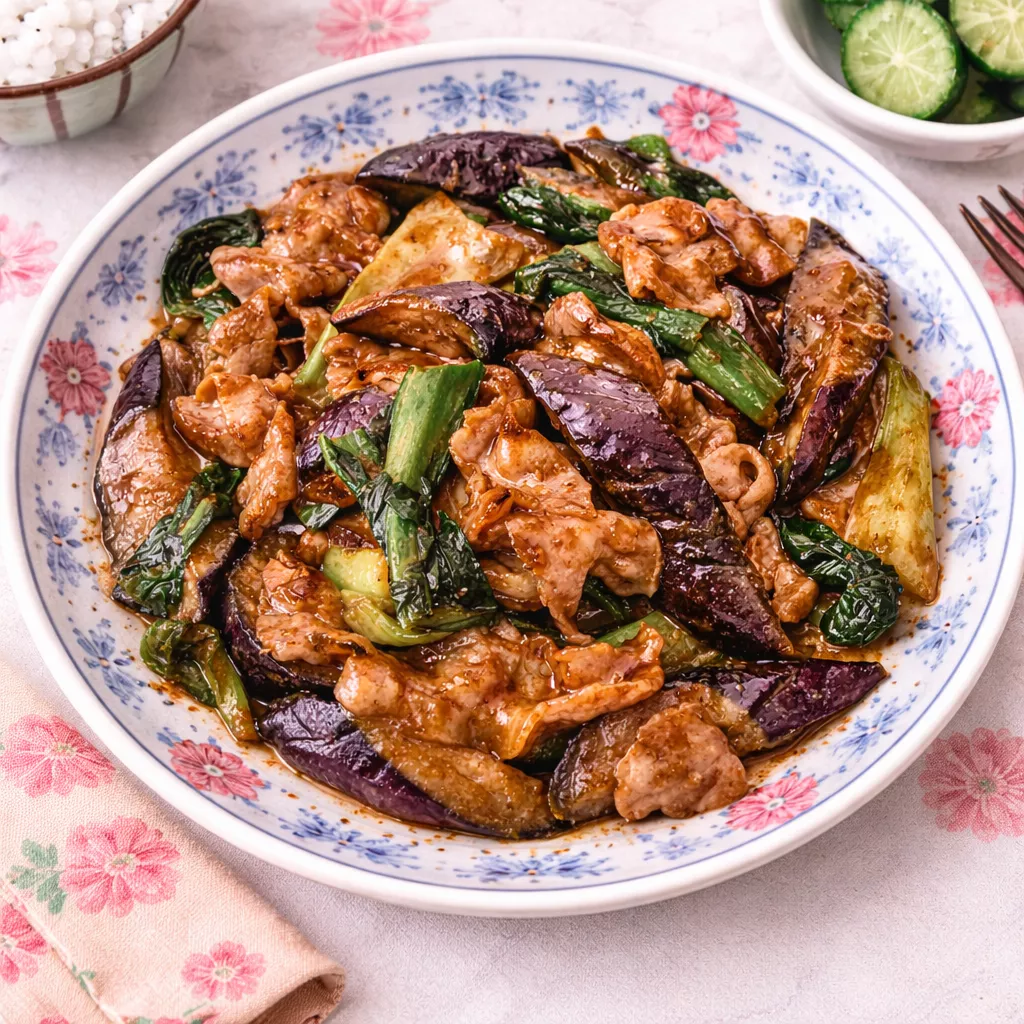
Once cooked, transfer the Stir-Fried Miso Eggplant to a serving plate. Arrange the pork and eggplant evenly. Spoon extra sauce over the top.
Serve with:
- Steamed white rice
- Pickled vegetables
- Miso soup
For presentation:
- Sprinkle sesame seeds on top
- Add sliced green onions
- Serve in a shallow bowl for better sauce display
Hana’s Recipe Tips
- Slice eggplant just before cooking to prevent browning.
- If eggplant tastes slightly bitter, soak slices in water for 5 minutes, then pat dry.
- For extra shine, add a small drizzle of sesame oil at the end.
- Serve immediately for best texture.
Storage and Make-Ahead Tips
Storage
- Store leftovers in an airtight container.
- Keep in refrigerator for up to 3 days.
Reheating
- Reheat in a pan over medium heat.
- Add a splash of water if sauce thickens too much.
- Microwave is also fine, but stovetop keeps better texture.
Make-Ahead
- You can cut vegetables in advance.
- Sauce can be mixed and stored in fridge for 2 days.
Eggplant may soften more after storage, but flavor becomes deeper.
Recipe Variations
Stir-Fried Miso Eggplant is very flexible, and you can easily adjust the protein, vegetables, or flavor level. Here are some simple ways to customize your Stir-Fried Miso Eggplant ナスの味噌炒め:
Change the Protein
You can swap the pork belly with other ingredients depending on your preference:
- Chicken thighs for a lighter option
- Thinly sliced beef for a richer flavor
- Firm tofu or mushrooms for a vegetarian version
Add More Vegetables
Boost nutrition and texture by adding extra vegetables:
- Bell peppers for sweetness and color
- Shiitake mushrooms for extra umami
- Onions for mild sweetness
Adjust the Flavor Level
You can easily modify the sauce to match your taste:
- Add more gochujang for extra spice
- Reduce sugar for a less sweet version
- Add a splash of sesame oil for nutty aroma
Try New Serving Ideas
Serve your Stir-Fried Miso Eggplant in different ways:
- Over steamed white rice for a rice bowl
- Inside a bento box for lunch
- As a side dish with grilled fish or soup
Health Benefits
- Eggplant is rich in fiber.
- Komatsuna contains vitamins A and C.
- Ginger supports digestion.
- Miso provides probiotics.
This dish is balanced, satisfying, and nutrient-rich.
More Japanese Stir-Fry Recipes to Try
If you enjoyed making Stir-Fried Miso Eggplant (ナスの味噌炒め), here are two more delicious Japanese stir-fry dishes you should try next.
Chinjao Rosu (チンジャオロース)
Chinjao Rosu is a flavorful stir-fry made with thinly sliced meat and crisp green peppers. It is savory, slightly sweet, and perfect with steamed rice. This dish is quick to cook and full of bold flavor, making it a great choice for busy weeknights. If you love simple meals that feel satisfying and balanced, this one is worth adding to your cooking list.
Komatsuna and Egg Stir Fry 小松菜とベーコンのたまご炒め
This comforting stir-fry combines fresh komatsuna greens with crispy bacon and soft scrambled eggs. It is light but filling and comes together in just minutes. The smoky bacon pairs beautifully with the tender greens and fluffy egg, creating a dish that is both simple and delicious. It works well as a side dish or a quick lunch.
Both recipes are easy, beginner-friendly, and perfect if you enjoy quick Japanese home-style cooking.


Conclusion
Stir-Fried Miso Eggplant (ナスの味噌炒め) is simple, flavorful, and comforting. It takes less than 30 minutes and uses everyday ingredients. The miso sauce brings everything together in a sweet and savory harmony.
This recipe is flexible and easy to customize. Try different proteins, adjust spice levels, or serve it as part of a larger Japanese meal.
Cooking at home does not have to be hard. With this recipe, you can create a rich and satisfying dish with minimal effort.
FAQs
1. Can I make Stir-Fried Miso Eggplant without pork?
Yes. You can use tofu, mushrooms, or chicken instead.
2. Why is my eggplant too oily?
Eggplant absorbs oil quickly. Use medium heat and avoid adding too much oil at once.
3. Can I freeze this dish?
Freezing is not recommended. Eggplant texture may become mushy after thawing.
4. Is Stir-Fried Miso Eggplant healthy?
Yes. It contains vegetables, protein, and fermented miso. It is balanced and nutrient-rich.
5. What type of miso should I use?
Mixed miso works well. White miso is sweeter, while red miso is stronger. Choose based on preference.
6. How do I prevent eggplant from browning?
Cut just before cooking or soak briefly in water.
7. Can I make this dish spicy?
Yes. Increase gochujang or add chili flakes.
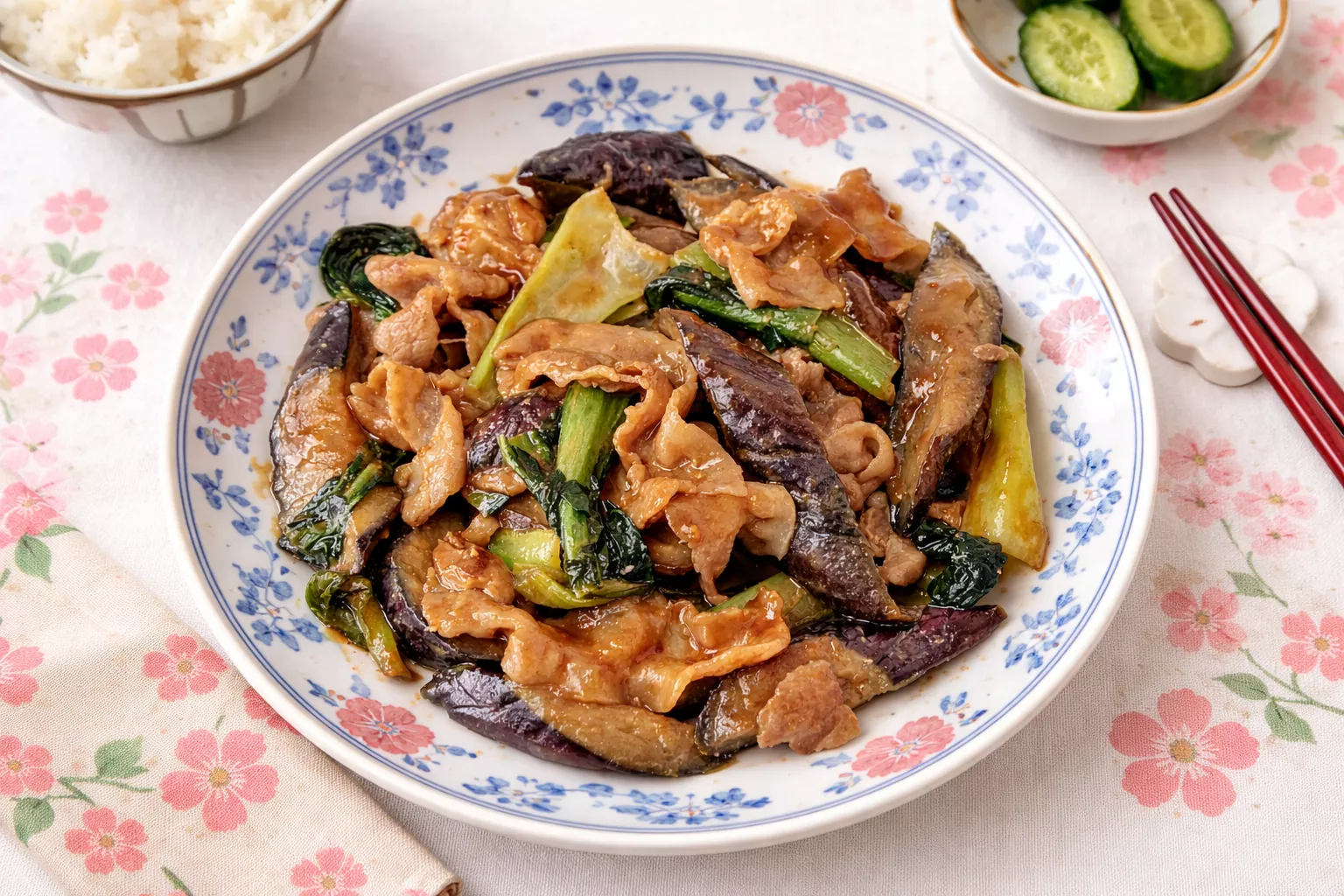
Stir-Fried Miso Eggplant ナスの味噌炒め
Course: AppetizersCuisine: JapaneseDifficulty: Easy2–3
servings10
minutes10
minutes320
kcalThis Stir-Fried Miso Eggplant is a quick and flavorful Japanese home-style dish made with tender eggplant, savory pork belly, fresh komatsuna, and a rich sweet-and-spicy miso sauce. It is perfect with steamed rice and ready in about 20 minutes.
Ingredients
150g thinly sliced pork belly
2 eggplants (about 200g total)
1/2 bag komatsuna (about 100g)
- Miso Sauce
1 tablespoon mixed miso
1 tablespoon sake (alcohol)
1 tablespoon mirin
2 teaspoons sugar
1/2 tablespoon soy sauce
1 teaspoon gochujang
3cm ginger paste (from tube)
Salad oil (for cooking)
Directions
- Prepare the Ingredients
Slice the eggplants lengthwise, then cut them diagonally into bite-sized pieces about 1.5 cm thick.
Cut the komatsuna into 3 cm sections, keeping stems and leaves separate.
Cut the pork belly into small, easy-to-eat pieces.
In a small bowl, combine all the sauce ingredients and mix until smooth. - Cook the Pork and Vegetables
Heat a small amount of salad oil in a frying pan over medium heat.
Add the pork belly and cook until the color begins to change.
Add the eggplant and komatsuna stems. Stir-fry until the eggplant softens and starts to absorb the flavor from the pan. - Add the Leafy Greens
Add the komatsuna leaves and continue cooking briefly. Stir just until the leaves wilt and become tender, being careful not to overcook them. - Add the Sauce and Finish
Pour the prepared miso sauce into the pan.
Stir well so everything is evenly coated. Let it simmer for a few minutes until the sauce thickens slightly and clings to the ingredients.
Turn off the heat and serve warm.
Notes
- ✪ Cut the eggplant evenly so it cooks at the same rate.
✪ Add the miso mixture at the end to prevent burning.
✪ If the sauce becomes too thick, add a small splash of water.
✪ Best served immediately over freshly steamed rice.
✪ Store leftovers in the refrigerator for up to 3 days. Reheat gently in a pan.
Did you make this recipe?
Tag @jp.dishes on Instagram so we can see your delicious creation!