
Tempura sauce (tentsuyu) is the light Japanese dip that brings a plate of crisp tempura together. Have you ever wondered why plain soy sauce tastes so strong beside that delicate coating? The answer is in the broth: dashi softens the saltiness, while mirin adds gentle sweetness.
Hello, I’m Hana. Let’s make a little bowl of 天つゆ for your next tempura meal. You only need three main ingredients and a small saucepan. Get the sauce ready before you start frying, and everything will be waiting when the tempura comes out of the oil.
This recipe takes about 10 minutes with prepared dashi. Below are four simple steps, ingredient substitutions, serving ideas and the small details that help you keep the sauce balanced.
Table of Contents
Tempura Sauce Recipe Overview
Expect a clear, amber-brown sauce with a savory broth flavor and a mild sweet finish. It should run easily from a spoon. There is no flour, cornstarch or long reduction in this recipe, so the result stays light enough for dipping.
Makes about 300 ml for 4 dipping portions. Timing assumes prepared dashi.
Make the dashi first if you are starting with kombu and bonito flakes. That extra stock-making time is not included here. Instant dashi is fine too; prepare it according to the packet before measuring the liquid.
What Is Tempura Sauce (Tentsuyu)?
Tentsuyu (天つゆ) is a dipping sauce served with shrimp and vegetable tempura. Its main ingredients are Japanese stock, soy sauce and mirin. Grated daikon and ginger are optional accompaniments that each person can add to their own bowl.
Tentsuyu is different from thick teriyaki sauce. It seasons a bite without giving it a sticky coating. It also differs from bottled mentsuyu, a noodle-sauce base that may be sold at several strengths. Check the label before using a concentrate for tempura.
Essential Ingredients for Tempura Sauce
1Prepared Dashi — 200 ml
Dashi is the broth base. Kombu-and-bonito stock gives a familiar savory taste, while kombu or kombu-shiitake stock works for a plant-based version.
Substitution: A mild unsalted vegetable stock can work in a pinch, although the flavor will change. Use prepared liquid stock, not 200 ml of dashi powder.
2Japanese Soy Sauce — 50 ml
Use regular Japanese soy sauce, often called koikuchi. It provides the main saltiness and color. A reduced-sodium version can make the dip milder.
Substitution: For a gluten-free sauce, choose certified gluten-free tamari and check the other ingredients too. Thick sweet soy sauce changes the flavor and is not a direct swap.
3Mirin — 50 ml
Mirin balances the broth with sweetness. Hon-mirin contains alcohol, and mirin-style seasonings vary in salt, sugar and alcohol content.
Without mirin: Use 50 ml water plus 2 teaspoons sugar for a simpler pantry version. Rice vinegar is sour and cannot replace mirin one for one.
4Daikon — 60 g, Optional
Peel and finely grate this white radish, then drain it gently. Its fresh flavor goes nicely with fried food.
If unavailable: Leave it out. The three-ingredient sauce still works well, and there is no need to replace it with a different raw radish.
5Fresh Ginger — ½ Teaspoon, Optional
Finely grated ginger adds a little warmth. Keep it separate from the daikon so everyone can choose how much to add.
Hana’s tip: Start with a small dab. Too much ginger can cover the delicate dashi flavor.
The Simple 4:1:1 Sauce Ratio
For this recipe, measure four parts dashi, one part soy sauce and one part mirin by volume. Using 200 ml, 50 ml and 50 ml makes about 300 ml before heating. It is an easy starting point, rather than a rule that every Japanese cook follows.
Keep a little extra dashi nearby for tasting. Soy sauce and prepared stock vary in saltiness, so the same measurements can taste different with different brands. Adjust after the short simmer, when the three flavors have come together.
How to Make Tempura Sauce in 4 Steps
You will need a measuring jug, a small saucepan, a spoon and four small dipping bowls. Have a fine grater ready if you want the optional garnishes.
Step 1: Measure and Combine the Liquids
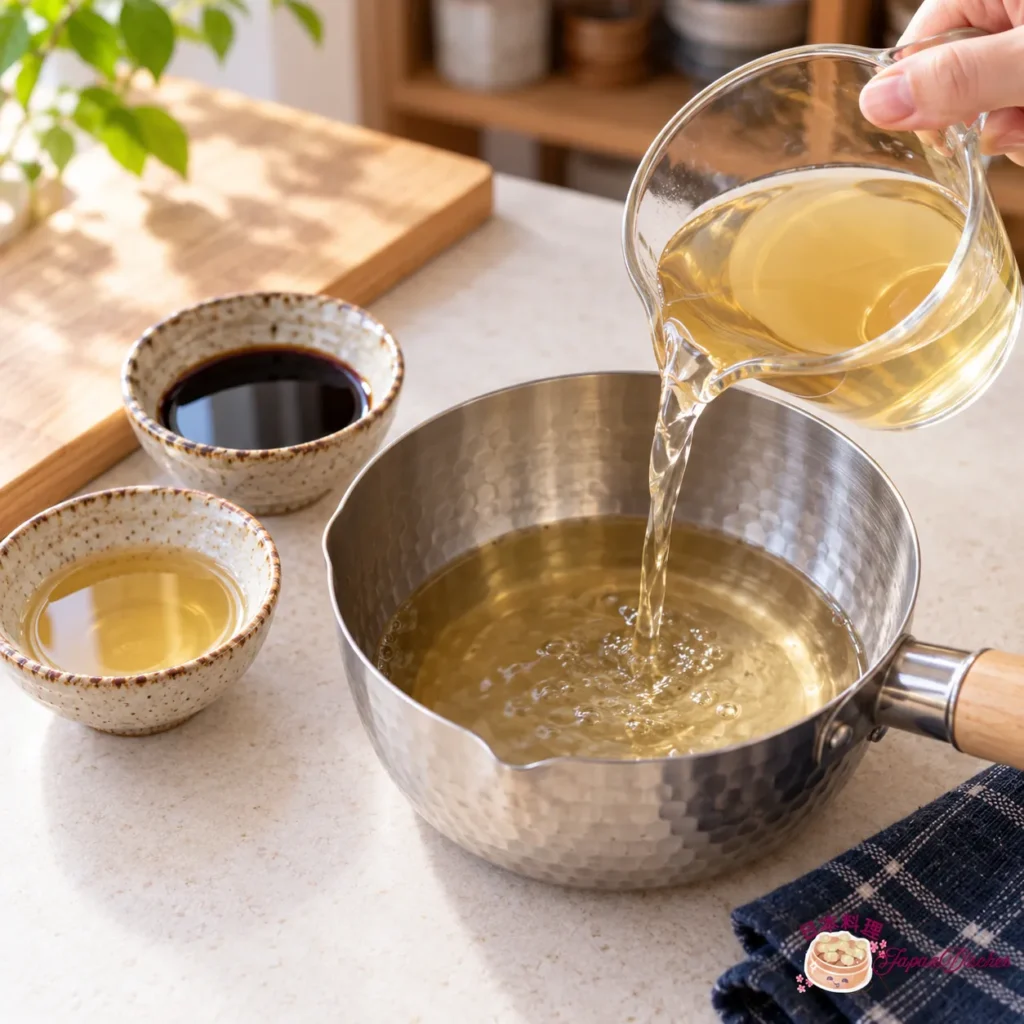
Measure 200 ml prepared dashi, 50 ml soy sauce and 50 ml mirin. Pour them into the saucepan and stir briefly. Use a small pan so the shallow amount of sauce is easy to watch.
Check whether your dashi packet already includes salt. Do not add more salt now; the soy sauce supplies plenty of seasoning.
Step 2: Bring to a Gentle Simmer
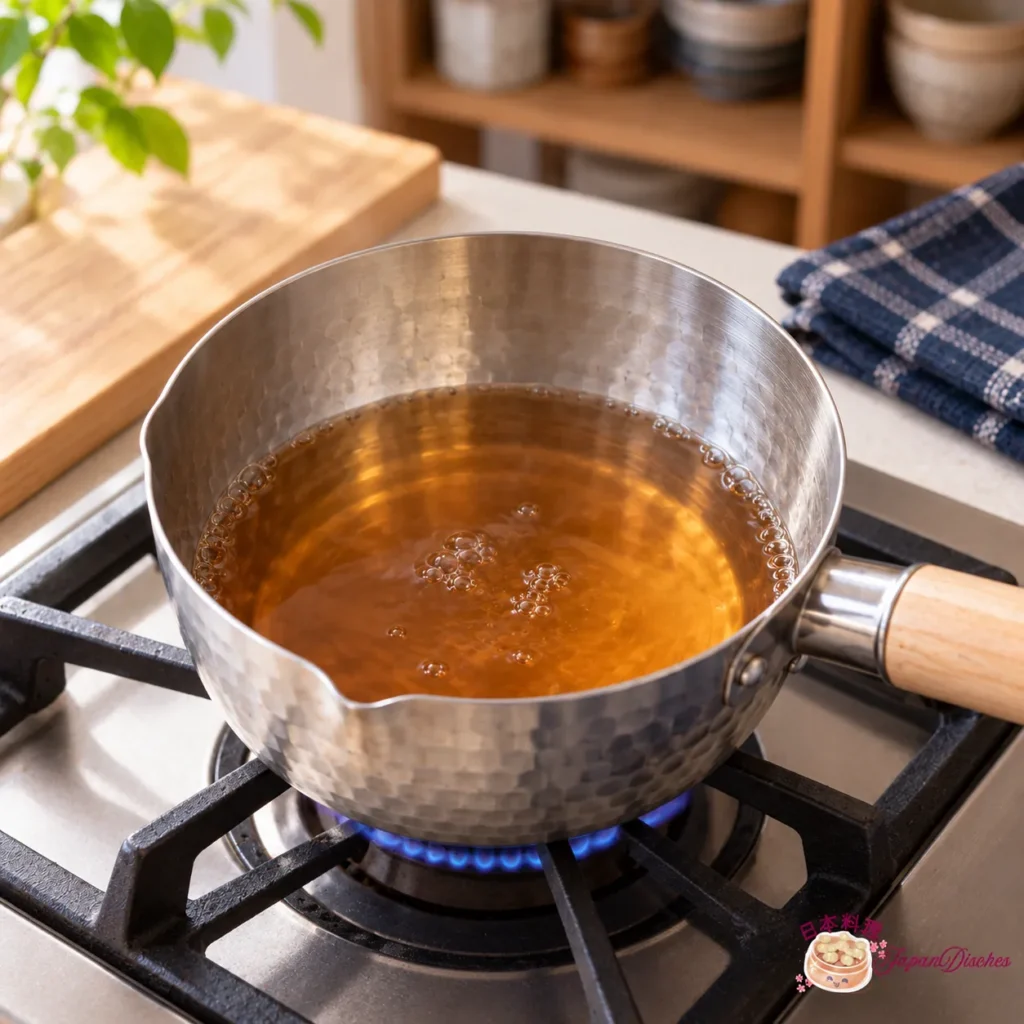
Heat over medium heat until bubbles begin to rise. Lower the heat and simmer gently for 1–2 minutes, then turn off the heat. You are blending the ingredients, not boiling the sauce down.
The sauce should still be thin. A wide pan or a long boil can evaporate too much water and leave the dip overly salty. A brief simmer also does not guarantee that all alcohol has cooked away.
Step 3: Grate the Daikon and Ginger
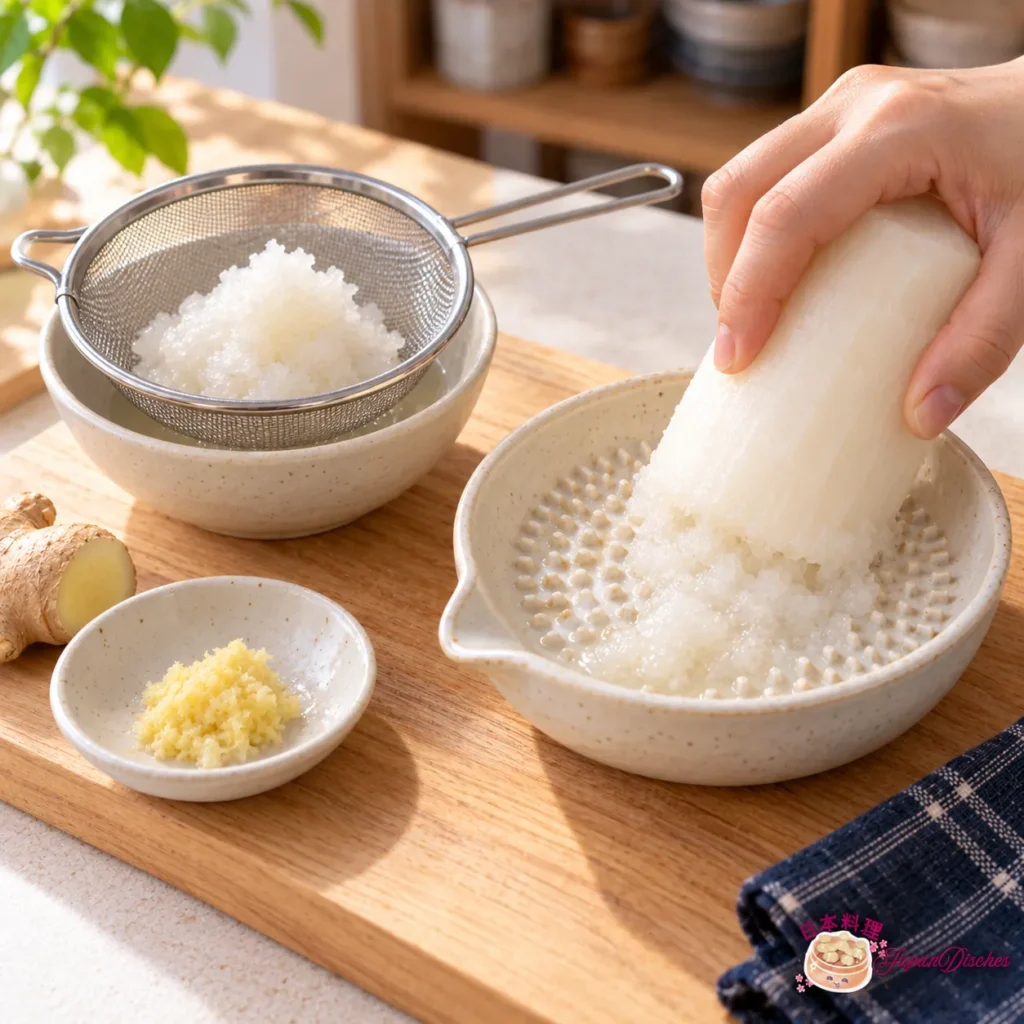
Let the sauce rest for about 3 minutes. Meanwhile, finely grate the peeled daikon. Place it in a fine sieve and press lightly to release excess water. Keep it moist rather than squeezing it completely dry.
Grate the ginger separately and arrange both on a small dish. If you are skipping the garnishes, simply use this time to set out the dipping bowls.
Step 4: Taste, Portion and Serve
Taste a cooled spoonful. If the sauce seems too strong, stir in extra dashi 1 tablespoon at a time. If you prefer it slightly sweeter, dissolve ½ teaspoon sugar in the warm sauce and taste again.
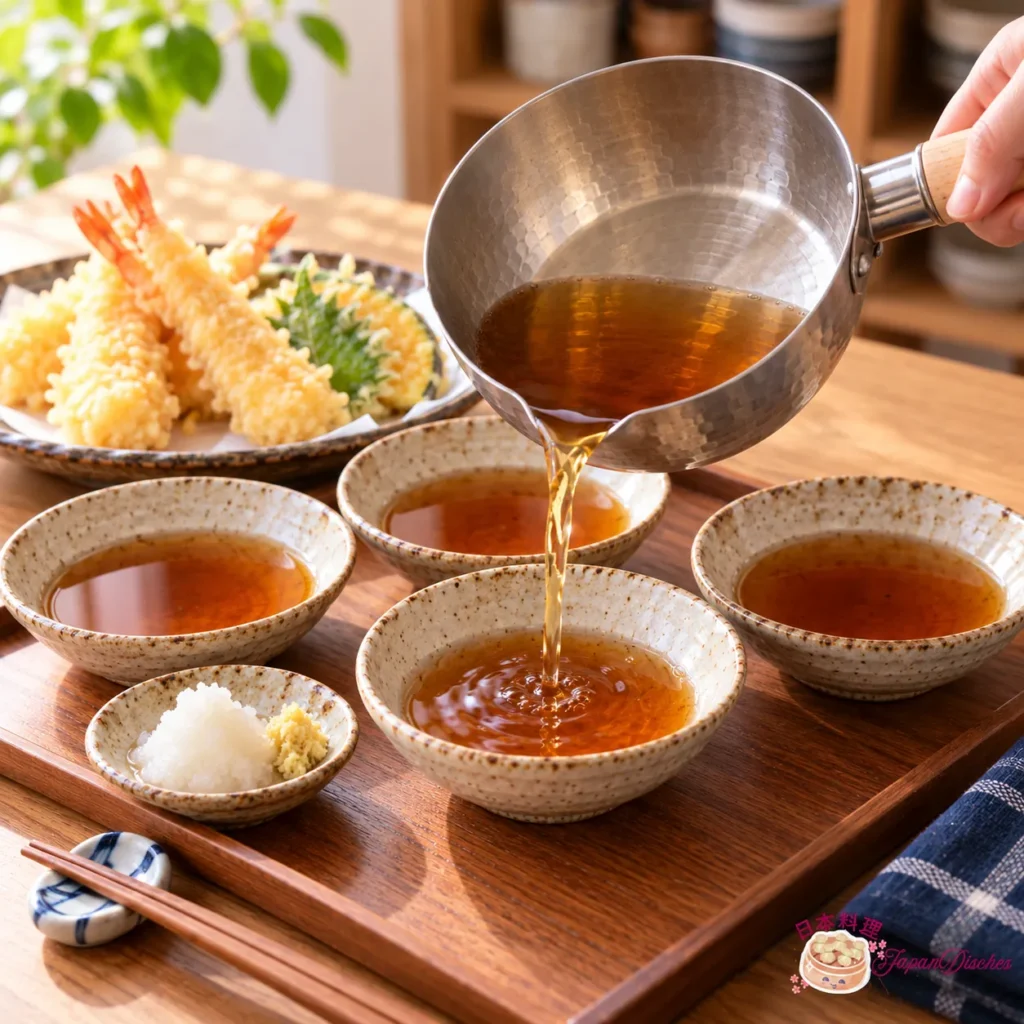
Divide between four bowls. Serve warm or at room temperature beside freshly cooked tempura, with the daikon and ginger on the side. Add only a little garnish to your bowl at first.
Secrets to Success and Expert Tips
- Measure prepared stock
Dashi powder must be dissolved first. A spoonful of powder is not the same as a spoonful of broth. - Keep the sauce light
Skip thickeners. Tentsuyu should behave like a seasoned broth, not a glaze. - Watch the simmer
Turn the heat down once bubbles appear. Extended boiling concentrates both sweetness and saltiness. - Adjust with dashi
Extra broth softens strong seasoning. Extra mirin changes the sweetness at the same time. - Dip only the bite you are eating
A quick dip adds flavor. Leaving tempura sitting in the sauce softens its coating.
Assembly, Serving and Presentation
Place the hot tempura on a separate plate, with one dipping bowl per person. Serve the grated daikon and ginger in a small side dish. Keep fried pieces out of the sauce until you are ready to eat them.
A platter of Japanese shrimp tempura or vegetable tempura is a natural match. Steamed rice and a light soup can turn the plate into a meal.
Presentation tip: Small ceramic bowls make the sauce easy to reach. Leave space between the tempura pieces, and keep chopsticks on a rest. Simple tableware lets the crisp coating and amber sauce stand out.
Hana’s Recipe Tips
Get your dipping sauce ready before frying. Tempura is best served promptly, so this small bit of preparation makes the last few minutes easier. You can warm the sauce again gently if needed.
Taste the sauce on its own first, then try it with one piece of tempura. The coating changes how the seasoning feels in a bite. Keep the rest of the batch untouched while you taste; used dipping sauce should never go back into the saucepan.
Storage and Make-Ahead Tips
Transfer unused sauce into a clean, shallow covered container and refrigerate promptly at 4°C / 40°F or below. Use it within 3 days. Label the container with the date, and keep the daikon separate.
For make-ahead meals, prepare the sauce the day before and grate the garnishes shortly before serving. Reheat only the amount you need, bring it to a boil, then let it cool to a comfortable dipping temperature.
Discard sauce from bowls used for dipping. Refrigerate perishable food within 2 hours, or within 1 hour above 32°C / 90°F, following FoodSafety.gov’s refrigeration guidance.
Recipe Variations and Substitutions
1Tempura Sauce Without Mirin
Replace the 50 ml mirin with 50 ml water and 2 teaspoons sugar. Heat until the sugar dissolves. This gives sweetness and the right liquid amount, but a simpler flavor.
For an alcohol-free version, check the soy sauce and stock labels as well. Some products contain alcohol even when mirin is omitted.
2Vegan Tempura Sauce
Choose kombu or kombu-shiitake dashi instead of bonito stock. Check instant-stock labels for fish ingredients. The sauce is vegan only when all its ingredients are plant-based.
3Gluten-Free Tempura Sauce
Use certified gluten-free tamari or soy sauce, and check the dashi and mirin. Taste and dilute if needed. This adapts the sauce only; the tempura batter needs its own gluten-free recipe.
4A Milder Dipping Sauce
Use reduced-sodium soy sauce, or add a little extra unsalted dashi after heating. Taste before adding more sweetness. A small adjustment is often enough.
Is Tempura Sauce Healthy?
Tentsuyu is a seasoning, not a health food. Soy sauce contributes sodium, and mirin contributes sweetness and may contain alcohol. Small dipping portions and reduced-sodium ingredients can help you control the seasoning.
Check labels when cooking for someone avoiding wheat, soy, fish or alcohol. The sauce and the tempura have separate ingredients, so both need to suit the person eating them.
More Japanese Recipes to Try
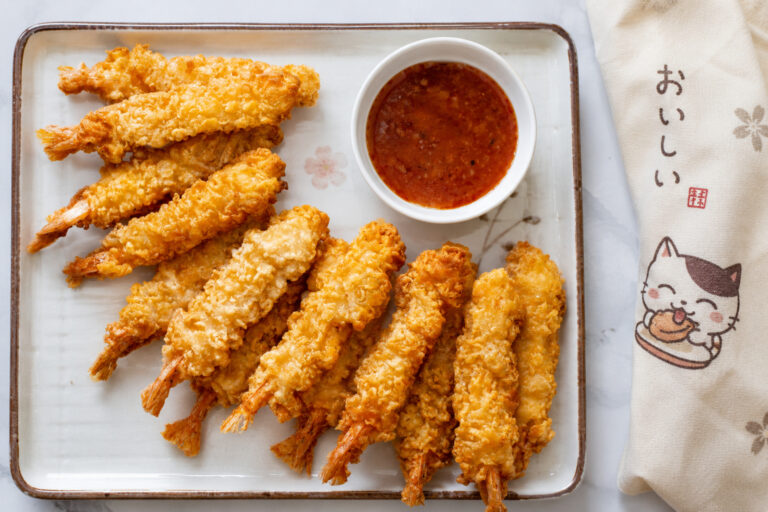
Prepare crisp shrimp to serve with your homemade dip.
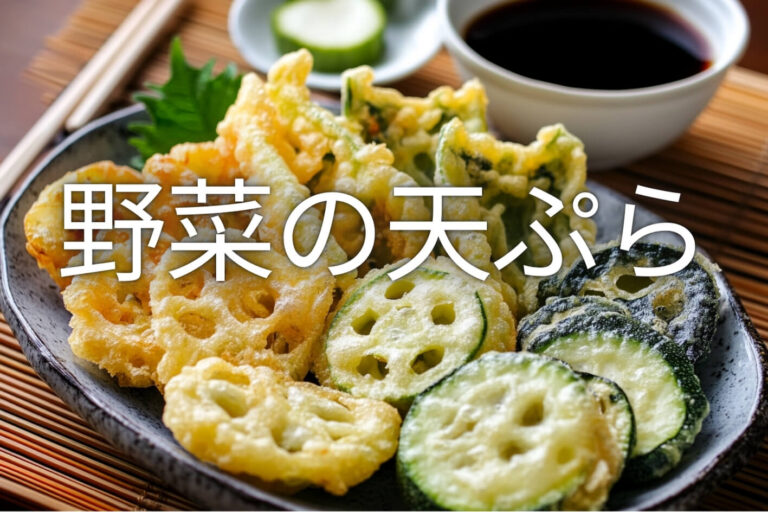
Build a colorful platter with vegetables you enjoy.
Frequently Asked Questions
What is tempura sauce made of?
The main ingredients are dashi, Japanese soy sauce and mirin. This recipe uses a 4:1:1 ratio, with optional grated daikon and ginger served alongside.
Can I make tempura sauce without dashi?
Use a mild unsalted vegetable stock as a practical substitute. The flavor will differ. Kombu dashi is a better choice if you want a Japanese broth without fish.
Is tentsuyu the same as soy sauce?
No. Soy sauce is one ingredient. Dashi dilutes it, and mirin adds sweetness, giving tentsuyu a lighter flavor for dipping.
Can I use bottled mentsuyu?
Sometimes. Look for tempura dipping instructions on the bottle and follow its dilution ratio. Concentrated mentsuyu is not interchangeable with prepared dashi.
Why is my tempura sauce too salty?
Salted stock, strong soy sauce or too much boiling can make the sauce taste harsh. Add unsalted dashi a tablespoon at a time and taste again.
Should I serve tentsuyu hot or cold?
Warm, room-temperature and chilled versions are all possible. For this meal, serve it warm or at room temperature after the short rest. Keep stored sauce refrigerated until needed.
Does simmering remove all the alcohol?
No. A short simmer does not guarantee an alcohol-free sauce. Use the water-and-sugar alternative and check every ingredient label if alcohol must be avoided.
Can I double the recipe?
Yes. Use 400 ml dashi, 100 ml soy sauce and 100 ml mirin in a larger saucepan. Keep the simmer brief and taste before serving.
Conclusion
A good bowl of tempura sauce does not need a long ingredient list. Measure the three liquids, give them a short simmer and adjust the seasoning with dashi. Set out the garnishes, bring the tempura to the table and enjoy it while the coating is crisp.

Tempura Sauce (Tentsuyu) 天つゆ
Course: Sauce, CondimentCuisine: JapaneseDifficulty: Easy4
portions3
minutes4
minutes3
minutes10
minutesA light Japanese tempura sauce made with dashi, soy sauce and mirin. Four simple steps make about 300 ml for four dipping portions. Timing assumes prepared dashi.
Ingredients
200 ml prepared dashi, unsalted or lightly seasoned
50 ml Japanese soy sauce
50 ml mirin
60 g daikon, peeled and finely grated, optional
½ teaspoon finely grated ginger, optional
Directions
- Combine 200 ml prepared dashi, 50 ml soy sauce and 50 ml mirin in a small saucepan.
- Heat until bubbles appear, lower the heat and simmer gently for 1–2 minutes. Turn off the heat; do not reduce the sauce.
- Rest for about 3 minutes. Meanwhile, grate the optional daikon and ginger. Drain the daikon lightly.
- Taste a cooled spoonful and dilute with extra dashi if needed. Portion into four dipping bowls, add garnishes to taste and serve.
Notes
- Timing assumes prepared dashi; making stock from scratch takes extra time. Use a 4:1:1 ratio of dashi, soy sauce and mirin by volume, with a brief simmer. Without mirin: use 50 ml water plus 2 teaspoons sugar, and check every label if avoiding alcohol. Refrigerate unused sauce promptly at 4°C / 40°F or below and use within 3 days. Discard sauce used for dipping.
Share your tempura meal and tag @jp.dishes. I’d love to see what you served with your tentsuyu.
Learn more: Kikkoman’s tempura preparation guide and The Japanese Food Lab’s discussion of tentsuyu ratios.