
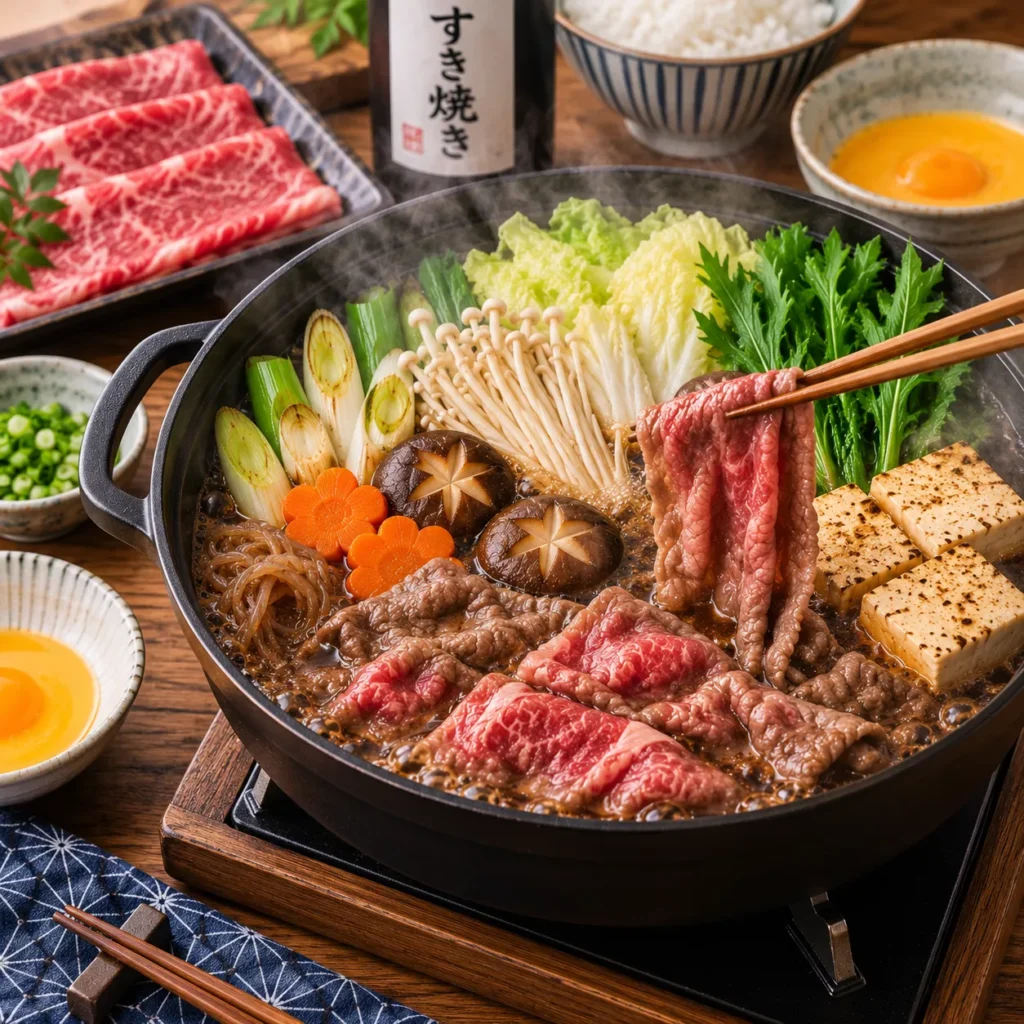
Have you ever wondered how a simple pot of beef, vegetables, tofu, and a sweet-savory broth can become one of Japan’s most comforting meals?
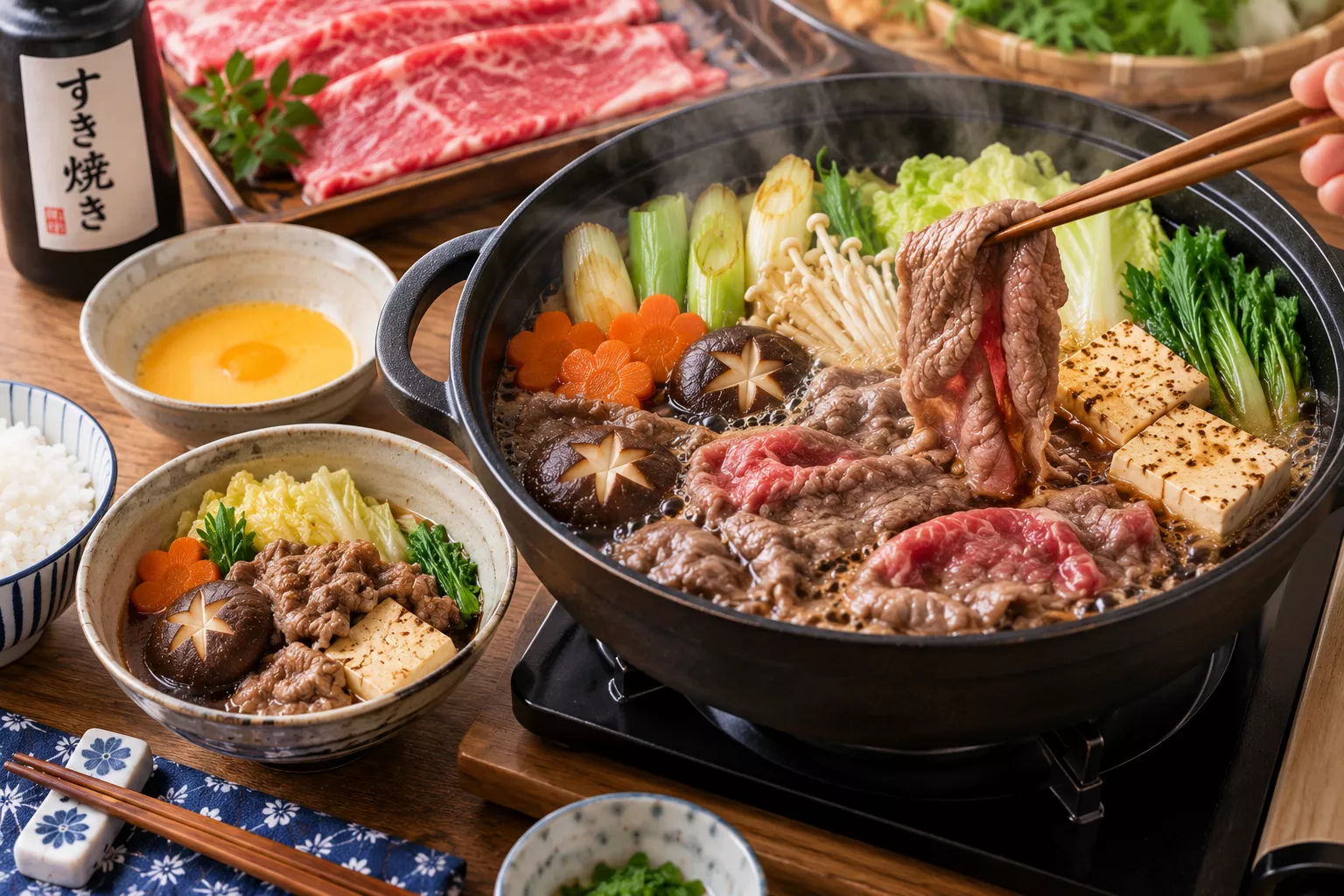
That is the charm of sukiyaki すき焼き. It is warm, rich, filling, and made for sharing. Thin slices of beef cook quickly in a flavorful sauce made with soy sauce, mirin, sugar, sake, and dashi. Tofu, mushrooms, carrots, leafy vegetables, and green onions soak up the sauce as they simmer.
One of the best things about sukiyaki is that it does not need complicated cooking skills. Most of the work is simple slicing, mixing, and simmering. You can prepare it in a traditional Japanese nabe pot, a deep frying pan, or a heavy pot you already have at home.
This sukiyaki すき焼き recipe is ideal for a family dinner, a cozy weekend meal, or a special Japanese-style dinner with friends.
Table of Contents
Sukiyaki すき焼き Recipe Overview
Sukiyaki is special because it combines many flavors and textures in one pan. The beef is tender and rich. The tofu becomes soft and full of flavor. The mushrooms add a deep savory taste, while the bok choy and carrots bring freshness and color.
The broth is one of the most important parts. It has a sweet and salty balance that coats every ingredient.
Although sukiyaki looks impressive when placed in the center of the table, the cooking process is quite simple. Preparing the ingredients before you start will make the whole recipe much easier.
What Is Sukiyaki すき焼き?
Sukiyaki すき焼き is a Japanese hot pot dish made with thinly sliced meat, tofu, vegetables, mushrooms, and a sweet soy-based cooking liquid.
Instead of being cooked in a large amount of plain soup, sukiyaki uses a stronger seasoned broth. This gives the ingredients a deep sweet, salty, and savory flavor.
The dish is often cooked in a wide pot at the table. Ingredients may be added little by little so everyone can enjoy them while they are still hot.
Sukiyaki became especially popular as beef became more widely eaten in Japan during the Meiji period. Over time, different regional cooking styles developed.
In the Kanto region, which includes Tokyo, a prepared sweet-savory sauce is usually added to the pot before the main ingredients are simmered.
In the Kansai region, including Osaka and Kyoto, the process may begin by cooking the beef with sugar and seasonings before vegetables and other ingredients are added.
Both methods create a rich and comforting dish.
Essential Ingredients for Sukiyaki すき焼き
Key Ingredients (材料)
Sukiyaki すき焼きThese ingredients create the rich sweet-and-savory taste of sukiyaki. Thin beef, tofu, mushrooms, and vegetables simmer in a flavorful broth made with soy sauce, mirin, sake, sugar, and dashi.
How to Make Sukiyaki すき焼き
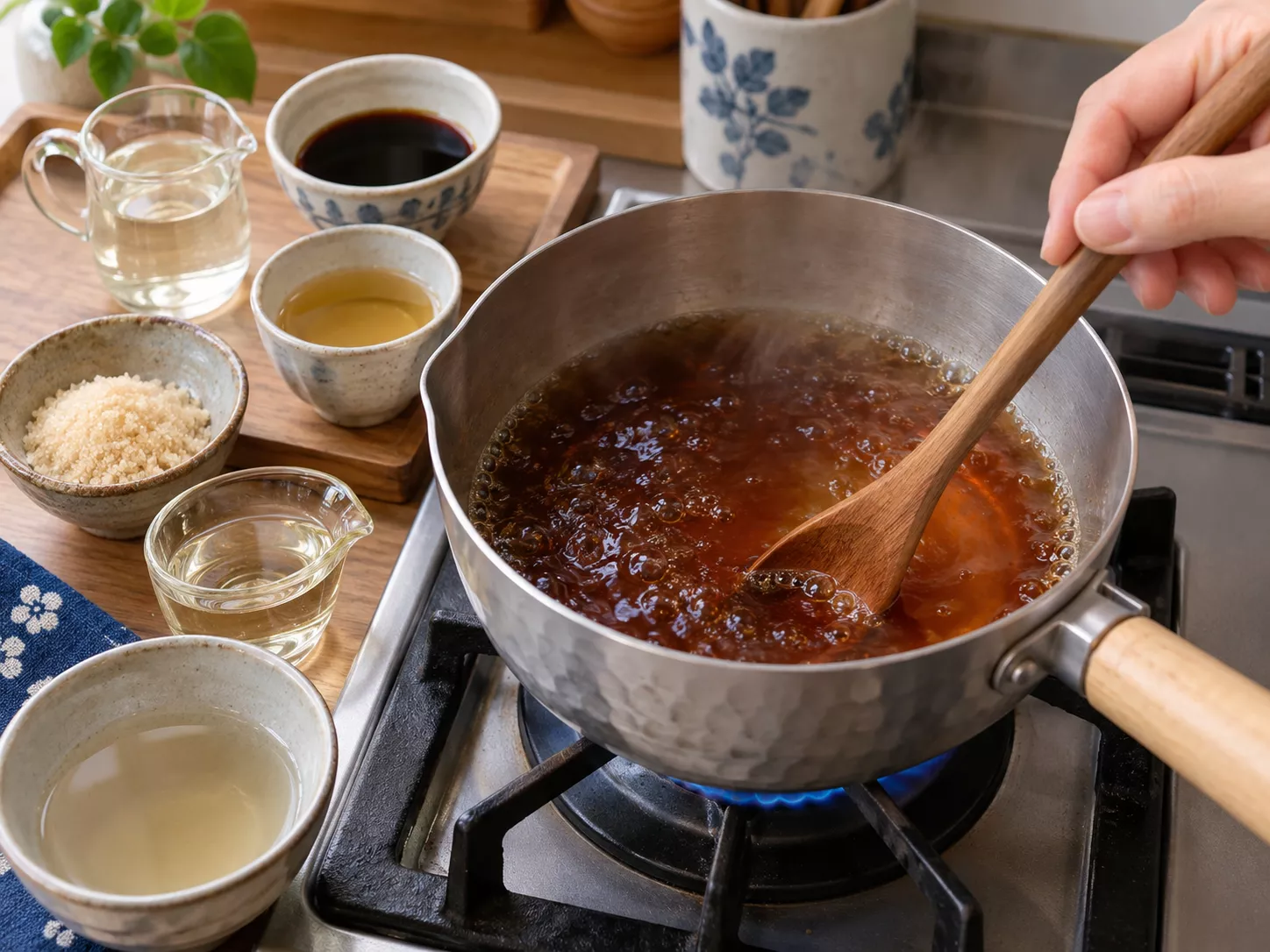
Step 1: Make the Sukiyaki Broth
Add the soy sauce, mirin, sugar, dashi, and sake to a small saucepan.
Place the saucepan over medium heat and stir gently until the sugar dissolves.
Bring the mixture to a light boil, then lower the heat.
Let it simmer gently for about 5 to 10 minutes.
This short cooking time helps the sweet, salty, and savory ingredients blend together.
Do not reduce the broth too much because it will continue to become stronger when it cooks with the beef and vegetables.
Turn off the heat and keep the broth warm while you prepare the remaining ingredients.
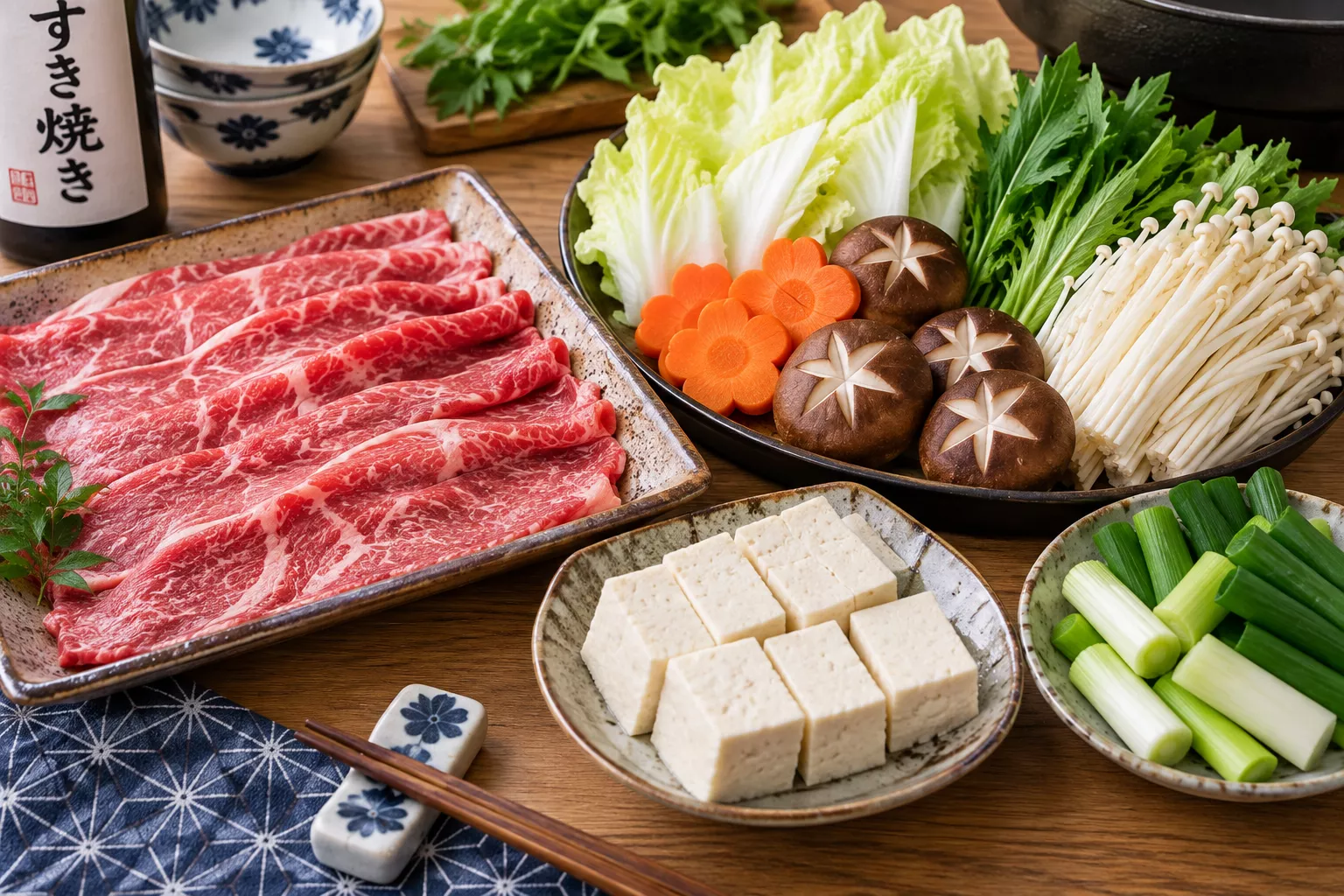
Step 2: Prepare the Beef, Tofu, Mushrooms, and Vegetables
Cut the beef into thin slices if it is not already prepared.
Cut the firm tofu into medium cubes.
Slice the carrots into thin rounds.
Remove the hard stems from the shiitake mushrooms and slice the caps if they are large.
Trim the bottom from the enoki mushrooms and gently separate them into small groups.
Cut the bok choy or Chinese cabbage into easy-to-eat pieces.
Finally, cut the green onions into pieces about 5 cm long.
Arrange everything on separate plates or on one large tray before cooking.
Preparing everything first is important because the cooking process becomes fast once the pot is hot.
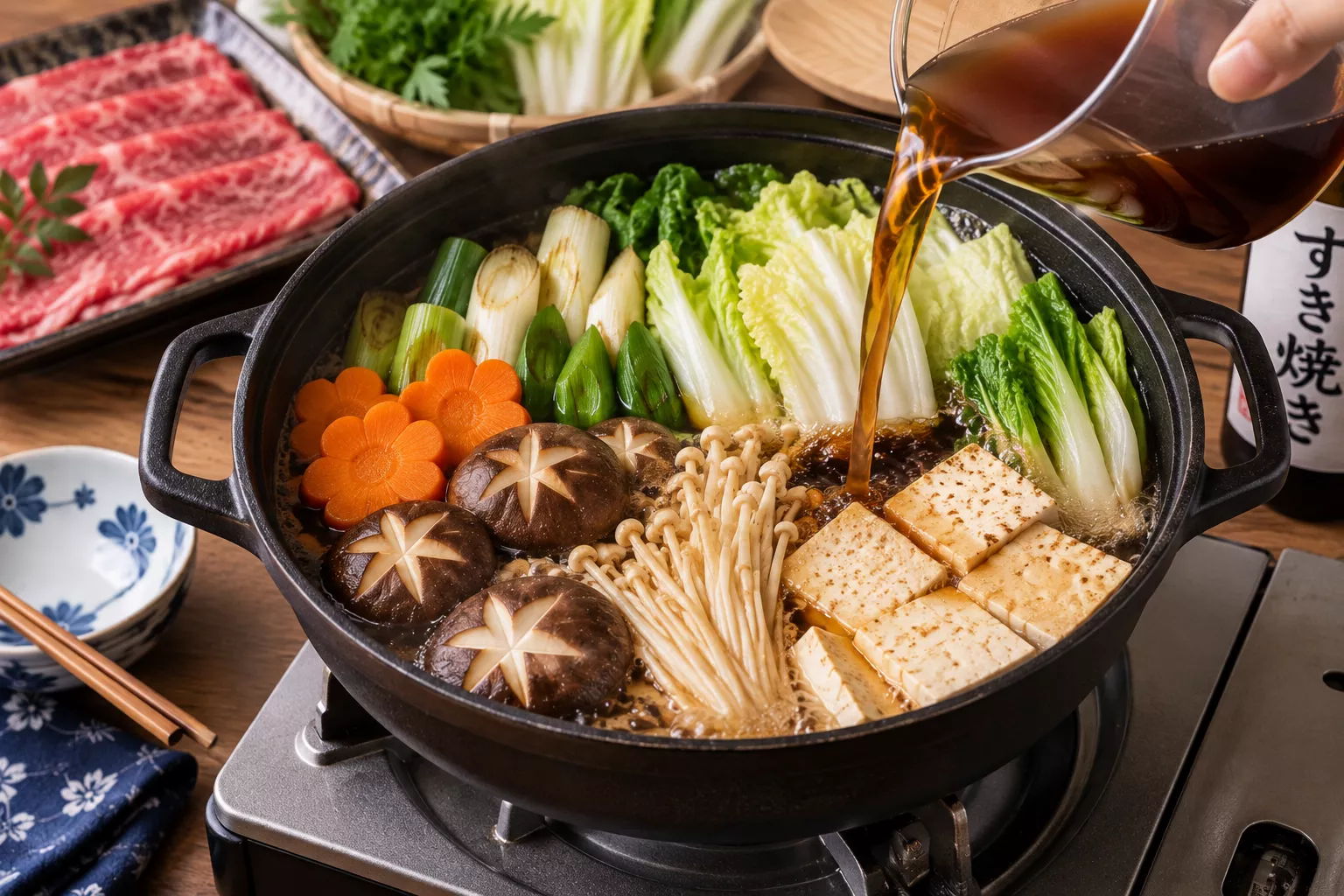
Step 3: Cook the Vegetables and Tofu
Place your nabe, deep pan, or heavy pot over medium heat.
Add the sesame oil.
Add the green onions and carrots and cook them for about 2 to 3 minutes.
They do not need to become fully soft. This first cooking step helps bring out their natural sweetness.
Add the shiitake and enoki mushrooms.
Cook for another 2 minutes.
Arrange the tofu and bok choy around the pan.
Carefully pour in the warm sukiyaki broth.
Lower the heat slightly and allow everything to simmer for about 10 to 15 minutes.
The carrots should become tender, the mushrooms should soften, and the tofu should become hot throughout.
Avoid stirring too strongly because tofu can break apart.
Step 4: Add the Beef and Serve
Place the thin beef slices over the simmering vegetables in a single layer.
Cook for about 1 to 2 minutes, depending on how thin the beef is.
Turn the slices gently if needed.
Thin beef cooks very fast, so watch it carefully. Leaving it in the broth too long can make it firm instead of tender.
Once the beef is cooked to your preferred doneness, divide it between serving bowls with tofu, mushrooms, carrots, bok choy, and green onions.
Spoon a small amount of the rich broth over each bowl.
Serve immediately with hot Japanese rice.
If desired, give each person a small bowl containing a beaten pasteurized or raw-consumption-safe egg for dipping the hot cooked ingredients.
Secrets to Success and Expert Tips
These simple tips will help you make rich, tender, and well-balanced Sukiyaki すき焼き with flavorful broth, soft vegetables, and juicy beef:
-
♥
Use very thin slices of beef
Thin beef cooks quickly and stays tender. Sukiyaki or shabu-shabu beef is ideal because it absorbs the broth without becoming tough. -
♥
Prepare everything before cooking
Cut the tofu, vegetables, mushrooms, and beef before heating the pot. Sukiyaki cooks quickly, so having everything ready makes the process much easier. -
♥
Keep the broth at a gentle simmer
Avoid boiling the sukiyaki too strongly. A gentle simmer helps the vegetables cook evenly, keeps the tofu from breaking, and protects the tender texture of the beef. -
♥
Add the beef near the end
The vegetables and tofu need more time to cook than thin beef. Add the beef only when the other ingredients are nearly ready and cook it for about 1 to 2 minutes. -
♥
Adjust the broth as it cooks
The sauce becomes stronger as liquid evaporates. If it tastes too salty or too concentrated, add a small splash of dashi or water to bring back the right balance. -
♥
Arrange the ingredients instead of stirring too much
Keep the beef, tofu, mushrooms, carrots, and greens in visible sections. This helps them cook properly and gives the finished sukiyaki a cleaner and more traditional presentation.
How to Assemble Sukiyaki
Sukiyaki is usually served directly from the cooking pot, which makes presentation easy.
Start by arranging the cooked vegetables around the outside of the pot.
Place tofu pieces in one area, mushrooms in another, and carrots beside the greens.
Add the cooked beef across the center or along one side.
Try not to cover every ingredient with beef. Seeing the different colors makes the dish look fresher and more attractive.
Place the hot pot in the center of the table on a heat-safe surface.
Serve rice in individual bowls.
Each person can take a little beef, vegetables, tofu, and broth as they eat.
If you cook sukiyaki at the table, keep extra ingredients nearby and add them in smaller batches. This keeps everything fresh instead of allowing the entire pot to cook for too long.
Hana’s Recipe Tips
For a simple home-style sukiyaki, prepare all the ingredients before turning on the stove. Once cooking starts, the recipe moves quickly.
Keep a little extra dashi beside the stove. As the broth simmers, it can become stronger and saltier. A small splash of dashi can bring the balance back without weakening the overall flavor.
Do not pack the pan too tightly. Leaving some room between the ingredients helps them heat more evenly.
When serving children or anyone who prefers a mild taste, place a smaller amount of broth in their bowl and add more vegetables and rice.
For a more relaxed meal, place the pan in the center of the table and allow everyone to choose their favorite ingredients.
Storage and Make-Ahead Tips
Sukiyaki tastes best immediately after cooking, especially because thin beef can become firm when reheated.
However, leftovers can still be stored safely.
Allow the food to cool, then transfer it to an airtight container.
Store it in the refrigerator for up to 2 days.
Keep cooked rice in a separate container so it does not absorb too much broth.
To reheat sukiyaki, place it in a saucepan over medium-low heat.
Add a small splash of water or dashi if the sauce has become too concentrated.
Heat until the ingredients are hot throughout.
Avoid repeatedly reheating the beef.
Make-Ahead Preparation
You can prepare several parts in advance:
- Mix the broth and refrigerate it.
- Slice the carrots.
- Clean and cut the mushrooms.
- Chop the green onions.
- Cut the bok choy.
- Drain and cube the tofu.
Keep raw beef refrigerated separately until you are ready to cook.
Recipe Variations
Sukiyaki すき焼き is easy to adapt to different tastes and ingredients. You can change the protein, add more vegetables, adjust the broth, or make a meat-free version while keeping the same warm and comforting hot pot style.
Make a Vegetarian Sukiyaki
For a meat-free version, replace the beef with filling plant-based ingredients:
- Extra firm tofu for more protein
- King oyster or shiitake mushrooms for a rich texture
- Seitan for a hearty meat substitute
Use kombu or mushroom dashi instead of fish-based dashi.
Try a Different Protein
Beef is traditional, but you can create another version with:
- Thinly sliced chicken
- Thinly sliced pork
- Extra tofu for a lighter meal
Chicken and pork need a little more cooking time than very thin beef, so make sure they are fully cooked before serving.
Add More Vegetables
Sukiyaki is perfect for using extra vegetables and mushrooms:
- Napa cabbage for a soft and slightly sweet texture
- Spinach or shungiku for more greens
- Shimeji or king oyster mushrooms for extra umami
- Leeks for a sweeter onion flavor
Finish with Udon Noodles
Add cooked udon noodles near the end of the meal. The noodles soak up the remaining sweet and savory broth and turn the last part of the sukiyaki into a filling noodle dish.
- Add the noodles only after most of the beef and vegetables are eaten
- Add a little dashi if the broth has become too concentrated
- Simmer briefly until the noodles are hot and coated with sauce
Is Sukiyaki Healthy?
Sukiyaki can be part of a balanced meal because it contains protein, vegetables, mushrooms, and tofu.
Beef provides protein and nutrients such as iron and vitamin B12.
Tofu adds plant-based protein.
Mushrooms and vegetables add fiber, vitamins, minerals, and different textures without making the meal too heavy.
One thing to watch is the sauce. Soy sauce contains sodium, while sugar and mirin add sweetness.
You can make a lighter version by using slightly less sugar or choosing a lower-sodium soy sauce.
Serving sukiyaki with plenty of vegetables can also create a more balanced meal.
Why Sukiyaki Is Great for Sharing
One reason sukiyaki remains so popular is that it turns dinner into an experience.
Instead of preparing individual plates in the kitchen, the pot can stay in the middle of the table.
People can talk while the ingredients gently cook.
Everyone can choose the foods they enjoy most.
One person may prefer beef and mushrooms, while another may fill a bowl with tofu and vegetables.
This makes sukiyaki flexible for families and groups with different preferences.
Conclusion
Making sukiyaki すき焼き at home is easier than it may first appear.
With thin beef, tofu, mushrooms, vegetables, and a simple sweet-savory broth, you can create a warm Japanese meal in less than an hour.
The recipe is also easy to adjust. Add more vegetables, replace the beef, use different mushrooms, or finish the meal with udon noodles.
The most important part is to avoid rushing the vegetables or overcooking the beef.
Prepare everything first, let the vegetables gently simmer, and add the thin beef only when you are almost ready to eat.
Serve it hot with Japanese rice and enjoy the rich broth, tender beef, soft tofu, and vegetables together.
More Japanese Recipes to Try
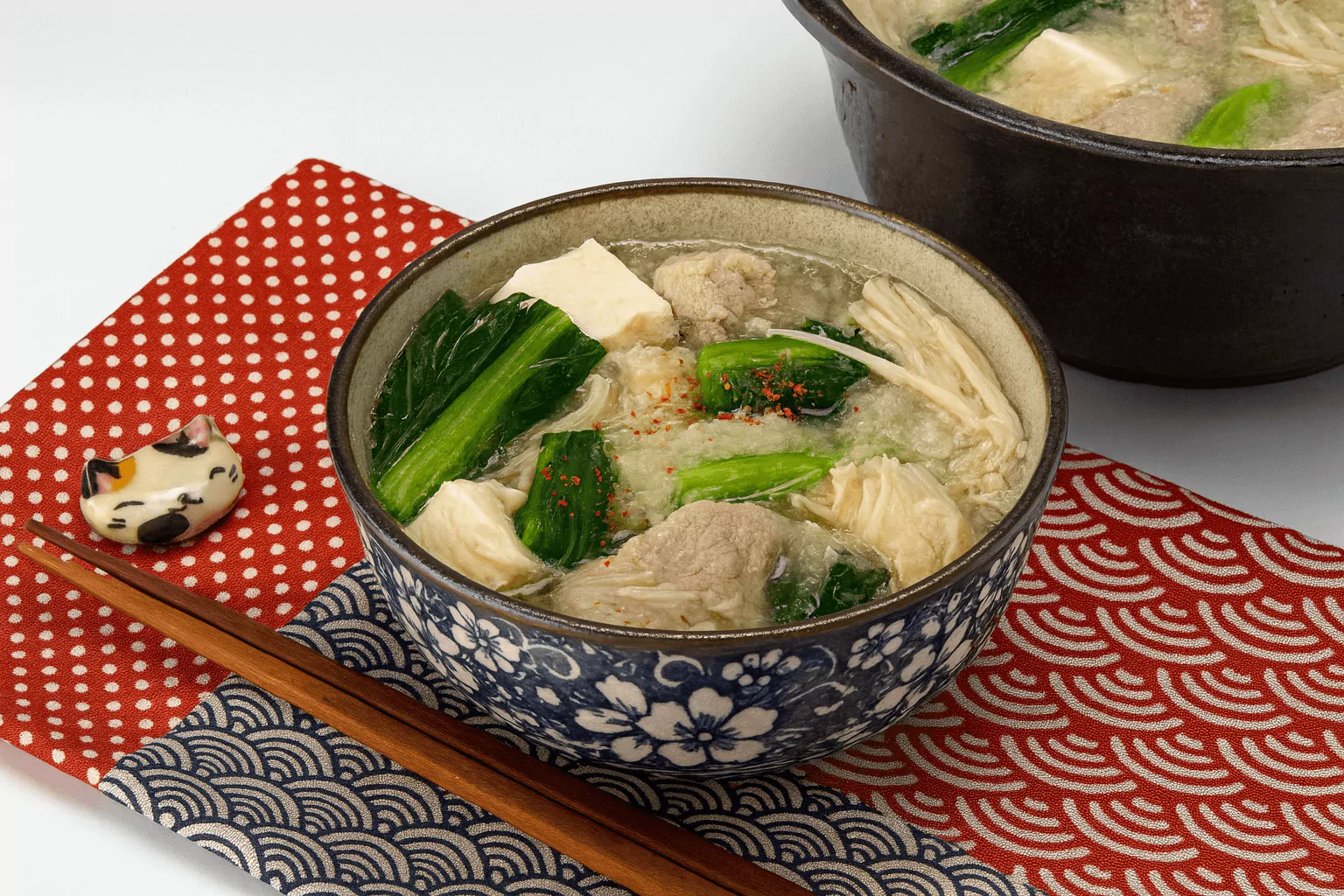
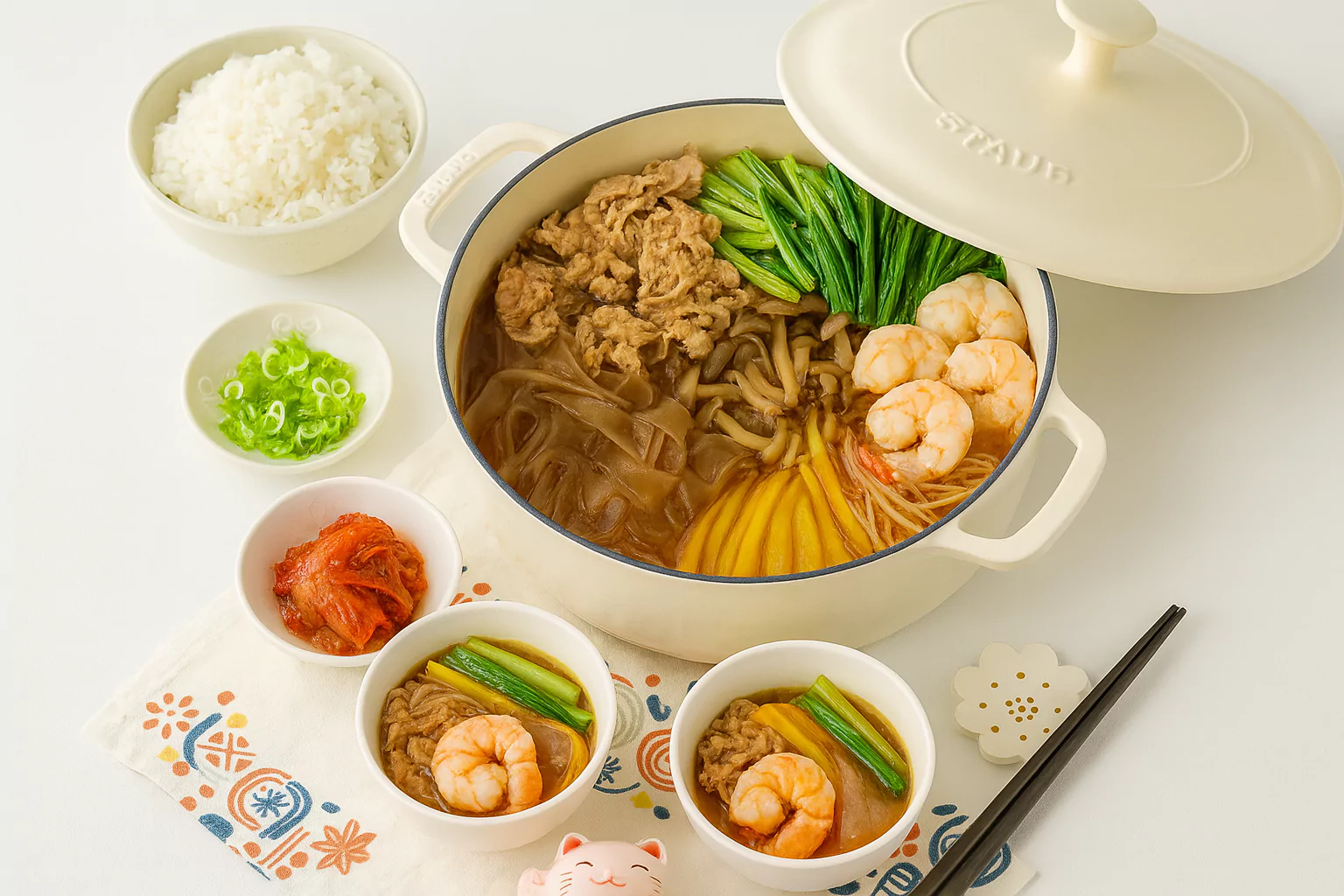
If you enjoyed Sukiyaki すき焼き, try another warm and comforting Japanese dish next. Stewed Glass Noodles is a light yet satisfying recipe filled with vegetables and tender noodles that absorb plenty of savory flavor. You can also try Tonjiru (豚汁) , a hearty Japanese miso soup made with pork and vegetables. Both recipes are excellent choices when you want a cozy Japanese meal that is simple, filling, and full of comforting flavor.
Frequently Asked Questions About Sukiyaki すき焼き
What does sukiyaki taste like?
Sukiyaki has a sweet, salty, and savory taste.
Soy sauce gives it saltiness, while mirin and sugar provide sweetness. Dashi, mushrooms, beef, and tofu add deep savory flavor.
What kind of beef is best for sukiyaki?
Thinly sliced tender beef works best.
Ribeye and sirloin are good choices because they cook quickly and stay tender.
Beef sold specifically for sukiyaki or shabu-shabu is especially convenient.
Can I make sukiyaki without a nabe pot?
Yes.
A large deep frying pan, Dutch oven, or wide heavy pot will work well.
The most important thing is having enough surface space to arrange and cook the ingredients evenly.
Can I prepare sukiyaki in advance?
You can prepare the broth and cut most of the vegetables in advance.
For the best texture, cook the beef shortly before serving.
How long does sukiyaki last in the refrigerator?
Cooked sukiyaki can usually be kept in an airtight container in the refrigerator for up to 2 days.
Reheat it gently and make sure it is hot throughout before eating.
Can sukiyaki be vegetarian?
Yes.
Replace the beef with extra tofu, seitan, or more mushrooms.
Use a vegetarian dashi made from kombu or mushrooms.
Do I have to use raw egg?
No.
The raw egg dipping sauce is optional.
If you prefer not to eat raw egg, simply enjoy the cooked ingredients directly from the broth.
If you do use egg for dipping, choose pasteurized eggs or eggs that are specifically considered safe for raw consumption where you live.
Can I reduce the sugar?
Yes.
You can reduce the sugar if you prefer a less sweet broth.
Start with about 1 tablespoon instead of 2 and adjust the flavor after tasting.
Why did my sukiyaki become too salty?
The broth can become concentrated as water evaporates during cooking.
Add a small amount of dashi or water to soften the flavor.
Avoid adding extra soy sauce until you have tasted the broth near the end.
What can I serve with sukiyaki?
Japanese short-grain rice is the most common choice.
You can also serve it with simple pickles, a light salad, or roasted hojicha tea.
Can I add noodles?
Yes.
Udon noodles are especially good.
Add cooked udon near the end so they can absorb some of the remaining sukiyaki sauce without becoming too soft.
Is sukiyaki difficult to make?
No.
It is an easy recipe when the ingredients are prepared before cooking.
The vegetables need most of the cooking time, while the thin beef is added near the end and cooks in only about 1 to 2 minutes.
What makes sukiyaki different from shabu-shabu?
Sukiyaki uses a stronger sweet soy-based cooking liquid.
Shabu-shabu is usually cooked in a lighter broth, and the ingredients are commonly dipped into separate sauces after cooking.
Sukiyaki ingredients absorb much more seasoning directly from the pot, giving the final dish a richer and sweeter flavor.

How to Make Sukiyaki すき焼き: Easy Japanese Hot Pot Recipe
Course: Main CoursesCuisine: JapaneseDifficulty: Easy2
servings20
minutes25
minutes540
kcalSukiyaki すき焼き is a comforting Japanese hot pot made with thinly sliced beef, tofu, mushrooms, and vegetables simmered in a rich sweet-and-savory broth. Soy sauce, mirin, sake, sugar, and dashi create the signature flavor, while the beef is added near the end so it stays tender. Serve it hot with Japanese rice and, if desired, a pasteurized egg for dipping.
Ingredients
Sukiyaki Broth
— 4 tablespoons soy sauce
— 2 tablespoons mirin
— 2 tablespoons sugar
— 200 ml dashi
— 2 tablespoons sakeMain Ingredients
— 200 g thinly sliced beef
— 100 g firm tofu, cut into cubes
— 2 carrots, thinly sliced
— 100 g shiitake mushrooms, sliced
— 100 g enoki mushrooms, trimmed and separated
— 1 head bok choy or Chinese cabbage, cut into bite-sized pieces
— 2 green onions, cut into 5 cm pieces
— 1 tablespoon sesame oilOptional for Serving
— 2 eggs, pasteurized or suitable for raw consumption
— Cooked Japanese rice
Directions
- Prepare the Sukiyaki Broth
Combine the soy sauce, mirin, sugar, dashi, and sake in a small saucepan. Heat over medium heat while stirring until the sugar has completely dissolved. Bring the mixture to a gentle boil, then reduce the heat and let it simmer for about 5 to 10 minutes. Remove it from the heat and keep the broth warm while you prepare the other ingredients. - Prepare the Beef, Tofu, Mushrooms, and Vegetables
Cut the tofu into medium cubes and slice the carrots into thin rounds. Slice the shiitake mushrooms, trim the base from the enoki mushrooms, and separate them into small bundles. Cut the bok choy or Chinese cabbage into bite-sized pieces and cut the green onions into pieces about 5 cm long. Keep the thinly sliced beef chilled until you are ready to cook it. - Cook the Vegetables and Tofu
Heat the sesame oil in a nabe, large deep frying pan, or heavy pot over medium heat. Add the green onions and carrots and cook for about 2 to 3 minutes. Add the shiitake and enoki mushrooms and cook for another 2 minutes. Arrange the tofu and bok choy in the pan, then pour in the warm sukiyaki broth. Reduce the heat and gently simmer for 10 to 15 minutes, or until the vegetables are tender and the tofu is heated through. - Add the Beef and Serve
Arrange the thin beef slices over the simmering ingredients in a single layer. Cook for about 1 to 2 minutes, turning gently if needed, until the beef reaches your preferred doneness. Avoid cooking it too long so it remains tender. Divide the beef, tofu, mushrooms, and vegetables between bowls and spoon over a little broth. Serve immediately with hot Japanese rice and optional pasteurized egg for dipping.
Notes
- Use thin beef: Sukiyaki or shabu-shabu beef works especially well because the slices cook very quickly and remain tender.
Do not overcook the meat: Add the beef only after the vegetables and tofu are almost ready. Thin slices usually need only 1 to 2 minutes.
Watch the broth: The sauce becomes stronger as it simmers. If it tastes too salty or concentrated, stir in a small amount of dashi or water.
Handle the tofu gently: Avoid stirring the pot too strongly, as the tofu may break apart.
Prepare everything first: Slice and arrange all the ingredients before heating the pot. Once cooking starts, sukiyaki comes together quickly.
For a vegetarian version: Replace the beef with extra tofu, seitan, or additional mushrooms and use kombu or mushroom dashi.
For the optional egg: Only use pasteurized eggs or eggs considered safe for raw consumption in your country. The egg can also be left out completely.
Storage: Refrigerate leftovers in an airtight container for up to 2 days. Reheat gently over medium-low heat and add a splash of dashi or water if the broth has become too concentrated.
Did you make this recipe?
Tag @jp.dishes on Instagram so we can see your delicious creation!