
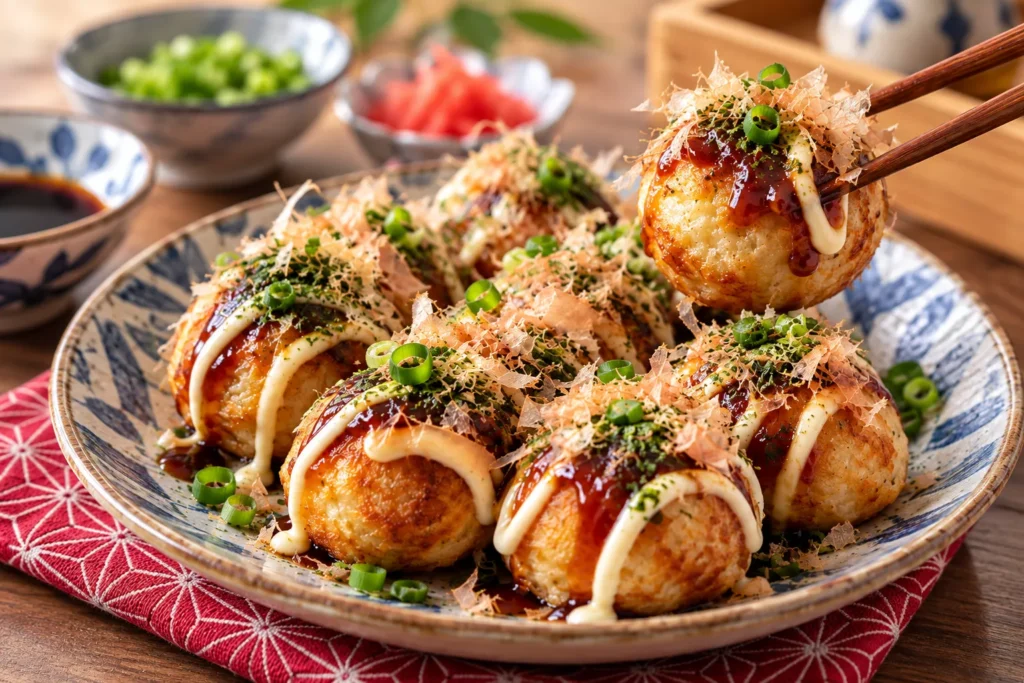
Have you ever wondered how Japanese street food stalls turn a thin batter filled with octopus into perfectly round, golden balls with a soft center?
Takoyaki たこ焼き is one of Japan’s most famous comfort foods. These small savory balls are crisp and lightly browned on the outside while staying soft, warm, and creamy inside. Each piece contains a small bite of octopus along with green onion, pickled ginger, and crunchy tempura pieces.
Making takoyaki at home may look difficult at first because of its round shape, but the process becomes much easier once you understand when and how to turn each ball. You do not need advanced cooking skills. A takoyaki pan, a few simple ingredients, and a little practice are enough.
This homemade takoyaki recipe keeps the preparation simple while giving you the classic Japanese flavors people love.
Recipe Overview
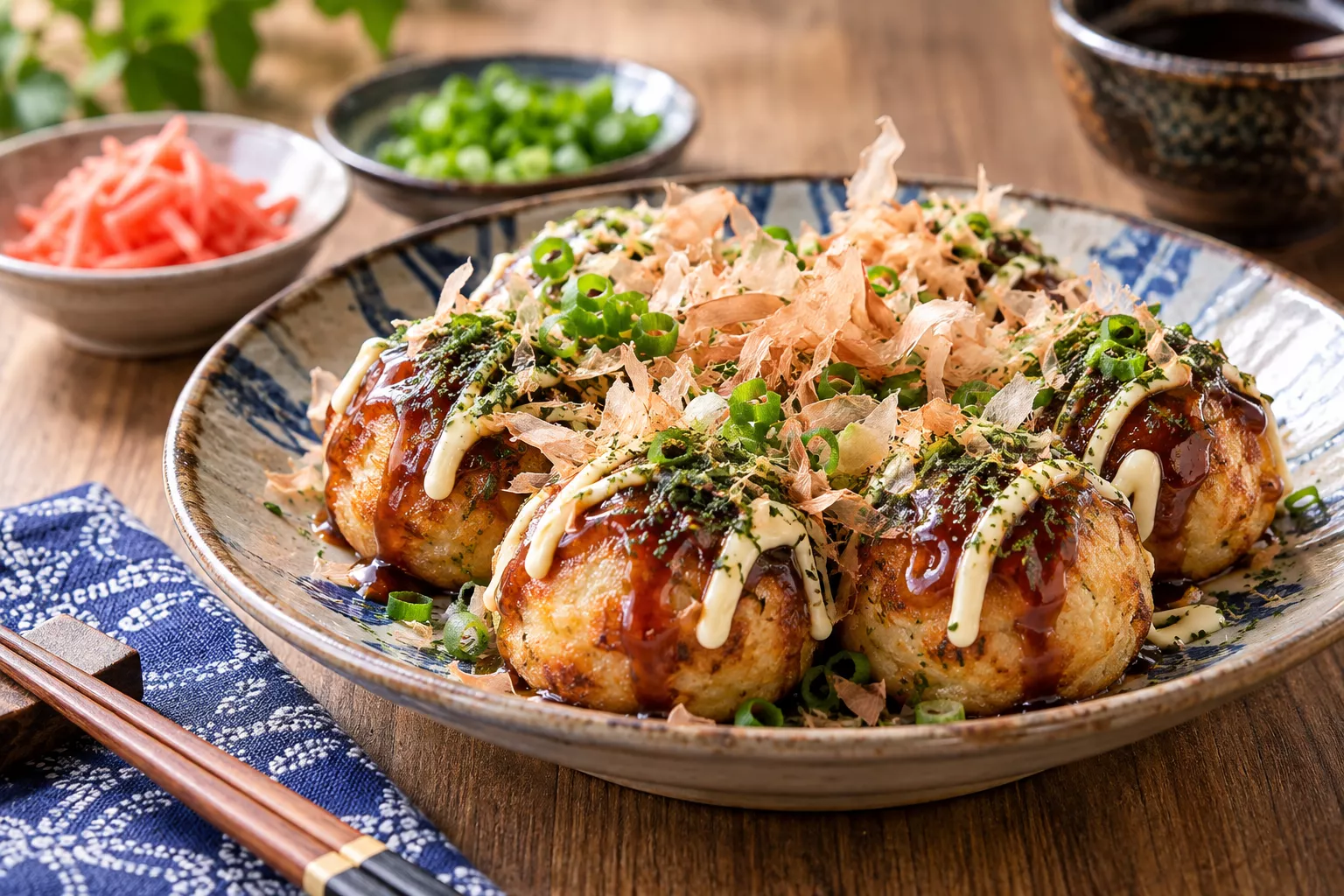
Takoyaki is a fun recipe because cooking it is almost as enjoyable as eating it. The batter cooks directly in a special pan with small round molds. As the outside begins to set, the batter is turned little by little until each piece becomes a ball.
The recipe combines several textures in one bite. The outside becomes lightly crisp, the inside stays tender, and the octopus gives the center a pleasant bite. Tenkasu adds a little richness and texture, while pickled ginger brings a sharp and refreshing flavor.
The ingredients are easy to prepare, but turning the takoyaki takes a little practice. Your first batch may not look perfectly round, and that is completely normal. After a few pieces, the turning movement becomes much easier.
What Is Takoyaki たこ焼き?
Takoyaki is a popular Japanese dish made from a thin flour-based batter cooked in a pan with round molds.
The word “tako” means octopus, while “yaki” refers to food cooked or grilled with heat. Small pieces of octopus are placed inside the batter together with ingredients such as green onion, tenkasu, and beni shoga.
Takoyaki is especially connected with Osaka and the Kansai region, where it is a common street food and casual snack.
Once cooked, the round balls are usually covered with takoyaki sauce and Japanese mayonnaise. Bonito flakes and aonori seaweed are then sprinkled over the top.
Fresh takoyaki is best enjoyed while it is still hot, although you should be careful because the center can stay extremely hot even when the outside feels cool enough to eat.
Why Takoyaki Is Special
Takoyaki is different from many fried snacks because it is not normally deep-fried.
The batter cooks inside an oiled takoyaki pan. This creates a thin golden surface while keeping the middle moist and tender.
Another reason takoyaki is special is its versatility. Octopus is traditional, but the basic cooking method works with many different fillings.
You can experiment with shrimp, cheese, squid, vegetables, tofu, fish cake, or other ingredients once you understand the basic recipe.
It is also a great dish for sharing. In Japan, families and friends sometimes prepare takoyaki together at the table using an electric takoyaki grill.
Essential Ingredients for Takoyaki
Key Ingredients (材料)
Takoyaki たこ焼きThese classic ingredients create homemade takoyaki with a lightly golden outside and a soft, savory center. Dashi gives the batter deep Japanese flavor, while octopus, tenkasu, green onion, and pickled ginger make every bite rich, fresh, and satisfying.
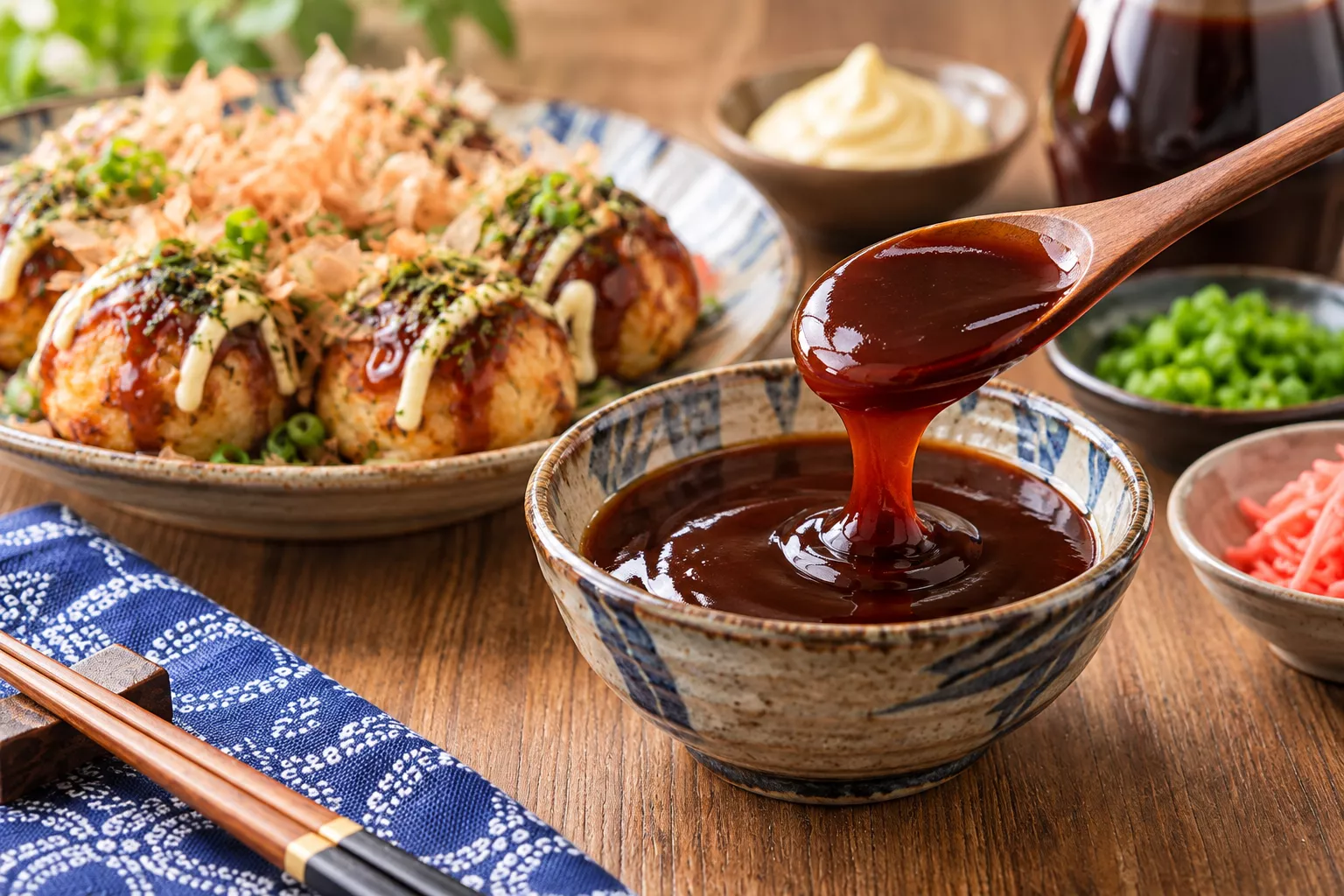
Takoyaki Sauce
Takoyaki sauce is thick, sweet, savory, and slightly fruity.
It is similar to okonomiyaki sauce, although the flavor can be slightly different depending on the brand.
Prepared takoyaki sauce is the easiest choice.
If you cannot find it, you can prepare a simple homemade version by combining ingredients such as Worcestershire-style sauce, ketchup, soy sauce, and a small amount of sugar.
Taste and adjust the balance until it is gently sweet and savory.
Traditional Takoyaki Toppings
The toppings are an important part of the finished dish.
Common choices include:
- Takoyaki sauce
- Japanese mayonnaise
- Aonori dried seaweed
- Bonito flakes
- Finely chopped green onion
Japanese mayonnaise has a creamy and slightly tangy flavor that works especially well with the sweet takoyaki sauce.
Bonito flakes may appear to move when placed over hot takoyaki. The rising heat causes the thin flakes to curl and wave.
Special Equipment You Need
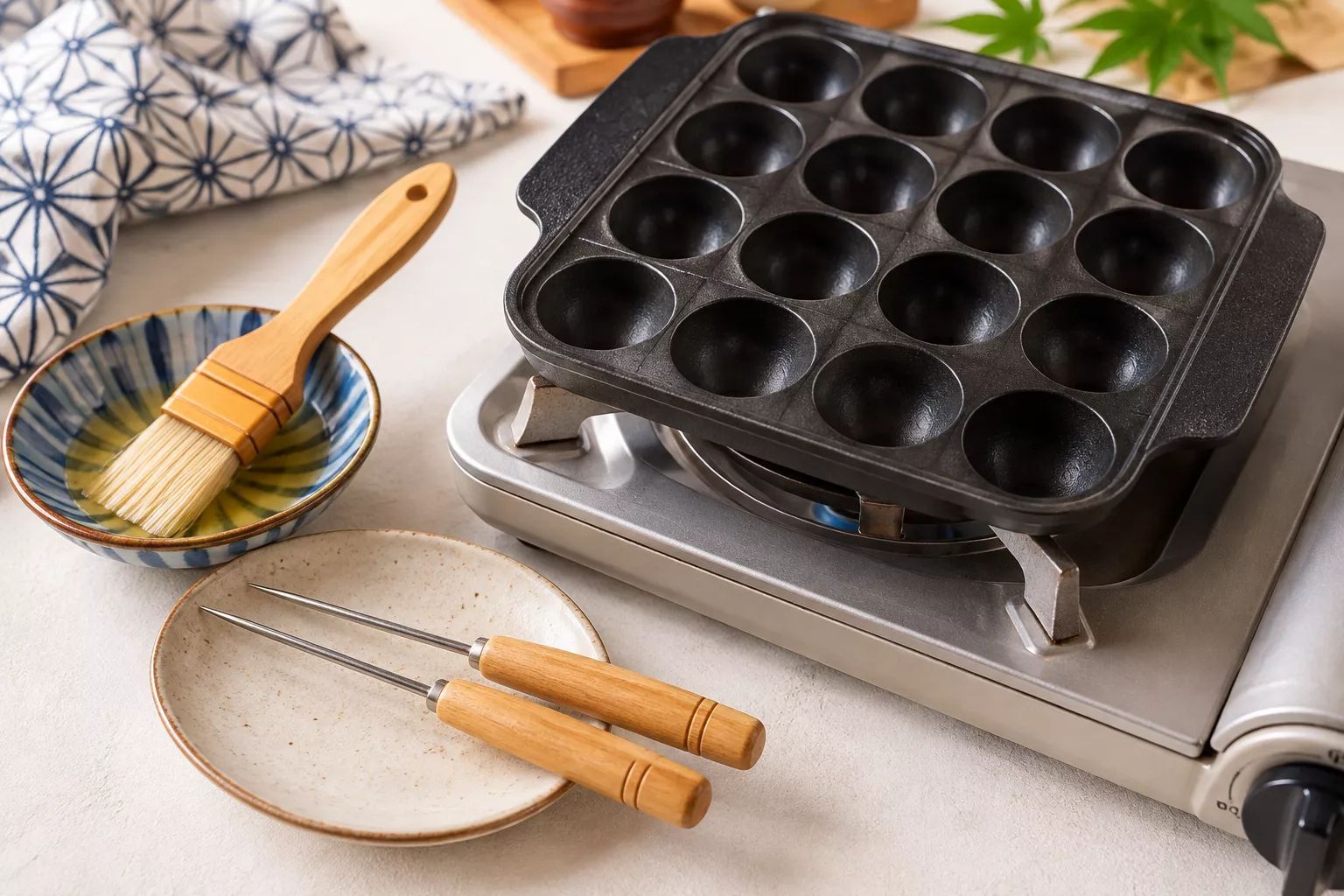
Takoyaki Pan
A takoyaki pan is the most important piece of equipment because its round molds create the traditional shape.
Takoyaki pans are available in several styles:
- Electric takoyaki makers
- Cast-iron pans
- Gas-powered takoyaki grills
- Stovetop takoyaki pans
An electric model is often the easiest option for beginners because it provides steady heat across the pan.
Oil Brush
An oil brush makes it easy to coat every mold.
The oil helps stop the batter from sticking and encourages the surface to become golden.
If you do not have a special brush, carefully use folded kitchen paper held with chopsticks or tongs.
Takoyaki Picks or Skewers
Special takoyaki picks make turning the balls easier.
Bamboo skewers can also work well at home.
Avoid scratching a nonstick pan with sharp metal tools.
How to Make Takoyaki たこ焼き
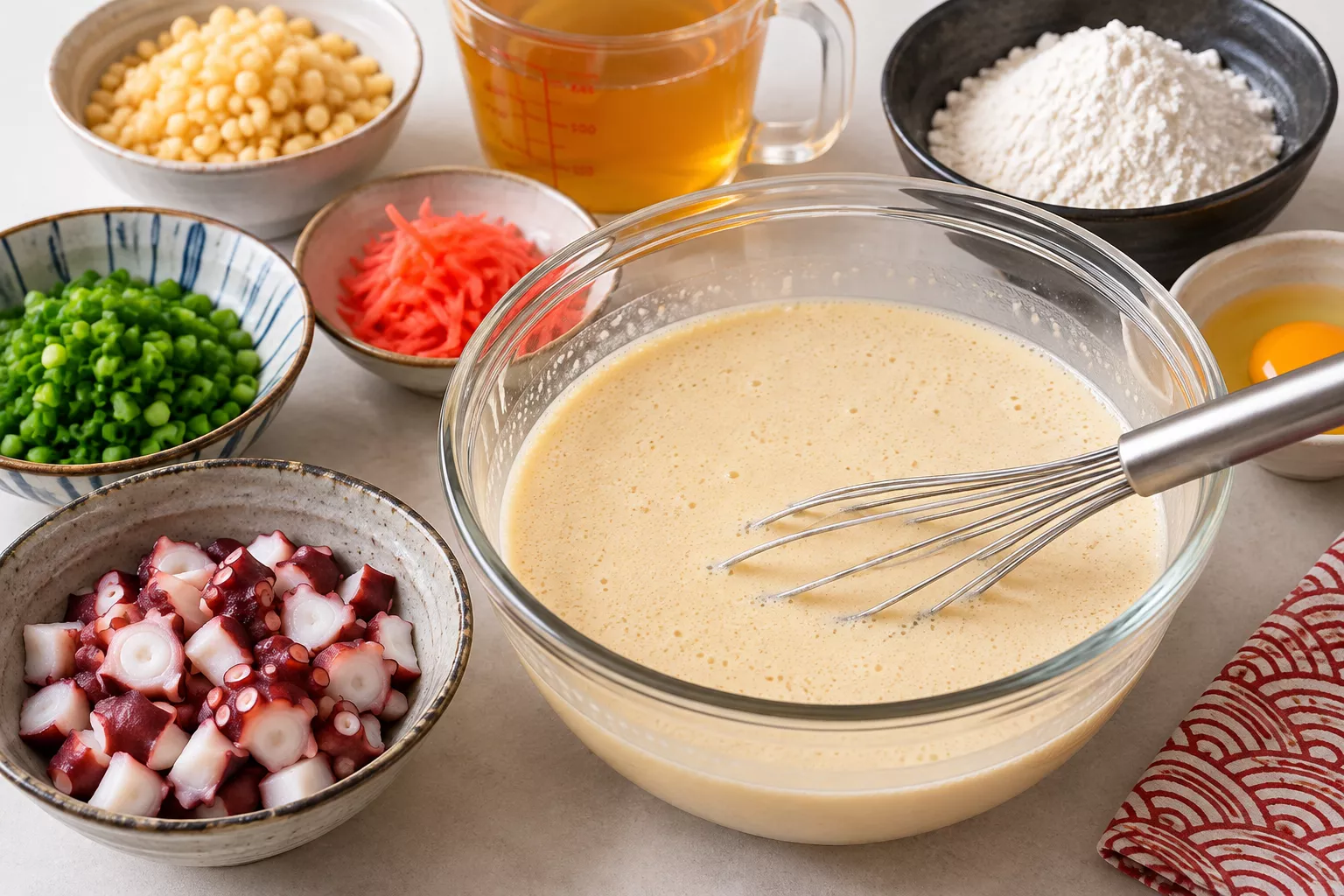
Step 1: Prepare the Batter and Fillings
Cut the cooked octopus into bite-size chunks.
Finely chop the green onion and beni shoga. Keep the tenkasu nearby so all the fillings are ready before you start cooking.
In a large bowl, whisk the egg with the dashi stock.
Slowly add the flour while whisking until the batter is smooth.
Takoyaki batter should look thin and pourable. Do not worry if it seems much more liquid than ordinary pancake batter. A loose batter is important because it creates the soft interior associated with good takoyaki.
Try not to beat the batter for a long time after the flour has been mixed in. Stir only until the large lumps disappear.
Step 2: Fill the Takoyaki Pan
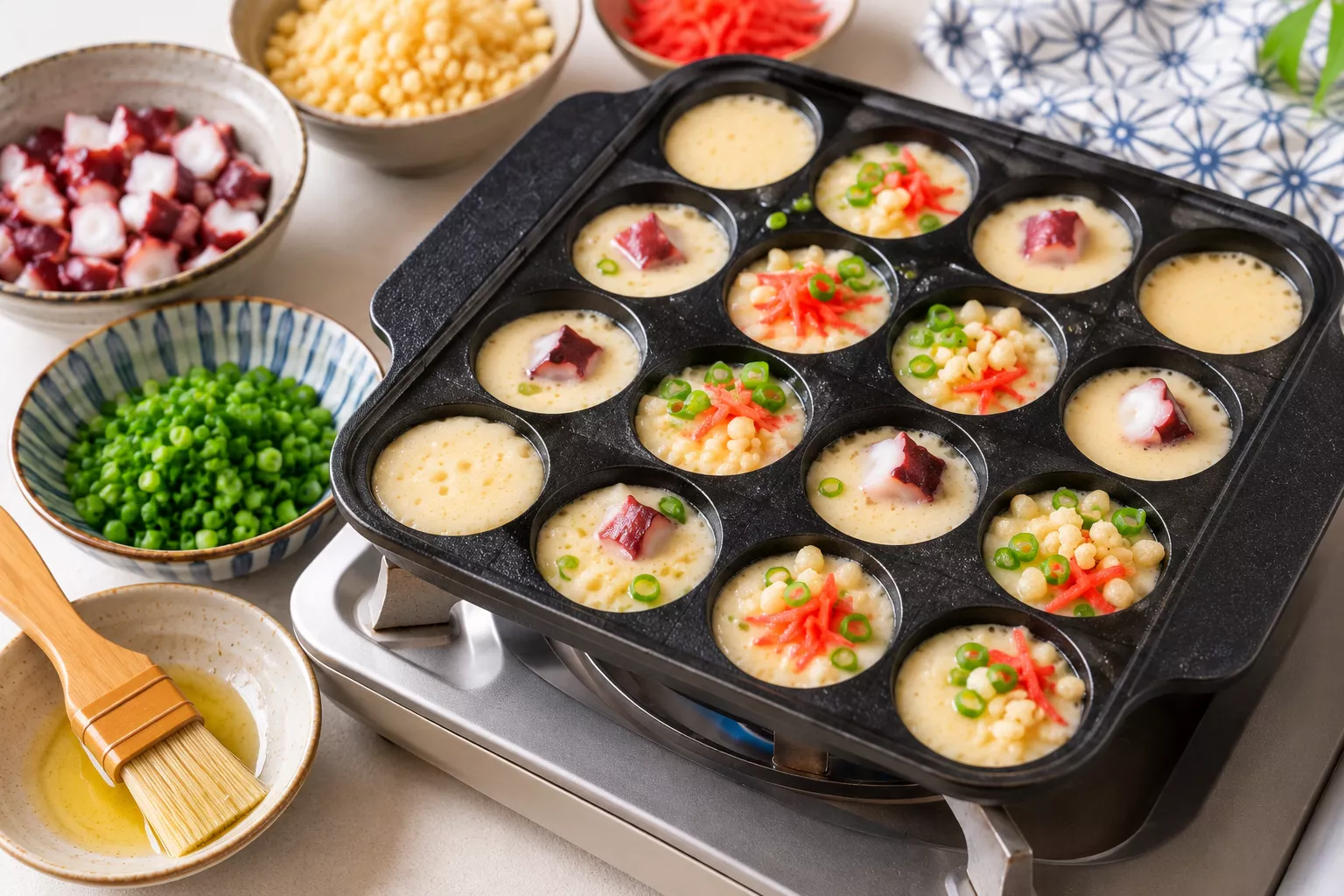
Heat the takoyaki pan over medium heat.
Brush oil generously over the entire surface, including inside each mold and around the spaces between the molds.
Pour batter into the molds. It is fine if a little batter flows over the edges because that extra batter will later be folded into the balls.
Place one piece of octopus into each mold.
Add a small amount of green onion, beni shoga, and tenkasu.
Pour a little more batter over the top when needed so the molds are completely filled.
Allow the takoyaki to cook without moving it immediately. The bottom and sides need time to become firm enough for turning.
Step 3: Turn and Shape the Takoyaki
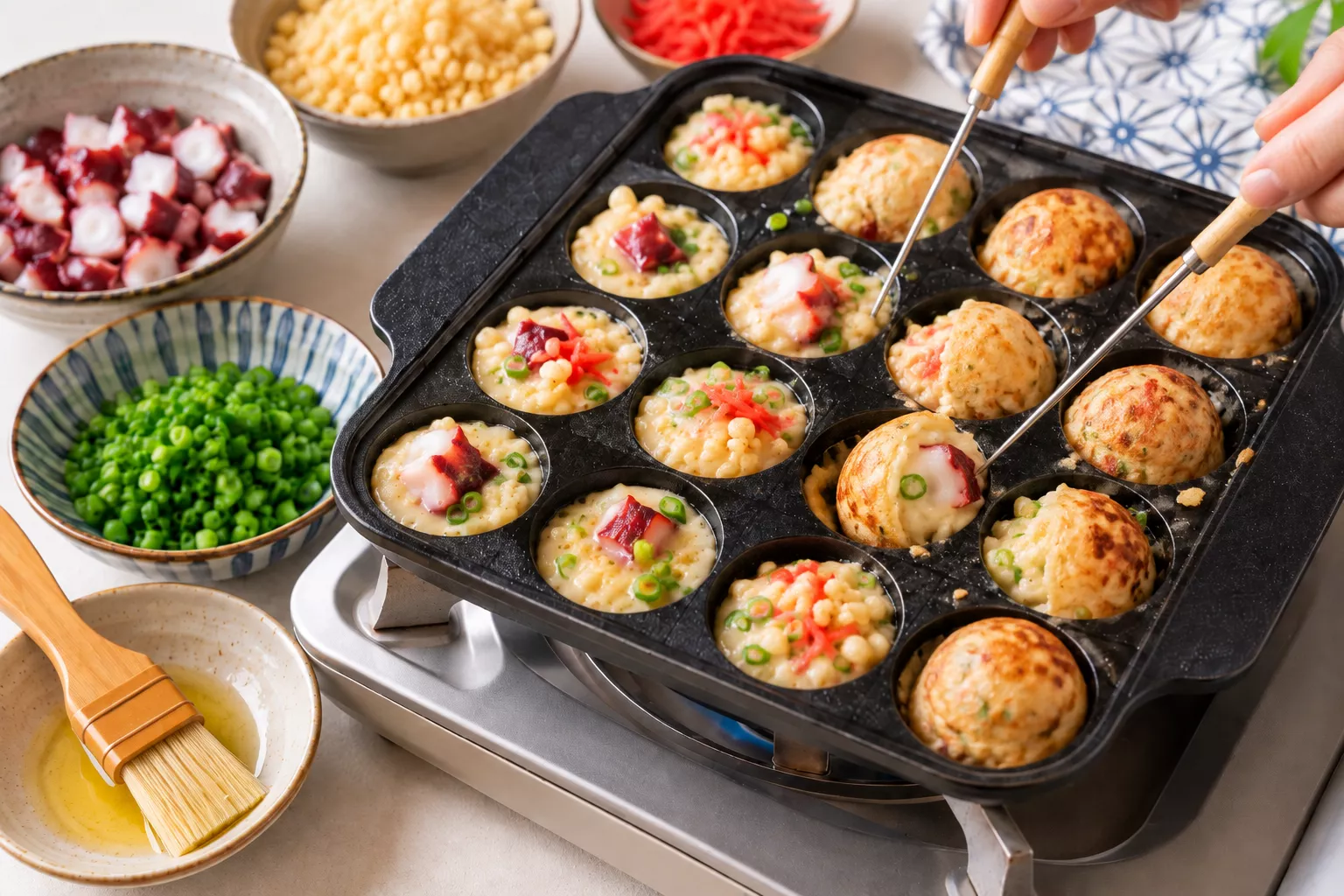
Once the edges look cooked but the center is still loose, use a takoyaki pick or bamboo skewer to separate the batter around each mold.
Turn each piece about 90 degrees.
Any uncooked batter should flow toward the bottom of the mold.
Use your skewer to push the extra batter from around the pan into each ball as you continue turning.
After the new surface begins to set, turn the balls again.
Continue rotating them little by little until they become round.
This is the most important stage of the recipe. Do not wait until the batter is completely cooked before making the first turn. If you turn it while the center is still soft, the loose batter can move and help form a full sphere.
Continue rotating until all sides are evenly golden and lightly crisp.
Step 4: Sauce, Top, and Serve
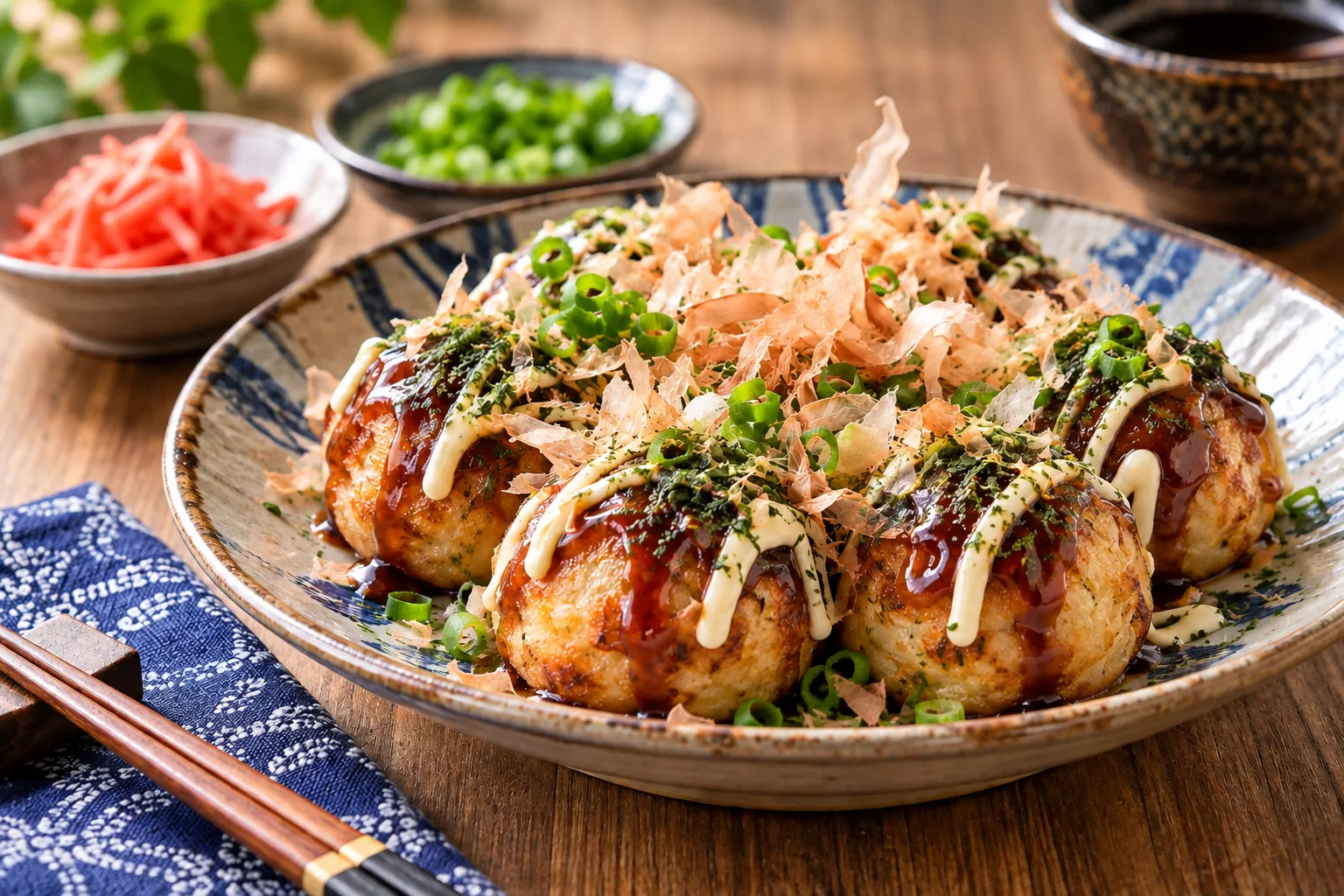
Transfer the hot takoyaki to a serving plate.
Drizzle takoyaki sauce over the top.
Add thin lines of Japanese mayonnaise.
Sprinkle with aonori and finish with bonito flakes.
Serve immediately while the outside is still lightly crisp and the center is warm and tender.
Be careful when eating freshly cooked takoyaki because the inside can be much hotter than you expect.
Secrets to Success and Expert Tips
These helpful tips will make it easier to prepare round, golden, and delicious Takoyaki たこ焼き with a soft center and classic Japanese flavor:
-
♥
Use a thin and smooth batter
Takoyaki batter should be much thinner than pancake batter. A loose batter helps create the soft, creamy center that makes traditional takoyaki so special. -
♥
Oil the pan generously
Brush every mold and the spaces around them with enough oil before adding the batter. This helps prevent sticking and gives the outside a beautiful golden finish. -
♥
Turn the takoyaki before the center fully sets
Start turning when the edges are firm but the middle is still soft. The loose batter will flow into the mold as you rotate each piece, helping create a round shape. -
♥
Keep the octopus pieces slightly chunky
Cut the cooked octopus into pieces that are small enough to fit inside the molds but large enough to taste. Very tiny pieces can become lost inside the batter. -
♥
Use medium heat for even cooking
Heat that is too high can brown the outside before the inside is ready. Medium heat gives you more control and helps the takoyaki cook evenly as you continue turning it. -
♥
Serve immediately after cooking
Takoyaki tastes best while the outside is lightly crisp and the center is still warm and soft. Add the sauce, Japanese mayonnaise, aonori, and bonito flakes just before serving.
Assembly and Presentation
Takoyaki is usually served close together on a small plate or traditional-style tray.
Place the balls in neat rows, then drizzle the sauce across the entire plate rather than covering each piece individually.
Follow with Japanese mayonnaise.
Finish with a small amount of aonori and bonito flakes.
You can also add chopped green onion for extra freshness and color.
Do not drown the takoyaki in sauce. You still want to taste the seasoned batter and octopus inside.
For parties, you can place the cooked takoyaki on a large serving plate and provide several sauces and toppings on the side. Guests can then finish their own portions.
Hana’s Recipe Tips
Prepare all the ingredients before pouring the first drop of batter into the pan. Takoyaki cooks quickly, so having the octopus, green onion, ginger, and tenkasu ready makes the process much easier.
Keep the batter nearby in a jug or bowl with a pouring spout if possible. This helps you refill the molds without making too much mess.
When turning the balls, work gently rather than forcing them. If one piece refuses to turn, give it a little more cooking time and try again.
Do not chase a perfect shape immediately. Turn each ball in stages. The round shape develops as more uncooked batter moves into the mold.
Finally, eat takoyaki soon after cooking. The contrast between the lightly crisp surface and soft center is one of the best parts of this dish.
Storage and Make-Ahead Tips
Takoyaki tastes best freshly cooked, but leftovers can still be stored.
Allow the takoyaki to cool completely before placing it inside an airtight container.
Store it in the refrigerator for up to 2 days.
Keep the sauces and toppings separate whenever possible. Bonito flakes and aonori are best added after reheating.
To reheat takoyaki, use an oven, toaster oven, or air fryer until the center is hot.
A microwave is faster, but it usually makes the outside softer.
You can also freeze cooked takoyaki.
Place cooled balls on a tray and freeze until firm. Transfer them to a freezer-safe container or bag.
Reheat them directly from frozen in an oven or air fryer until hot throughout.
The batter can also be prepared a short time before cooking and kept covered in the refrigerator. Stir it gently before pouring because some of the ingredients may settle at the bottom.
Recipe Variations
Takoyaki たこ焼き is easy to customize once you learn the basic cooking method. You can replace the octopus, add creamy fillings, make a spicy version, or try different toppings while keeping the same soft center and golden outside.
Try Different Seafood
If octopus is not available, other seafood can make a delicious filling:
- Shrimp for a slightly sweet and tender filling
- Squid for a mild seafood flavor and chewy texture
- Small pieces of cooked scallop for a richer variation
Add a Cheesy Center
Cheese gives takoyaki a creamy center and works well with the savory batter:
- Mozzarella for a soft and stretchy center
- Cheddar for a stronger, richer flavor
- Combine cheese with octopus for a creamy seafood version
Make It Without Octopus
You can replace the traditional octopus with other fillings for an easy homemade variation:
- Cooked bacon pieces for a smoky flavor
- Firm tofu cubes for a meat-free option
- Finely chopped mushrooms for extra umami
- Corn for a slightly sweet bite
Change the Toppings and Flavor
Keep the classic takoyaki base but finish it with different flavors:
- Add shichimi togarashi for a gentle spicy kick
- Mix a little chili sauce with Japanese mayonnaise
- Add extra green onion for a fresh finish
- Sprinkle toasted sesame seeds over the sauce
Health Benefits of Takoyaki
Takoyaki is mainly enjoyed as a snack or comfort food, but several ingredients can contribute useful nutrients.
Octopus provides protein and contains minerals such as iron, selenium, and copper. It also provides vitamin B12.
Green onions add a small amount of vitamins and plant compounds, while seaweed toppings can provide minerals.
The recipe is also cooked in a pan rather than being completely submerged in frying oil.
However, sauces, mayonnaise, and prepared mixes may contain significant amounts of sodium, sugar, or fat. Using moderate amounts of toppings can help keep the serving more balanced.
Takoyaki is best enjoyed as part of a varied diet rather than viewed as a health food on its own.
Frequently Asked Questions
Do I Really Need a Takoyaki Pan?
For traditional round takoyaki, yes.
The deep round molds allow the thin batter to form the classic ball shape while being turned.
A similar round-mold pan, such as an æbleskiver pan, may work as an alternative, although the size and shape can be slightly different.
Why Is My Takoyaki Sticking to the Pan?
The pan may not contain enough oil, or you may be trying to turn the batter too early.
Coat every mold carefully and wait until the outside has formed a thin cooked layer.
A new cast-iron pan may also require proper seasoning.
Why Is My Takoyaki Not Round?
The first turn probably happened too late or there was not enough batter in the molds.
Turn the pieces when the edges are cooked but the center remains loose.
Push any extra batter from around the molds back into the balls as you rotate them.
Can I Make Takoyaki Without Octopus?
Yes.
Although octopus is the traditional filling, you can use shrimp, squid, fish cake, cheese, bacon, tofu, vegetables, or other small fillings.
Can I Use Water Instead of Dashi?
Yes, but the flavor will be lighter.
Dashi gives the batter an important savory taste.
If you cannot make fresh dashi, instant dashi is a convenient substitute.
Can I Use Takoyaki Flour Mix?
Yes.
Takoyaki mix is a convenient choice because it is specially made for this dish.
Follow the liquid measurements printed on the package because different brands may require different amounts.
Can I Make Takoyaki Ahead of Time?
You can cook it ahead, but freshly made takoyaki has the best texture.
For parties, prepare the batter and fillings in advance, then cook the balls shortly before serving.
How Should I Reheat Takoyaki?
An oven, toaster oven, or air fryer is best when you want to restore some crispness.
Microwaving works when you need a quick option, but the surface will be softer.
Can Takoyaki Be Frozen?
Yes.
Cool the cooked takoyaki completely before freezing.
Freeze the balls without sauce or mayonnaise and add the toppings after reheating.
Is Takoyaki Healthy?
Takoyaki contains protein from octopus and egg, and it can provide several vitamins and minerals.
However, it also contains flour and is usually served with rich sauces and mayonnaise.
The best approach is to enjoy a reasonable portion and avoid using excessive toppings.
Is Takoyaki Difficult for Beginners?
The batter itself is simple.
Turning the balls is the part that requires practice.
Do not worry if the first few pieces look uneven. Most beginners improve quickly once they understand the correct time to begin turning them.
Conclusion
Takoyaki たこ焼き is one of those recipes that turns cooking into part of the experience.
The ingredients are simple, the preparation is fairly quick, and the filling can easily be adjusted to suit your taste.
The most important skill is learning to turn the batter while the center is still soft. Once you master that step, creating round homemade takoyaki becomes much easier.
Start with the traditional combination of octopus, tenkasu, green onion, and beni shoga. Finish the hot balls with takoyaki sauce, Japanese mayonnaise, aonori, and bonito flakes.
After you become comfortable with the basic version, experiment with shrimp, cheese, tofu, vegetables, or other fillings.
Fresh from the pan, homemade takoyaki gives you a crispy outside, a soft savory center, and the comforting flavors that make this Japanese dish so popular.