
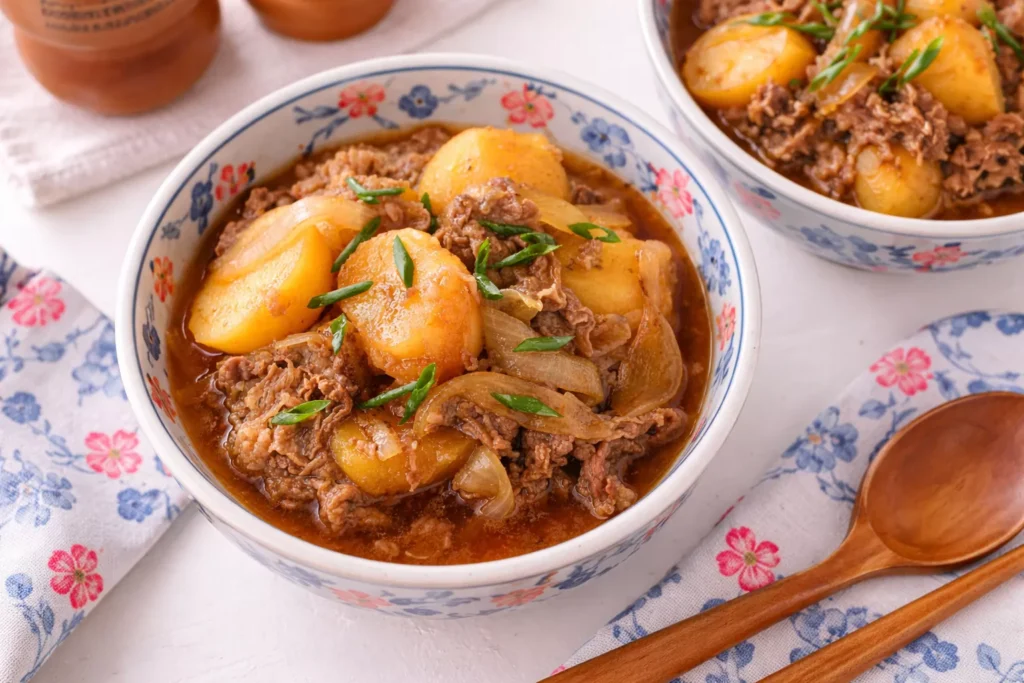
Have you ever wondered why one simple bowl of food can feel warm, comforting, and full of memories at the same time? Nikujaga is one of those dishes. It looks simple, but every bite tells a story of home cooking, care, and balance. This classic Japanese meal turns everyday ingredients into something deeply satisfying and gentle on the body.
Why Nikujaga Is Special
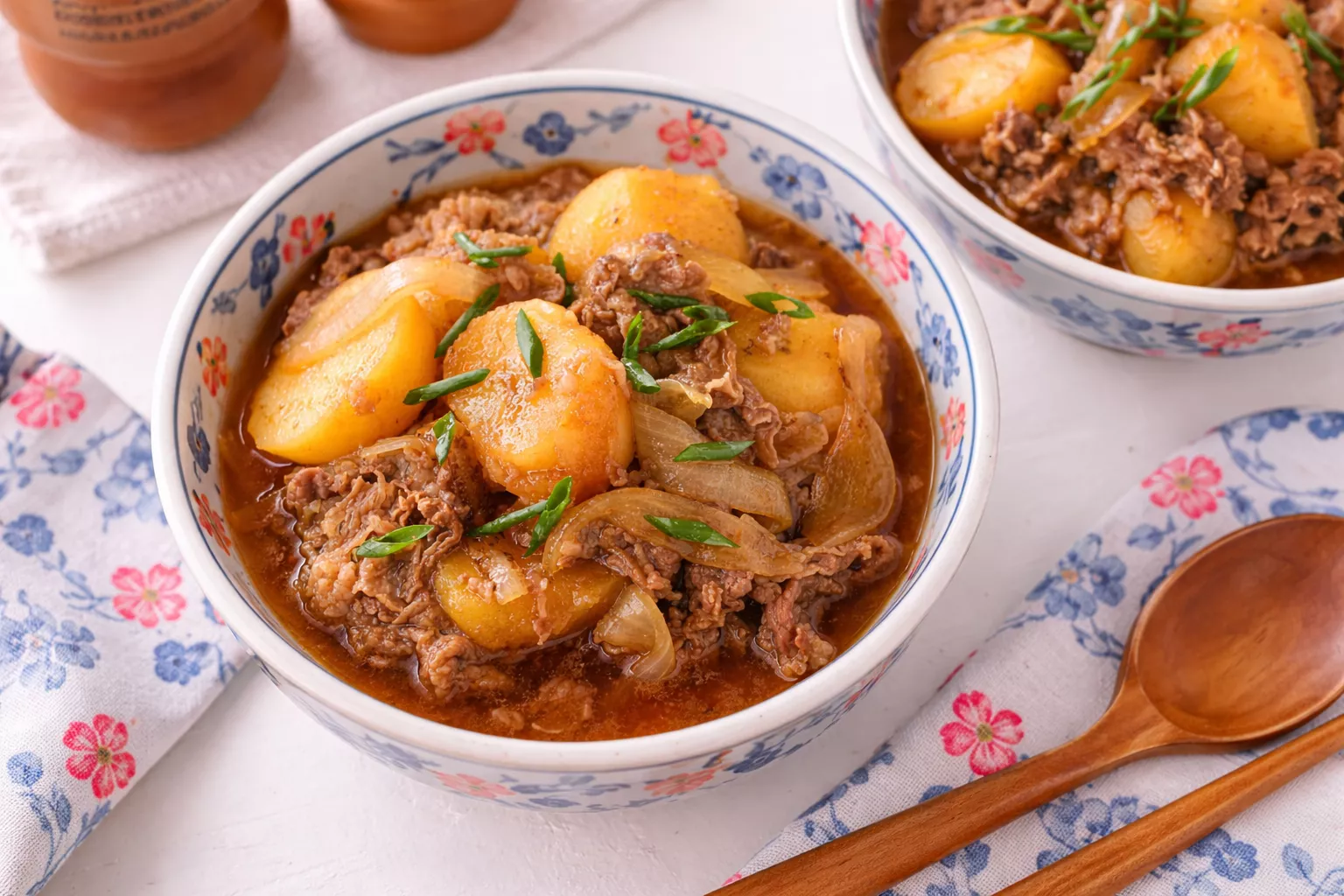
Nikujaga is a well-known Japanese home dish made with beef, potatoes, and onion, slowly simmered in a lightly sweet and savory broth. What makes this recipe special is its balance. The flavors are soft, not heavy. The texture is tender, not oily. Everything works together in a calm and comforting way.
This dish does not need special tools or long cooking hours. It is ready in about 20 minutes, making it perfect for busy days. The difficulty level is easy, even for beginners. If you can cut vegetables and simmer a pot, you can make Nikujaga.
What Is Nikujaga 肉じゃが?
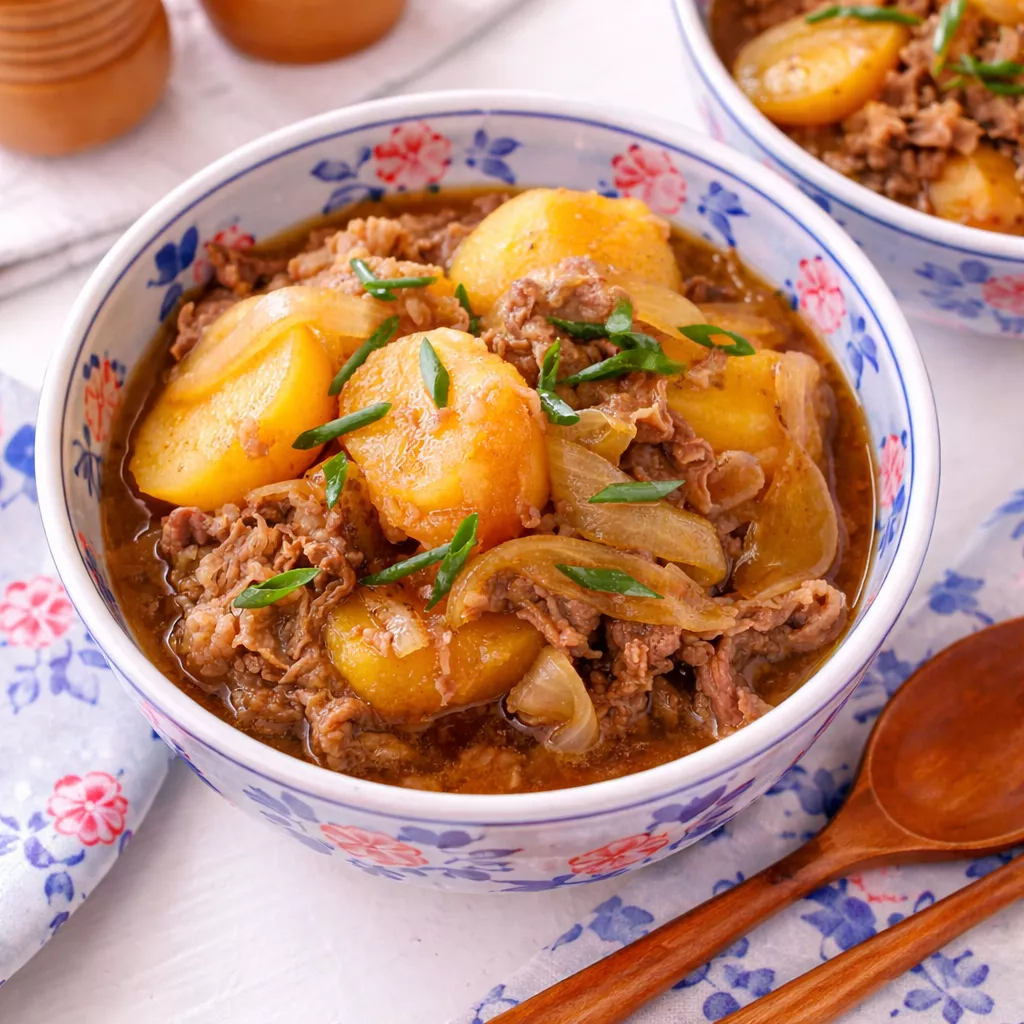
Nikujaga, written as 肉じゃが, means “meat and potatoes” in Japanese. It is a traditional simmered dish where thin slices of beef and chunks of potato are cooked gently in a seasoned broth made with soy sauce, sugar, mirin, and dashi. Unlike fried or grilled meals, Nikujaga uses slow simmering so the ingredients absorb flavor from the inside out.
This dish is often cooked at home and served as a main or side dish. Over time, it has become a symbol of simple Japanese comfort food.
Essential Ingredients and Why They Matter
Key Ingredients (材料)
Nikujaga 肉じゃがNikujaga uses simple everyday ingredients. When simmered gently, each one absorbs flavor and creates the soft, comforting taste of Japanese home cooking.
Step-by-Step Instructions
Step 1: Prepare the Ingredients
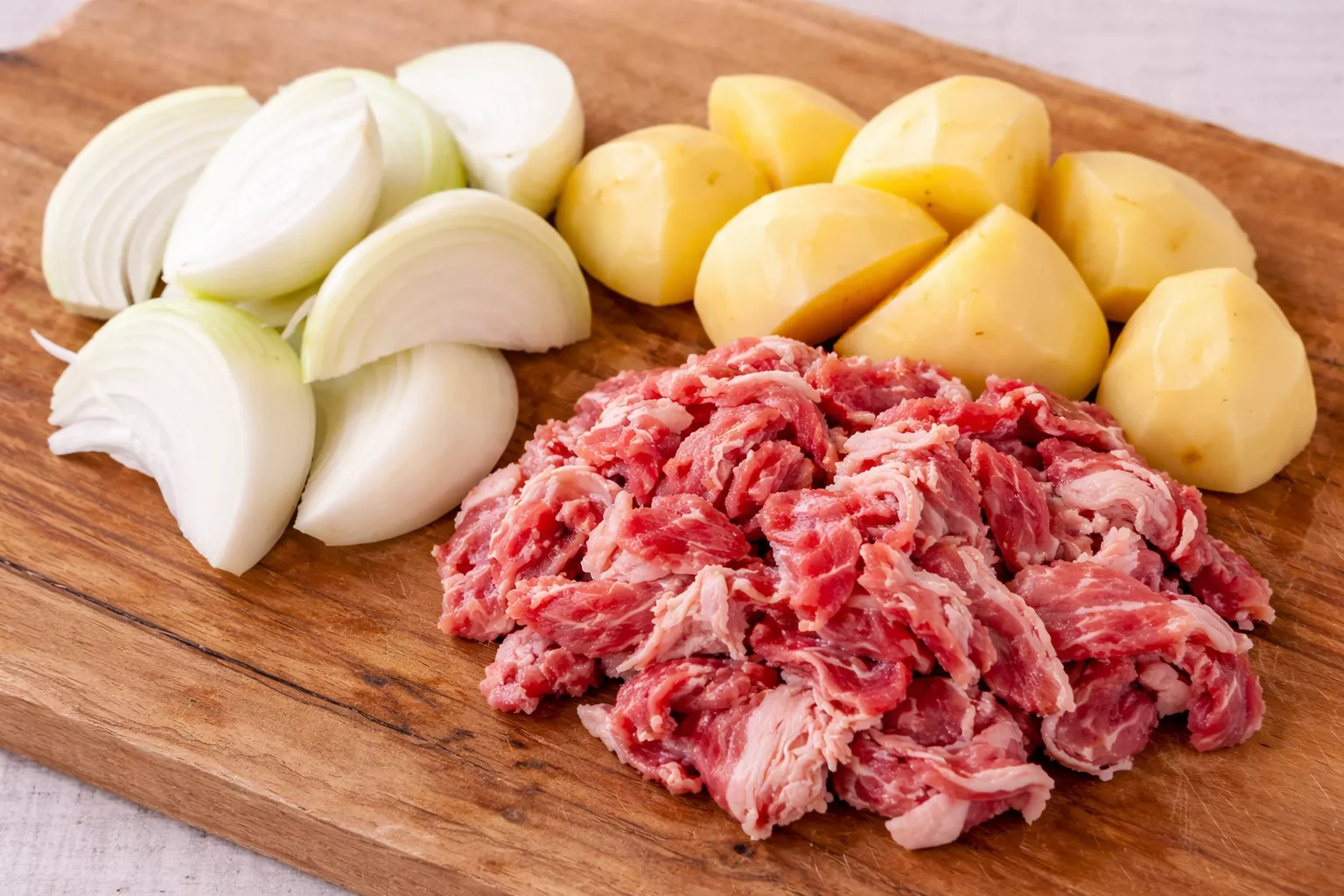
Peel the potatoes and cut them in half. If the potatoes are large, cut them into 3 to 4 even pieces or bite-size chunks. Cut the onion into wedges about 1 cm wide. Cut the thinly sliced beef into easy-to-eat pieces.
Step 2: Build the Base
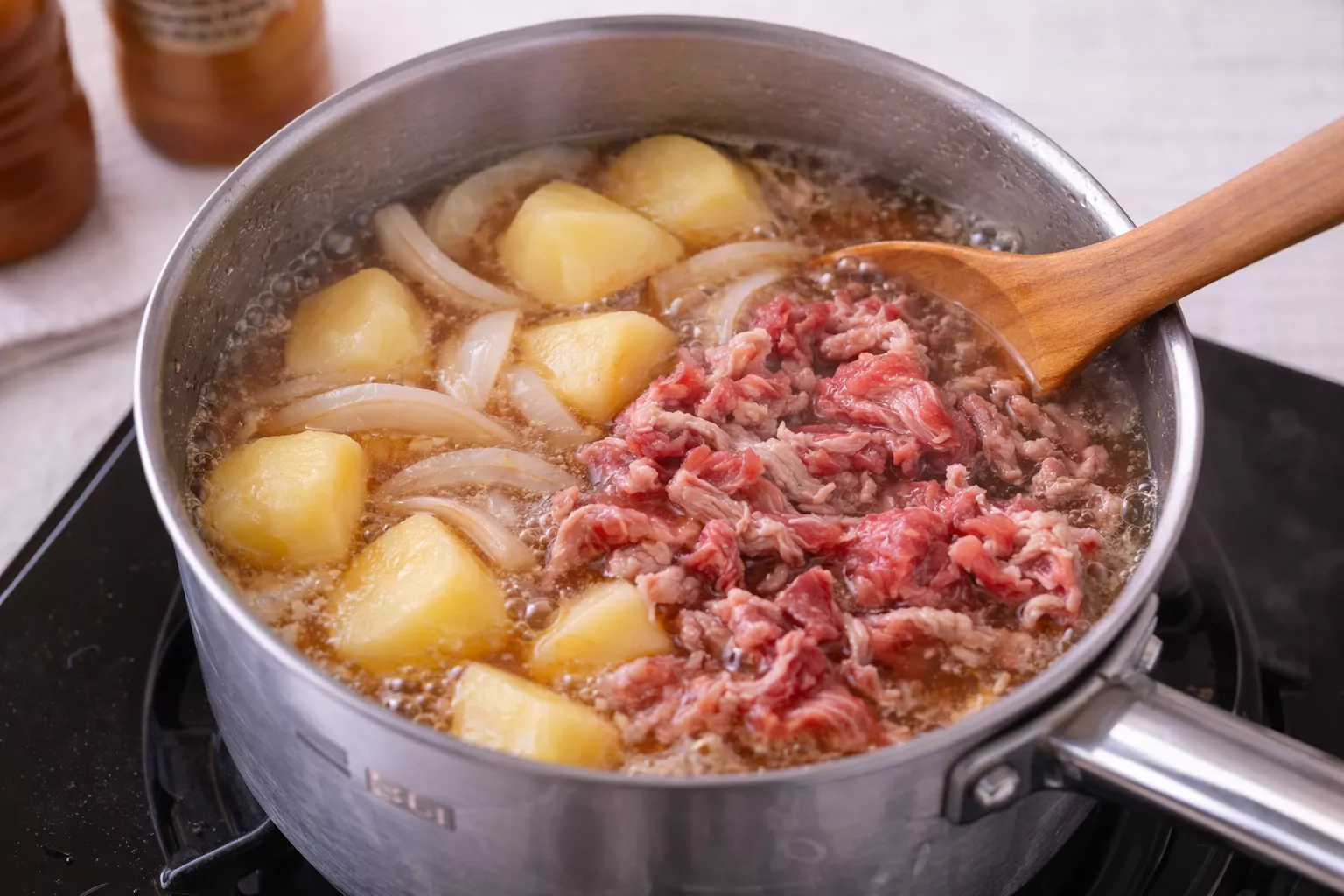
Heat the salad oil in a small saucepan over medium heat. Add the onion and cook for 2 to 3 minutes until slightly soft and fragrant. Add the potatoes, water, sugar, mirin, and hon dashi. Bring everything to a gentle boil. Add the beef and loosen it gently so it spreads evenly.
Step 3: Simmer Slowly
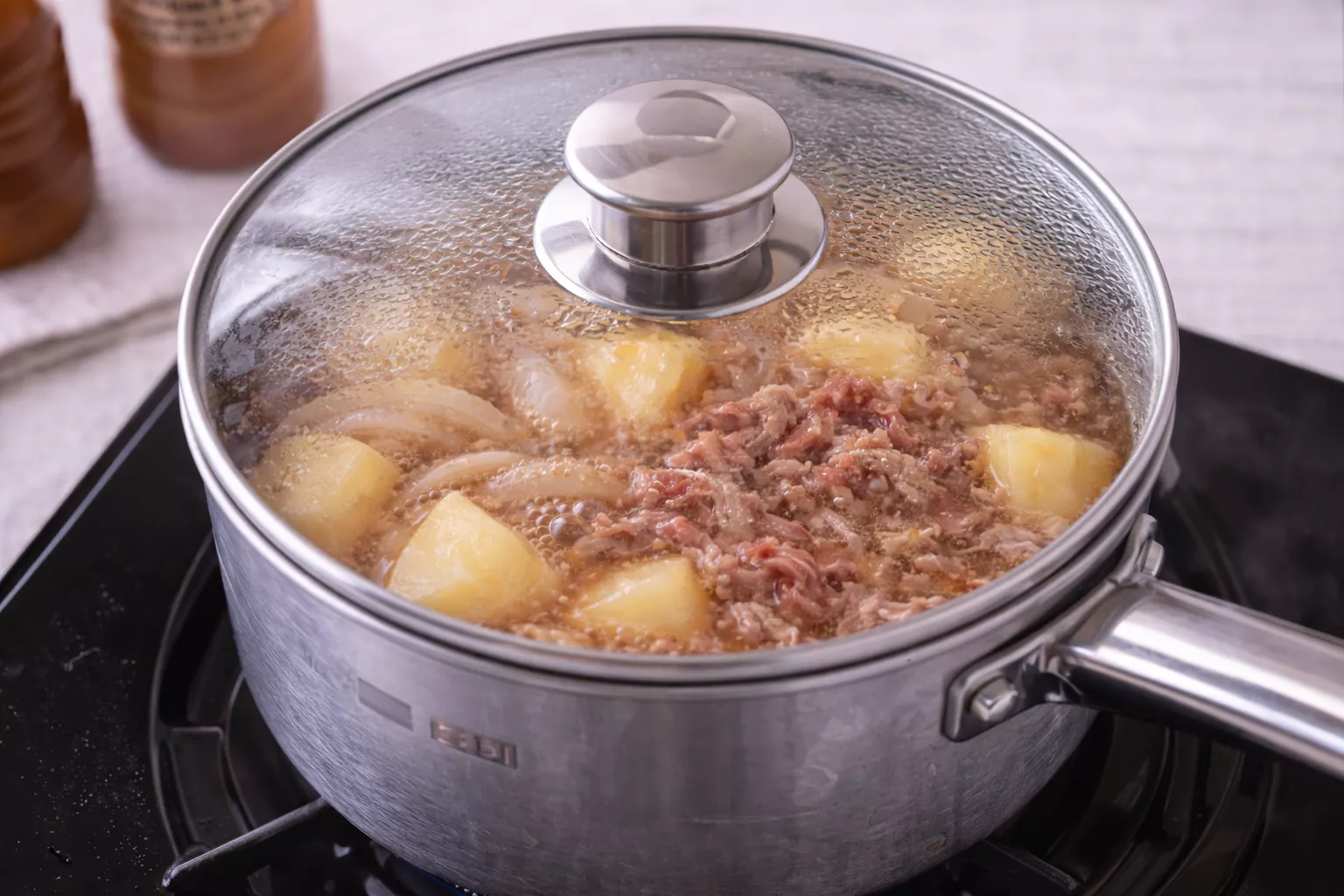
Lower the heat to low-medium. Cover the pot and let it simmer for 8 minutes. The potatoes should start to soften, and the broth should reduce slightly.
Step 4: Finish and Rest
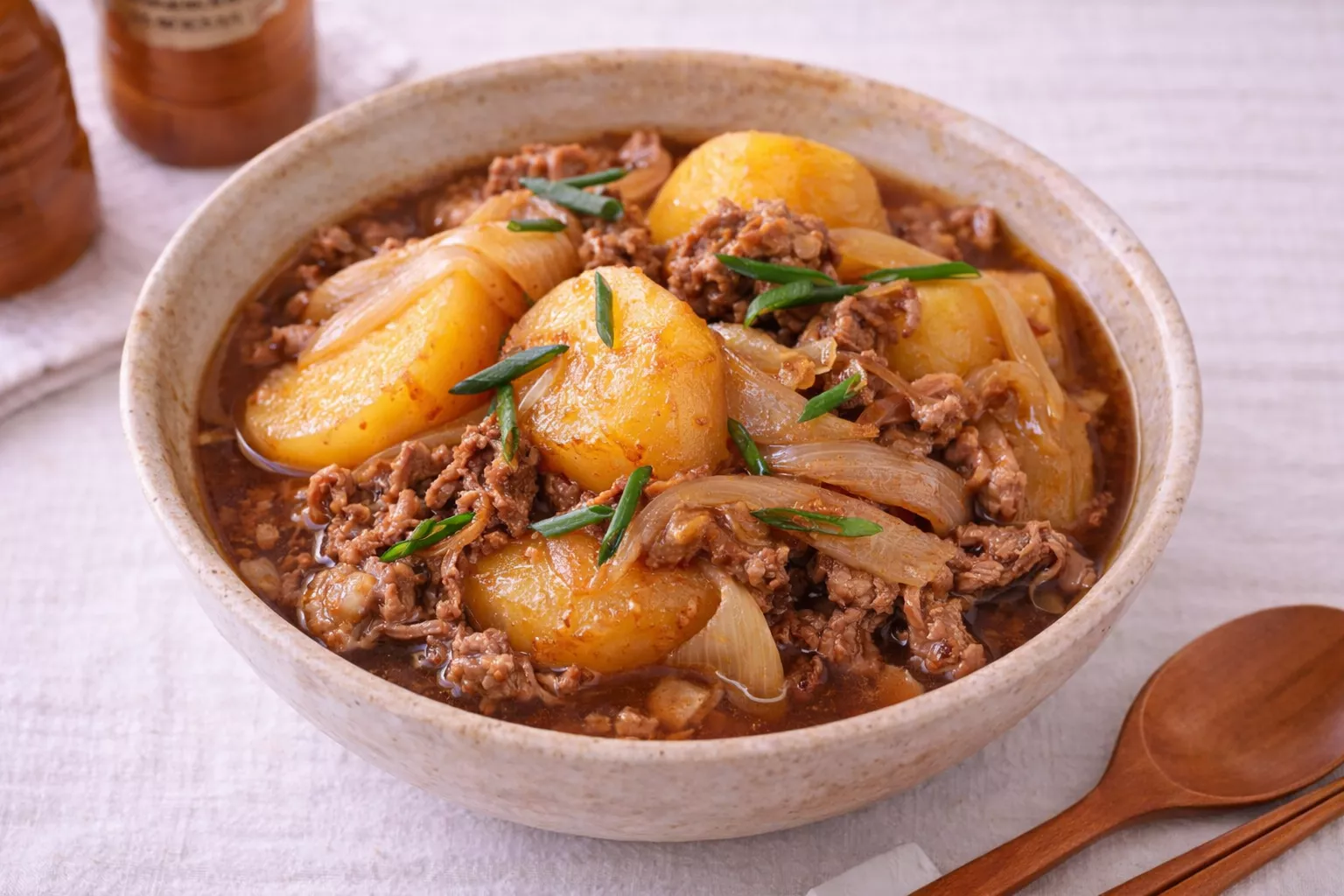
Add the soy sauce and simmer uncovered for 5 more minutes. Turn off the heat and transfer to a serving dish. Let it cool slightly so the flavors soak deeper into the ingredients before serving.
Secrets to Success and Expert Tips
These simple but important tips will help you make tender beef, soft potatoes, and deeply flavored Nikujaga every time:
-
♥
Cut ingredients into even sizes
Potatoes and onions should be similar in size so they cook evenly and absorb the seasoning at the same pace. -
♥
Sauté the onion gently
Cooking the onion first brings out its natural sweetness and builds a flavorful base for the simmering broth. -
♥
Add the beef after the liquid boils
Adding beef too early can make it tough. Drop it in once the broth is hot so it stays soft and tender. -
♥
Simmer gently, not rapidly
A calm simmer helps the potatoes absorb flavor without breaking apart and keeps the broth clear. -
♥
Let the dish rest before serving
Allowing Nikujaga to cool slightly helps the seasoning soak deeper into the ingredients and improves overall taste.
Assembly and Serving
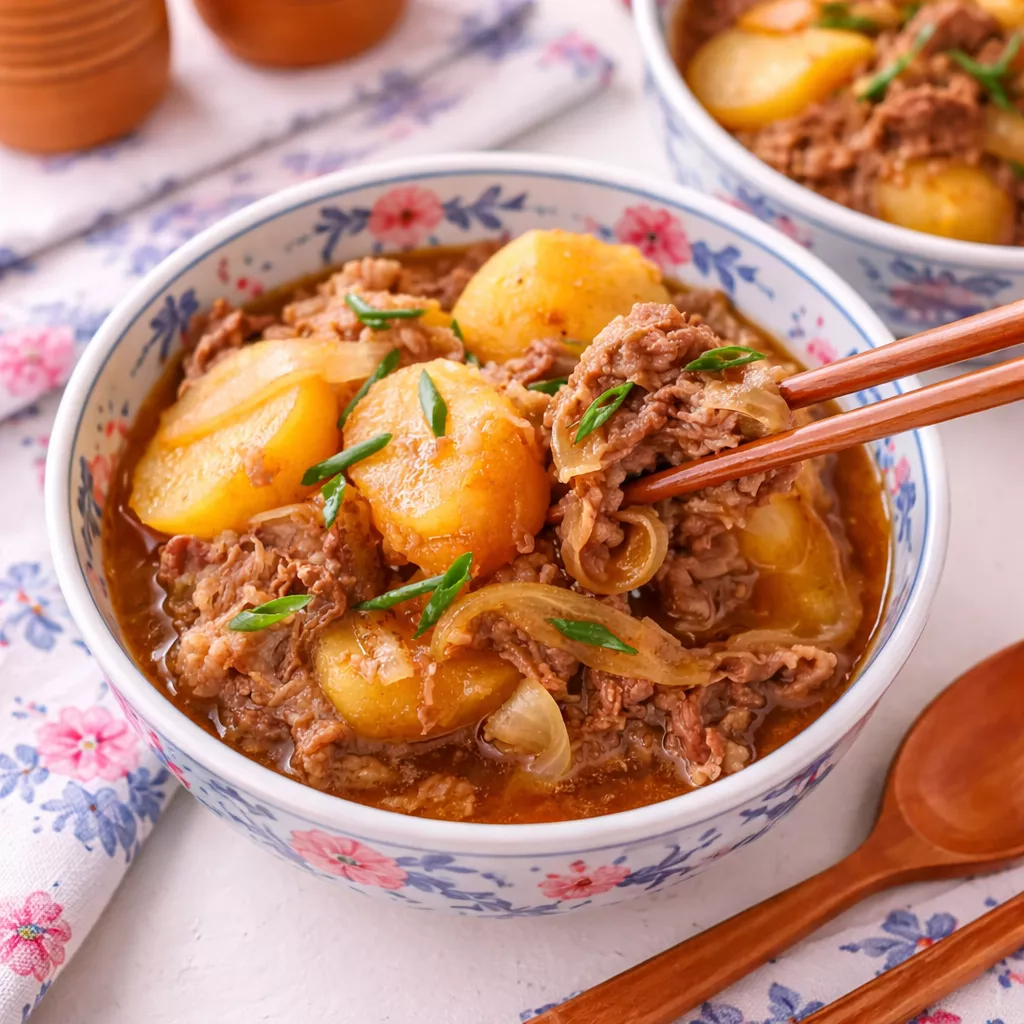
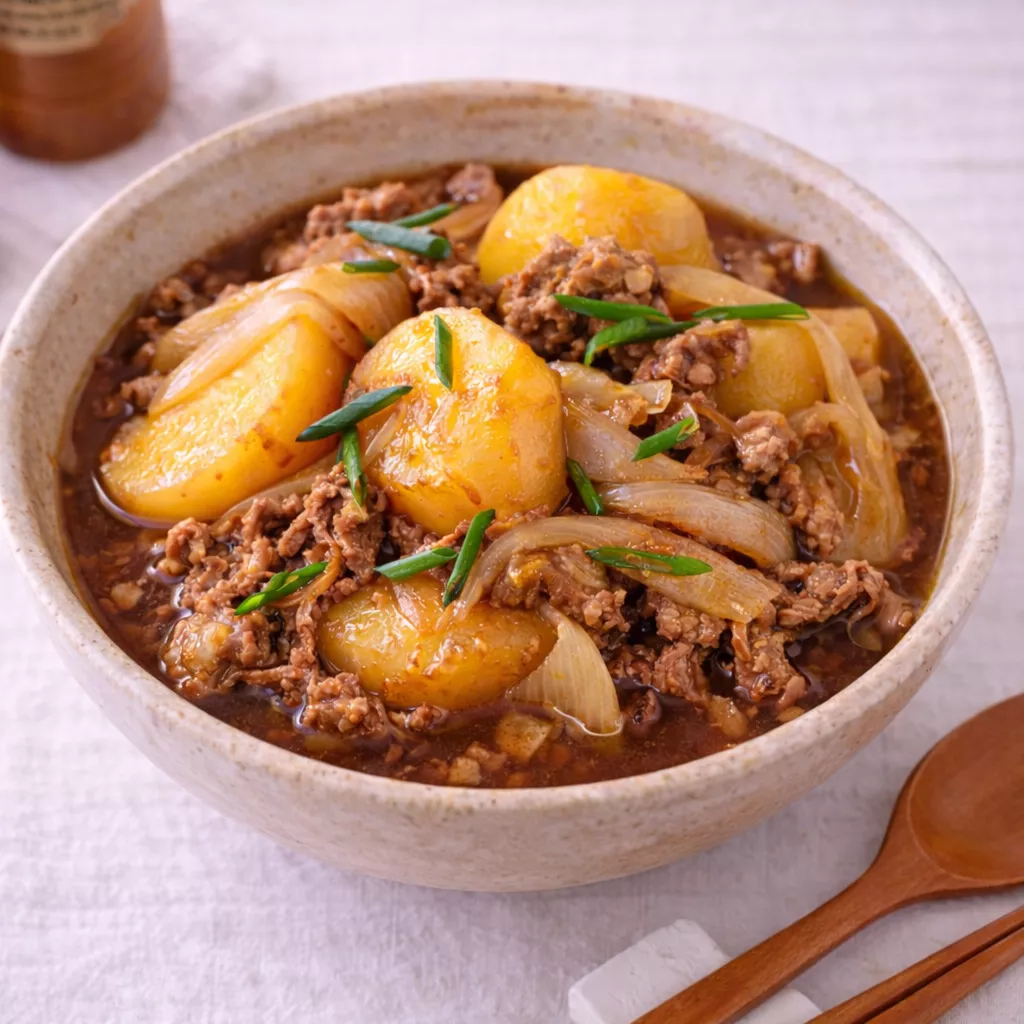
Nikujaga does not need layering or decoration. The beauty comes from how the ingredients sit together naturally.
How to Serve
- Spoon the potatoes first, then add beef and onion on top.
- Pour a small amount of broth over the dish for shine.
- Serve warm or at room temperature.
Hana’s Recipe Tips
For better flavor, avoid rushing the final step. Letting the dish cool for a few minutes allows the potatoes to absorb the broth. If reheating, use low heat to keep the texture soft and the taste balanced.
Storage and Make-Ahead Tips
Nikujaga stores very well and often tastes better the next day.
- Store in an airtight container in the refrigerator for up to 3 days.
- Reheat gently on the stove or microwave with a cover.
- Add a small splash of water if the broth has reduced too much.
This dish is ideal for meal prep and busy weeks.
Recipe Variations
Nikujaga is easy to adjust using simple ingredients you may already have at home. These variations keep the dish comforting while adding new flavors or textures.
Change the Protein
Swap the beef for other proteins while keeping the same simmering method:
- Thinly sliced pork for a richer flavor
- Chicken thigh pieces for a lighter taste
- Firm tofu for a meat-free version
Add More Vegetables
Extra vegetables can add color and nutrition:
- Carrots cut into chunks
- Shirataki noodles for a lighter dish
- Snow peas added at the end for color
Adjust the Seasoning
Small changes can shift the flavor balance:
- Reduce sugar for a more savory taste
- Add extra mirin for mild sweetness
- Use light soy sauce for a softer color
Change How You Serve It
Nikujaga can be served in different ways:
- Serve with steamed rice for a full meal
- Enjoy as a side dish at room temperature
- Pack into a bento box once cooled
More Japanese Recipes to Try
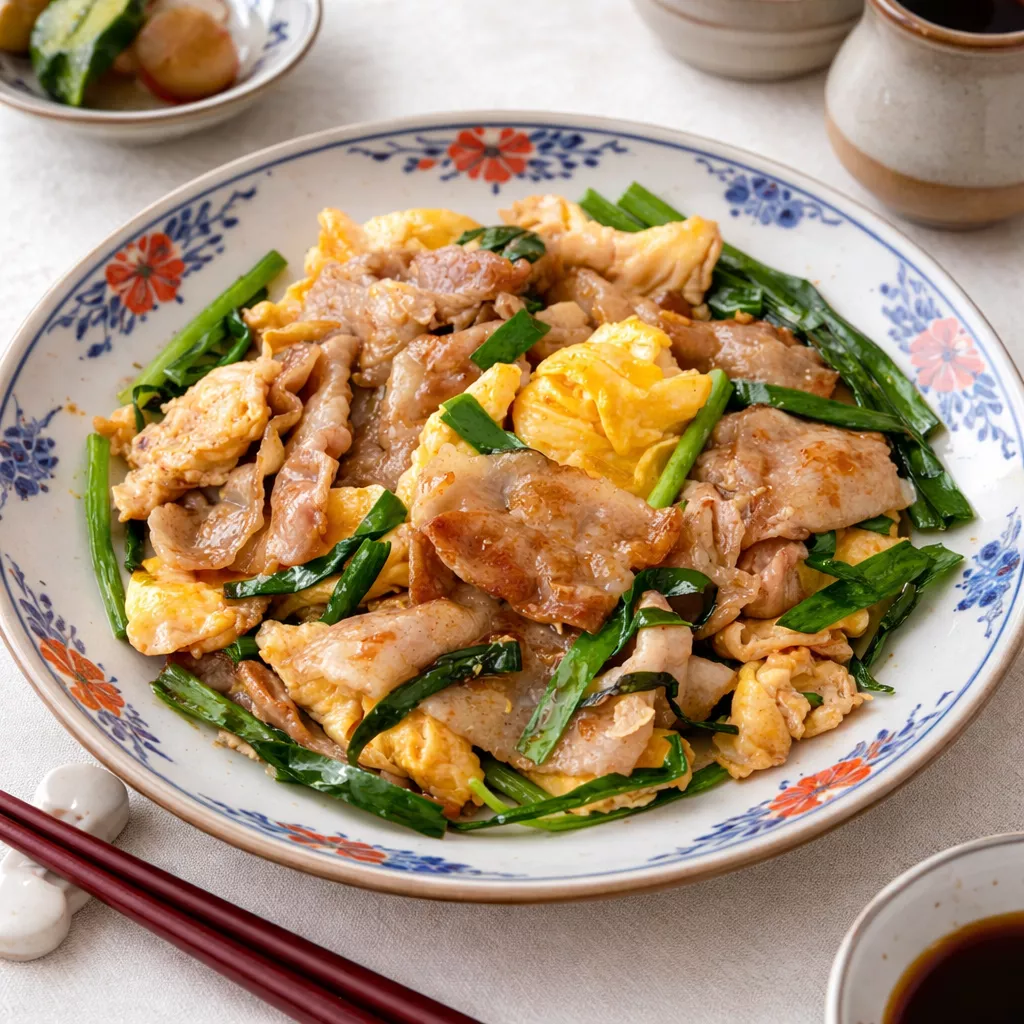
If you enjoyed Nikujaga, you may also like other easy and comforting Japanese home dishes. Stir-fried pork with chives (豚肉とチャイブの炒め物) is a quick and flavorful recipe made with tender pork and fresh chives, lightly seasoned and cooked in minutes. It is perfect for busy weekdays and pairs well with rice.
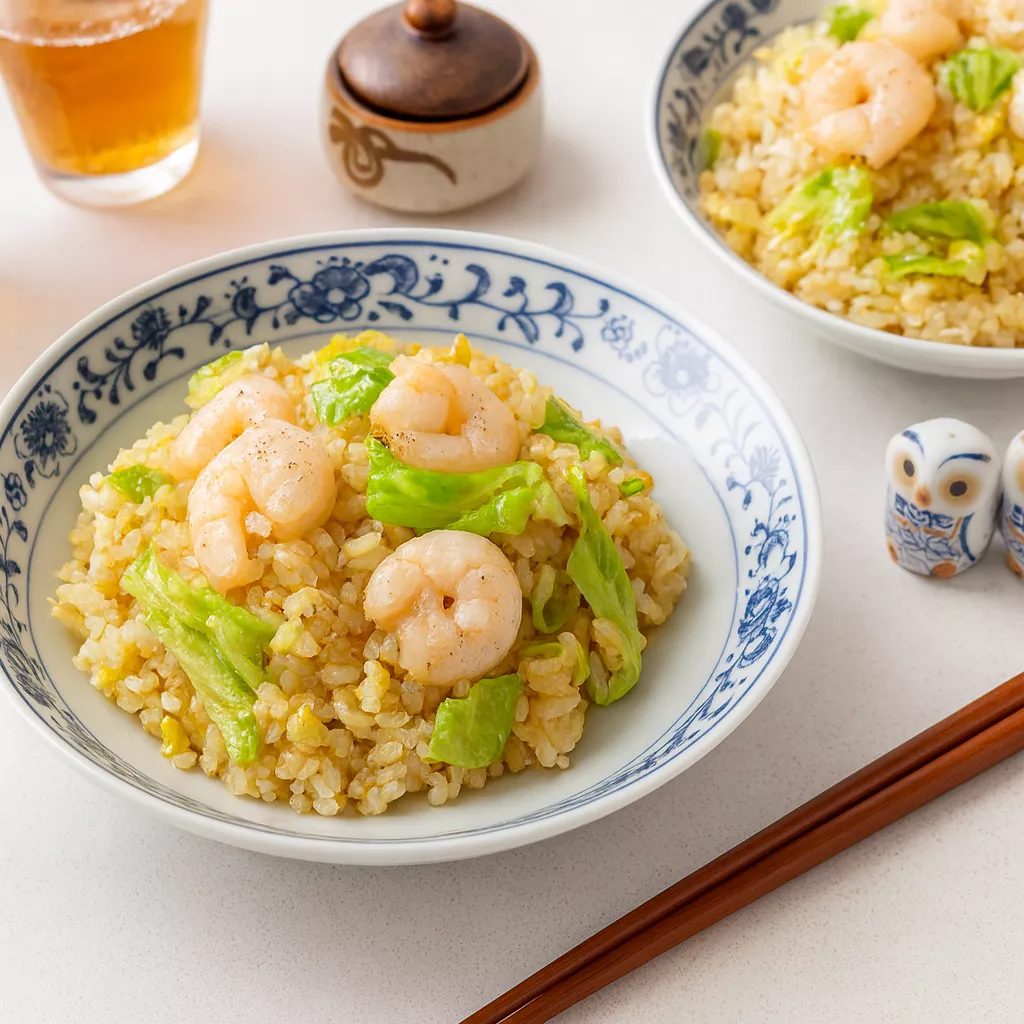
Another great option is Ebi Retasu Chāhan (エビレタスチャーハン), a popular Japanese shrimp fried rice made with fluffy rice, juicy shrimp, and crisp lettuce. This dish is light, fast to cook, and full of texture, making it a favorite for lunch or dinner.
Conclusion
Nikujaga is proof that simple ingredients can create deep comfort. It is easy to cook, gentle in flavor, and satisfying without being heavy. This dish fits any season and any table. With a short cooking time and basic ingredients, Nikujaga is a recipe worth making again and again.
FAQs
Is Nikujaga healthy?
Yes. It uses simple ingredients, light oil, and simmering instead of frying. It provides protein, vegetables, and balanced seasoning.
Can I make Nikujaga ahead of time?
Yes. The flavor improves after resting. It is perfect for next-day meals.
Can I freeze Nikujaga?
Freezing is not recommended because potatoes may change texture.
What makes Nikujaga different from other potato dishes?
The simmered method allows flavor to soak into the potatoes instead of coating the outside.
Can I adjust the seasoning?
Yes. Sweetness and saltiness can be adjusted slightly while keeping balance.
Nikujaga 肉じゃが: Japanese Simmered Meat and Potatoes
Course: MainCuisine: JapaneseDifficulty: Easy2
servings10
minutes15
minutes380
kcalNikujaga is a classic Japanese home dish made with tender beef, soft potatoes, and onion gently simmered in a lightly sweet soy-based broth. It is simple, comforting, and easy to prepare with everyday ingredients.
Ingredients
Thinly sliced beef – 150 g
Potatoes – 4 small (about 320 g)
Onion – 1/2 piece
Salad oil – 1/2 tablespoon
- Seasoning (A):
Water – 200 ml
Sugar – 2 tablespoons
Mirin – 2 tablespoons
Hon dashi – 1 teaspoon
Soy sauce – 2 1/2 tablespoons
Directions
- Peel the potatoes and cut them in half or into bite-size pieces. Cut the onion into 1 cm wide wedges. Cut the beef into easy-to-eat pieces.
- Heat the salad oil in a saucepan over medium heat. Add the onion and cook gently for 2–3 minutes until softened. Add the potatoes, water, sugar, mirin, and hon dashi. Bring to a boil, then add the beef and gently separate it.
- Lower the heat to low-medium, cover, and simmer for 8 minutes until the potatoes begin to soften and absorb the broth.
- Add the soy sauce and simmer uncovered for 5 minutes. Turn off the heat and transfer to a serving dish. Let it rest briefly so the flavor settles before serving.
Notes
- ✪ Letting Nikujaga cool slightly helps the seasoning soak deeper into the potatoes.
✪ Simmer gently to keep the potatoes from breaking apart.
✪ This dish tastes even better after resting and can be reheated gently the next day.
Did you make this recipe?
Tag @jp.dishes on Instagram so we can see your delicious creation!