
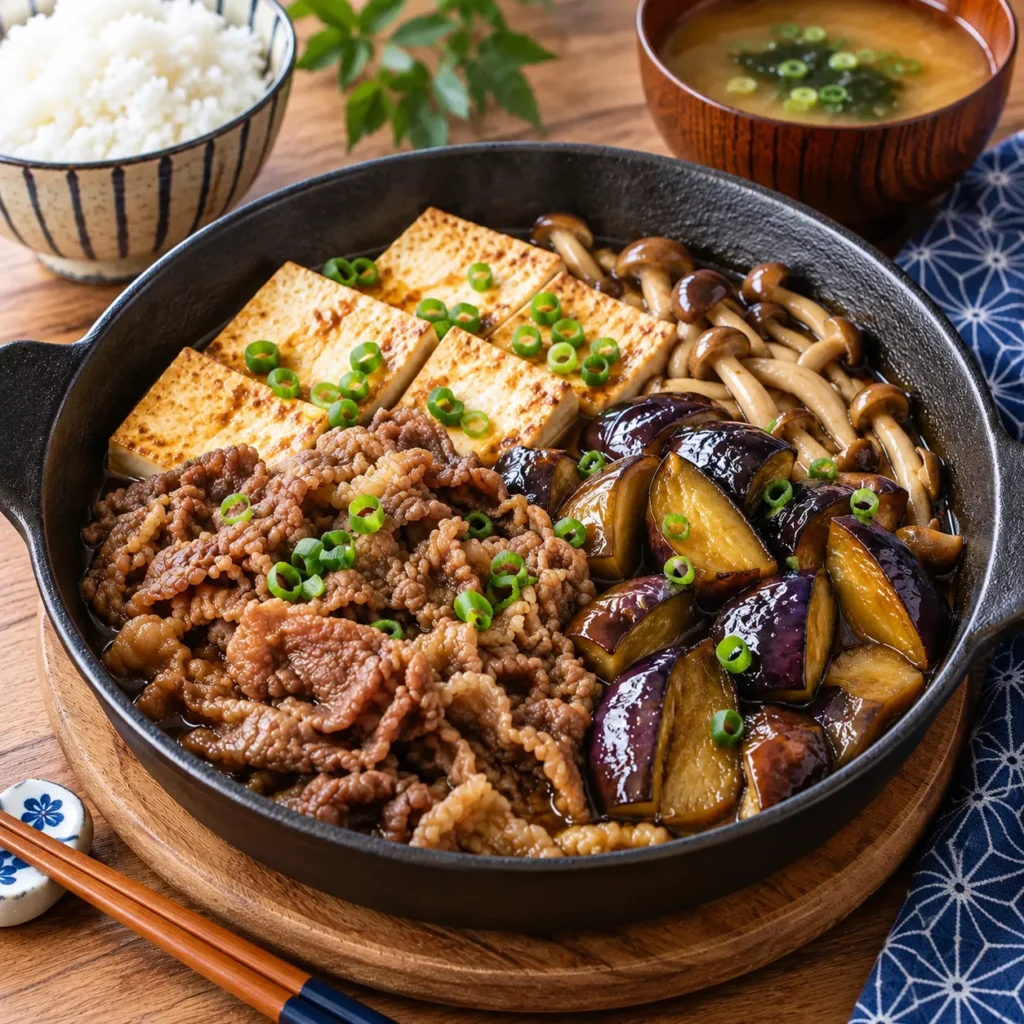
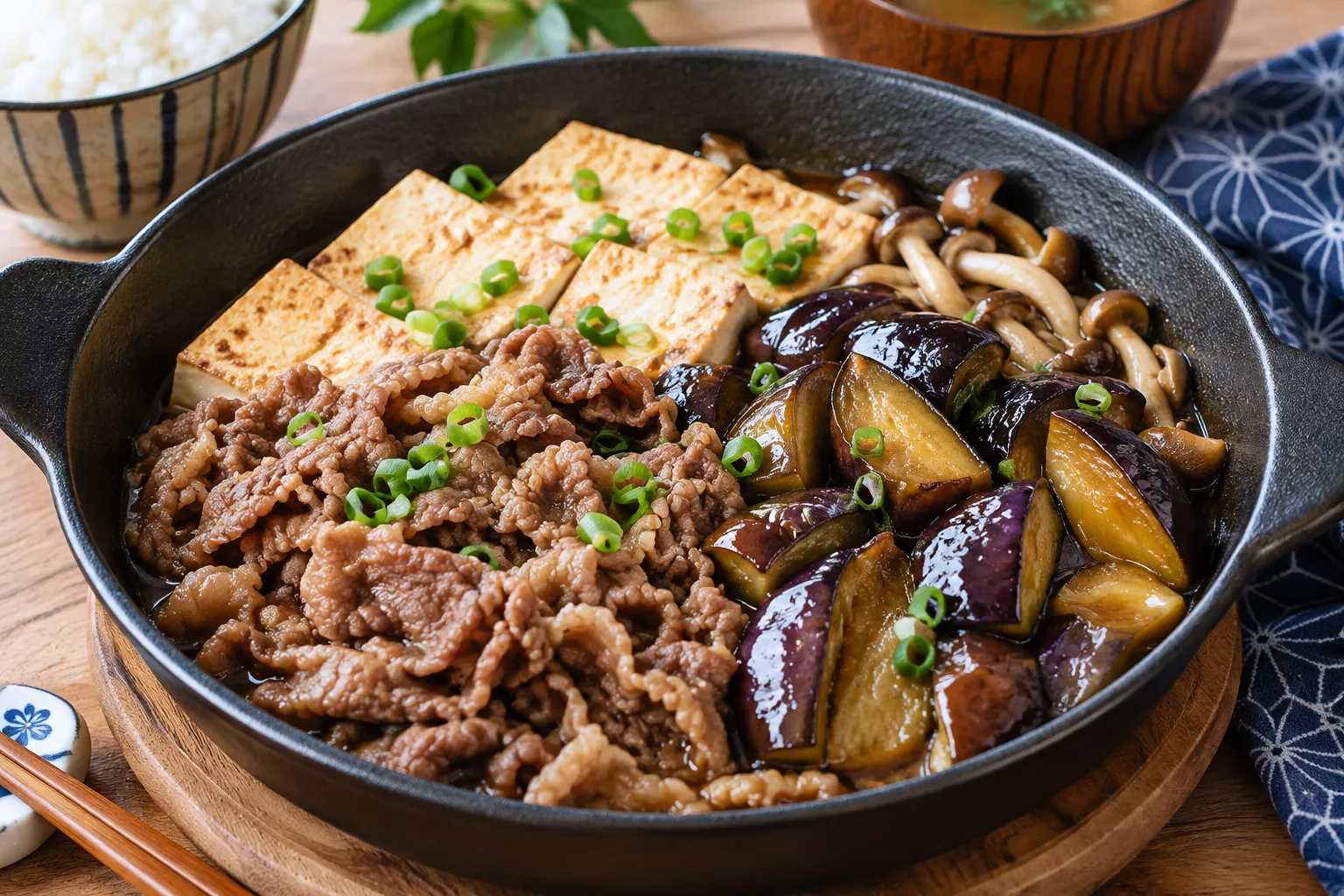
Have you ever wondered how a simple pan of beef, eggplant, tofu, and mushrooms can turn into a rich Japanese-style meal in only 20 minutes?
Beef and Autumn Eggplant Sukiyaki-Style Stew 牛肉と秋なすときのこのすき焼き風煮 is a comforting one-pan dish filled with tender beef, soft eggplant, mushrooms, and tofu simmered in a sweet and savory sukiyaki-inspired sauce. It is warm, filling, simple to prepare, and perfect when you want Japanese comfort food without spending a long time in the kitchen.
The sauce is made with familiar Japanese pantry ingredients such as soy sauce, mirin, sake, and sugar. As everything cooks together, the eggplant becomes tender, the mushrooms release their rich flavor, and the tofu absorbs the sauce. Thinly sliced beef adds richness and makes the dish satisfying enough for dinner.
Serve it with a bowl of freshly cooked Japanese rice, and you have an easy autumn meal that tastes comforting and homemade.
Recipe Overview
This recipe is especially useful for busy evenings because almost everything is cooked in the same frying pan. There is no need to prepare a separate sauce pan or cook each ingredient completely on its own.
The key is to cook the ingredients in the right order. Eggplant goes into the pan first so it has enough time to become tender. Beef is added next and only partially cooked before the tofu, mushrooms, and seasoning mixture are introduced. A short simmer finishes everything together.
The result is a balanced dish with meat, vegetables, mushrooms, and tofu in one serving.
What Is Beef and Autumn Eggplant Sukiyaki-Style Stew?
Beef and Autumn Eggplant Sukiyaki-Style Stew 牛肉と秋なすときのこのすき焼き風煮 is a Japanese simmered dish inspired by the sweet and savory flavors commonly associated with sukiyaki.
Traditional sukiyaki is often prepared at the table in a shallow pot with thinly sliced beef, tofu, vegetables, mushrooms, and a soy-based seasoning mixture. This recipe takes those familiar flavors and turns them into a faster everyday meal.
Eggplant is an especially good match for this style of cooking because its soft flesh absorbs the sauce. Mushrooms add earthy flavor, while tofu gives the dish a mild, tender contrast to the rich beef.
Instead of slowly cooking a large hot pot, everything comes together quickly in a frying pan. This makes it an easy choice for a weeknight dinner while still giving you the comforting taste of a Japanese simmered meal.
Essential Ingredients
Key Ingredients (材料)
Beef and Autumn Eggplant Sukiyaki-Style Stew 牛肉と秋なすときのこのすき焼き風煮These simple ingredients create the sweet, savory, and comforting flavor of this easy sukiyaki-style stew. The beef adds richness, the eggplant becomes soft and juicy, and the tofu and mushrooms soak up the delicious soy-based sauce.
How to Make Beef and Autumn Eggplant Sukiyaki-Style Stew
Step 1: Prepare the Ingredients and Sauce
Cut the eggplant into bite-sized pieces. Place the pieces in a bowl of water for a short time, then drain them well.
Cut the tofu into manageable bite-sized pieces about 1 cm thick.
Prepare the mushrooms. Trim off any tough ends and gently separate them into smaller pieces.
In a small bowl, combine:
- 50 ml water
- 3 tablespoons soy sauce
- 3 tablespoons mirin
- 2 tablespoons sake
- 2 tablespoons sugar
Stir until the sugar begins to dissolve.
Preparing everything before heating the pan is helpful because the beef cooks quickly once it is added.
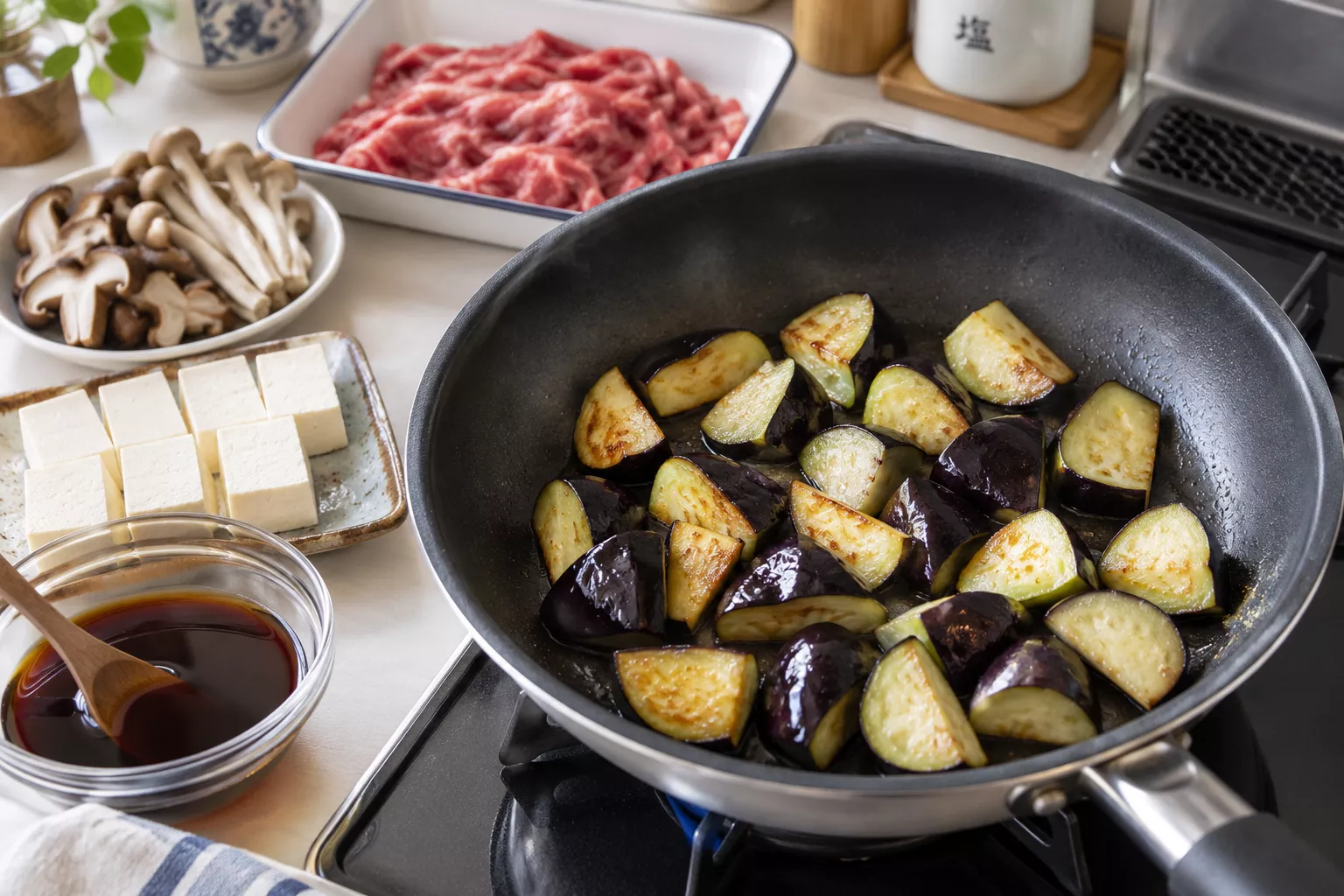
Step 2: Brown the Eggplant
Heat 2 tablespoons salad oil in a large frying pan over medium heat.
Place the eggplant in the pan with the skin side facing down when possible.
Cook for about 4 minutes, allowing the eggplant to soften and develop some color.
Turn the pieces and cook the other sides until lightly browned.
Do not rush this stage. Giving the eggplant time to cook in the oil is one of the secrets to achieving a soft texture later.
Step 3: Add the Beef, Tofu, and Mushrooms
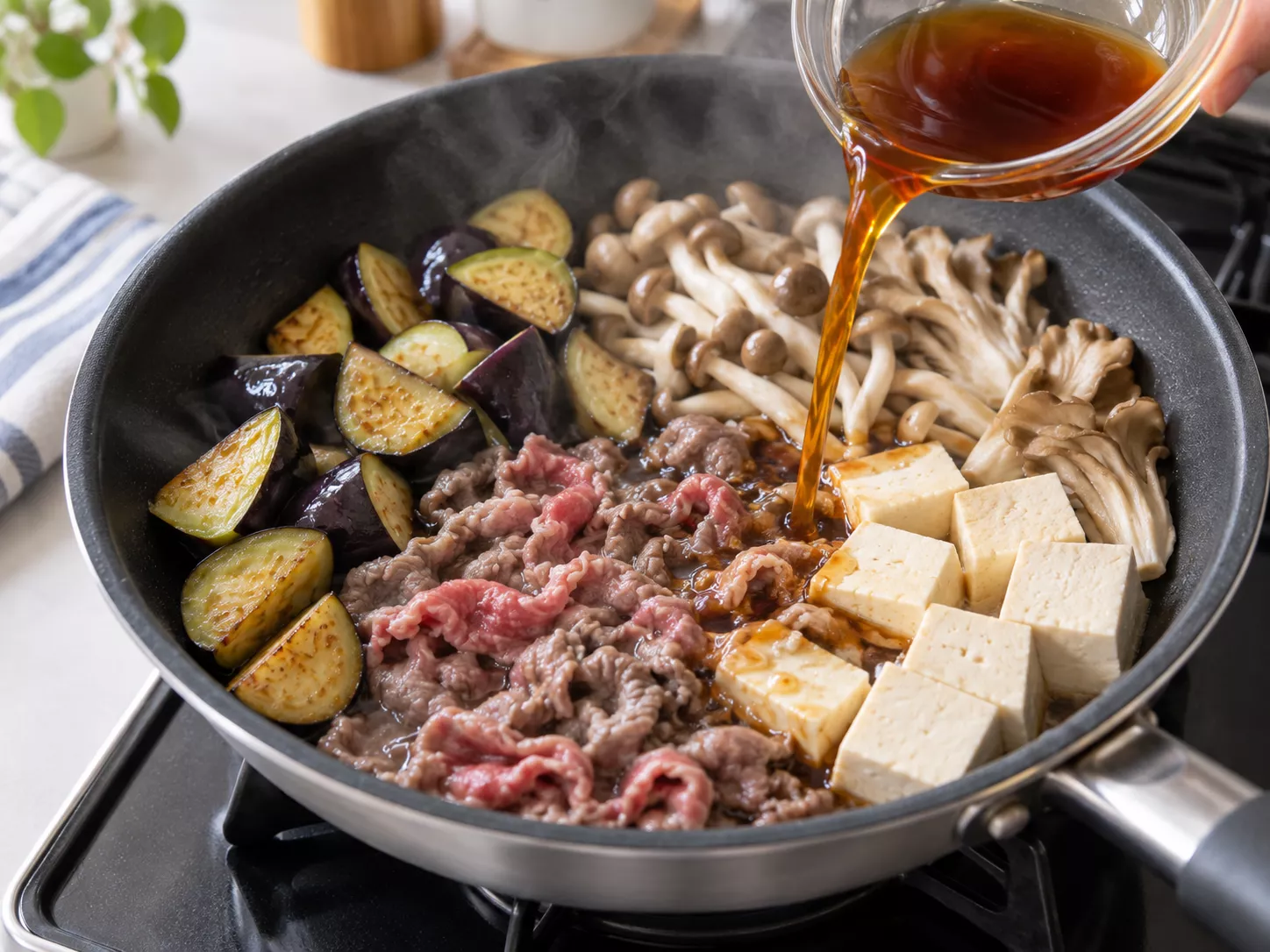
Move the eggplant toward one side of the pan.
Place the thinly sliced beef in the open space. Separate the slices gently with chopsticks or a spatula while they cook.
Cook over medium heat until the beef is roughly 60 to 70 percent cooked. It should still have a little pink remaining because it will continue cooking during the simmering stage.
Move the beef slightly to create more space.
Add the tofu and mushrooms.
Pour the prepared sukiyaki-style seasoning mixture evenly over everything in the pan.
Try to distribute the sauce around the pan rather than pouring it onto only one ingredient.
Step 4: Simmer and Finish
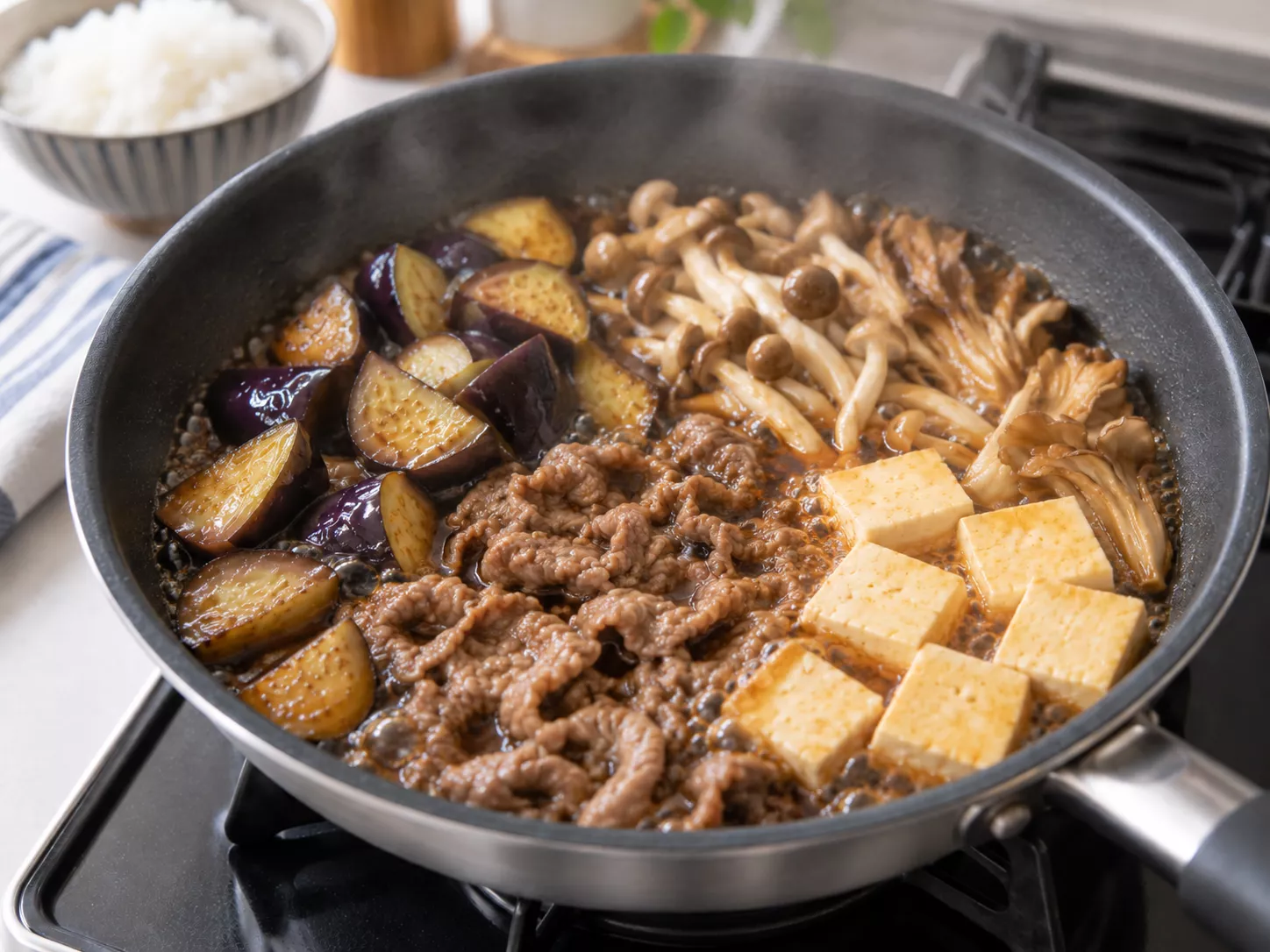
Bring the sauce to a gentle boil over medium heat.
Once bubbling, simmer everything together for about 3 minutes.
Carefully turn the tofu and move the other ingredients through the sauce so they are evenly coated.
Be gentle with the tofu because it can break if stirred too strongly.
When the beef is cooked through, the mushrooms are tender, and the eggplant has absorbed some of the sauce, remove the pan from the heat.
Allow the stew to sit for a minute before serving. This gives the sauce a little extra time to settle around the ingredients.
Serve hot with steamed Japanese rice.
Secrets to Success and Expert Tips
These simple tips will help you make Beef and Autumn Eggplant Sukiyaki-Style Stew 牛肉と秋なすときのこのすき焼き風煮 with tender beef, soft eggplant, flavorful mushrooms, and a well-balanced sweet and savory sauce:
-
“`
-
♥
Brown the eggplant before simmering
Cook the eggplant in oil first until it begins to soften and lightly brown. This gives it a silky texture and helps it soak up the sukiyaki-style sauce more evenly. -
♥
Do not fully cook the beef at the beginning
Cook the thinly sliced beef only until it is about 60 to 70 percent done. It will finish cooking in the sauce, which helps keep the meat tender instead of dry or chewy. -
♥
Handle the tofu gently
Use firm or cotton tofu and turn the pieces carefully while simmering. Avoid stirring too strongly so the tofu keeps its shape while still absorbing the sauce. -
♥
Use a mix of mushrooms for deeper flavor
Combining mushrooms such as maitake, shiitake, enoki, or shimeji adds more texture and a richer savory taste to the stew. -
♥
Keep the simmer gentle
Once the sauce begins to boil, reduce the heat slightly and let everything cook gently. A strong boil can break the tofu and make the thin beef tougher. -
♥
Let the stew rest briefly before serving
After turning off the heat, leave the dish in the pan for about a minute. This gives the eggplant, tofu, and mushrooms a little more time to absorb the sweet and savory sauce.
“`
How to Assemble and Serve
This stew does not require complicated assembly. The goal is to arrange the different ingredients so each one can be seen and enjoyed.
Place a serving of hot steamed rice in a bowl or serve it separately.
Spoon the beef, eggplant, tofu, and mushrooms onto a shallow serving plate or bowl. Try to keep several pieces of each ingredient visible.
Pour a little of the pan sauce over the top.
Do not drown the dish in sauce. A small amount is enough because the ingredients have already absorbed plenty of flavor.
For a simple Japanese-style presentation, group the eggplant, mushrooms, beef, and tofu loosely instead of mixing everything into one pile.
The dark soy glaze against the pale tofu and purple eggplant makes the dish naturally attractive without needing many toppings.
Hana’s Recipe Tips
For the softest eggplant, give it enough time in the oil before adding the other ingredients. This first cooking stage helps create the tender texture that makes this stew so comforting.
When adding the tofu, slide it gently into the open spaces in the pan instead of placing it on top of the beef. This allows more of the tofu to touch the sauce.
Use whichever mushrooms are freshest and easiest for you to find. The recipe does not depend on one exact variety.
Finally, taste a small amount of the sauce near the end. If it feels too strong for your preference, add a tablespoon or two of water and simmer briefly. If you like stronger flavor, allow the sauce to reduce for another minute.
Storage and Make-Ahead Tips
Refrigerating
Allow leftovers to cool before placing them in an airtight container.
Store in the refrigerator for up to 2 days.
Because the eggplant and tofu continue absorbing liquid during storage, the flavor may become stronger the next day.
Reheating
The best method is to reheat the stew gently in a frying pan or small saucepan over low to medium-low heat.
Add a splash of water if the sauce has become too thick.
You can also microwave individual portions. Cover loosely and heat in short intervals until completely hot.
Avoid overheating because thinly sliced beef can become tough.
Make-Ahead Preparation
For the freshest texture, it is better to cook the dish shortly before serving.
However, you can prepare several ingredients in advance.
You can:
- Mix the sauce ahead of time.
- Clean and separate the mushrooms.
- Cut and drain the tofu.
- Portion the beef.
Cut eggplant closer to cooking time to help keep its texture and color.
More Beef Recipe Variations to Try
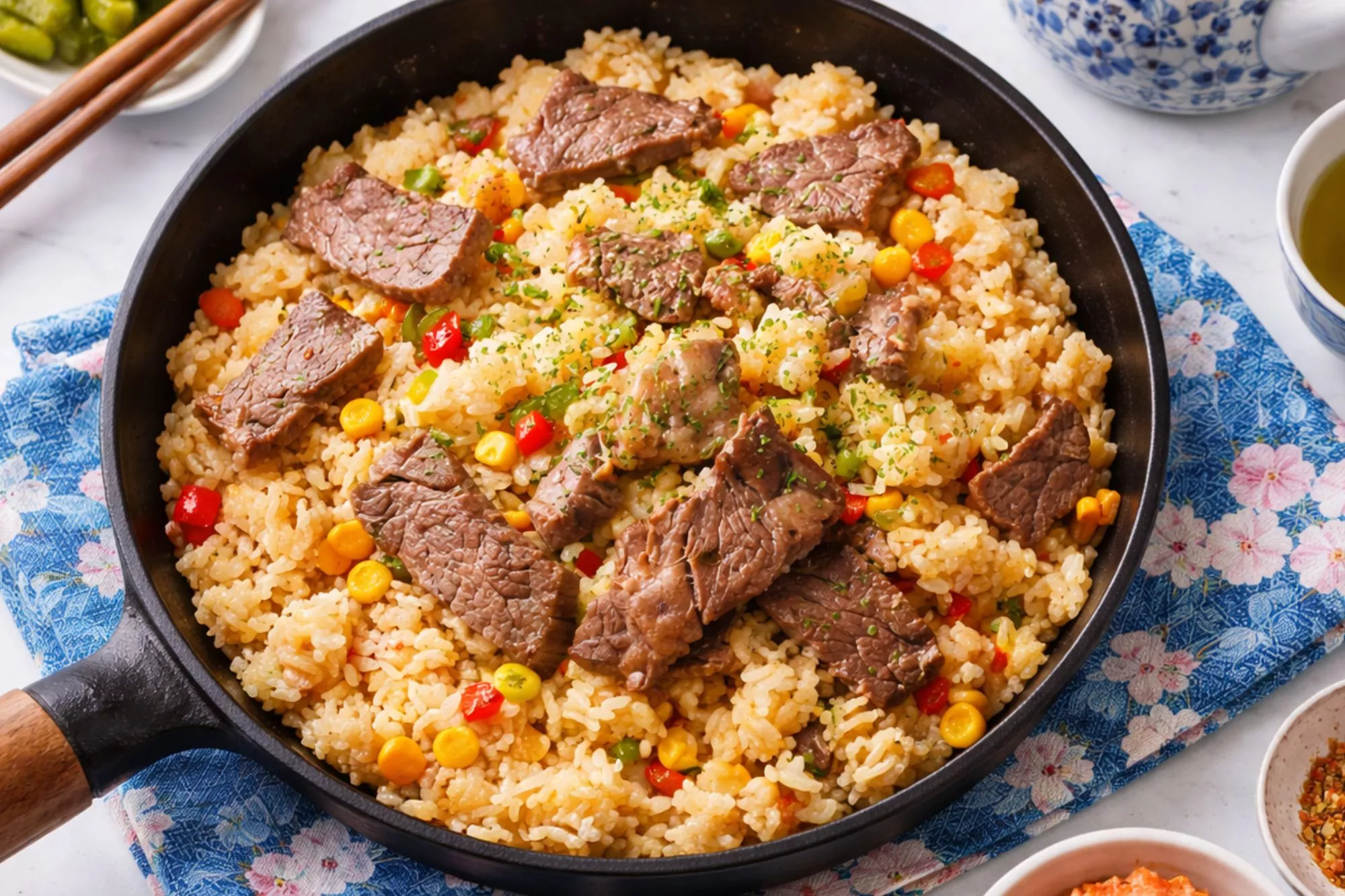
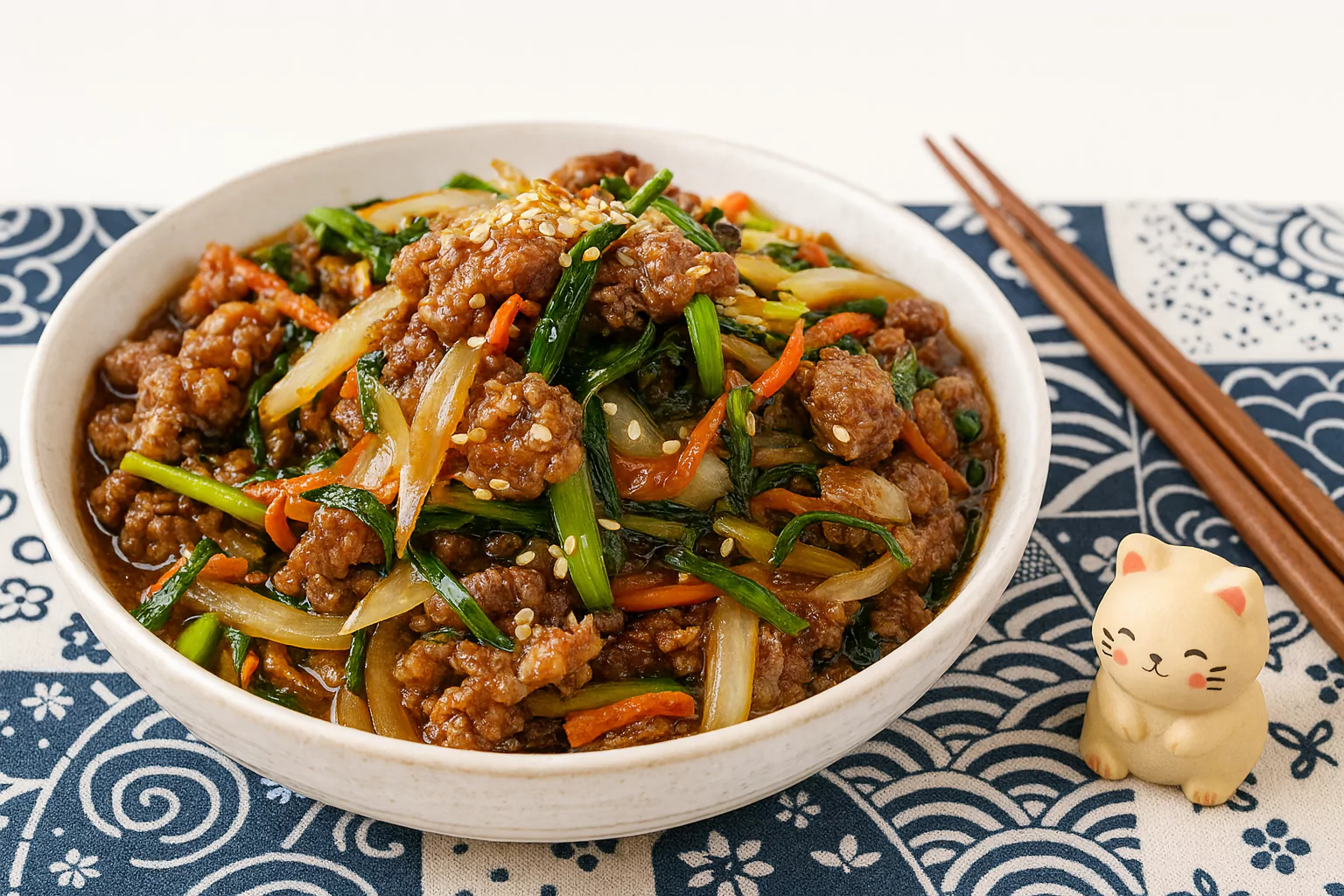
If you enjoyed Beef and Autumn Eggplant Sukiyaki-Style Stew 牛肉と秋なすときのこのすき焼き風煮, try Gyudon Japanese Beef Rice Bowl (牛丼) for another comforting Japanese beef dish with tender sliced beef and onions served over warm rice. You can find the recipe here: https://www.japandishes.com/how-to-make-gyudon-japanese-beef-rice-bowl/. For a richer and more garlicky option, try Colorful Steak Garlic Rice ステーキガーリックライス, made with juicy steak, fragrant garlic rice, and colorful vegetables. You can find that recipe here: https://www.japandishes.com/japanese-steak-garlic-rice-recipe/.
Recipe Variations
Beef and Autumn Eggplant Sukiyaki-Style Stew 牛肉と秋なすときのこのすき焼き風煮 is easy to adapt with different proteins, vegetables, mushrooms, and seasonings. You can keep the same one-pan cooking method while creating a version that matches your taste or the ingredients you already have at home.
Make It Spicy
Add a little heat while keeping the sweet and savory sukiyaki-style flavor:
- Sprinkle shichimi togarashi over the finished stew
- Add a small spoonful of chili oil before serving
- Mix a little chili paste into the sauce for stronger heat
Try a Different Protein
The sauce works well with other proteins if you want to change the beef:
- Thinly sliced pork for a rich and tender version
- Chicken thigh slices for a milder flavor
- Extra firm tofu and more mushrooms for a meat-free option
Add More Vegetables
Add extra vegetables to make the stew more colorful and filling:
- Sliced onion for extra sweetness
- Napa cabbage for a softer, lighter texture
- Japanese leek or green onion for more aroma
Create a Mushroom-Rich Version
Increase the mushrooms for deeper umami and more autumn flavor:
- Maitake for a rich, earthy taste
- Shiitake for strong savory flavor
- Enoki or shimeji for a lighter texture and variety
Turn It Into an Udon Meal
Add cooked udon noodles during the final few minutes of simmering. The noodles will absorb some of the sweet soy sauce and turn the stew into a more filling one-pan dinner.
Why This Recipe Works for a Balanced Meal
This dish contains several different food groups in one pan.
Beef provides protein along with nutrients such as iron and vitamin B12. Tofu adds extra protein, while mushrooms and eggplant provide plant-based ingredients and useful nutrients.
Eggplant also adds fiber, and mushrooms can help make meals satisfying without requiring a large amount of meat.
The recipe is still relatively rich because of the beef, oil, sugar, and seasoning, so portion size matters. Serving it with rice and a simple vegetable side can help create a more complete meal.
Another benefit is speed. Because thinly sliced beef cooks quickly and the sauce requires only a few pantry ingredients, dinner can be ready in around 20 minutes.
Frequently Asked Questions
Can I make this recipe without sake?
Yes. Replace the sake with the same amount of water. The sauce will still work, although it will have slightly less depth.
What mushrooms are best?
Maitake, shiitake, enoki, shimeji, and oyster mushrooms are all good choices.
You can use one variety or mix several together.
Can I use regular eggplant?
Yes.
If using a large Western-style eggplant, cut it into smaller bite-sized pieces so it cooks quickly and absorbs the sauce evenly.
Why should I soak the eggplant?
A brief soak can help keep the prepared eggplant fresh before cooking and remove some bitterness that certain eggplants may have.
Drain it well before frying so excess water does not cause the oil to splatter.
Can I use silken tofu?
You can, but silken tofu is much more delicate.
Firm or cotton tofu is easier to cook in the pan without breaking.
Can I prepare this dish ahead of time?
Yes, but it has the best texture when freshly cooked.
You can prepare the sauce, mushrooms, tofu, and beef ahead of time and cook everything shortly before serving.
How long can leftovers be stored?
Store leftovers in a sealed container in the refrigerator for up to 2 days.
Reheat thoroughly before eating.
Can I freeze the stew?
Freezing is not ideal because tofu and eggplant can change texture after thawing.
For the best result, refrigerate leftovers and eat them within a couple of days.
Why is my eggplant still firm?
It probably needed more time during the first cooking stage.
Cook the eggplant until it begins to soften and brown before adding the beef and sauce.
How do I stop the tofu from breaking?
Use firm or cotton tofu and cut it into fairly thick pieces.
Instead of stirring everything strongly, gently turn the tofu with chopsticks or a spatula while simmering.
Can I reduce the sugar?
Yes.
For a less sweet sauce, reduce the sugar from 2 tablespoons to about 1 to 1 1/2 tablespoons.
Keep in mind that the sweet flavor is part of the sukiyaki-style seasoning.
What should I serve with this stew?
Freshly steamed Japanese rice is the easiest choice because it absorbs the flavorful sauce.
You can also serve it with miso soup, cucumber salad, spinach with sesame dressing, or another simple vegetable side.
Conclusion
Beef and Autumn Eggplant Sukiyaki-Style Stew 牛肉と秋なすときのこのすき焼き風煮 brings together tender beef, soft eggplant, tofu, and mushrooms in a sweet and savory Japanese-style sauce.
The whole dish can be prepared in about 20 minutes, making it useful for busy weeknights as well as relaxed autumn dinners. Browning the eggplant first gives it a tender texture, while adding the beef later keeps it from becoming overcooked. Tofu and mushrooms absorb the sauce and make every serving more satisfying.
The recipe is also easy to adjust. Change the mushrooms, add vegetables, use pork instead of beef, or add udon noodles for a more filling version.
Serve it hot with freshly cooked rice and enjoy a simple Japanese comfort meal made from everyday ingredients.

How to make : Beef and Autumn Eggplant Sukiyaki-Style Stew 牛肉と秋なすときのこのすき焼き風煮
Course: Main CoursesCuisine: JapaneseDifficulty: Easy2
servings8
minutes12
minutes565
kcalA quick Japanese one-pan stew made with tender beef, soft eggplant, tofu, and mushrooms simmered in a sweet and savory sukiyaki-style sauce. Ready in about 20 minutes, it is a comforting meal that pairs perfectly with steamed rice.
Ingredients
200 g thinly sliced beef
2 small eggplants (about 200 g)
1/2 block cotton or firm tofu
50 g mushrooms of your choice— maitake, shiitake, enoki, shimeji, or oyster mushrooms
50 ml water
3 tablespoons soy sauce
3 tablespoons mirin
2 tablespoons sake
2 tablespoons sugar
2 tablespoons salad oil
Directions
- Prepare the Ingredients and Sauce
Cut the eggplants into bite-sized pieces and soak them briefly in water, then drain well. Slice the tofu into bite-sized pieces about 1 cm thick. Trim the mushrooms and separate them into smaller pieces. In a bowl, stir together the water, soy sauce, mirin, sake, and sugar until well combined. - Brown the Eggplant
Heat the salad oil in a large frying pan over medium heat. Arrange the eggplant pieces in the pan, placing the skin side down when possible. Cook for about 4 minutes, then turn the pieces and continue cooking until lightly browned and beginning to soften. - Add the Beef, Tofu, and Mushrooms
Move the eggplant to one side of the pan. Add the thinly sliced beef to the open area and gently separate the slices while cooking. Cook until the beef is about 60 to 70 percent done. Make room in the pan and carefully add the tofu and mushrooms. Pour the prepared seasoning mixture evenly over all the ingredients. - Simmer Until Flavorful
Bring the sauce to a gentle boil over medium heat, then simmer for about 3 minutes. Carefully turn the tofu and move the other ingredients through the sauce so everything is evenly coated. Cook until the beef is fully done, the mushrooms are tender, and the eggplant has absorbed the sauce. Remove from the heat and let the stew rest for about 1 minute before serving.
Notes
- Browning the eggplant before adding the sauce helps it become soft and allows it to absorb more flavor.
Do not fully cook the beef before simmering; finishing it in the sauce helps keep it tender.
Handle the tofu gently when turning it so the pieces do not break apart.
Maitake, shiitake, enoki, shimeji, and oyster mushrooms all work well in this recipe.
Keep the final simmer gentle rather than boiling strongly.
Serve immediately with freshly steamed Japanese rice for a complete meal.
Did you make this recipe?
Tag @jp.dishes on Instagram so we can see your delicious creation!