
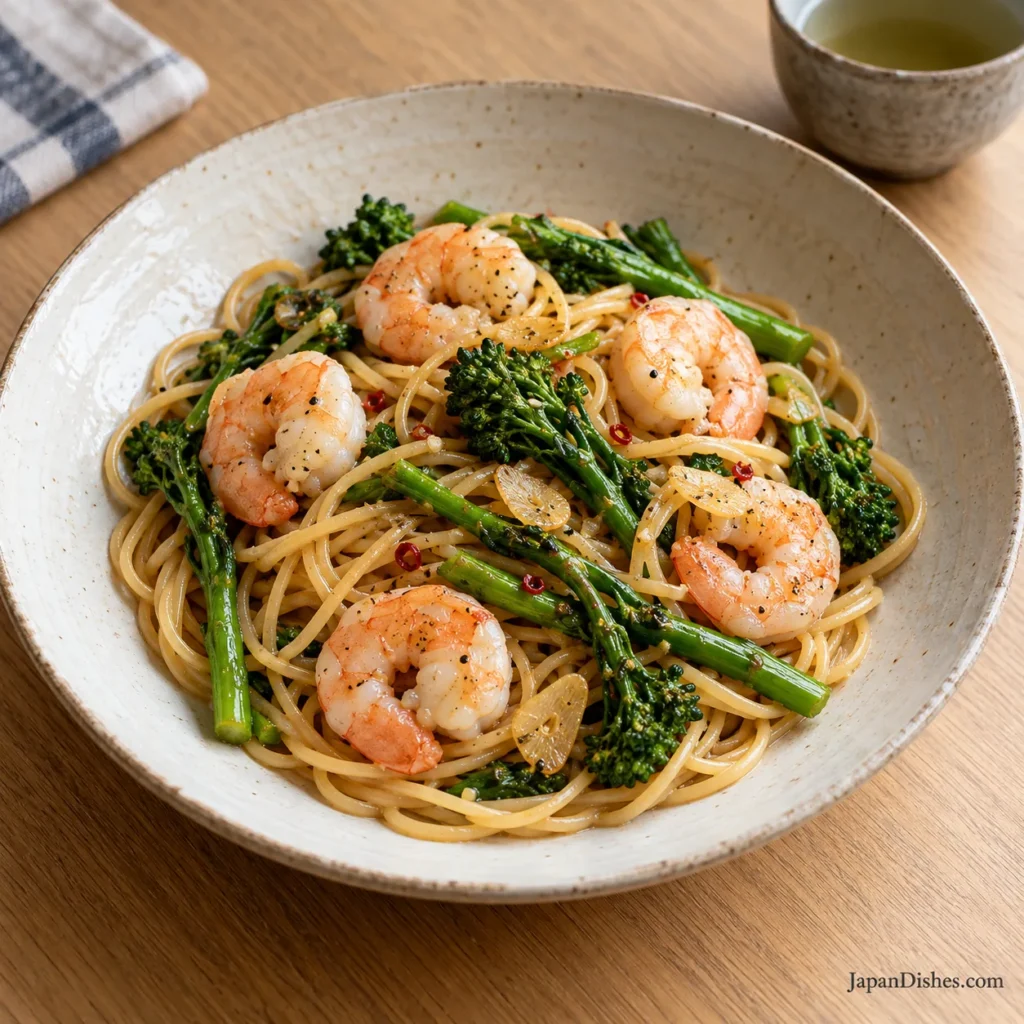
Looking for a warm, savory dinner that feels special without a heavy sauce? This Japanese-style shrimp and broccolini pasta brings together springy spaghetti, sweet shrimp and tender green stalks with a light garlic, soy and butter coating. A little chili oil is lovely at the end, but you can keep each plate mild.
Welcome to the table—Hana here. Let’s put the water on first and take this one stage at a time. The little details matter: dry shrimp, evenly cut vegetables and a cup of cloudy pasta water kept beside the stove. Those simple habits help you finish dinner calmly rather than rushing between pans.
Table of Contents
What is Japanese-style shrimp and broccolini pasta?
Wafu means Japanese-style. Here, Italian-style spaghetti meets Japanese pantry flavors: soy sauce and a little unsalted dashi. Butter rounds out the seasoning, while garlic gives the whole pan a gentle aroma. The result should taste savory and balanced, with enough moisture for the strands to slide apart.
This recipe makes two portions in about 30 minutes, with thawed, peeled shrimp ready. Pasta and pan work overlap; thicker spaghetti or a slow hob may take longer. Follow the doneness checks below.
Ingredients for shrimp and broccolini pasta
Measure everything before heating the pan. Tablespoons are 15 ml. You need a large pot, a 28 cm frying pan, tongs and a clean plate for cooked shrimp.
For two portions
- 200 g (7 oz) dry spaghetti
- 240 g (8½ oz) raw shrimp, weighed peeled and deveined, tails removed, fully thawed
- 180 g (6⅓ oz) broccolini, trimmed and cut into 5 cm pieces; split thick stems
- 2 garlic cloves, thinly sliced
- 15 ml (1 tablespoon) olive oil
- 20 g unsalted butter
- 15 ml (1 tablespoon) regular Japanese soy sauce
- 30 ml (2 tablespoons) prepared unsalted dashi, or water
- 5–10 ml (1–2 teaspoons) crunchy chili oil, optional, to taste
- Freshly ground black pepper, to taste
- 2.5 liters water and 10 g salt, for boiling pasta
- 150 ml pasta cooking water, reserved; add only as needed
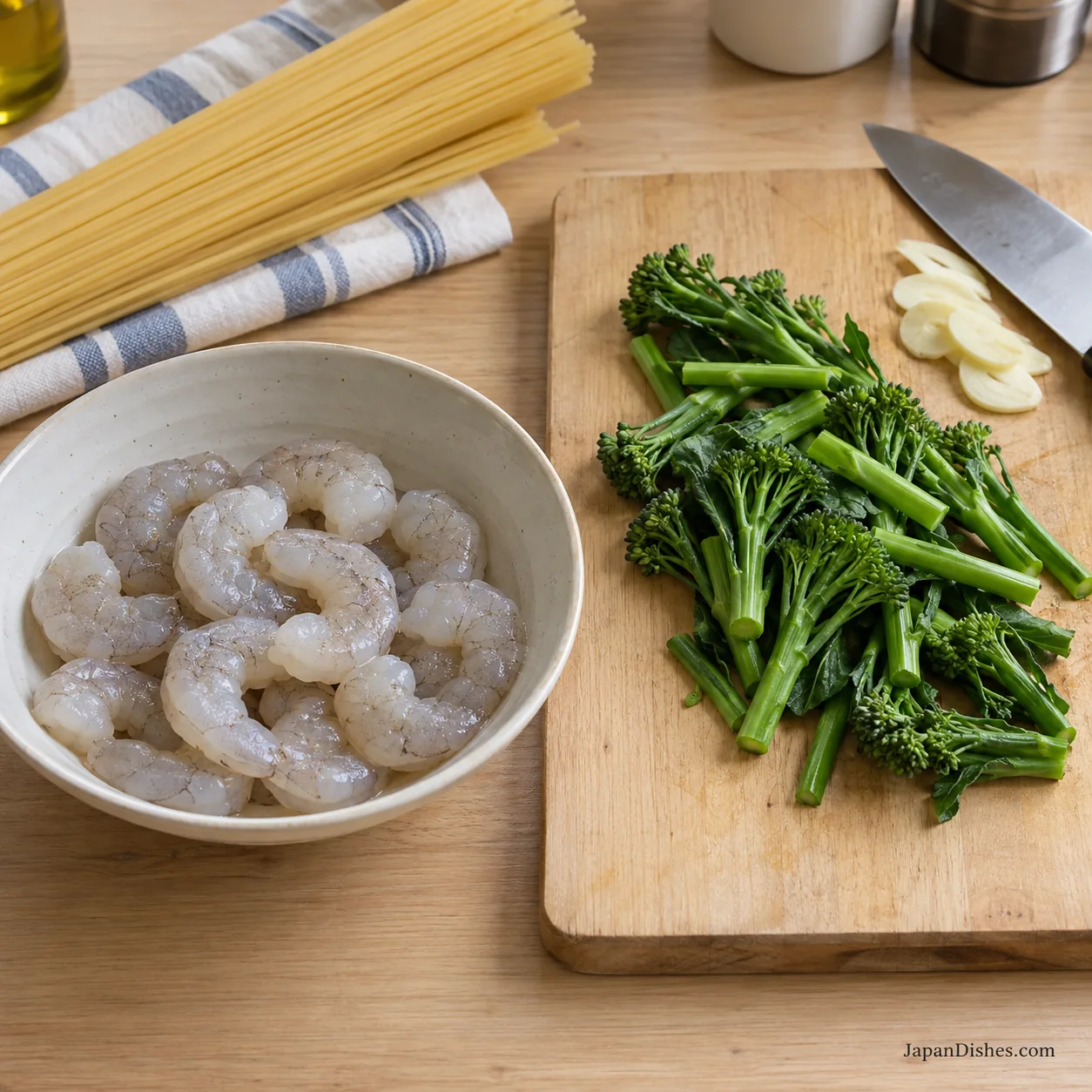
Shrimp: Start with 240 g after peeling and deveining, roughly 12 medium-large pieces depending on size. Remove the tails for easy eating. Frozen shrimp are fine once thawed in the refrigerator and patted dry. Keep them chilled until you are ready to cook. A wet surface makes the pan sputter and encourages steaming.
Broccolini: Choose firm slender stems with compact florets. Trim dry ends and cut into pieces about 5 cm (2 inches) long. Split thicker stems lengthwise so they cook with the delicate tips. If using regular broccoli, cut small florets and thinly slice the peeled stalk; check tenderness rather than assuming identical cooking time.
Soy and dashi: This recipe uses regular Japanese soy sauce plus separately prepared, unsalted dashi. Concentrated noodle soup base is much saltier and is not a straight replacement. If using salted instant dashi, begin with less soy sauce and adjust only after tasting the finished noodles. Plain water works if dashi is unavailable, with a lighter savory flavor.
Butter, garlic and chili: Unsalted butter gives more control over seasoning. Slice garlic thinly and lower the heat before adding it. Optional crunchy chili oil varies in salt and heat, so add a teaspoon first. Check its label for ingredients and allergens; the pasta already contains shellfish, wheat, soy and milk.
Shrimp and broccolini pasta: five photo steps
1. Put the water on and prepare the ingredients
Start heating 2.5 liters of water in a large pot. Pat 240 g thawed, peeled and deveined tail-off shrimp dry and season with a little black pepper. Trim 180 g broccolini into 5 cm pieces, splitting thick stems lengthwise. Thinly slice 2 garlic cloves. Measure the soy sauce, unsalted dashi and butter; keep the shrimp chilled until cooking.
Keep raw seafood in a separate bowl. Wash hands, utensils and surfaces that touch raw shrimp before handling cooked food.
2. Boil the spaghetti and briefly cook the broccolini
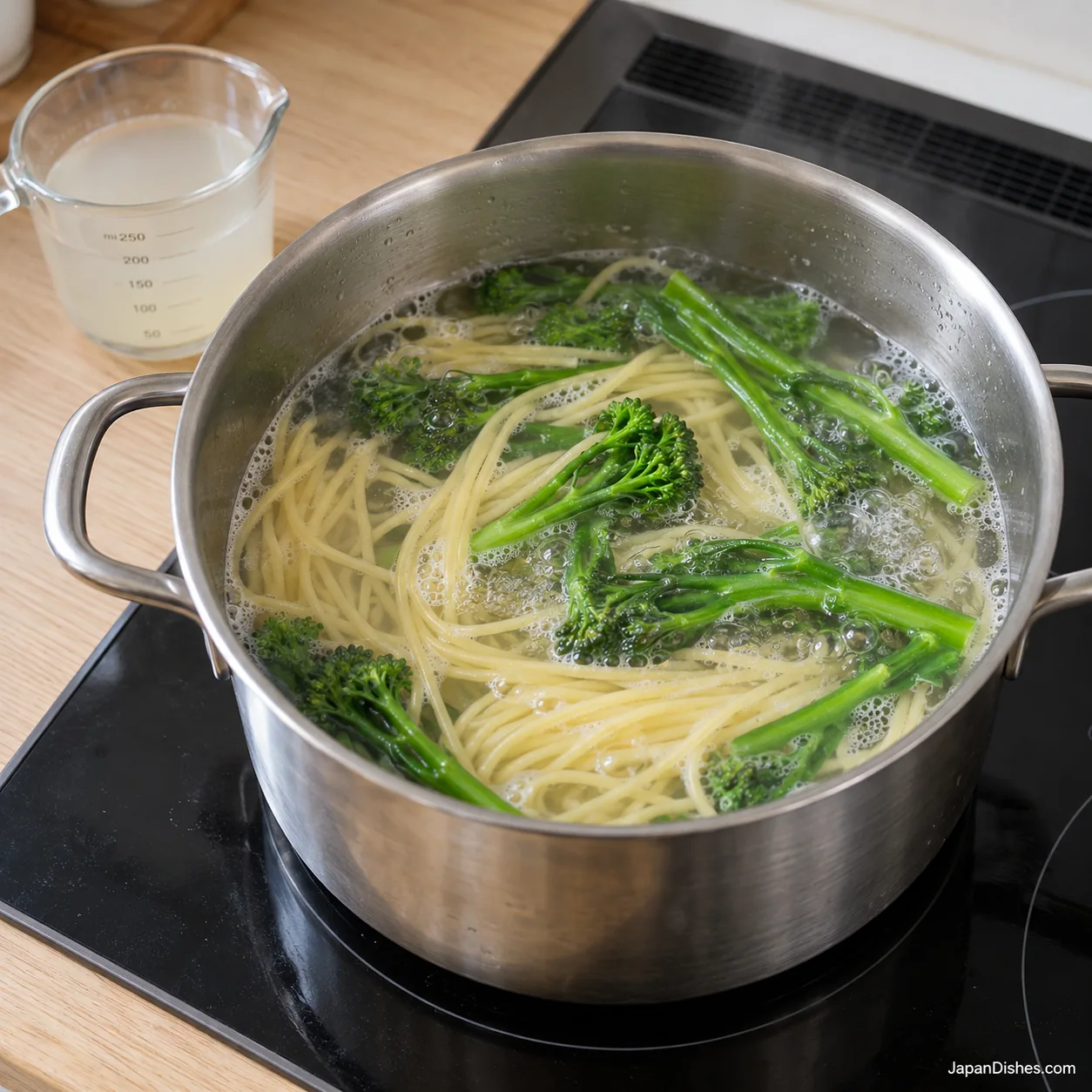
When the water boils, add 10 g salt and 200 g spaghetti. Stir well. Aim to drain 1 minute before the packet’s stated al dente time; add the broccolini for the final 2 minutes of that shortened cooking time. Before draining both together, scoop out 150 ml pasta water. Do not rinse. If the pan is not ready, keep a little cooking water with the drained pasta.
For example, if the packet says 10 minutes, drain at 9 minutes and add the broccolini at minute 7. The stems should be just tender with a little bite. Particularly thick stems may need an extra minute; lift out the pasta if necessary while they finish.
3. Sear the shrimp and set them aside
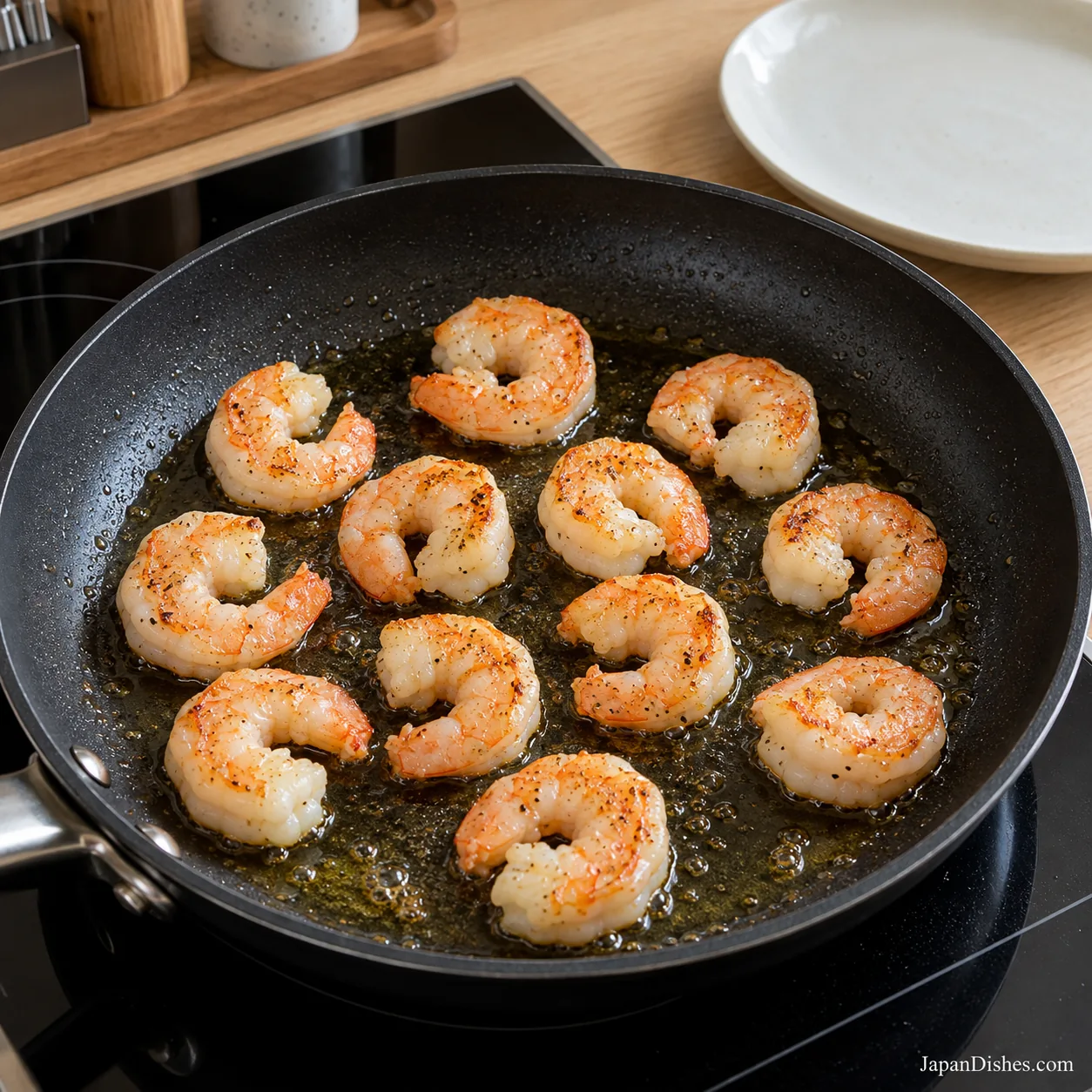
While the pasta cooks, warm 1 tablespoon olive oil in a 28 cm frying pan over medium-high heat. Add the shrimp in a single layer. Cook about 90 seconds to 2 minutes per side, depending on size, until the centers reach 63°C (145°F) and the flesh is pearly and opaque throughout. Transfer to a clean plate. Lower the heat before making the sauce.
A little color on the outside is welcome, but prolonged frying makes shrimp firm and dry. Check a thick piece rather than judging by its curled shape alone. If the pan is too small for one uncrowded layer, work in batches and allow extra time.
4. Make the light garlic soy-butter sauce
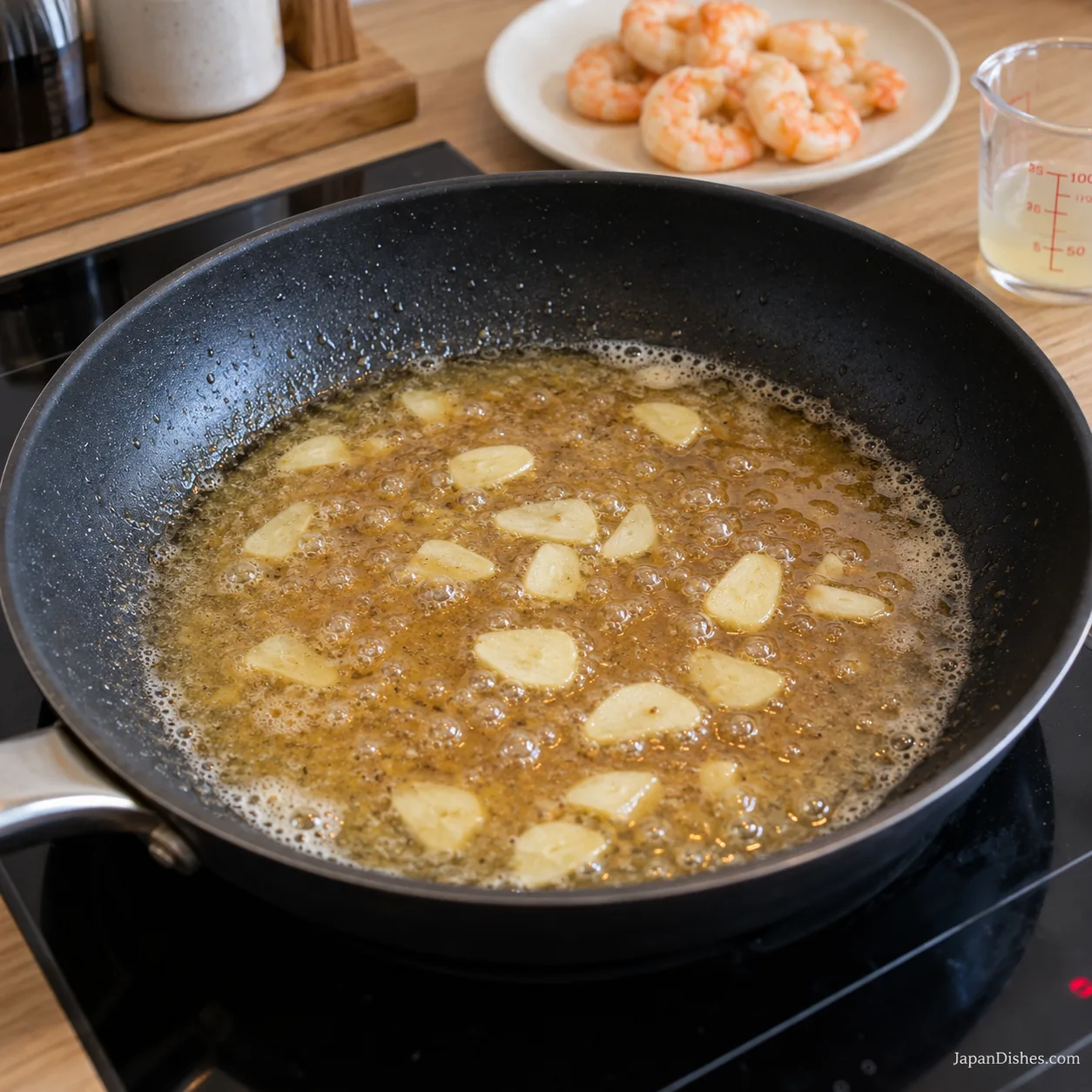
Over medium-low heat, add 20 g unsalted butter and the sliced garlic to the same pan. Cook gently for 30–60 seconds, stirring, until fragrant and still pale. Add 1 tablespoon Japanese soy sauce, 2 tablespoons unsalted prepared dashi and 2 tablespoons of the reserved pasta water. Let the thin sauce bubble gently for about 30 seconds; do not reduce it to a glaze.
If the pan is very hot after searing, lift it off the heat briefly before adding butter. Remove burnt garlic and remake the sauce in a clean pan if necessary.
5. Toss, adjust and serve straight away
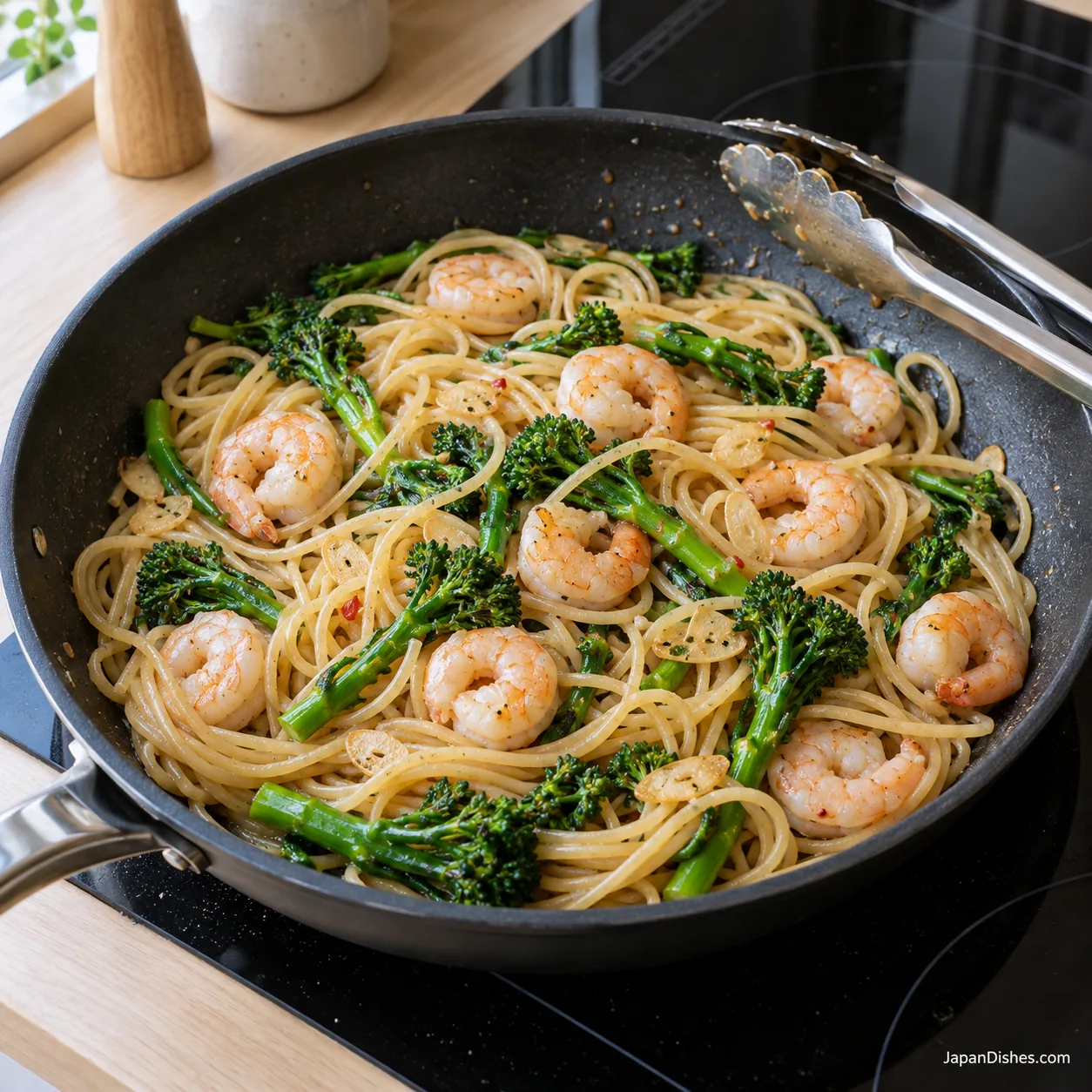
Add the drained spaghetti and broccolini to the sauce, then return the cooked shrimp and their juices. Toss over medium-low heat for 30–60 seconds, just until hot and lightly coated. Add reserved pasta water a tablespoon at a time if the strands look dry. Take off the heat, stir in 1–2 teaspoons optional crunchy chili oil to taste, and divide between two warm shallow bowls. Serve immediately.
Taste a noodle before adding extra soy sauce. Pasta water, soy and chili oil all contribute seasoning. The finished sauce should cling lightly to the spaghetti, with no thick sticky coating or deep pool left underneath.
Tips for tender shrimp and glossy noodles
Keep a little pasta water back
The cloudy water helps the butter and seasoning spread over the noodles. Add small splashes while tossing, then pause to see how the pan changes. You do not need to use the entire 150 ml; it is a reserve, not a measured sauce ingredient.
Give the shrimp their own short cooking stage
Setting cooked shrimp aside protects them while the sauce comes together. Return them only for the brief final toss. Use a clean plate and tongs for cooked seafood rather than the unwashed equipment used for raw shrimp.
Watch the garlic and the heat
The frying pan holds heat after searing. Lower the burner and give it a moment before adding butter. Garlic slices can go from pale to bitter quickly, particularly in a thin pan. The sauce needs a gentle bubble, not a fierce boil.
Make two portions comfortably
A large pan gives spaghetti room to move. For four portions, use two pans or cook in two rounds; doubling everything in a small pan makes tossing awkward and can overcook the vegetables.
Recipe variations
Mild plates: Leave the chili oil out of the pan and offer it at the table. For extra aroma without heat, use the garlic already in the recipe rather than substituting an unknown amount of seasoned chili sauce.
Mushroom version: Replace the shrimp with 200 g sliced mushrooms and brown them until their released liquid evaporates, allowing extra time. Use unsalted kombu or mushroom dashi. Check the chili oil label too; a dish with fish-based stock is not vegetarian.
Different vegetables: Thin asparagus pieces can replace broccolini, with tenderness checked during the final boil. Baby spinach needs only a brief wilt in the frying pan at the end. For a gluten-free version, choose suitable pasta, certified gluten-free tamari and verified gluten-free stock and chili oil; follow the pasta packet’s timing.
What to serve with the pasta
Serve this shrimp and broccolini pasta as the main dish, with a small cucumber salad or a simple green side. For another Japanese noodle dinner, try our Garlic Pepper Yaki Udon. Seafood lovers can also bookmark our Japanese Shrimp Tempura for a different evening. The pictured links below lead to those recipes.
Storage and reheating
This pasta is nicest immediately, while the noodles are supple and the shrimp tender. If you have leftovers, portion them into shallow containers and refrigerate promptly, within 2 hours of cooking, or within 1 hour when the temperature is above 32°C (90°F). Keep the refrigerator at 4°C (40°F) or below. Do not leave the pan on the counter until completely cold.
For this dish, plan to eat refrigerated leftovers within 2 days for better texture. Reheat only the portion needed with a splash of water, covered, stirring to distribute heat, until it reaches 74°C (165°F) throughout. Shrimp will become firmer on reheating. Freezing is possible, but the noodles and greens lose their pleasant bite; a fresh small batch is preferable.
For more guidance, see the FDA’s seafood handling advice and USDA food storage and reheating guidance.
Frequently asked questions
Can I use frozen shrimp?
Yes. Thaw them in the refrigerator first, then peel, devein and dry them thoroughly. The 30-minute recipe time starts with thawed, prepared shrimp; it does not include thawing. Frozen shrimp added straight to the pan will release water and cook unevenly.
Can I use ordinary broccoli?
Yes. Use small florets and thin slices of peeled stalk. Cook them until just tender, checking before draining. Large broccoli chunks need longer than slender broccolini pieces, so adjust the vegetable timing without overcooking the spaghetti.
Do I need dashi soy sauce?
No. The measured base here is 15 ml regular Japanese soy sauce plus 30 ml unsalted prepared dashi. A bottled dashi soy sauce or noodle soup concentrate has its own dilution instructions and should not replace both quantities blindly.
Why is my pasta dry or too salty?
For dryness, toss with a small splash of reserved pasta water and serve promptly. For saltiness, first check whether the stock or chili oil was already seasoned. More soy sauce is not the fix; next time reduce salty additions and season only after tasting.
Can I prepare it ahead?
You can trim the broccolini, slice the garlic and measure the sauce ingredients ahead. Keep prepared shrimp covered and refrigerated separately. Cook the pasta and finish the pan shortly before serving for the best texture.
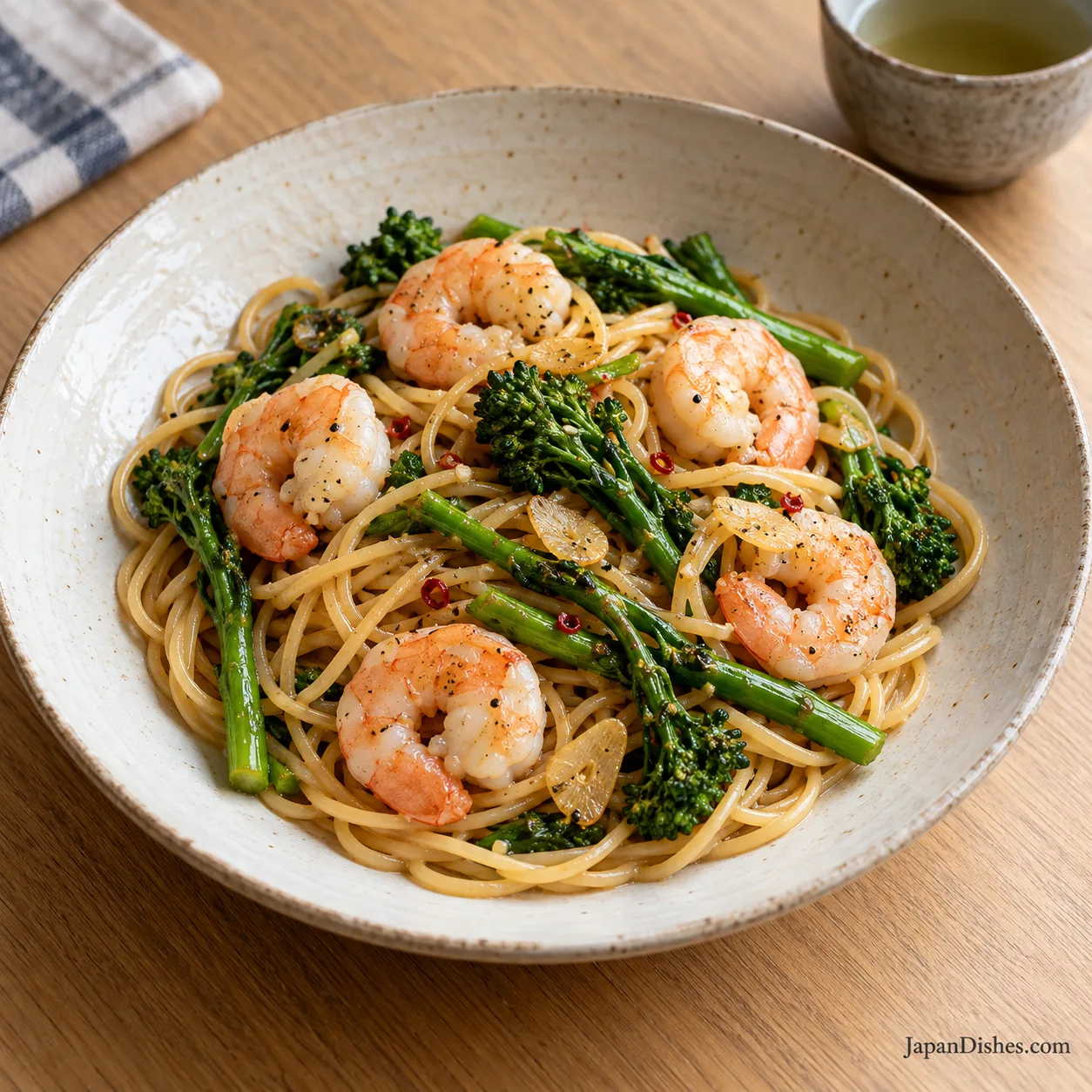
Japanese-style Shrimp and Broccolini Pasta 海老とブロッコリーニの和風パスタ
Course: Main courseCuisine: JapaneseDifficulty: Easy2
portions10
minutes20
minutes30
minutesJapanese-style shrimp and broccolini pasta with a light garlic soy-butter sauce, unsalted dashi and optional chili oil. Two servings in about 30 minutes using thawed, prepared shrimp.
Ingredients
200 g (7 oz) dry spaghetti
240 g (8½ oz) raw shrimp, weighed peeled and deveined, tails removed, fully thawed
180 g (6⅓ oz) broccolini, trimmed and cut into 5 cm pieces; split thick stems
2 garlic cloves, thinly sliced
15 ml (1 tablespoon) olive oil
20 g unsalted butter
15 ml (1 tablespoon) regular Japanese soy sauce
30 ml (2 tablespoons) prepared unsalted dashi, or water
5–10 ml (1–2 teaspoons) crunchy chili oil, optional, to taste
Freshly ground black pepper, to taste
2.5 liters water and 10 g salt, for boiling pasta
150 ml pasta cooking water, reserved; add only as needed
Directions
- Start heating 2.5 liters of water in a large pot. Pat 240 g thawed, peeled and deveined tail-off shrimp dry and season with a little black pepper. Trim 180 g broccolini into 5 cm pieces, splitting thick stems lengthwise. Thinly slice 2 garlic cloves. Measure the soy sauce, unsalted dashi and butter; keep the shrimp chilled until cooking.

- When the water boils, add 10 g salt and 200 g spaghetti. Stir well. Aim to drain 1 minute before the packet’s stated al dente time; add the broccolini for the final 2 minutes of that shortened cooking time. Before draining both together, scoop out 150 ml pasta water. Do not rinse. If the pan is not ready, keep a little cooking water with the drained pasta.
- While the pasta cooks, warm 1 tablespoon olive oil in a 28 cm frying pan over medium-high heat. Add the shrimp in a single layer. Cook about 90 seconds to 2 minutes per side, depending on size, until the centers reach 63°C (145°F) and the flesh is pearly and opaque throughout. Transfer to a clean plate. Lower the heat before making the sauce.
- Over medium-low heat, add 20 g unsalted butter and the sliced garlic to the same pan. Cook gently for 30–60 seconds, stirring, until fragrant and still pale. Add 1 tablespoon Japanese soy sauce, 2 tablespoons unsalted prepared dashi and 2 tablespoons of the reserved pasta water. Let the thin sauce bubble gently for about 30 seconds; do not reduce it to a glaze.
- Add the drained spaghetti and broccolini to the sauce, then return the cooked shrimp and their juices. Toss over medium-low heat for 30–60 seconds, just until hot and lightly coated. Add reserved pasta water a tablespoon at a time if the strands look dry. Take off the heat, stir in 1–2 teaspoons optional crunchy chili oil to taste, and divide between two warm shallow bowls. Serve immediately.
Notes
- Timing: 10 minutes preparation and 20 minutes cooking, about 30 minutes total, with pasta and pan work overlapping. Start with thawed, peeled shrimp; allow extra time for thawing or peeling. Use unsalted dashi, not undiluted noodle soup concentrate. Cook shrimp to 63°C (145°F), with pearly opaque flesh. Chili oil is optional and varies in salt and heat. Refrigerate leftovers promptly and use within 2 days for texture; reheat to 74°C (165°F). Contains shellfish, wheat, soy and milk; check stock and chili oil labels for additional allergens.