
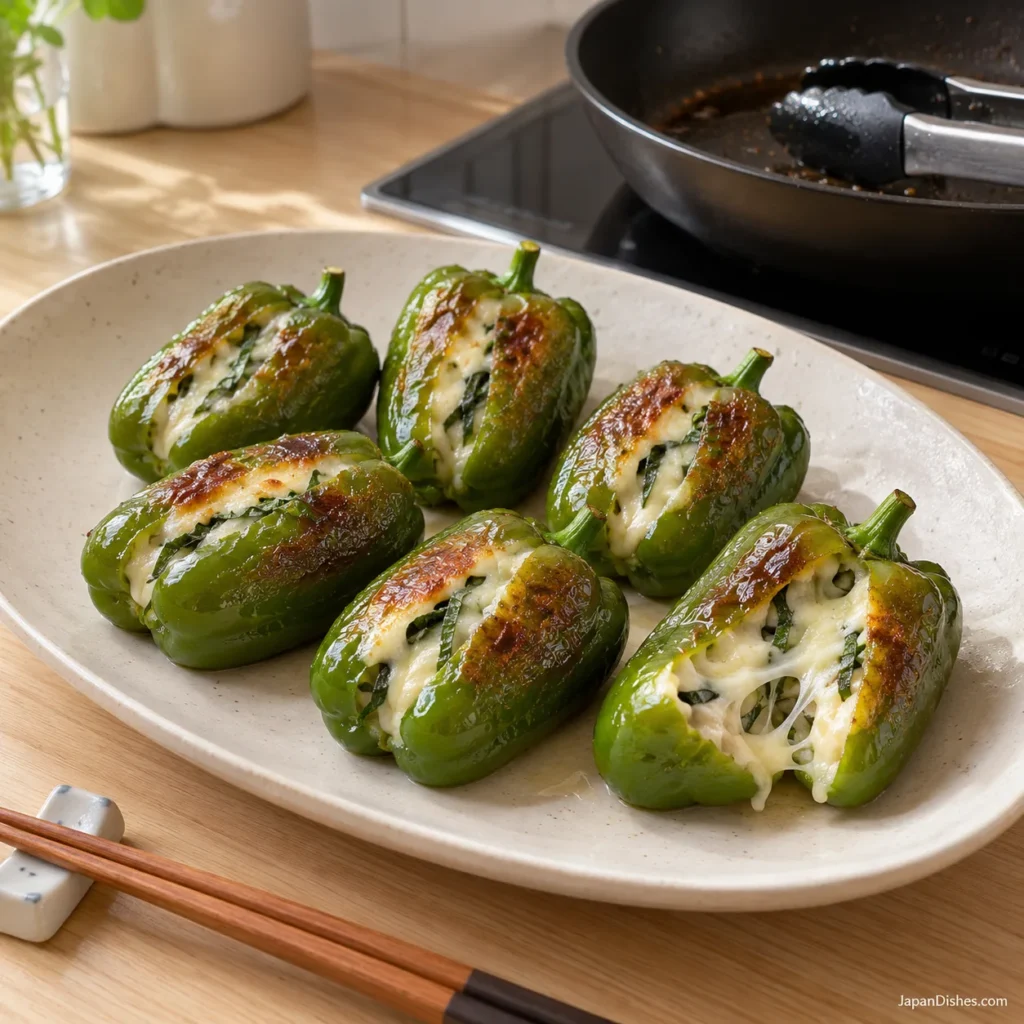
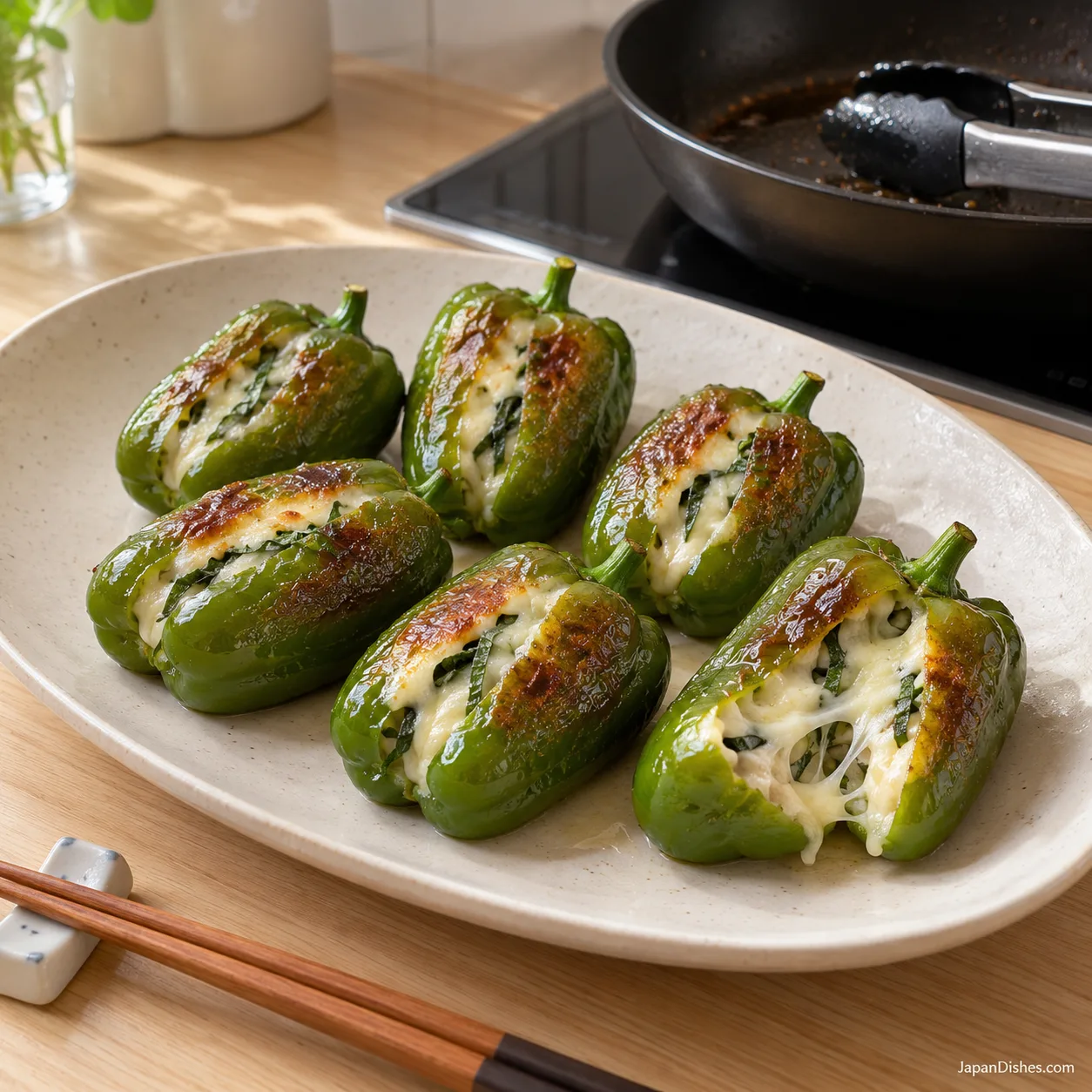
Want cheese-stuffed piman with tender green peppers and a creamy center, without leaving most of the cheese stuck to the pan? Keep the peppers mostly whole, use a modest filling and cook with the openings facing up. A short covered steam finishes the inside after the skins have browned.
Welcome to Hana’s kitchen at JapanDishes. This Japanese-style appetizer brings together the gentle bitterness of piman, milky mozzarella and fragrant green shiso. We’ll make six peppers, enough for three small side servings, in about 20 minutes. Ten photo stages show the preparation and cooking separately, and the recipe card repeats the same detailed directions.
What are cheese-stuffed piman?
Piman are small green sweet peppers commonly used in Japanese home cooking. They are usually thinner-walled than large supermarket bell peppers and have a pleasantly grassy, slightly bitter flavor. They are not the same as hot green chilies. Their size makes them convenient little pockets for melted cheese.
Cheese-filled peppers have attracted recent attention in Japan. An October 17 report by Netlab covered a shiso-and-Camembert version by creator @you_recipe_ that had passed four million video views at the time of reporting. The version here uses measured mozzarella portions, removes the seed core and explains each stage for home cooks. It is a variation on the idea, not a claim to have invented stuffed peppers.
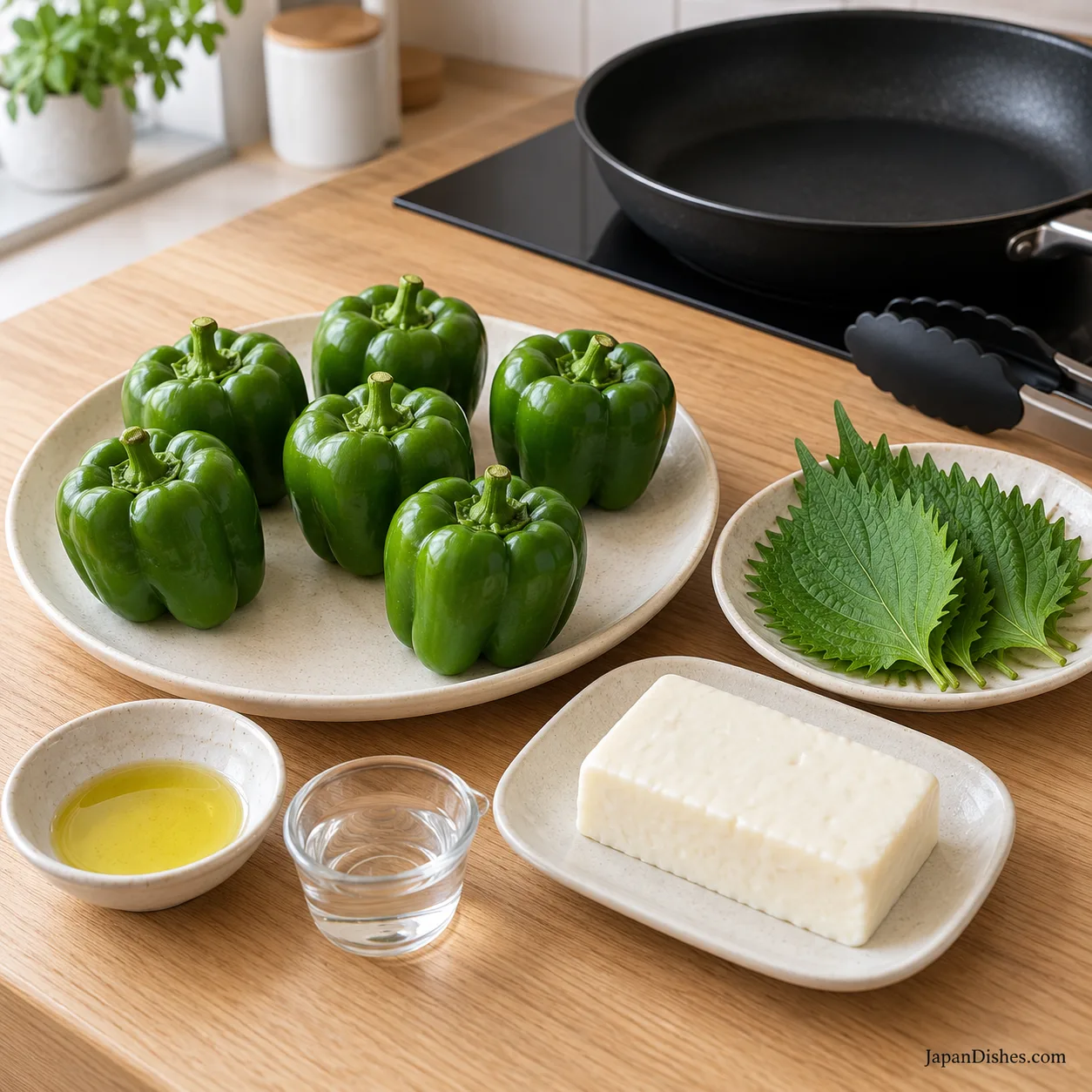
Ingredients for cheese-stuffed piman
- 6 small Japanese green piman, about 180–240 g total
- 90 g low-moisture mozzarella, divided into 6 portions of about 15 g
- 6 small green shiso leaves, washed and dried
- 2 teaspoons neutral cooking oil
- 1 tablespoon water, for steaming
- Freshly ground black pepper, to taste
- A small pinch of salt, only if needed after tasting
Choose similarly sized peppers. Look for firm, small piman with intact skins. Six peppers weighing around 30–40 g each are a useful starting point. A large bell pepper has a bigger cavity and thicker walls, so it needs a different filling quantity and longer cooking. Do not substitute an unidentified small green chili just because it looks similar.
Use low-moisture mozzarella. A block or cooking mozzarella is easier to portion than a very wet ball packed in brine. Fresh mozzarella releases more liquid, which can leave the pan watery. Fifteen grams per pepper is a guide, not an instruction to force cheese into a tiny cavity: use less if the slit cannot close loosely.
Shiso supplies the Japanese herbal note. Green shiso, also called oba, has a fresh aroma that can suggest mint, basil and citrus. Use one small leaf per pepper, removing a tough leaf stem. If you cannot find it, omit it for a simpler cheese pepper or try a small basil leaf as a clearly different variation.
Season after cooking. Mozzarella and other melting cheeses vary in saltiness. Start with black pepper and taste a cooled bite before adding salt. This recipe contains milk. If serving someone who follows a vegetarian diet, choose cheese made with a suitable vegetarian rennet and check its label.
Have the tools ready. Use a small sharp knife, teaspoon, board, silicone-tipped tongs and a 24–26 cm pan with a fitted lid. Fill the peppers before heating the pan.
How to make cheese-stuffed piman: ten photo steps
1. Wash, dry and set out the ingredients
Wash the six piman under running water and dry them thoroughly, including around the stems. Wash and pat dry the shiso leaves. Measure the mozzarella, oil and tablespoon of water. Keep the cheese refrigerated until you are ready to portion it. Set the pan, lid and tongs beside the stove, but leave the heat off while preparing the peppers.
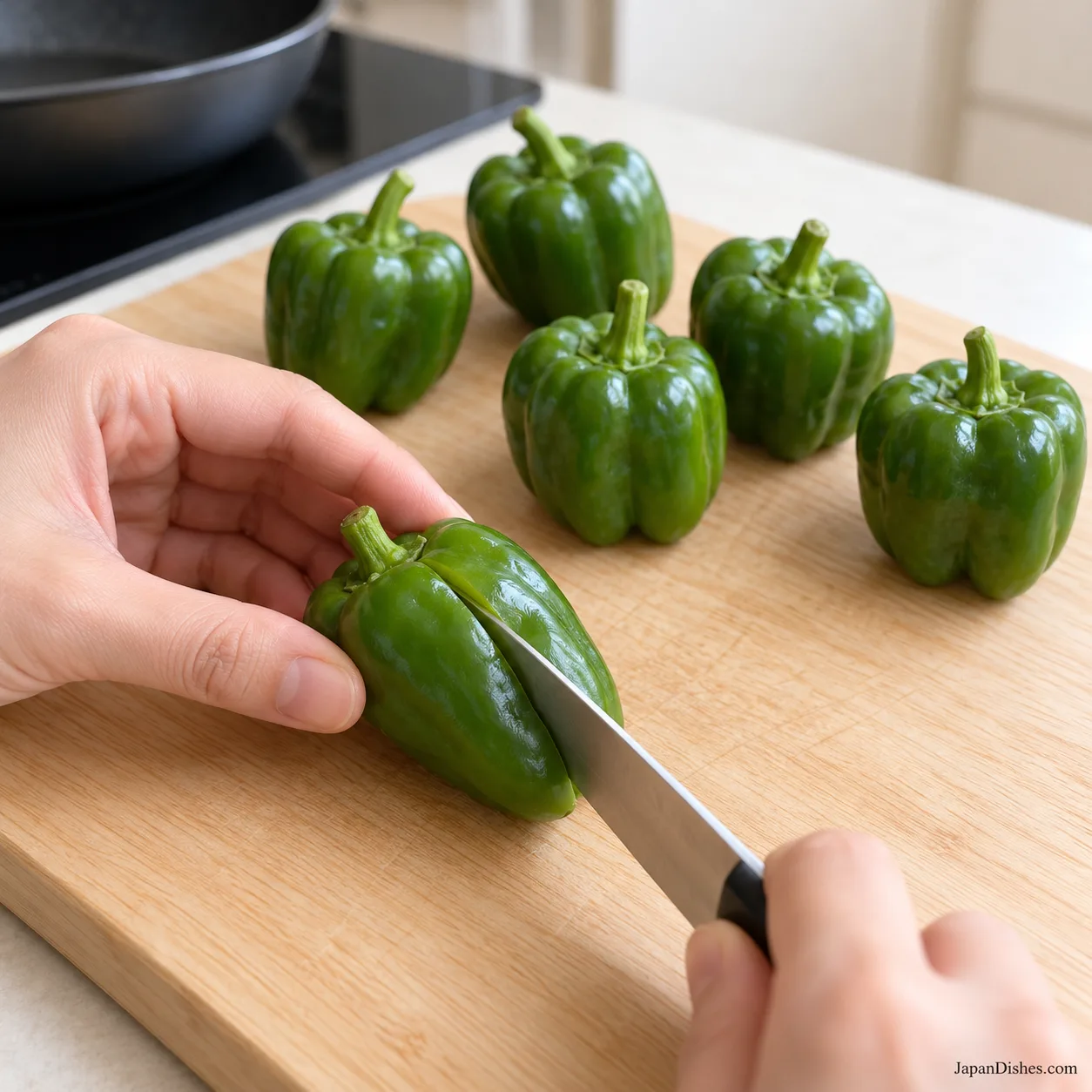
2. Make a slit in one side
Lay a pepper securely on its side on the board. With a small knife, make one lengthwise slit from just below the stem toward the tip, stopping short of both ends. Cut through only the upper wall; do not slice through the opposite side or split it into two halves. Repeat with the other peppers. The connected ends help hold the filling inside.
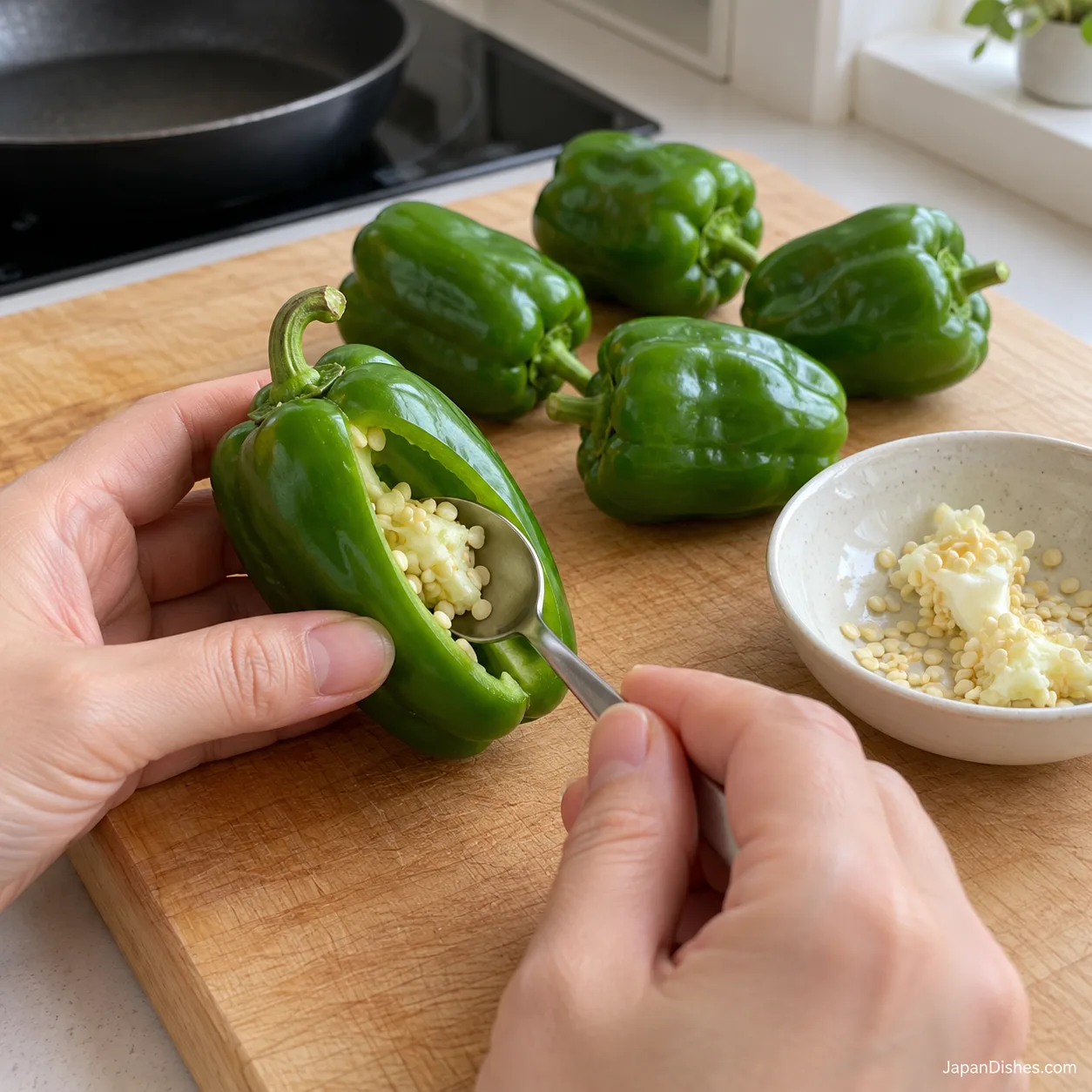
3. Remove the seed core through the opening
Open the slit gently with your fingers. Use the tip of a teaspoon to loosen the pale seed core and lift it out through the opening. Remove loose seeds and inspect the cavity, keeping the outer stem attached for structure. If you rinse the inside, shake out the water and pat dry before filling. Discard any pepper that is spoiled or damaged inside.
4. Divide the cheese and prepare the shiso
Divide the 90 g mozzarella into six portions of about 15 g. Cut each portion into short narrow batons that fit inside a pepper without pushing against its ends. Remove tough stems from the six shiso leaves. Fold or trim an oversized leaf so it can fit into the cavity; do not pack several leaves into one pepper just to use them up.
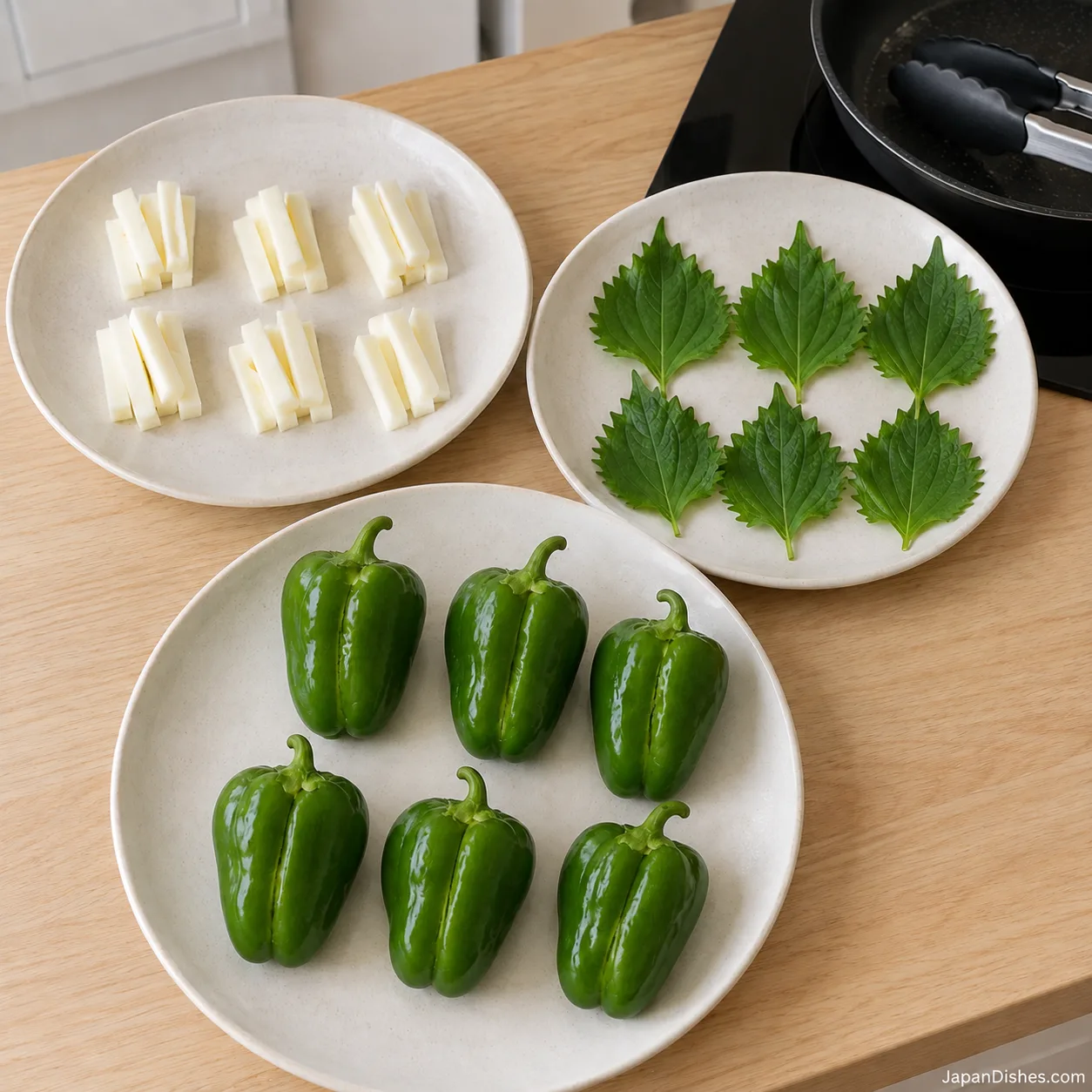
5. Tuck the filling inside
Place one shiso leaf inside a pepper, then tuck one cheese portion into it. You can loosely wrap the leaf around the cheese before inserting it if that feels easier. Keep the filling below the opening where possible. Work gently instead of forcing the pepper wide open. Repeat for all six, reducing the cheese portion for any unusually small pepper.
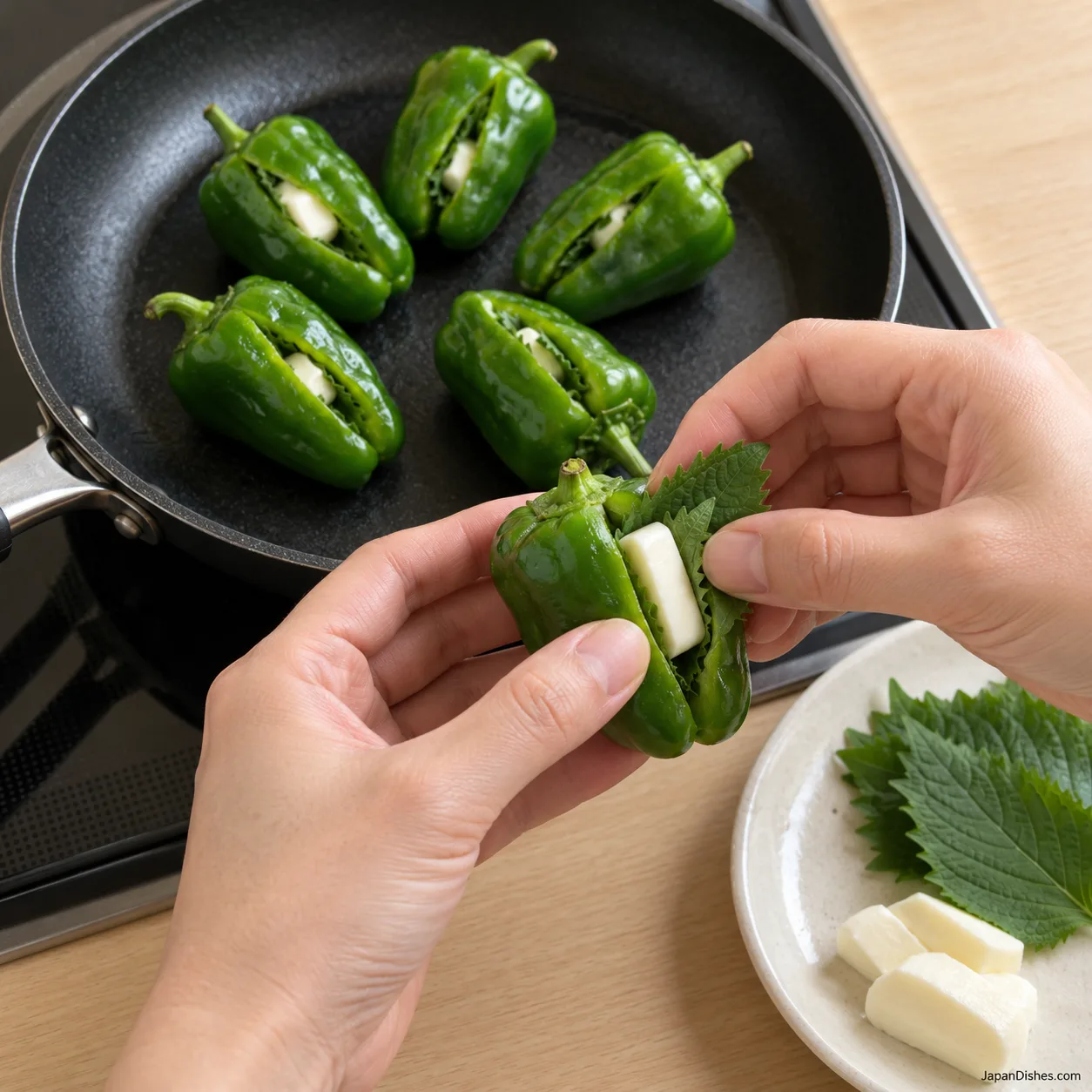
6. Check the openings before cooking
Press the sides of each slit lightly toward one another. They do not need to seal completely, but the cheese should not be piled above the pepper wall. Remove any bits hanging outside and place the peppers on a plate with openings facing up. No toothpicks are needed for this method. Keep that upward orientation when you transfer them to the pan.
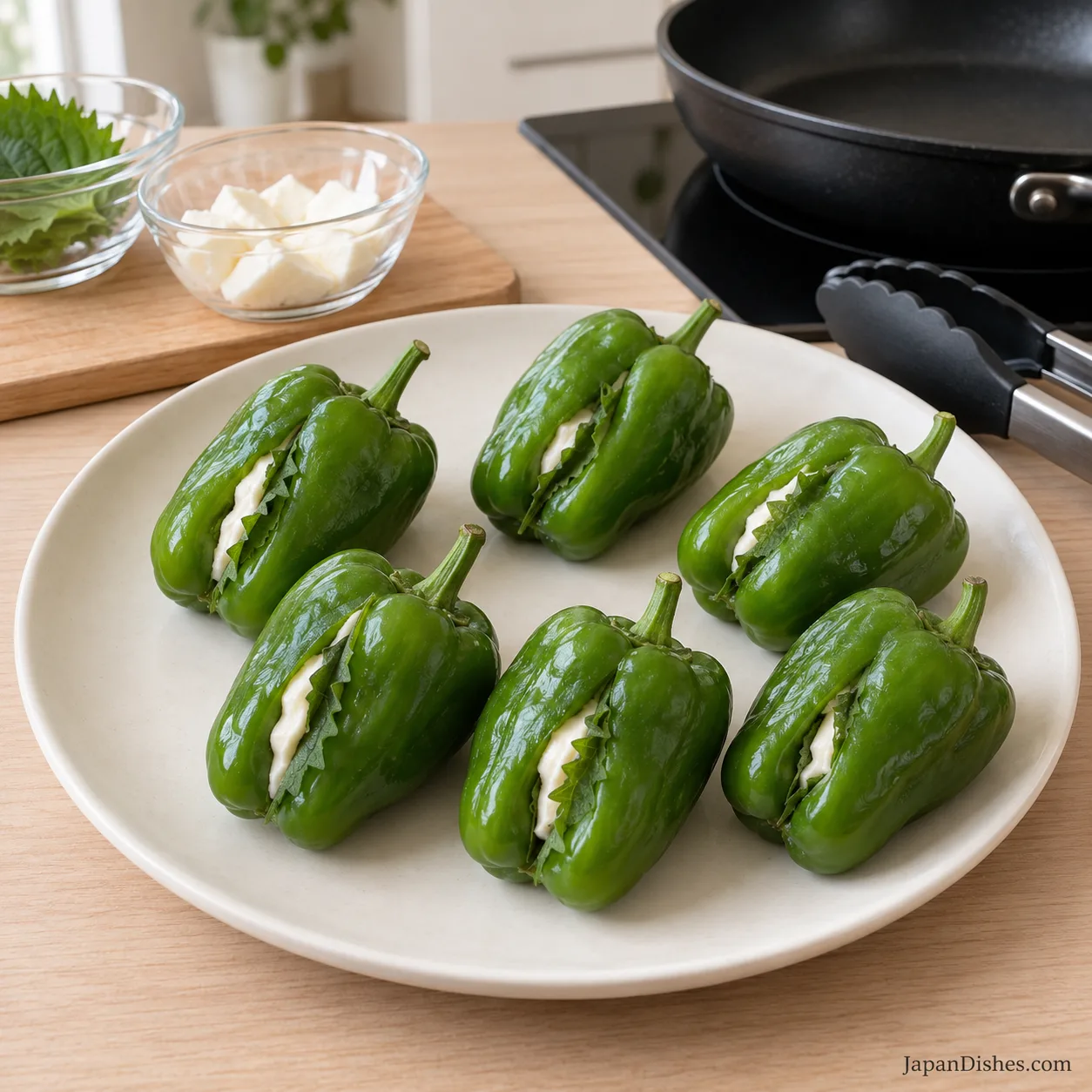
7. Brown the undersides gently
Spread 2 teaspoons oil in the pan and warm over medium-low to medium heat. Add the six peppers with their openings facing up, leaving a little space between them. Cook for about 3–4 minutes, until the undersides develop light brown patches. Use the tongs to lift and inspect one edge. You may tilt them slightly to color a lower side, but do not turn the cheese-filled opening face down.
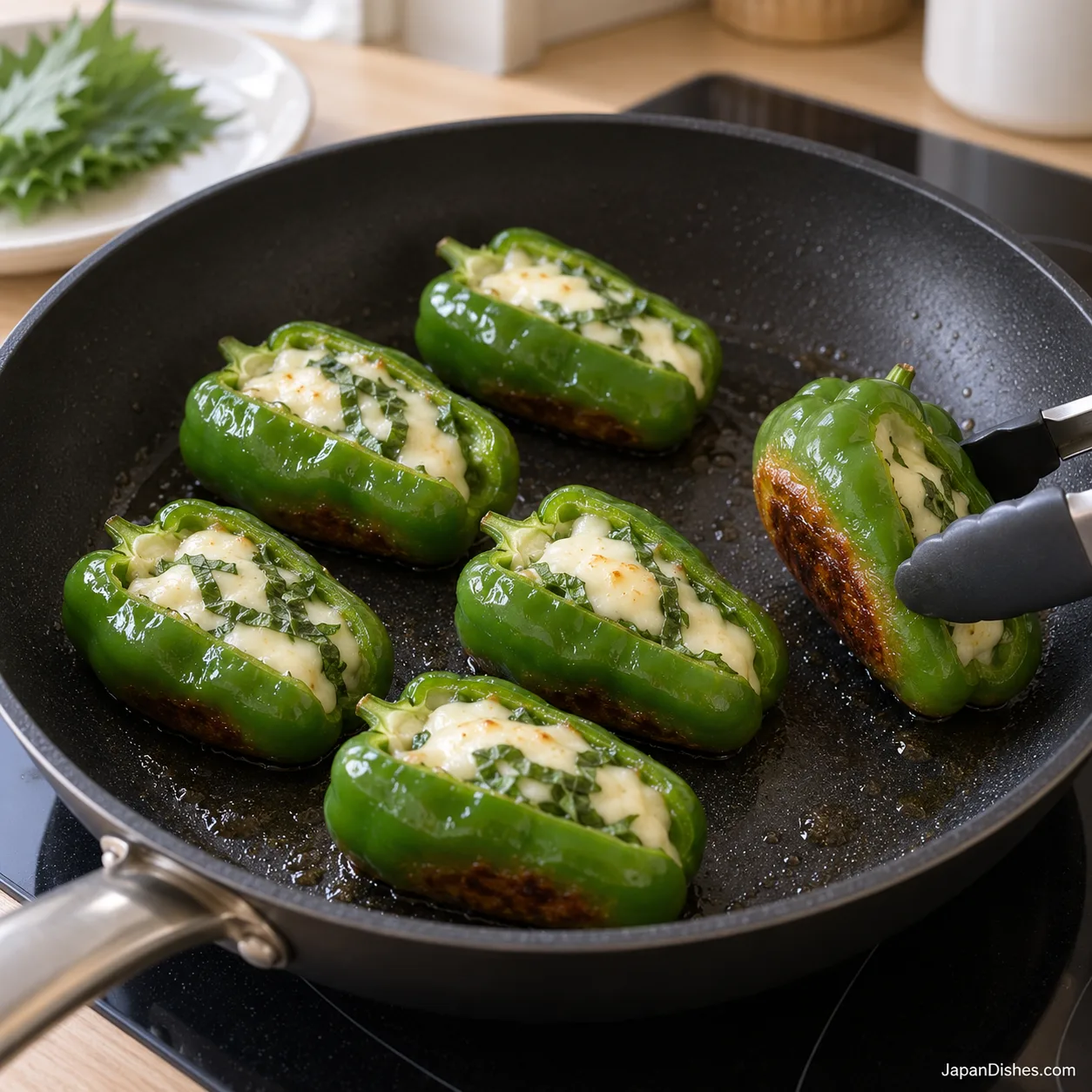
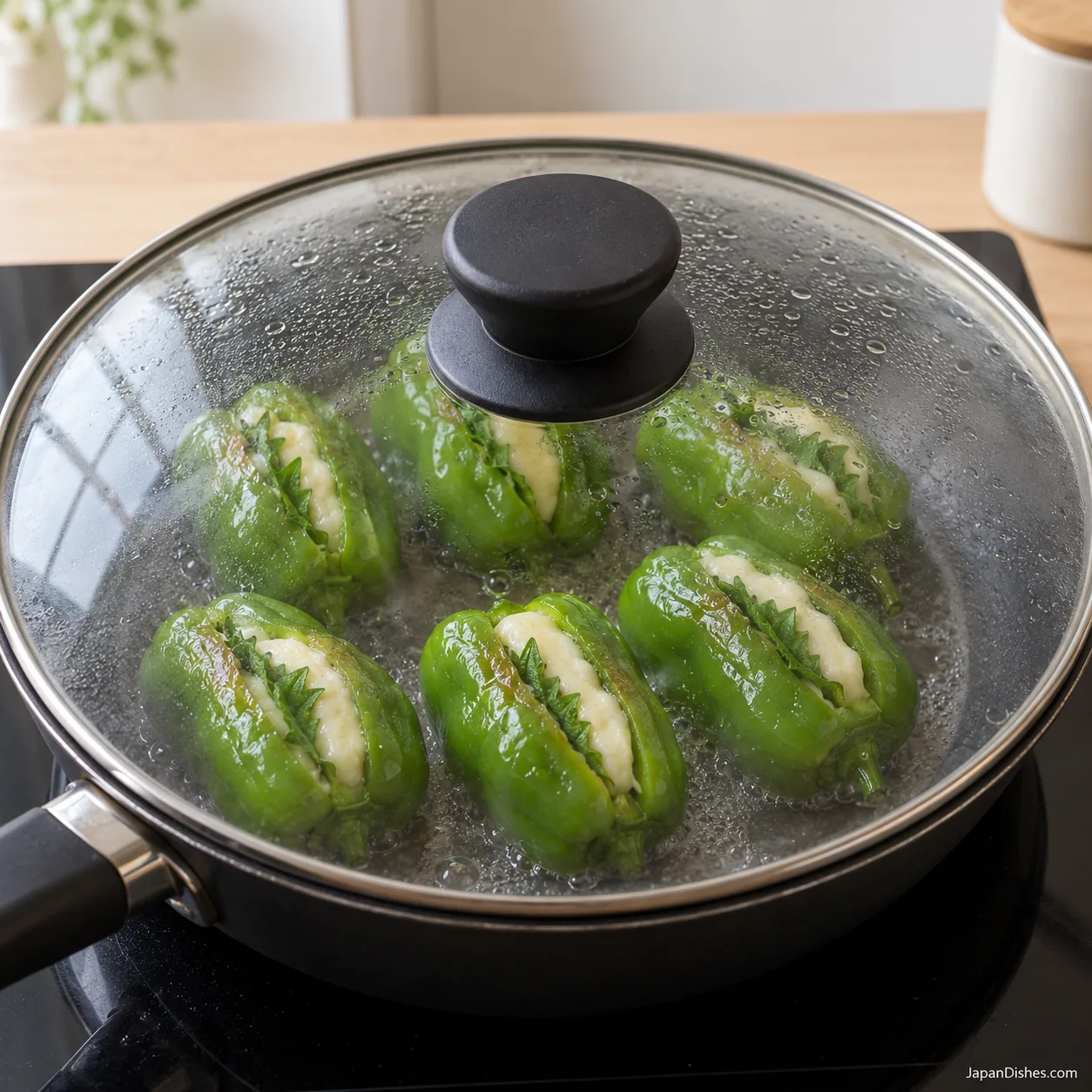
8. Cover and steam until softened
Reduce the heat to low and briefly take the pan off the burner. Carefully add the measured tablespoon of water to an empty area of the pan, keeping your face and hands away from splashes. Cover promptly and return to low heat. Steam for about 3–4 minutes. The cheese should melt and the pepper walls should soften. If the pan dries before they soften, add another teaspoon of water carefully and continue briefly.
9. Uncover and check the texture
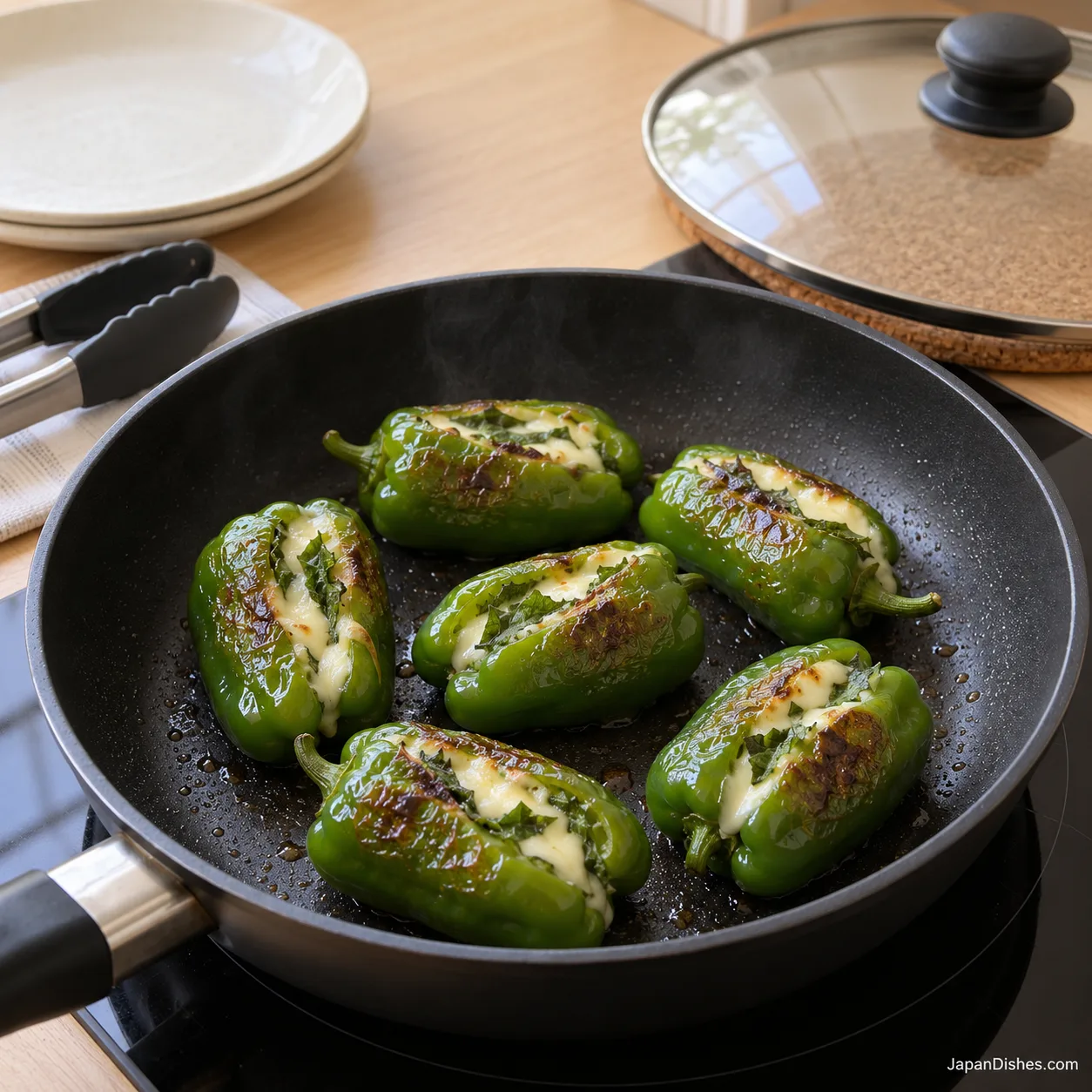
Lift the lid away from your face so steam escapes safely. Check one pepper with the tongs: its wall should yield gently, and the filling should be melted rather than a cold solid block. If needed, cover for another minute. Once ready, cook uncovered over low to medium-low heat for 30–60 seconds to evaporate excess water. Avoid boiling away all moisture over fierce heat or burning any escaped cheese.
10. Season and serve warm
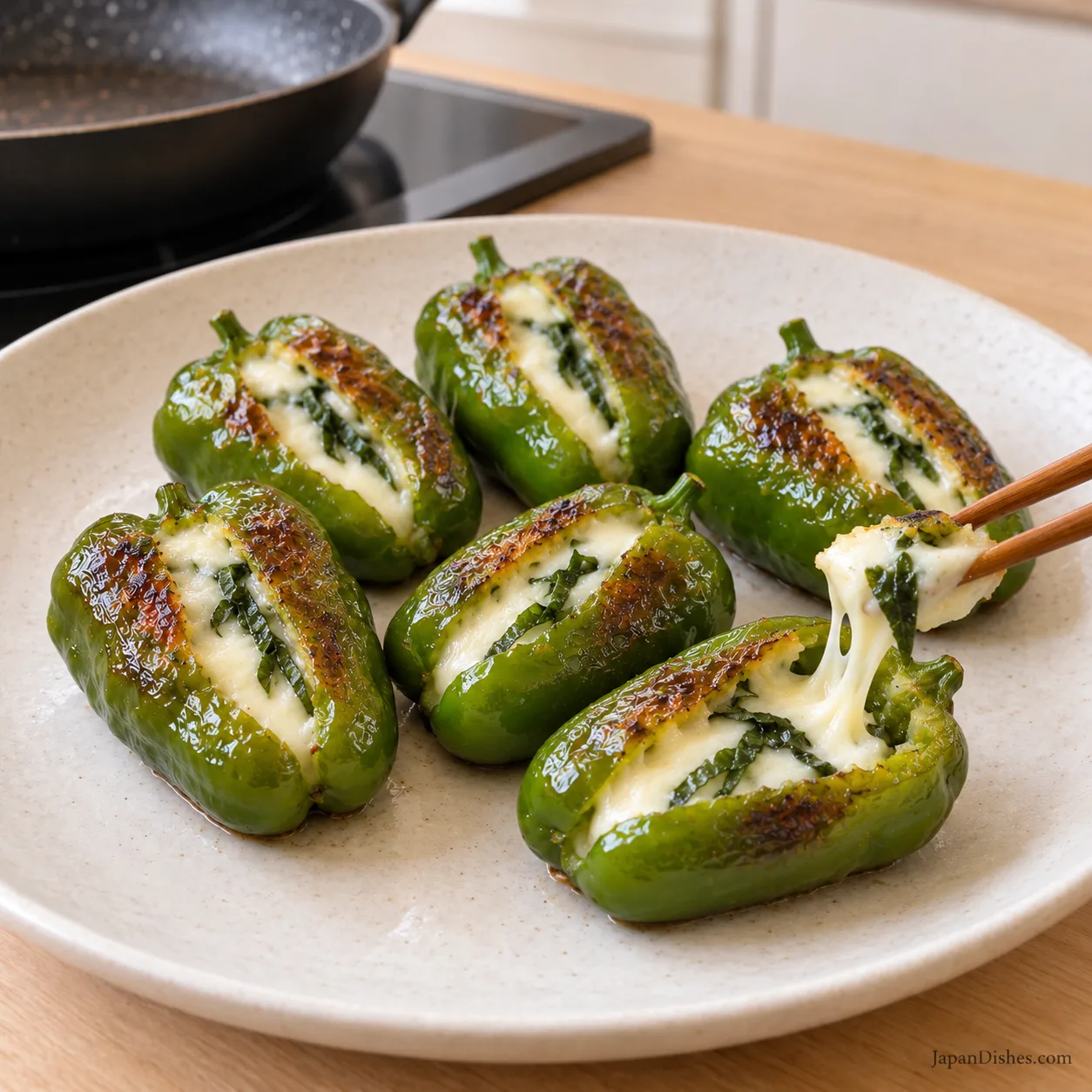
Transfer the peppers carefully to a serving plate. Add black pepper and, only if needed, a small pinch of salt. Let them stand briefly before tasting because melted cheese can be very hot. Serve while the filling is soft. Cut or bite the cooked pepper away from the outer stem and discard the stem rather than eating it. Divide into three side servings of two peppers each.
Troubleshooting the peppers and filling
The cheese leaks out
The cavity may be overfilled, the slit may be too wide, or the opening may have turned downward. Use a smaller cheese portion, keep both ends connected and move the peppers gently. A little melted cheese escaping is normal; a large puddle is a cue to reduce the filling next time.
The skin browns but the pepper is hard
Browning and softening are separate stages. Lower the heat and use the short covered steam to cook the wall through. Thick bell peppers take longer than small piman, so do not judge them only by the color of the skin.
The pan is watery
Wet peppers, brined mozzarella or too much steaming water can contribute. Dry the peppers and shiso, use low-moisture cheese and measure the water. Finish uncovered briefly, watching the pan rather than leaving it on high heat.
Variations
A different cheese: A mild melting cheese such as young Gouda gives a different flavor and stretch. Keep the filling modest and expect the melt to vary. Do not add extra salt until tasting.
No shiso available: Leave it out, or use a small basil leaf and describe the result as a basil variation. The pepper-and-cheese method still works, but the herb flavor will be different.
Changing the size: For larger bell peppers, use a recipe written for their thicker walls and capacity. Simply increasing the cheese while keeping the same cooking time is unlikely to give the same result.
What to serve with cheese-stuffed piman
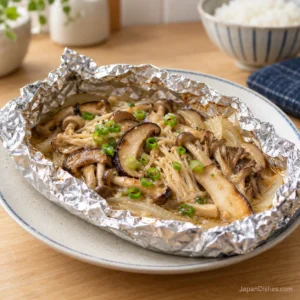
Serve cheese-stuffed piman as a small appetizer or alongside rice and a main dish. For a vegetable-focused meal, pair them with our Pan-Fried Teriyaki Tofu Bowl. Our Miso Butter Mushrooms in Foil offer another warm side with a contrasting texture. Keep portions modest when serving several rich dishes together.
Make ahead, storage and reheating
These are best freshly cooked, when the cheese is soft and the pepper still has some texture. You can prepare the slit, cleaned peppers and portion the filling several hours ahead; keep them covered in the refrigerator and fill shortly before cooking. Peppers cooked straight from the refrigerator may need a little longer under the lid.
Refrigerate leftovers promptly in a shallow covered container, within 2 hours of cooking, or within 1 hour if the room is above 32°C/90°F. Keep the refrigerator at 4°C/40°F or colder and aim to use them within 2 days for quality. Do not leave a serving plate out overnight.
Reheat only the amount you need, gently covered in a pan or in the microwave, until the pepper and filling reach 74°C/165°F throughout. Check with a food thermometer; melted-looking cheese alone does not confirm the temperature. See the USDA guidance on reheating leftovers. Freezing is possible but tends to soften the pepper further, so this small batch is better cooked for immediate serving.
Frequently asked questions
Are piman spicy?
Japanese piman are mild sweet peppers with a slightly bitter green flavor. They are not interchangeable with jalapeños or other hot chilies. Check the variety when buying unfamiliar small peppers.
Can I use fresh mozzarella in brine?
Low-moisture mozzarella is the recommended choice for this version. Fresh mozzarella releases more liquid, even after draining, and can make the cavity and pan watery.
Do I need to remove the seeds?
This version removes the seed core so you can inspect the inside and make room for the measured filling. Keep the pepper mostly whole by working through the slit, rather than cutting it into two boats.
Can I make this without a lid?
The covered stage helps soften the pepper and melt the filling without burning the underside. Use a lid suitable for the pan. Open-pan cooking alone may leave a firm wall and cold filling before the skin becomes too dark.
Is it the same as the viral Camembert recipe?
No. This is a mozzarella variation with the seed core removed and measured portions for six peppers. The related Camembert-and-shiso video helped bring attention to the idea; its quantities and ingredients are not presented as this recipe.
Use the texture cues in the steps as well as the timing: pepper size, cheese and pan heat can change how quickly the filling melts.
Cheese-Stuffed Piman with Shiso ピーマンのチーズ詰め
Course: AppetizerCuisine: JapaneseDifficulty: Easy3
servings10
minutes10
minutes20
minutesJapanese-style cheese-stuffed piman with mozzarella and shiso. Makes six small peppers, enough for three side servings, in about 20 minutes. Ten photo stages show the filling and pan-steaming method.
Ingredients
6 small Japanese green piman, about 180–240 g total
90 g low-moisture mozzarella, divided into 6 portions of about 15 g
6 small green shiso leaves, washed and dried
2 teaspoons neutral cooking oil
1 tablespoon water, for steaming
Freshly ground black pepper, to taste
A small pinch of salt, only if needed after tasting
Directions
- Wash the six piman under running water and dry them thoroughly, including around the stems. Wash and pat dry the shiso leaves. Measure the mozzarella, oil and tablespoon of water. Keep the cheese refrigerated until you are ready to portion it. Set the pan, lid and tongs beside the stove, but leave the heat off while preparing the peppers.

- Lay a pepper securely on its side on the board. With a small knife, make one lengthwise slit from just below the stem toward the tip, stopping short of both ends. Cut through only the upper wall; do not slice through the opposite side or split it into two halves. Repeat with the other peppers. The connected ends help hold the filling inside.
- Open the slit gently with your fingers. Use the tip of a teaspoon to loosen the pale seed core and lift it out through the opening. Remove loose seeds and inspect the cavity, keeping the outer stem attached for structure. If you rinse the inside, shake out the water and pat dry before filling. Discard any pepper that is spoiled or damaged inside.
- Divide the 90 g mozzarella into six portions of about 15 g. Cut each portion into short narrow batons that fit inside a pepper without pushing against its ends. Remove tough stems from the six shiso leaves. Fold or trim an oversized leaf so it can fit into the cavity; do not pack several leaves into one pepper just to use them up.
- Place one shiso leaf inside a pepper, then tuck one cheese portion into it. You can loosely wrap the leaf around the cheese before inserting it if that feels easier. Keep the filling below the opening where possible. Work gently instead of forcing the pepper wide open. Repeat for all six, reducing the cheese portion for any unusually small pepper.
- Press the sides of each slit lightly toward one another. They do not need to seal completely, but the cheese should not be piled above the pepper wall. Remove any bits hanging outside and place the peppers on a plate with openings facing up. No toothpicks are needed for this method. Keep that upward orientation when you transfer them to the pan.
- Spread 2 teaspoons oil in the pan and warm over medium-low to medium heat. Add the six peppers with their openings facing up, leaving a little space between them. Cook for about 3–4 minutes, until the undersides develop light brown patches. Use the tongs to lift and inspect one edge. You may tilt them slightly to color a lower side, but do not turn the cheese-filled opening face down.
- Reduce the heat to low and briefly take the pan off the burner. Carefully add the measured tablespoon of water to an empty area of the pan, keeping your face and hands away from splashes. Cover promptly and return to low heat. Steam for about 3–4 minutes. The cheese should melt and the pepper walls should soften. If the pan dries before they soften, add another teaspoon of water carefully and continue briefly.
- Lift the lid away from your face so steam escapes safely. Check one pepper with the tongs: its wall should yield gently, and the filling should be melted rather than a cold solid block. If needed, cover for another minute. Once ready, cook uncovered over low to medium-low heat for 30–60 seconds to evaporate excess water. Avoid boiling away all moisture over fierce heat or burning any escaped cheese.
- Transfer the peppers carefully to a serving plate. Add black pepper and, only if needed, a small pinch of salt. Let them stand briefly before tasting because melted cheese can be very hot. Serve while the filling is soft. Cut or bite the cooked pepper away from the outer stem and discard the stem rather than eating it. Divide into three side servings of two peppers each.
Notes
- Makes six stuffed peppers, three small side servings of two each. Prep about 10 min; cook about 10 min. Use small thin-walled Japanese piman, not hot chilies or large thick-walled bell peppers. Low-moisture mozzarella is recommended. Adjust filling downward for smaller cavities. Keep openings facing up. Contains milk; choose suitable rennet for vegetarian diners. Refrigerate leftovers promptly within 2 hours (1 hour above 32°C/90°F), keep at 4°C/40°F or colder, use within 2 days for quality and reheat to 74°C/165°F throughout.