
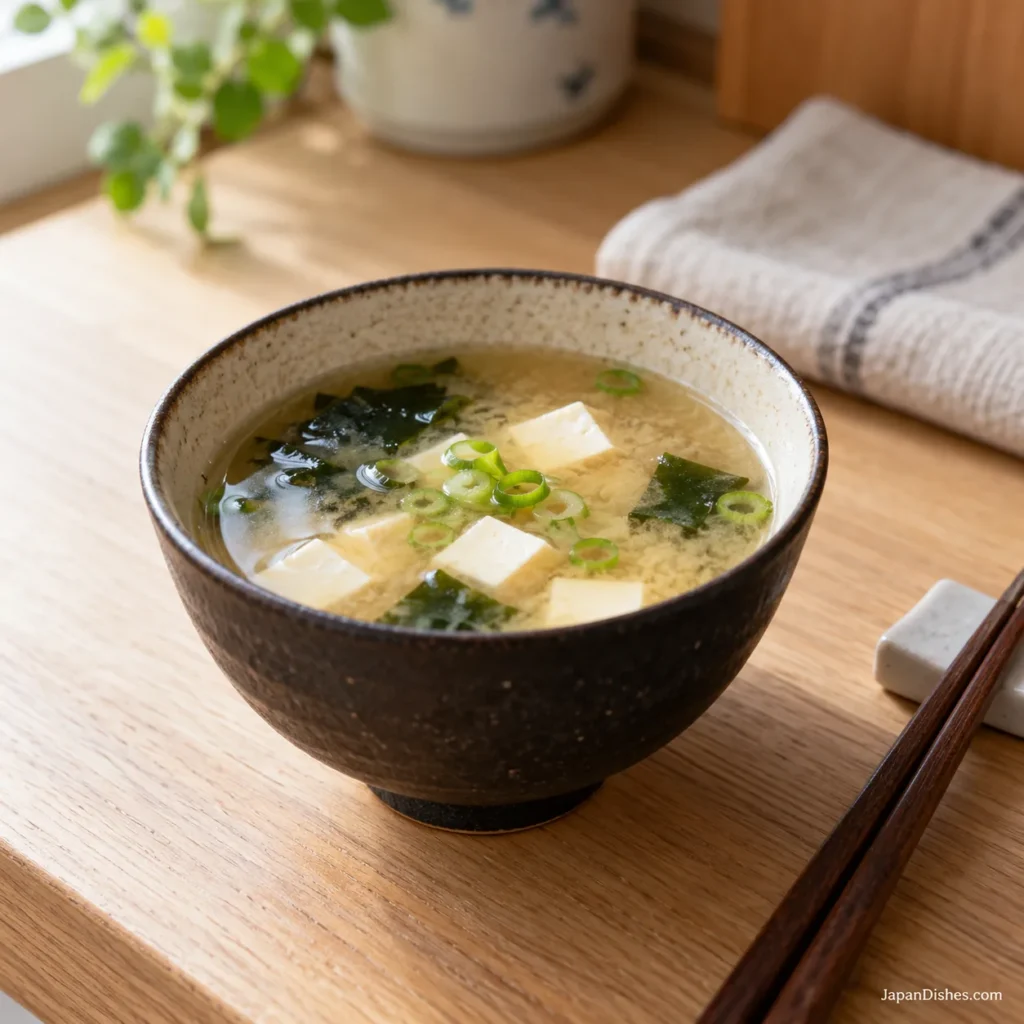
Want homemade miso soup that tastes rounded and savory, with tender tofu and no stubborn lumps of paste? Start with a light dashi, then stir in the miso after turning off the heat. This small change makes the whole bowl easier to get right.
Welcome to Hana’s kitchen at JapanDishes. Today’s recipe keeps things simple: kombu, bonito flakes, tofu, wakame and a little scallion. Follow the six photo steps for four small bowls in about 30 minutes. You’ll also find a vegetarian stock option and the same instructions in the printable recipe card.
Prepare the tofu and garnishes while the kombu warms. Optional 30-minute kombu presoaking is additional.
Table of Contents
What is miso soup?
Miso soup, or misoshiru (味噌汁), is a Japanese soup made by seasoning dashi with fermented miso paste. Tofu and wakame are familiar additions, but the vegetables and miso can change with the season and the cook. This is a light soup to serve alongside rice and a main dish.
The stock here combines kombu with katsuobushi, which are dried bonito flakes. That means the standard recipe contains fish. For a vegetarian bowl, use the stock substitution below and check the miso label for added fish stock. The finished soup should be gently cloudy and easy to sip, with enough space between the tofu pieces.
Ingredients for homemade miso soup
Measure the stock and miso carefully on your first batch. Different pastes vary in saltiness, so the recipe starts with 45 g of miso and leaves room to adjust. You’ll need a medium saucepan, a fine sieve, a measuring jug and a small mixing bowl.
For four small bowls
- 1 liter water, plus a little extra to top up the strained dashi
- 10 g dried kombu
- 15 g thin katsuobushi (dried bonito flakes; contains fish)
- 200 g silken tofu, gently drained and cut into roughly 1.2 cm cubes
- 2 g dried wakame, soaked separately in water and drained according to the packet
- 45–60 g plain white or blended miso paste, added to taste
- 1 scallion, thinly sliced
Kombu and bonito: Kombu supplies the first layer of flavor; thin bonito flakes add a savory, lightly smoky finish. Leave the kombu’s natural pale surface bloom in place, wiping away obvious grit with a damp cloth if necessary. Remove the kelp before boiling. For another description of the underlying method, see Kikkoman’s guide to kombu and bonito dashi.
Miso: White or blended miso makes a gentle starting point. Red miso also works, but begin at the lower amount and taste before adding more. Weighing is more consistent than measuring a heaped spoon. Choose plain miso when making the stock below; paste with added dashi may bring extra seasoning and fish ingredients.
Tofu, wakame and scallion: Silken tofu gives a soft texture; soft tofu is a useful substitute. Drain it gently and cut it on a board without pressing. Dried wakame expands considerably, so use 2 g and soak it separately before draining. Check the packet for any different preparation instructions. Slice the scallion finely so it stays a garnish rather than a mouthful of raw onion.
How to make homemade miso soup: six photo steps
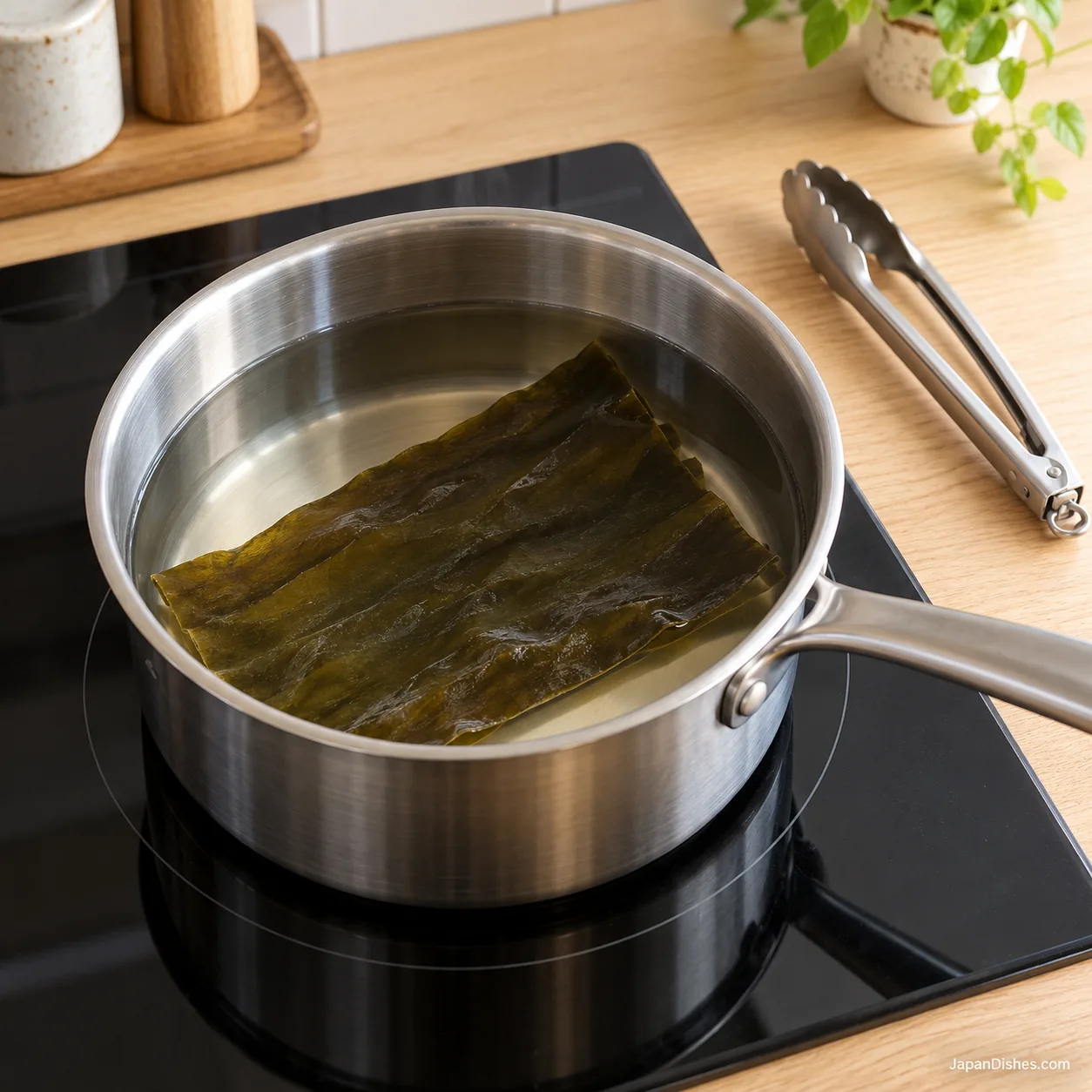
1. Warm the kombu slowly
Put 1 liter of cold water and 10 g kombu in a medium saucepan. Heat over medium-low for about 10–15 minutes, until the water is steaming and small bubbles gather around the edge. Lift out the kombu just before the water begins to boil. If the water heats faster on your stove, follow those visual cues and remove the kelp earlier.
Keep the heat gentle so the kombu has time to infuse. You can soak it in the measured water for 30 minutes before heating if convenient; that optional soaking time is additional to the recipe’s 30-minute estimate.
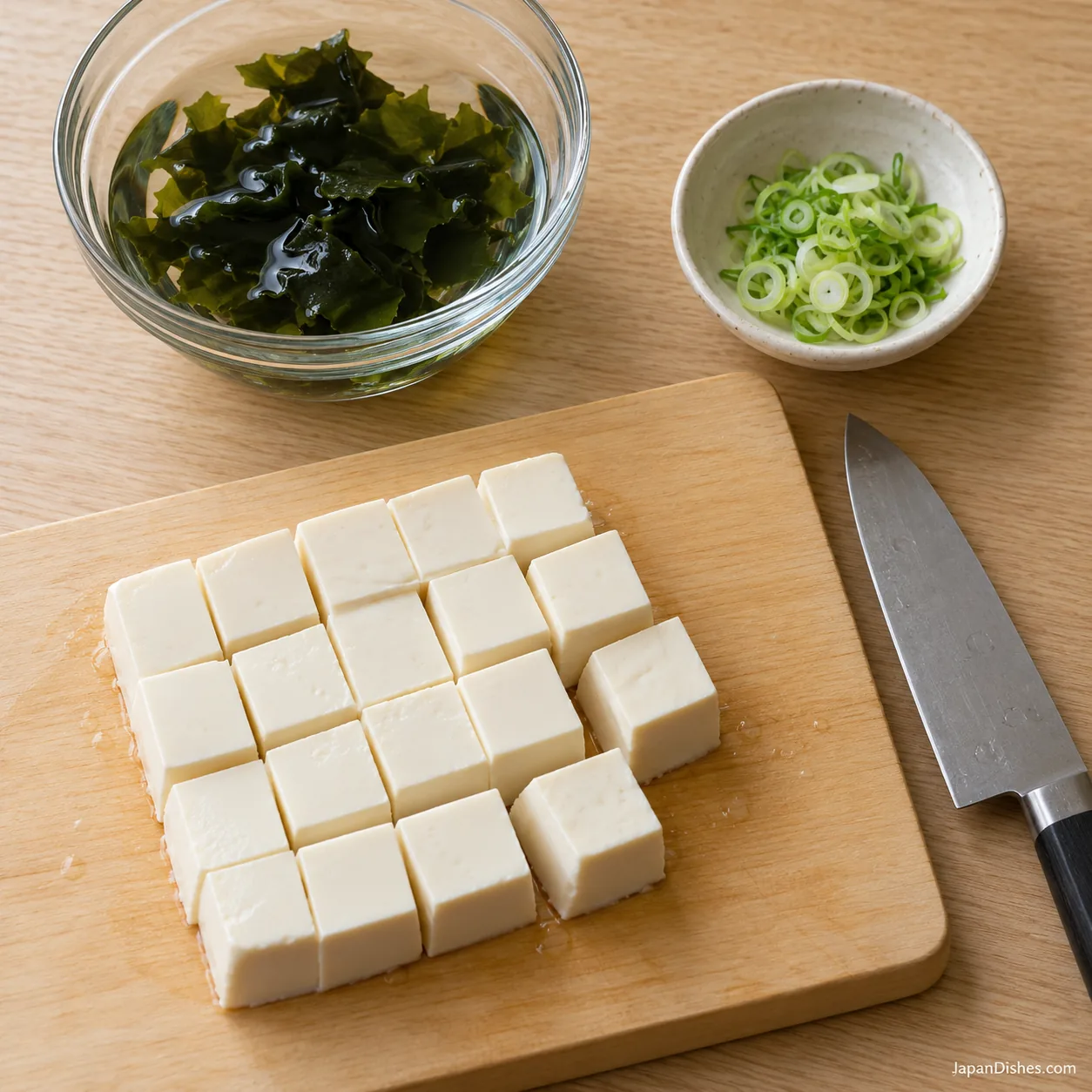
2. Prepare the tofu and garnishes
While the kombu warms, drain 200 g silken tofu and cut it gently on a board into roughly 1.2 cm cubes. Soak 2 g dried wakame in a separate bowl of water for about 5 minutes, or as directed on its packet. Drain well, discard the soaking water and cut any large pieces smaller. Thinly slice 1 scallion and keep the garnishes aside.
Slide a broad spoon or spatula under the tofu when moving it. Avoid pressing it dry or repeatedly handling the cubes; a few broken edges are fine, but gentle handling keeps the soup clear of crumbled tofu.
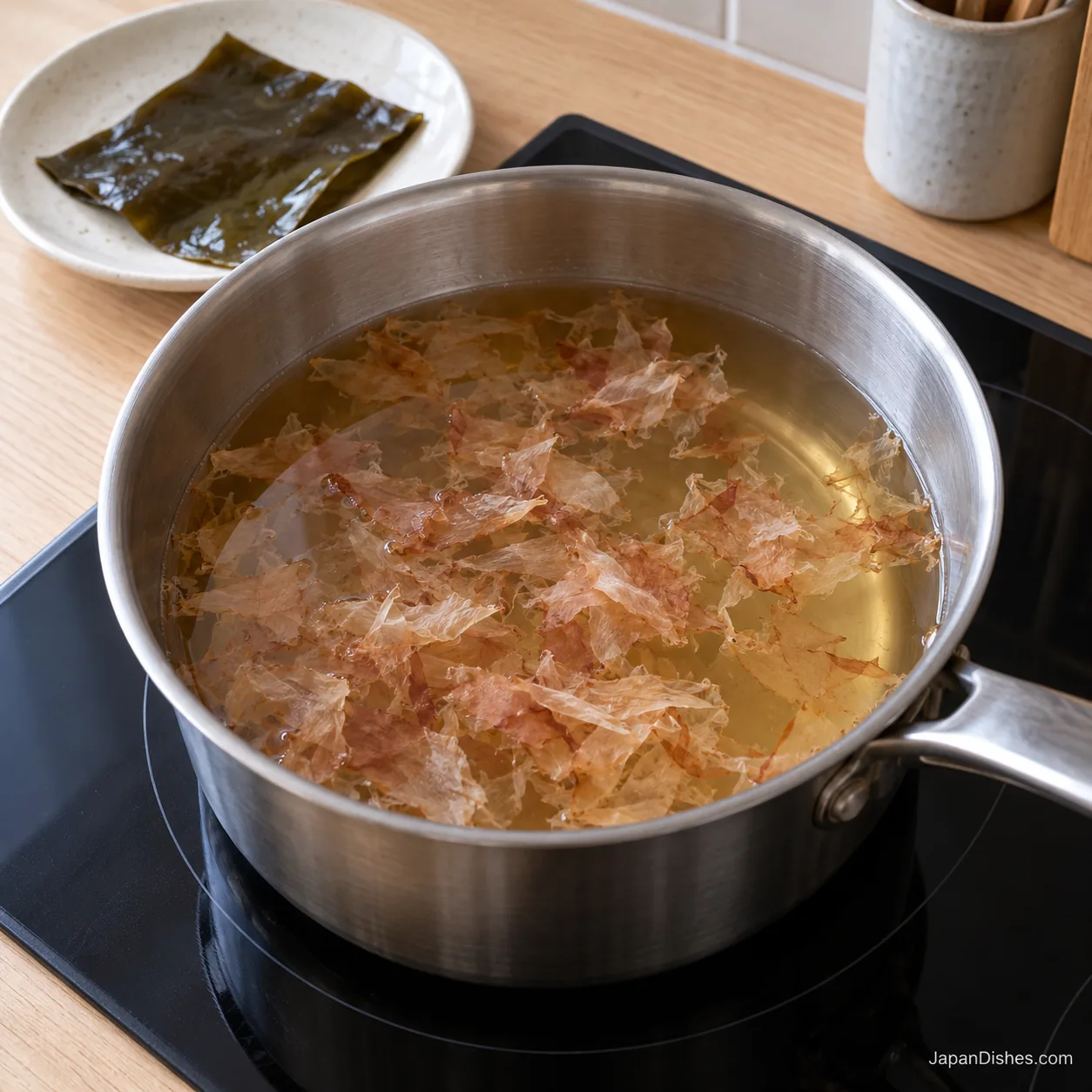
3. Steep the bonito off the heat
After removing the kombu, bring the liquid just to a gentle simmer, then turn off the heat. Add 15 g thin bonito flakes and let them steep for 5 minutes without stirring vigorously. The flakes will soften and begin to settle. Keep the tofu, wakame, scallion and miso out of the pan at this stage.
This separates stock-making from seasoning: you can strain out the fish flakes before adding anything you intend to eat. Set a fine sieve over a heatproof measuring jug while the flakes steep.
4. Strain the dashi and warm the tofu
Pour the stock through the fine sieve into the heatproof jug and let it drain without squeezing the bonito. Measure the strained dashi and add water as needed to bring it back to 1 liter. Return it to the saucepan, add the tofu and warm gently over low heat for 3–4 minutes, until the tofu is hot through. Avoid a rolling boil or vigorous stirring.
The measured top-up replaces liquid lost to the kelp, flakes and evaporation. It also gives you a consistent starting point for the miso. If your tofu’s packaging calls for a particular cooking treatment, follow it before seasoning the soup.
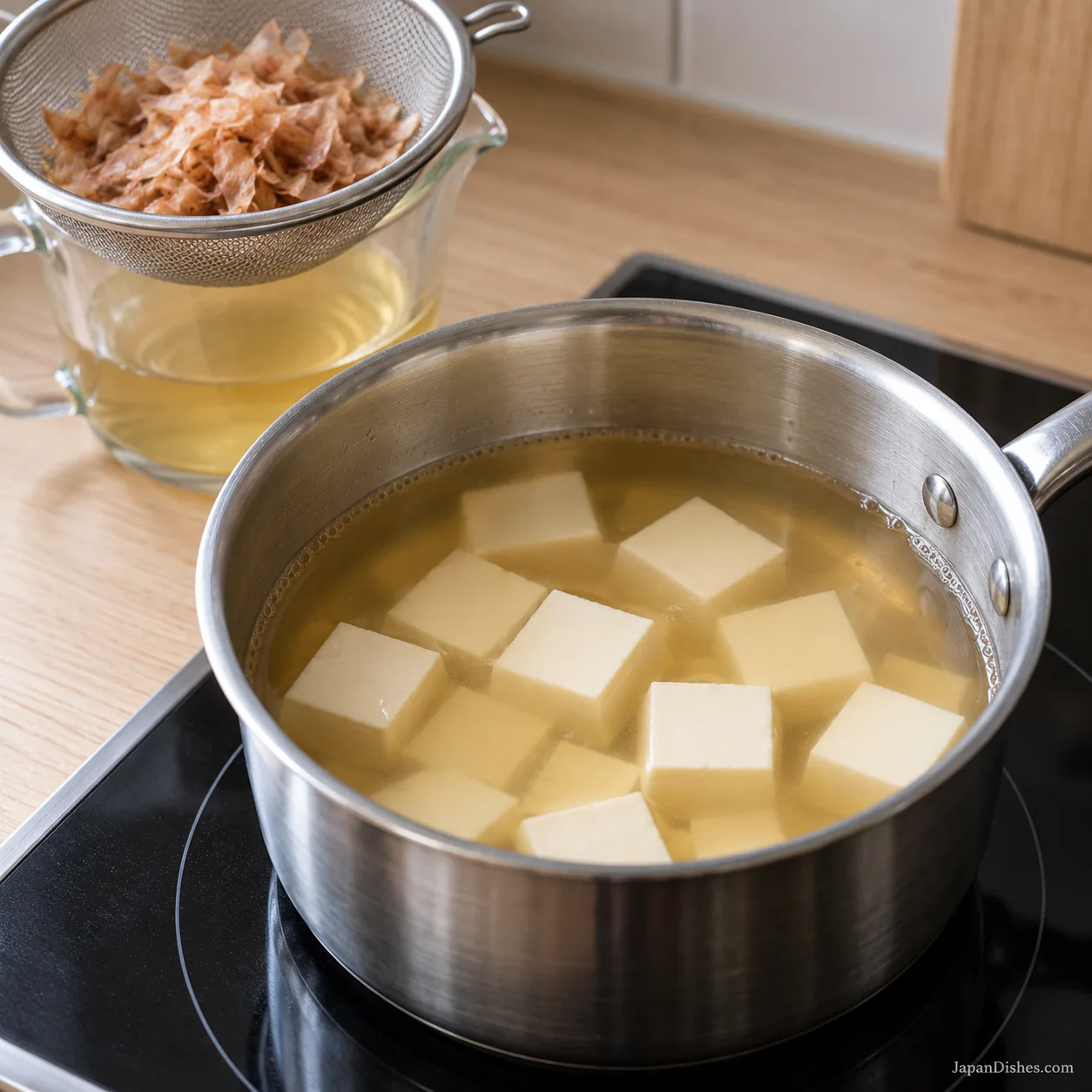
5. Dissolve the miso with the heat off
Turn off the heat. Ladle about 80 ml of hot dashi from the saucepan into a small bowl and mix in 45 g miso until smooth. Pour this mixture back into the pan and stir gently around the tofu. Taste a cooled spoonful. If needed, dissolve up to 15 g more miso in a little broth before adding it; stop when the soup tastes balanced to you.
Dissolving the paste separately prevents salty pockets and lets you mix thoroughly without breaking the tofu. Keep the fresh soup below a boil after adding miso to preserve its aroma. You do not need to add soy sauce or salt automatically.
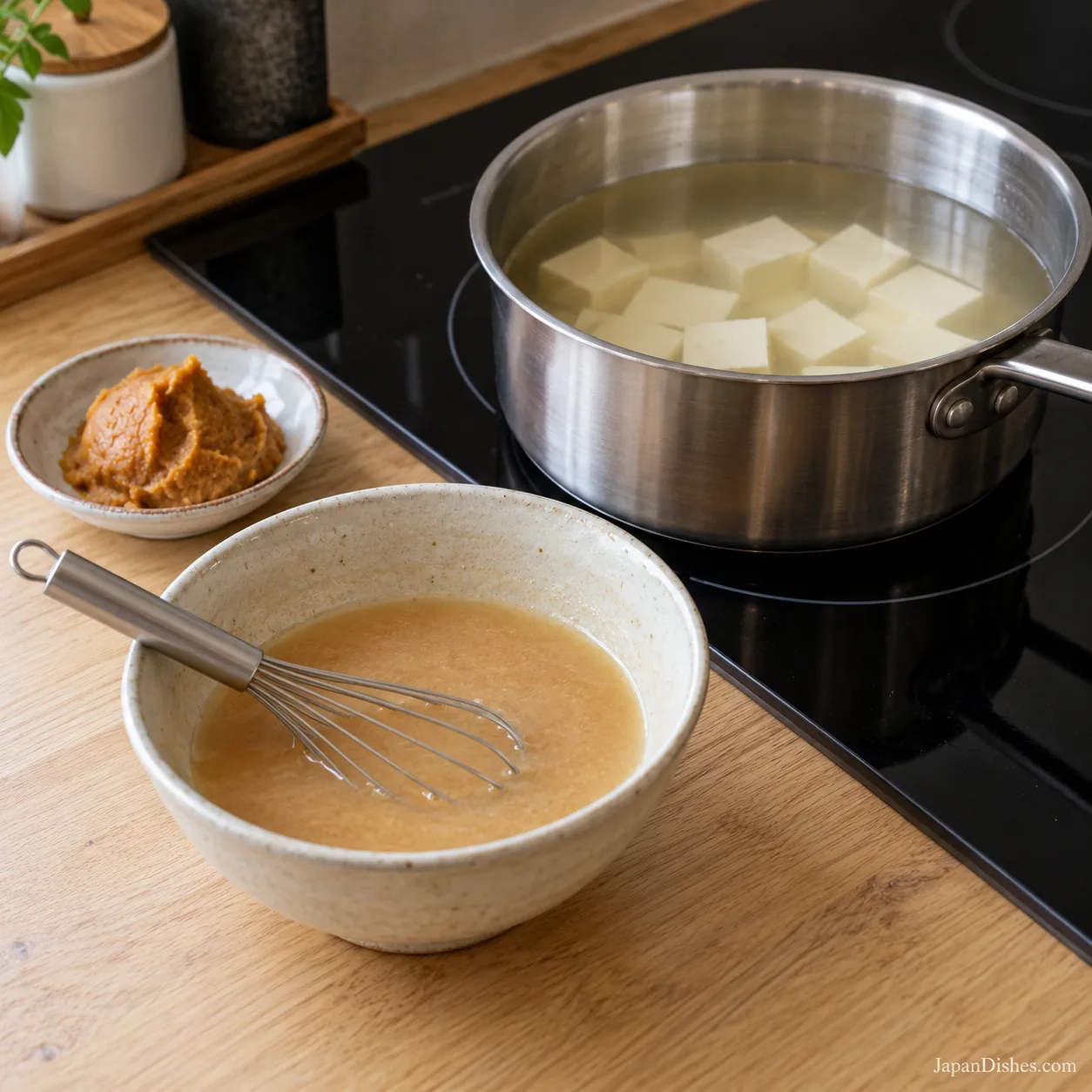
6. Add wakame and serve
Stir the drained wakame into the hot soup. Divide the tofu and broth between four small bowls, then scatter the sliced scallion over each portion. Serve promptly, allowing the soup to cool to a comfortable sipping temperature. If it has cooled too far during mixing, warm it briefly over low heat without bringing it to a hard boil.
A little separation as the soup stands is normal; give it a gentle stir before serving. These are side-dish portions. For two larger bowls, divide the same batch between two people and serve with rice or another substantial dish.
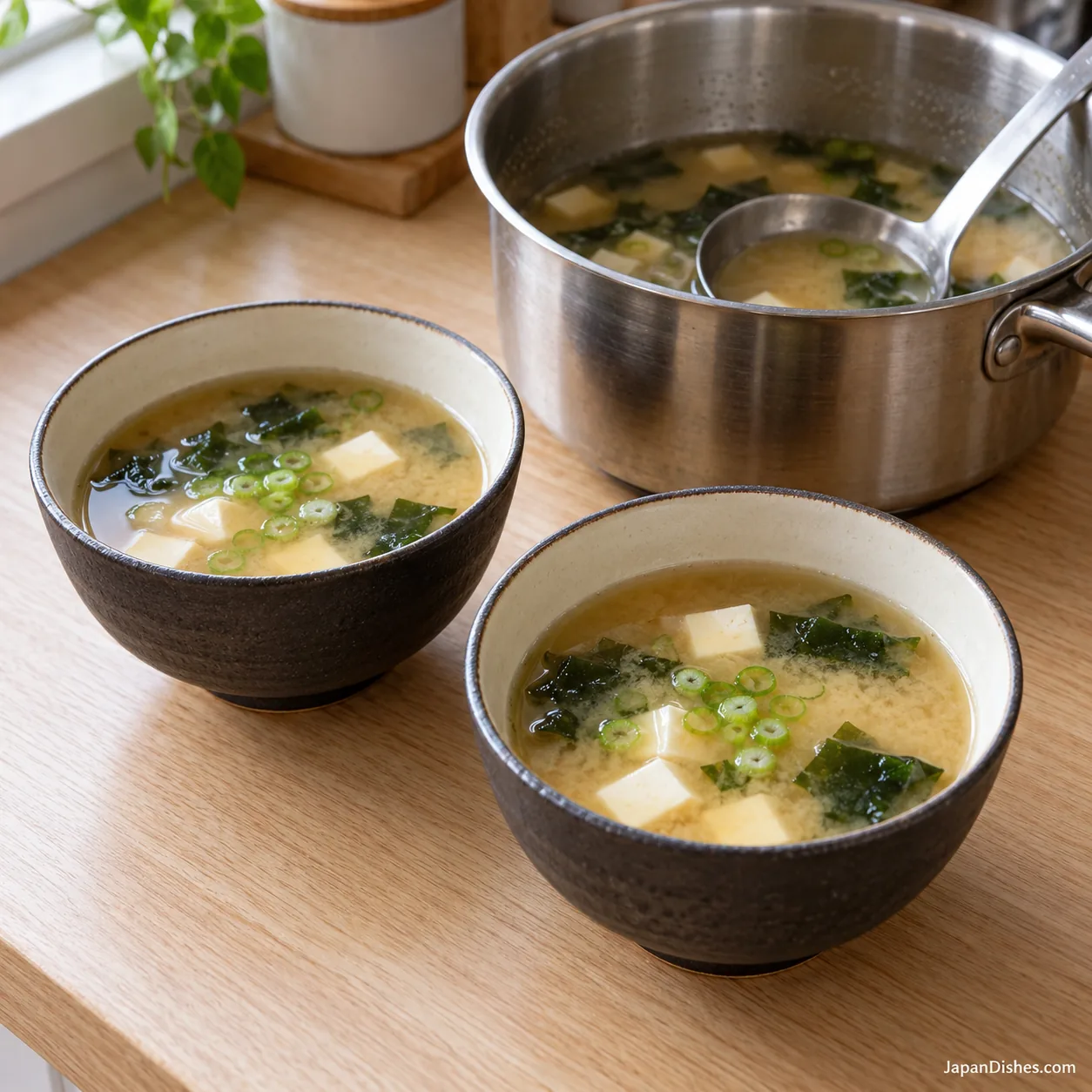
Tips for smooth, balanced miso soup
Too salty? Dilute gradually
Add a little unsalted dashi or hot water, stir and taste again. Start with a few tablespoons. Adding more tofu alone does not remove salt from the broth; dilution changes its concentration.
Flavor seems flat? Check the stock
Taste the dashi before seasoning. If it is very weak, improve the stock on your next batch rather than adding miso indefinitely. In this batch, add miso only within your preferred saltiness.
Lumps or broken tofu? Change the order
Mix the paste smooth in a separate bowl, then return it to the pot. Warm the tofu before adding miso and stir around it gently with a broad spoon.
Variations
Vegetarian or vegan: Omit the bonito. Use 1 liter of prepared, unsalted kombu or kombu–shiitake dashi instead of making the fish-based stock in steps 1 and 3. Start at step 2, then warm the tofu in that stock and finish as directed. Check that the miso and any packaged stock contain no fish ingredients. Preparation time depends on your chosen dashi method.
More vegetables: Thinly sliced mushrooms or tender spinach make good additions. Cook mushrooms in the strained stock before adding the miso; add spinach near the end of that cooking stage. Root vegetables need longer and should be tender before seasoning. Keep additions modest so the broth remains the center of the bowl.
What to serve with homemade miso soup
Serve homemade miso soup beside steamed rice and our Mirin Salmon for a fish dinner, or pair the vegetarian version with a Pan-Fried Teriyaki Tofu Bowl. The light soup complements the sweet, savory glaze in either main dish. Keep the portions small when serving it as part of a larger meal.

Storage and reheating
Refrigerate leftovers promptly in shallow, covered containers, within 2 hours of cooking—or within 1 hour if the room temperature is above 32°C/90°F. Keep the refrigerator at 4°C/40°F or colder. Plan to eat this tofu and wakame soup within 2 days for its best texture and flavor; do not leave the pot on the counter waiting until bedtime.
Reheat only the portion you need, stirring gently over low to medium-low heat until it reaches 74°C/165°F throughout, then remove it from the heat. Use a food thermometer to check. The fresh-soup advice about preserving miso’s aroma does not replace safe leftover reheating. See the USDA’s food storage and reheating guidance for the temperature and cooling rules.
For easier preparation ahead, make only the plain dashi, cool and refrigerate it promptly, and use within 2 days. Add tofu and season with miso when serving. Plain dashi can also be frozen in portions for about a month for quality. Freezing the finished soup changes the tofu’s soft texture, so freezing the stock alone is the better option.
Frequently asked questions
Can I use instant dashi?
Yes. Prepare 1 liter according to the packet, then start with the tofu and garnishes. Some instant stocks contain salt, so begin with less miso if necessary and taste before adding more. Check the ingredients if avoiding fish.
Which miso should I buy first?
A plain white or blended miso is a versatile starting point for this gentle soup. Red miso gives a deeper flavor. The quantity is adjustable because brands and styles vary in saltiness; the color alone does not tell you exactly how much to use.
Is this homemade miso soup vegetarian?
The main recipe contains bonito flakes, so it contains fish. Use the kombu or kombu–shiitake stock variation for a vegetarian version and check the miso label for added fish stock.
Why does the miso settle at the bottom?
Fine particles of miso can settle as the bowl stands. Stir gently and they will disperse again. If you find dense, salty lumps instead, dissolve the paste more thoroughly in a separate bowl before adding it.
Do I need to boil the tofu?
Warm the cubes gently in the dashi before adding miso, following any cooking directions on the tofu package. A hard boil and vigorous stirring can break delicate silken tofu into small pieces.
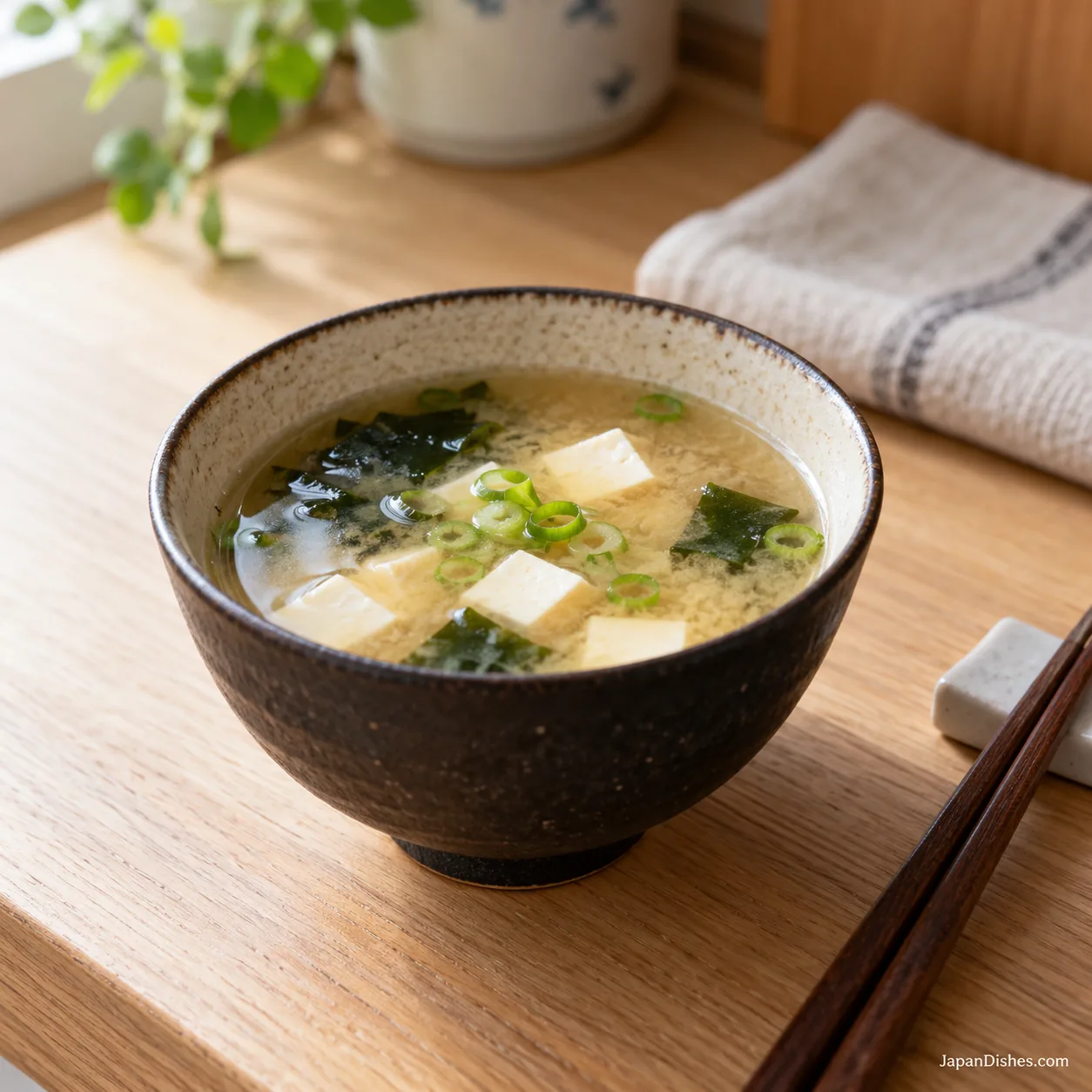
Homemade Miso Soup 味噌汁
Course: SoupCuisine: JapaneseDifficulty: Easy4
small bowls5
minutes25
minutes30
minutesLight, savory homemade miso soup with kombu–bonito dashi, silken tofu, wakame and scallion. Makes four small side servings in about 30 minutes, with a vegetarian stock option in the notes.
Ingredients
1 liter water, plus a little extra to top up the strained dashi
10 g dried kombu
15 g thin katsuobushi (dried bonito flakes; contains fish)
200 g silken tofu, gently drained and cut into roughly 1.2 cm cubes
2 g dried wakame, soaked separately in water and drained according to the packet
45–60 g plain white or blended miso paste, added to taste
1 scallion, thinly sliced
Directions
- Put 1 liter of cold water and 10 g kombu in a medium saucepan. Heat over medium-low for about 10–15 minutes, until the water is steaming and small bubbles gather around the edge. Lift out the kombu just before the water begins to boil. If the water heats faster on your stove, follow those visual cues and remove the kelp earlier.

- While the kombu warms, drain 200 g silken tofu and cut it gently on a board into roughly 1.2 cm cubes. Soak 2 g dried wakame in a separate bowl of water for about 5 minutes, or as directed on its packet. Drain well, discard the soaking water and cut any large pieces smaller. Thinly slice 1 scallion and keep the garnishes aside.
- After removing the kombu, bring the liquid just to a gentle simmer, then turn off the heat. Add 15 g thin bonito flakes and let them steep for 5 minutes without stirring vigorously. The flakes will soften and begin to settle. Keep the tofu, wakame, scallion and miso out of the pan at this stage.
- Pour the stock through the fine sieve into the heatproof jug and let it drain without squeezing the bonito. Measure the strained dashi and add water as needed to bring it back to 1 liter. Return it to the saucepan, add the tofu and warm gently over low heat for 3–4 minutes, until the tofu is hot through. Avoid a rolling boil or vigorous stirring.
- Turn off the heat. Ladle about 80 ml of hot dashi from the saucepan into a small bowl and mix in 45 g miso until smooth. Pour this mixture back into the pan and stir gently around the tofu. Taste a cooled spoonful. If needed, dissolve up to 15 g more miso in a little broth before adding it; stop when the soup tastes balanced to you.
- Stir the drained wakame into the hot soup. Divide the tofu and broth between four small bowls, then scatter the sliced scallion over each portion. Serve promptly, allowing the soup to cool to a comfortable sipping temperature. If it has cooled too far during mixing, warm it briefly over low heat without bringing it to a hard boil.
Notes
- Timing: 5 minutes prep + about 25 minutes cooking and steeping; preparation overlaps with warming the kombu. Optional 30-minute kombu presoaking is additional. Vegetarian: replace the kombu–bonito stock method with 1 liter prepared unsalted kombu or kombu–shiitake dashi; omit bonito and check labels for fish. Soy is present in tofu and most miso; some miso also contains barley or other gluten ingredients. Refrigerate promptly within 2 hours (1 hour above 32°C/90°F), keep at 4°C/40°F or colder and plan to eat within 2 days for quality. Reheat leftovers to 74°C/165°F throughout.