
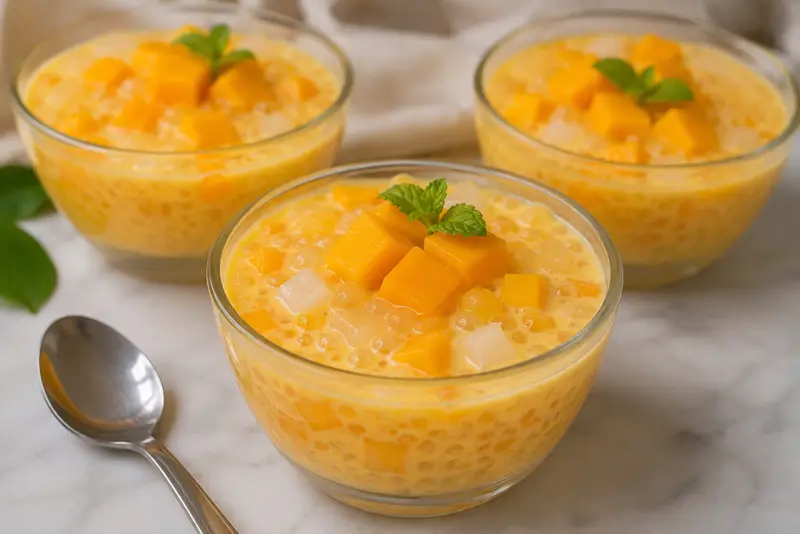
Have you ever wondered how a few simple ingredients like ripe mango, milk, sago, and jelly can turn into a creamy dessert that looks as beautiful as it tastes?
This Japanese-Style Mango Sago (マンゴーサゴ) is cool, fruity, creamy, and full of different textures. Soft sago pearls mix with sweet mango cubes, silky mango milk, mango jelly, and tender coconut jelly. Every spoonful has something a little different.
It is a wonderful dessert for warm days because it is served very cold. You can prepare it before dinner and leave it in the refrigerator until you are ready to serve. It also looks elegant in small glass cups, making it a good choice for family meals, summer parties, or a simple dessert at home.
Recipe Overview
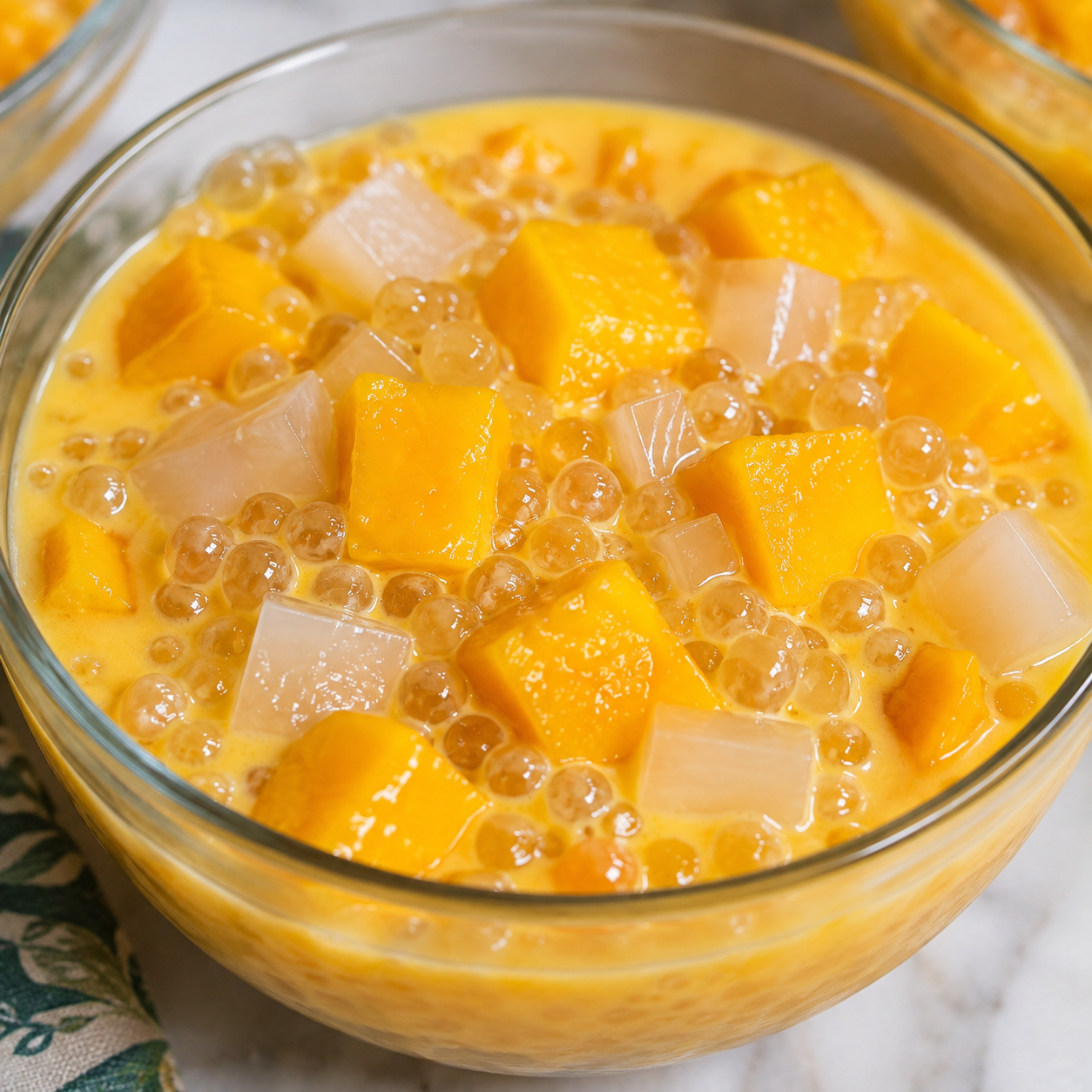
Japanese-Style Mango Sago is special because it combines several textures in one chilled dessert. The sago is soft and slightly chewy. Fresh mango is juicy and tender. The two kinds of jelly are light and bouncy, while the mango milk and condensed milk make everything rich and creamy.
What Is Japanese-Style Mango Sago (マンゴーサゴ)?
Mango sago is a chilled dessert made with cooked sago pearls, mango, milk, and other sweet ingredients. Versions of mango sago are enjoyed in different parts of Asia, especially in Hong Kong and other Chinese-speaking regions.
This recipe is a Japanese-style interpretation that gives the dessert a soft, neat, and refreshing presentation. It combines fresh mango with homemade mango jelly and tender coconut jelly, creating several light textures in the same bowl.
The mango puree gives the dessert a deep fruit flavor, while chilled mango milk makes the base smooth. Condensed milk adds sweetness and body without needing a complicated cream mixture.
It is not a traditional Japanese dessert, but this version can fit nicely into a Japanese-inspired summer dessert menu because of its clean presentation, agar-based jellies, and refreshing taste.
Essential Ingredients
Key Ingredients (材料)
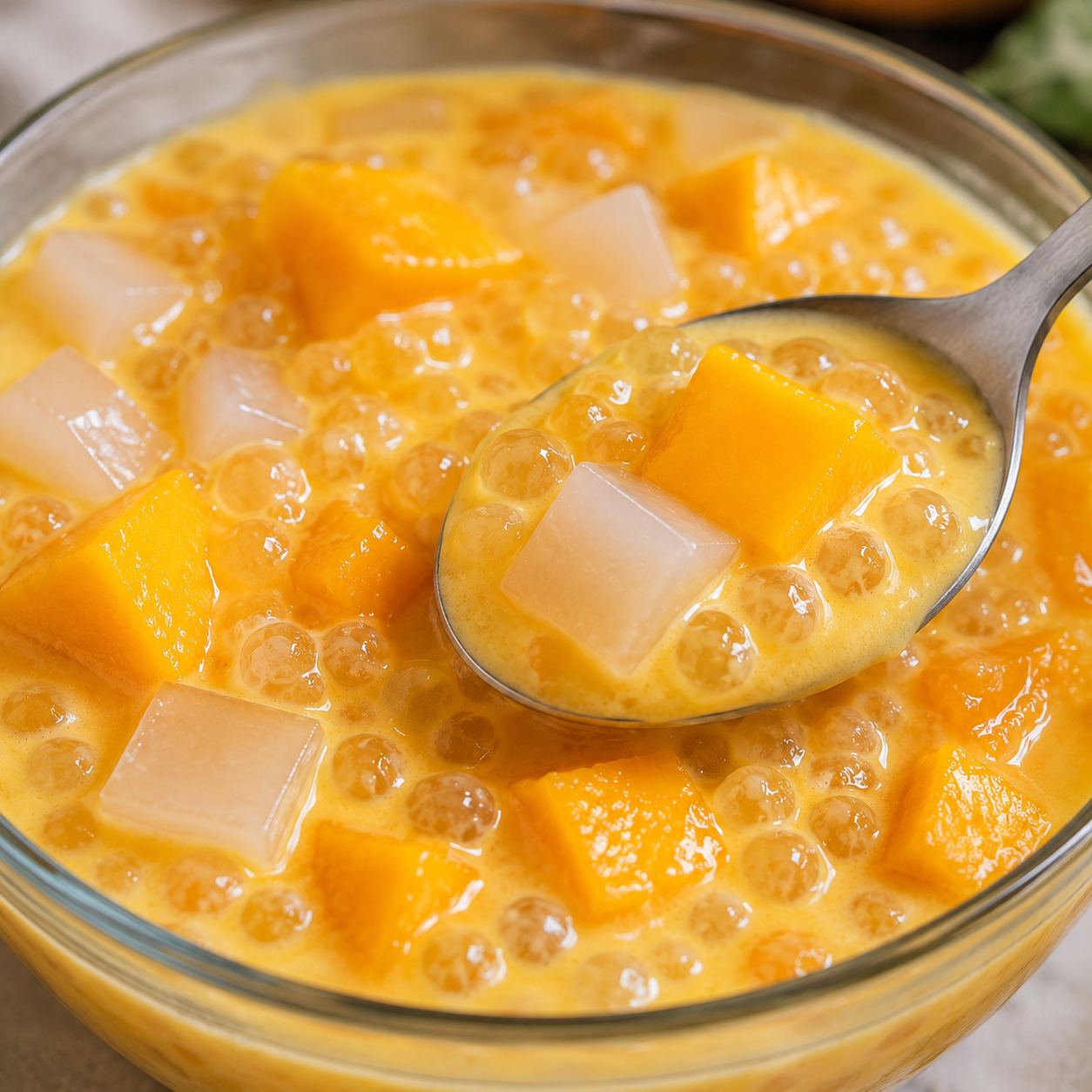
Japanese-Style Mango Sago マンゴーサゴThese ingredients create a creamy, fruity, and refreshing mango sago dessert with soft pearls, juicy mango, and two kinds of light jelly. Each ingredient adds its own flavor or texture, helping every spoonful taste cool, sweet, and satisfying.
How to Make Japanese-Style Mango Sago in 4 Steps
Step 1: Make the Mango Jelly and Coconut Jelly
- Start with the mango jelly.
- Add ½ cup water and 1 tablespoon sugar to a small pan. Heat gently while stirring.
- Add 1 teaspoon agar agar and continue cooking until the agar has completely dissolved. There should not be visible grains left in the liquid.
- Stir in ½ cup mango puree.
- Once everything is evenly combined, pour the mixture into a small tray or shallow container.
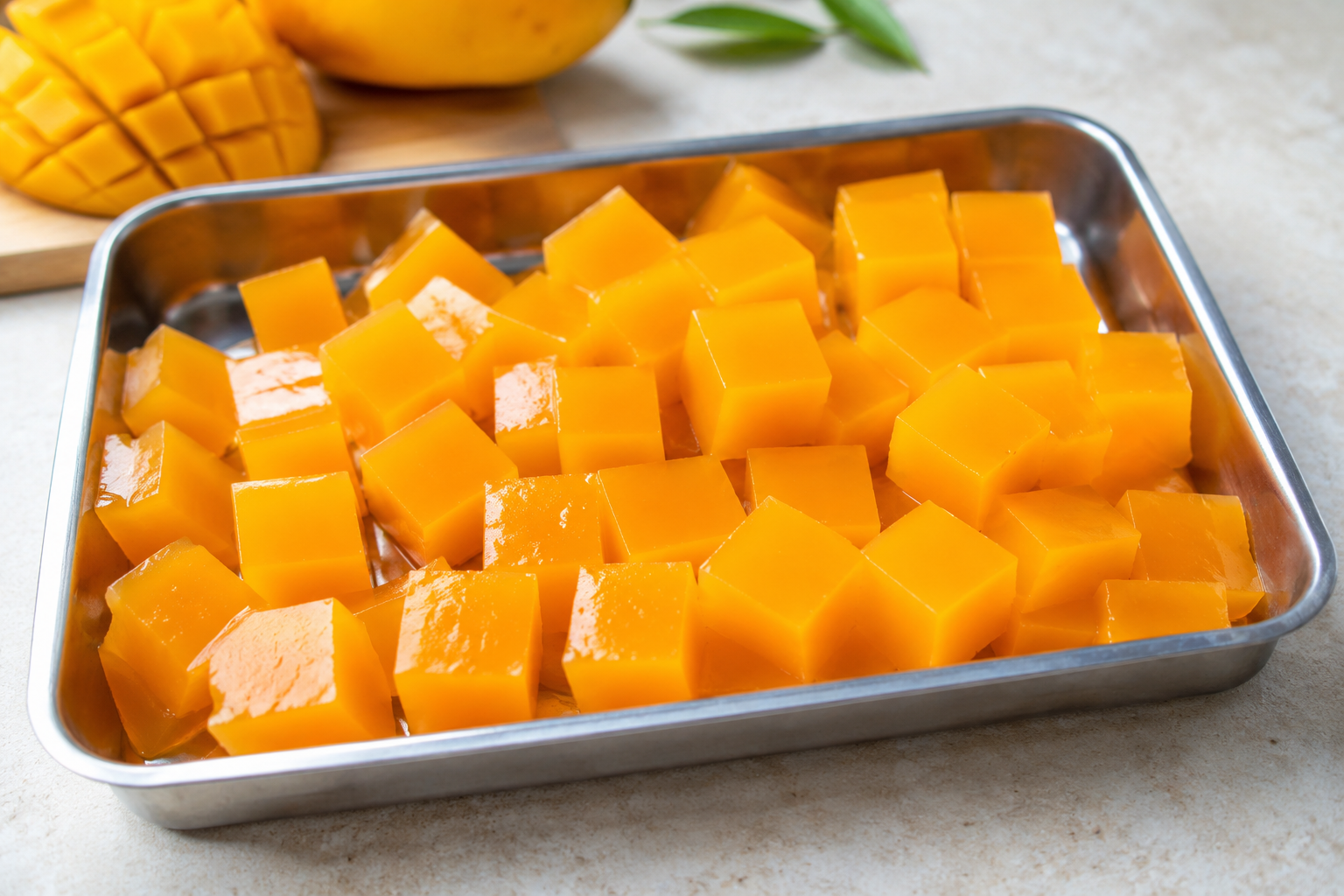
- Leave it until it cools and becomes firm. Once set, cut the mango jelly into small cubes.
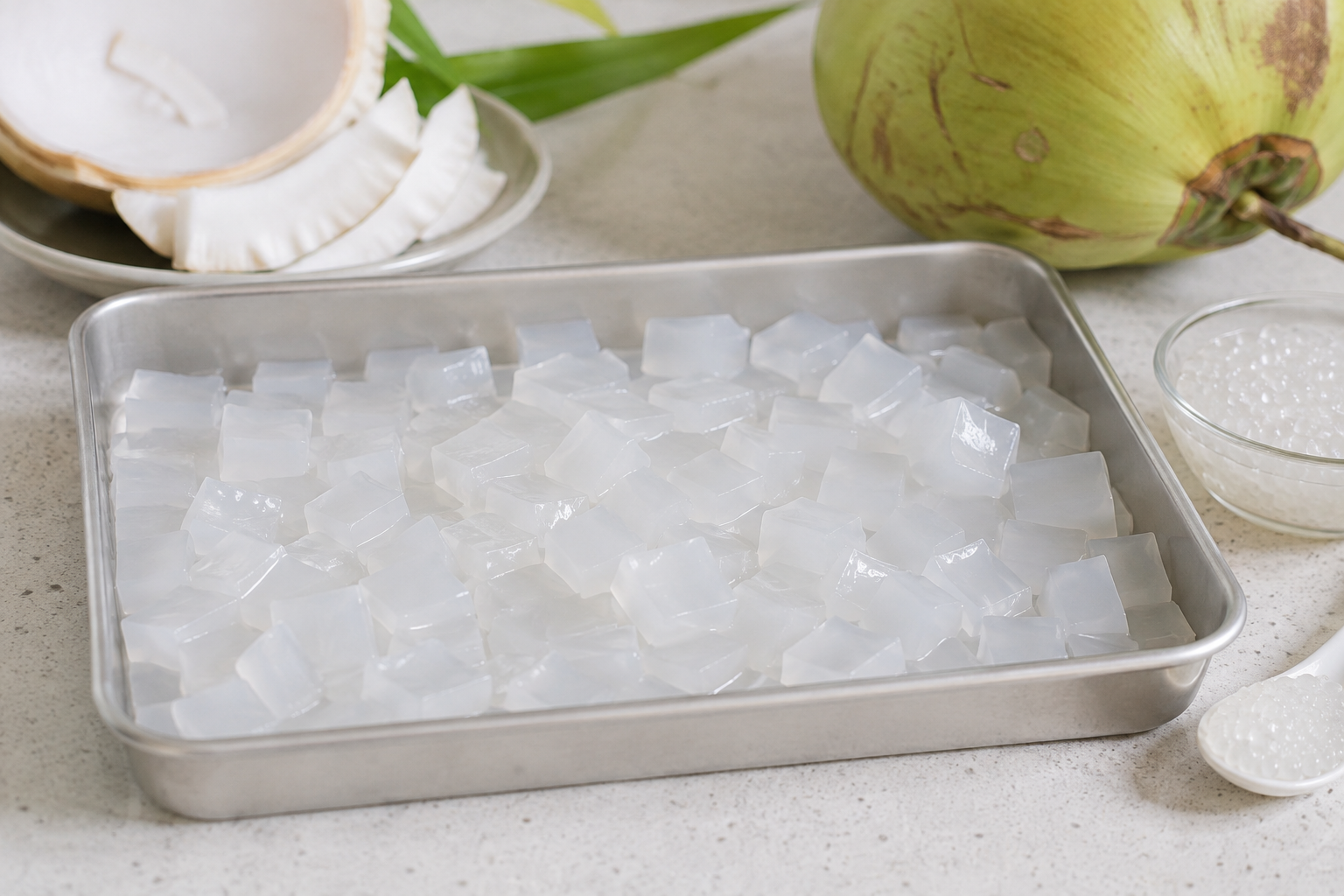
- Next, make the tender coconut jelly.
- Add 1 cup tender coconut water and 1 tablespoon sugar to a clean pan. Heat gently.
- Add 1 teaspoon agar agar and stir until fully dissolved.
- Pour the mixture into another tray and allow it to set.
- When firm, cut it into small cubes about the same size as the mango jelly.
- Keeping the jelly cubes small makes them easier to eat with the sago.
Step 2: Cook the Sago and Prepare the Mango Milk
- Bring a large pot of water to a full boil.
- Add ¾ cup uncooked sago.
- Cook until the pearls become transparent. Stir from time to time so they do not collect at the bottom of the pan or stick together.
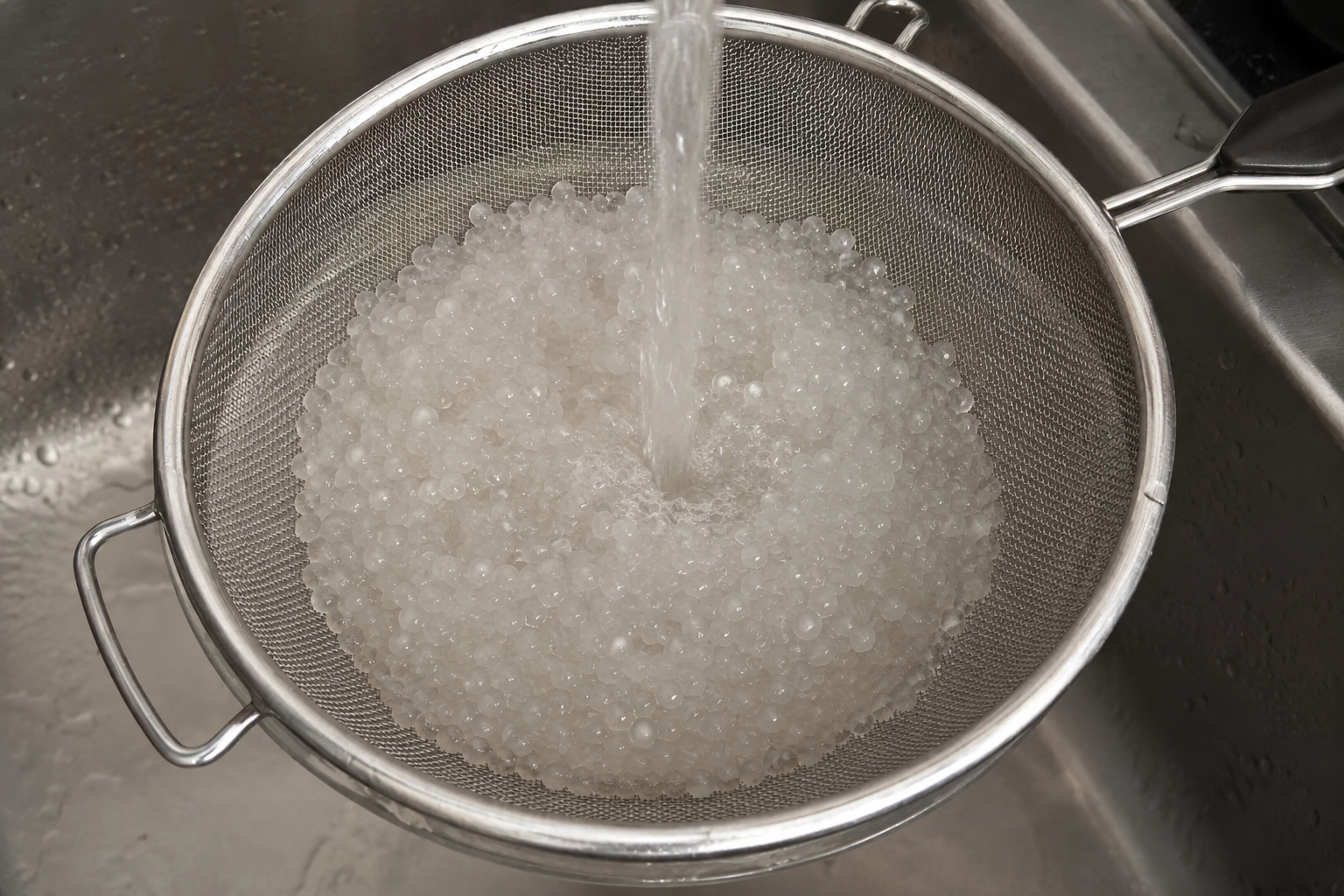
- When the sago is completely cooked, pour it into a fine strainer.
- Rinse it well under cold water. This removes extra starch and stops the cooking process.
- Let the sago drain while you prepare the mango milk.
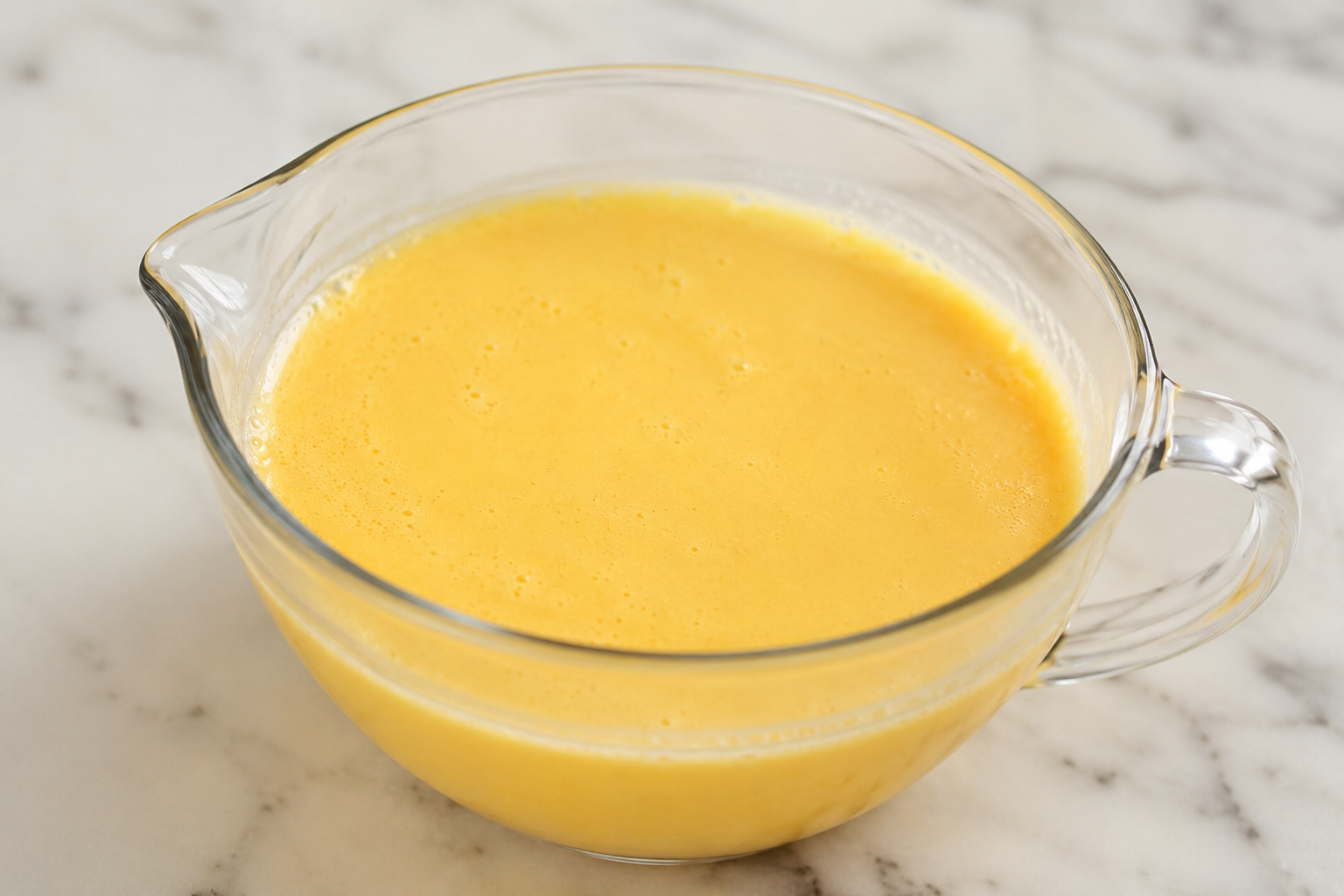
- For the mango milk, combine:
- ¾ cup mango puree
- 1½ cups chilled milk
- 2 tablespoons sugar
- Mix until smooth and evenly colored.
- The milk should have a light mango flavor and creamy consistency.
Step 3: Combine the Mango Sago
- Place the drained cooked sago in a large mixing bowl.
- Add:
- 1 cubed mango
- Prepared mango jelly cubes
- Prepared tender coconut jelly cubes
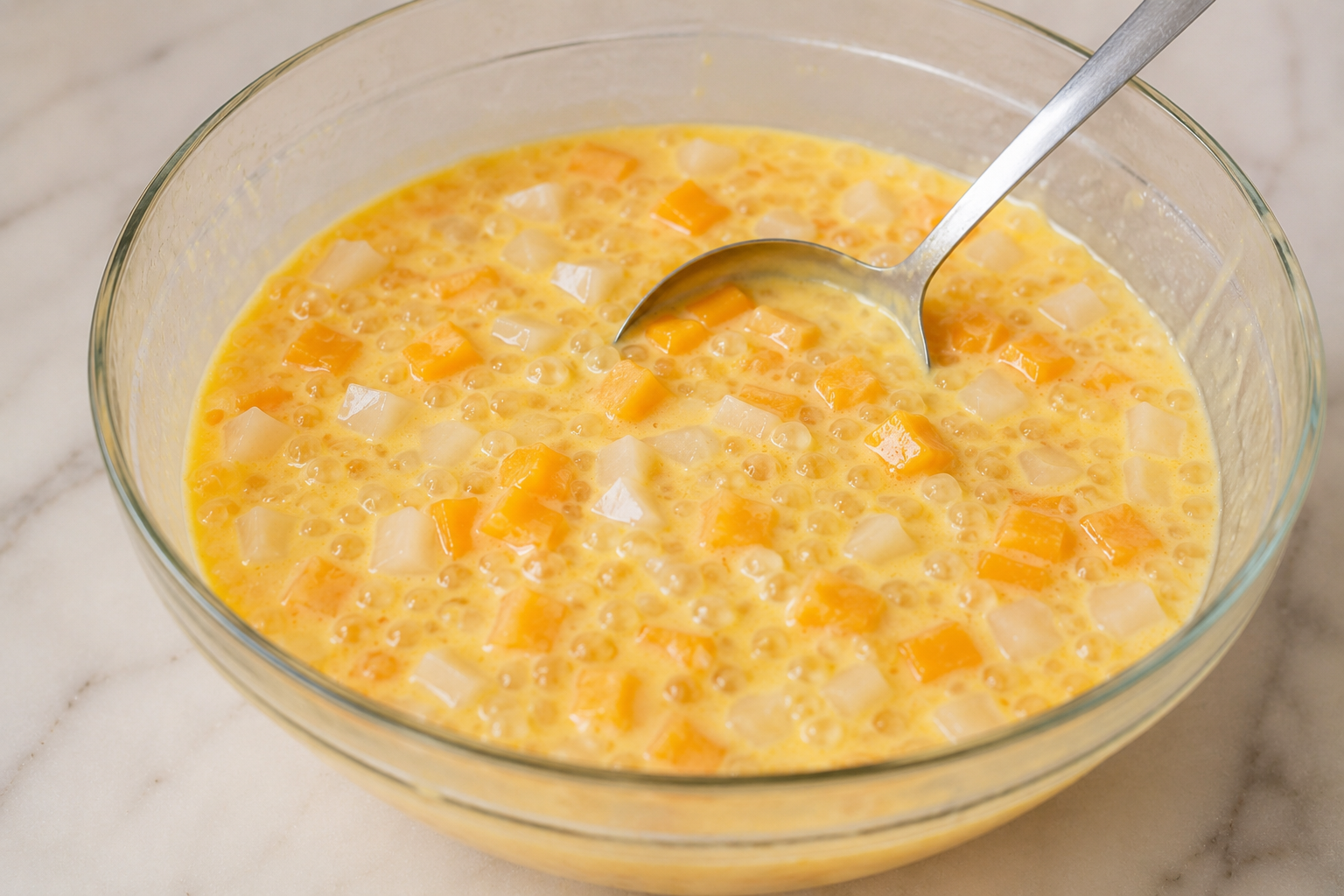
- Mix gently so the soft mango pieces and jelly cubes do not break.
- Pour in the prepared mango milk.
- Add ¾ cup mango puree and 1 cup condensed milk.
- Slowly fold everything together until the sago, fruit, and jelly are evenly spread through the creamy mango mixture.
- Taste a small spoonful before chilling. The dessert should be sweet, fruity, and creamy.
- Avoid mixing too strongly. Gentle stirring helps the jelly cubes keep their shape.
Step 4: Chill and Serve
- Add a few ice cubes if you want the dessert extra cold.
- Cover the bowl and place it in the refrigerator for 1–2 hours.
- Chilling is important because it allows all the flavors to come together. The sago also becomes pleasantly cool and soft.
- Before serving, stir the mango sago gently.
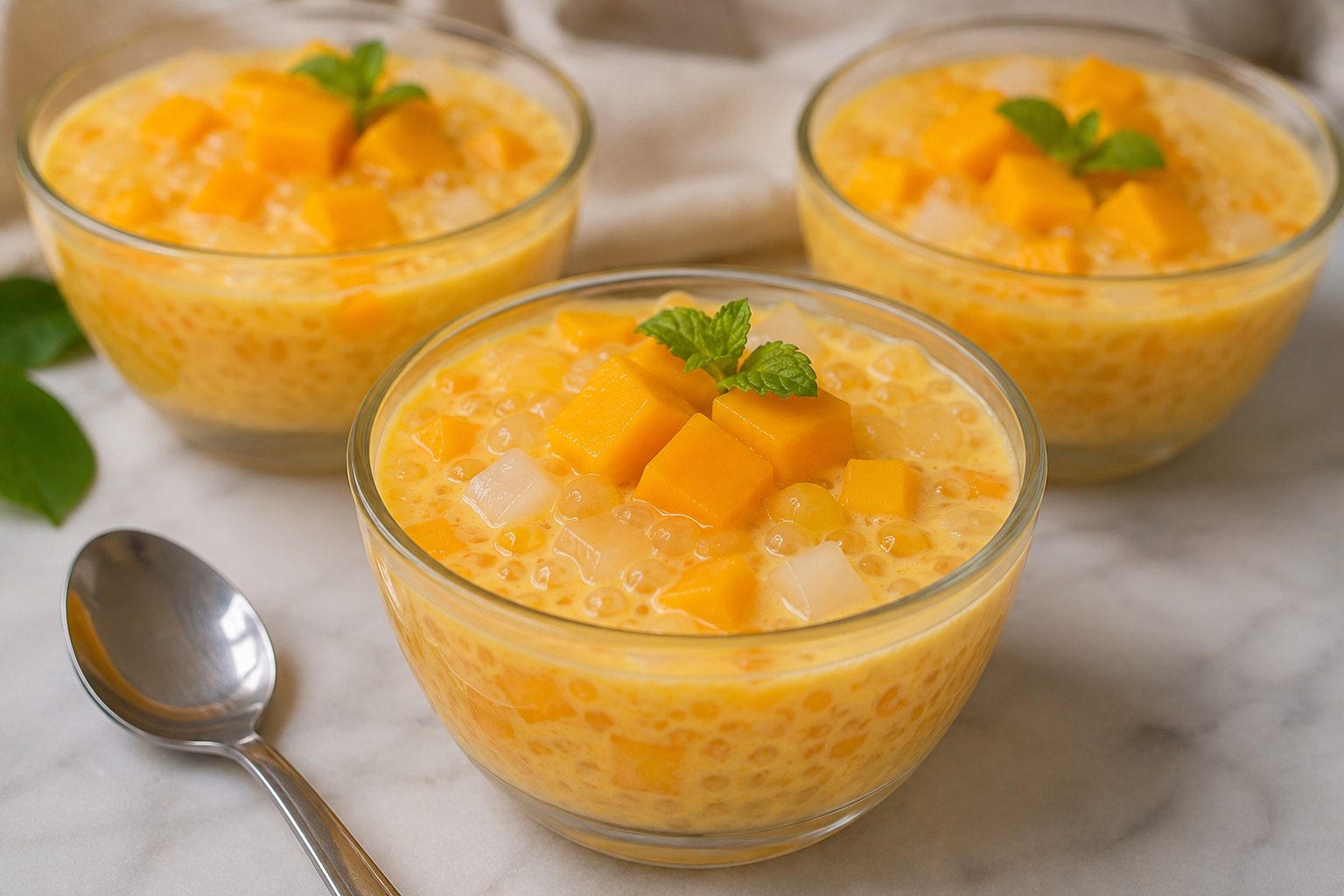
- Spoon it into small dessert bowls or clear glasses.
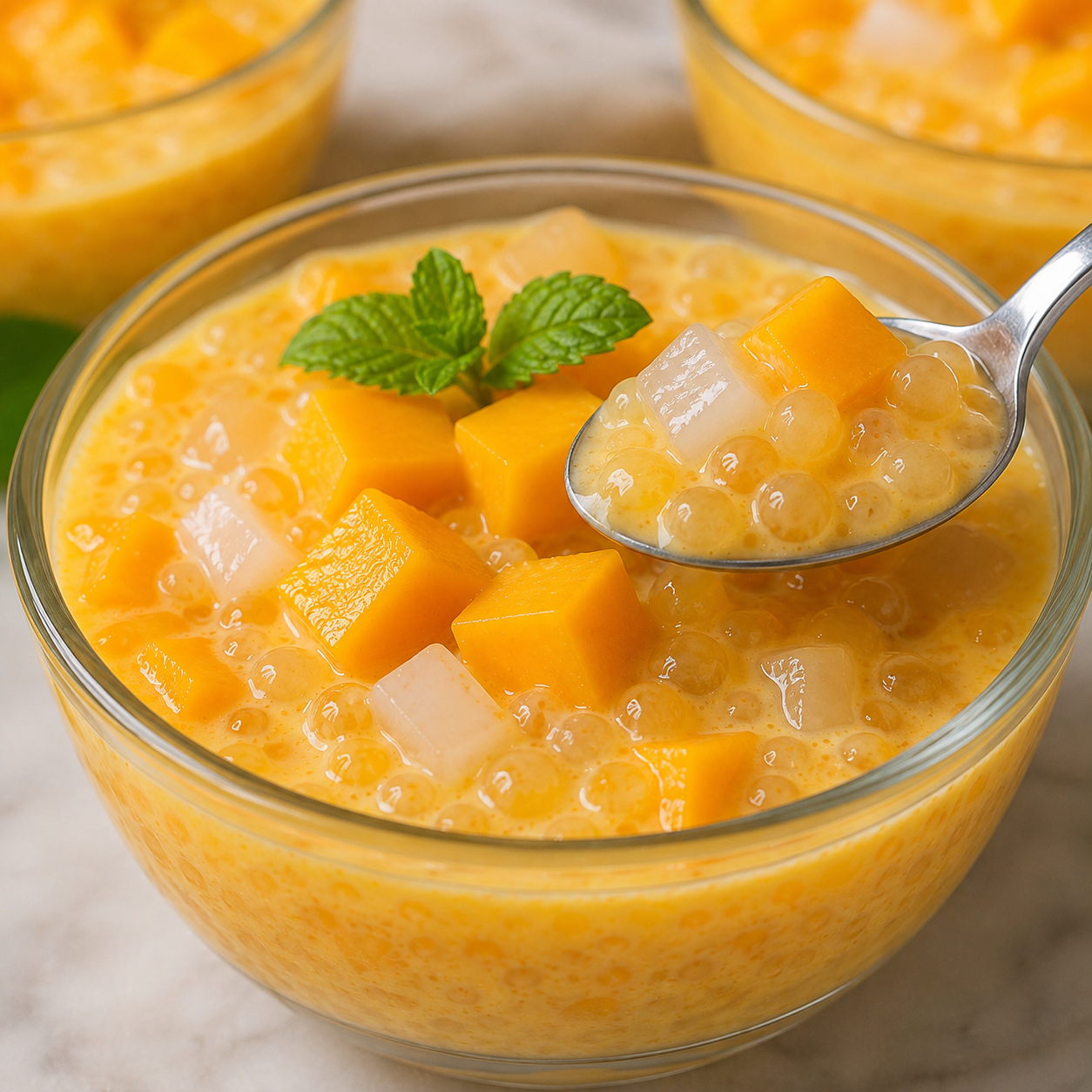
- Make sure each serving has a good mix of sago, fresh mango, mango jelly, coconut jelly, and creamy mango milk.
- Serve immediately while cold.
Secrets to Success and Expert Tips
These simple tips will help you make smooth, creamy, and refreshing Japanese-Style Mango Sago マンゴーサゴ with soft sago pearls, sweet mango, and perfectly set jelly:
-
♥
Use sweet and fully ripe mangoes
Ripe mangoes give the dessert its best natural sweetness, bright color, and fruity flavor. Choose mangoes that smell fragrant and feel slightly soft when gently pressed. -
♥
Cook the sago until completely transparent
The sago pearls should not have a hard white center. Cook them in plenty of boiling water and stir from time to time so they do not stick together. -
♥
Rinse the cooked sago with cold water
Rinsing removes extra starch and stops the cooking process. It also helps keep the pearls separate, soft, and pleasant instead of overly sticky. -
♥
Dissolve the agar agar completely
Agar agar needs to dissolve properly while heating so the mango jelly and coconut jelly can set evenly. Stir well and make sure no visible grains remain before pouring the mixtures into trays. -
♥
Mix the ingredients gently
Fold the mango cubes and jelly into the sago carefully. Gentle mixing helps keep the soft fruit and jelly cubes whole and gives the finished dessert a more attractive texture. -
♥
Chill well before serving
Let the finished mango sago rest in the refrigerator for 1–2 hours. Serving it very cold makes the creamy mango flavor more refreshing and allows all the ingredients to blend together beautifully.
Assembly and Presentation
A simple presentation works very well for this dessert because its natural colors are already beautiful.
Use a clear dessert glass or small glass bowl. The yellow mango, white coconut jelly, and tiny sago pearls will be visible through the sides.
Start by spooning some of the mango sago mixture into the glass.
Try to include several pieces of mango and jelly in each portion.
For a cleaner presentation, save a few mango cubes and jelly cubes before mixing everything together. Place them carefully on top just before serving.
You can also add a very small spoonful of mango puree over the top for a brighter mango color.
Keep the dessert cold until the moment you serve it.
Hana’s Recipe Tips
Hana’s favorite way to make this dessert is to prepare the jelly first. While the jelly is setting, you can cook the sago and prepare the mango milk. This makes the whole process much easier.
Use mangoes that smell sweet near the stem. This is often a good sign that they are ripe.
After rinsing the sago, let it drain well. Too much extra water can thin the mango milk.
Hana also recommends making the jelly cubes small enough to fit easily on a spoon with the sago and mango. The best bite is one that has a little of everything.
If you want a beautiful dessert for guests, assemble the mango sago in individual glasses instead of one large bowl.
Storage and Make-Ahead Tips
Japanese-Style Mango Sago is best enjoyed fresh and cold.
Store leftovers in a sealed container in the refrigerator.
For the best texture, enjoy it within 1–2 days. As it sits, the sago may continue to absorb liquid and the mixture can become thicker.
If this happens, stir in a small amount of chilled milk before serving.
The mango jelly and coconut jelly can be prepared ahead of time. Keep them covered in separate containers in the refrigerator.
You can also make the mango puree and mango milk ahead of time and keep them cold.
For the freshest result, cut the fresh mango close to the time you plan to assemble the dessert.
Do not reheat mango sago. It is designed to be served chilled.
Freezing is also not recommended because the milk, jelly, mango, and sago may develop different textures after thawing.
Recipe Variations
Japanese-Style Mango Sago マンゴーサゴ is easy to customize. You can make it richer, lighter, fruitier, or dairy-free while keeping the same simple chilled dessert style.
Make It More Coconut-Flavored
For a stronger tropical taste, replace part of the milk with coconut-based ingredients:
- Coconut milk for a richer and creamier base
- Coconut condensed milk for extra coconut flavor
- Fresh tender coconut pieces for more texture
Add More Fresh Fruit
Fresh fruit can make the dessert brighter, more colorful, and even more refreshing:
- Strawberries for a sweet and slightly tart flavor
- Peach cubes for a soft and juicy texture
- Kiwi for a fresh and tangy contrast
Make a Lighter Version
If you prefer a less sweet and lighter dessert, you can adjust the creamy ingredients:
- Use less condensed milk
- Reduce the added sugar in the mango milk
- Add a little more chilled milk for a thinner consistency
Try a Dairy-Free Version
You can easily make Japanese-Style Mango Sago without dairy by changing the milk ingredients:
- Use coconut milk instead of regular milk
- Try oat milk for a mild and creamy taste
- Use dairy-free condensed milk to keep the dessert rich
Health Benefits of Mango Sago
Mango is naturally rich in nutrients, including vitamin C and vitamin A-related carotenoids. It also contains some fiber.
Using fresh mango adds fruit to the dessert while giving it natural sweetness and flavor.
Tender coconut water adds another refreshing ingredient and contributes small amounts of minerals.
However, mango sago is still a dessert. Condensed milk and added sugar can make it high in sugar, so portion size is worth keeping in mind.
For a lighter version, reduce some of the added sugar or condensed milk while keeping plenty of fresh mango.
Variation Recipes to Try
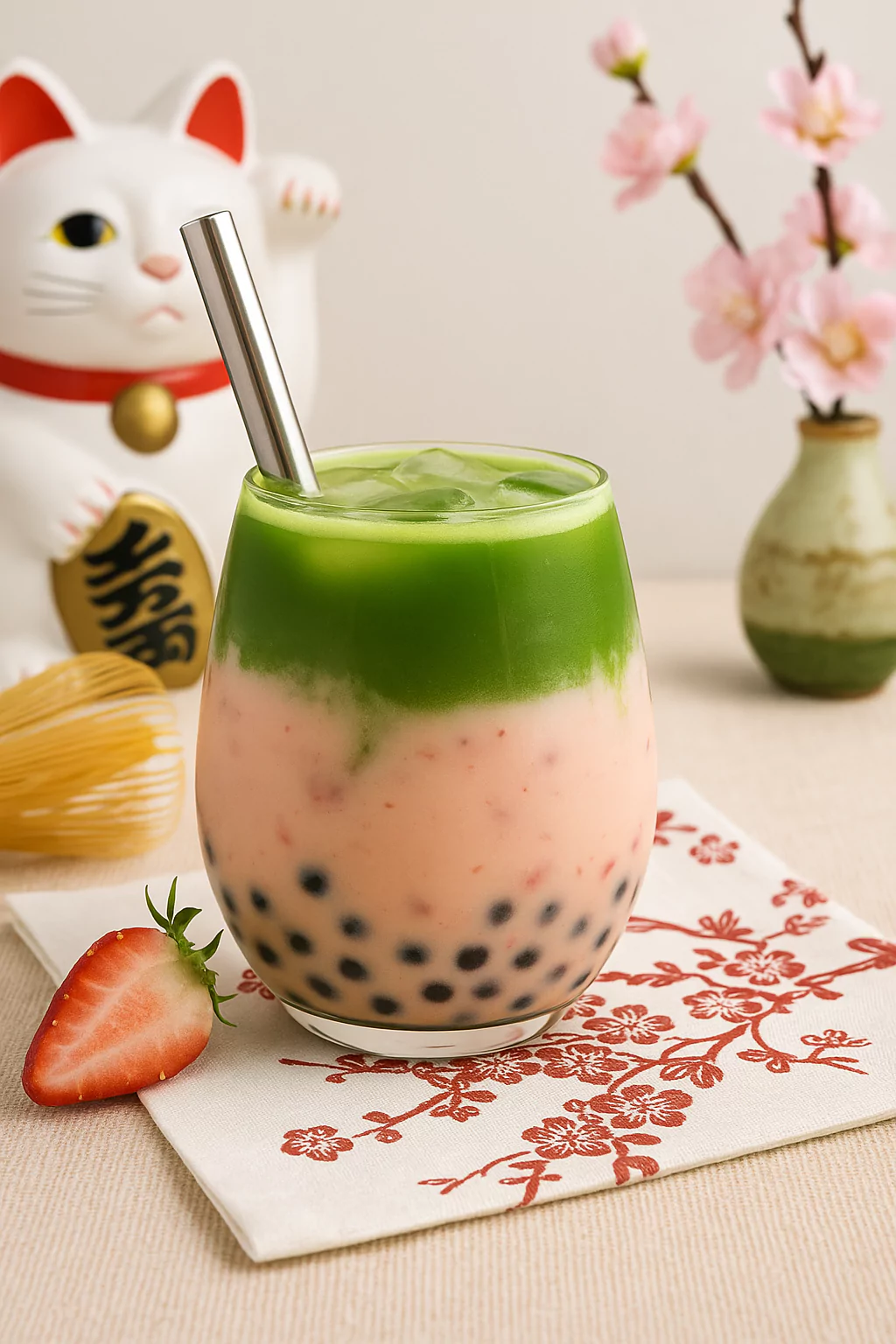
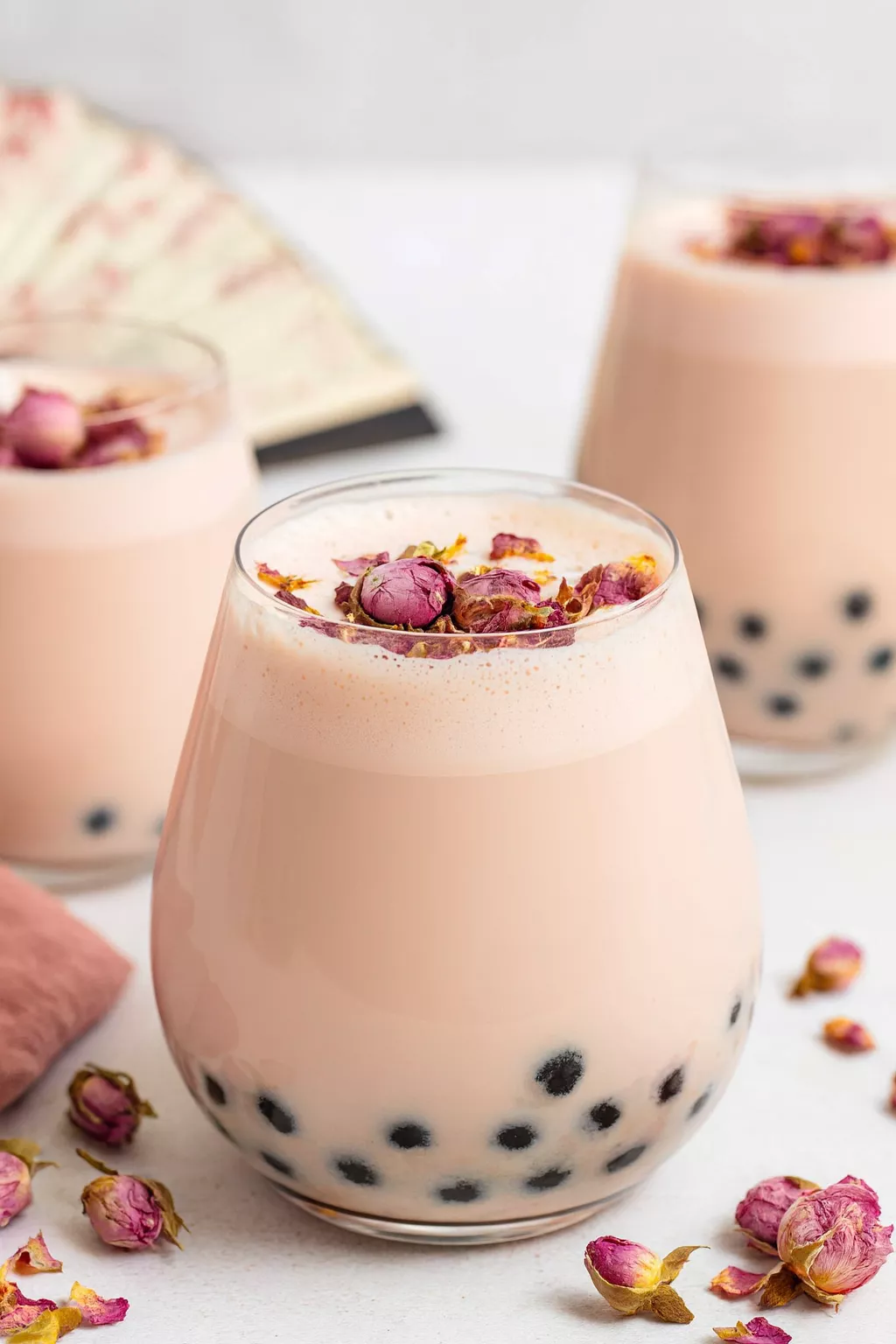
If you enjoyed this Japanese-Style Mango Sago, try another refreshing drink or dessert with creamy and fruity flavors. Strawberry Matcha Boba ストロベリー抹茶タピオカ combines sweet strawberry, earthy matcha, and chewy tapioca pearls for a colorful treat. You can also try Rose Milk Tea ローズミルクティー , a smooth and fragrant drink with a gentle floral flavor that pairs beautifully with light Japanese-style desserts.
Frequently Asked Questions
What is mango sago made from?
This version is made with cooked sago, fresh mango, mango puree, mango milk, condensed milk, mango jelly, and tender coconut jelly.
Is Japanese-Style Mango Sago a traditional Japanese dessert?
Not exactly. Mango sago has roots elsewhere in Asia. This recipe is a Japanese-style version inspired by the clean presentation and light jelly textures often used in modern Japanese-style desserts.
Can I use tapioca pearls instead of sago?
Yes. Small tapioca pearls can usually be used as a substitute. Follow the cooking directions on the package because cooking time can vary.
Why is my sago still white in the middle?
It probably needs more cooking. Properly cooked sago should be transparent. Continue cooking until the centers are no longer hard.
Why should I rinse cooked sago?
Rinsing removes extra surface starch and stops the pearls from continuing to cook. It also helps prevent them from sticking together too much.
Can I prepare mango sago the day before?
Yes. You can prepare it ahead and refrigerate it. For the best texture, however, it is best eaten within 1–2 days.
How long should mango sago chill?
Chill it for at least 1–2 hours before serving.
Can I make it without condensed milk?
Yes. The flavor and texture will be lighter. You may need to adjust the sweetness with a little sugar or another sweetener.
Can I make this recipe dairy-free?
Yes. Replace regular milk with coconut milk or another plant-based milk and choose a dairy-free condensed milk alternative.
Is mango sago healthy?
It contains fresh mango and some useful nutrients, but it also contains condensed milk and added sugar. It is best enjoyed as a dessert in a reasonable portion.
Why did my agar jelly not set?
The agar may not have dissolved completely, or the quantity of liquid may have been too high. Heat the agar mixture properly and stir until it is fully dissolved before pouring it into the tray.
Should mango sago be served hot or cold?
Always serve it cold. Chilling gives the dessert its refreshing flavor and best texture.
Conclusion
Learning How to Make Japanese-Style Mango Sago (マンゴーサゴ) is easier than the finished dessert may suggest. The recipe combines soft sago pearls, sweet fresh mango, fruity mango milk, creamy condensed milk, mango jelly, and refreshing tender coconut jelly in one chilled bowl.
The four-step method keeps preparation simple. Make the jellies, cook the sago and mango milk, combine everything, and then chill.
Once you understand the basic recipe, you can easily create your own version. Add more fresh fruit, use coconut milk, reduce the sweetness, or make a simpler version without jelly.
Serve your Japanese-Style Mango Sago very cold and enjoy the mix of creamy, fruity, soft, and lightly chewy textures in every spoonful.
Japanese-Style Mango Sago (マンゴーサゴ)
Course: DessertCuisine: JapaneseDifficulty: Easy6
servings25
minutes20
minutes430
kcalA cool and creamy Japanese-Style Mango Sago (マンゴーサゴ) made with soft sago pearls, ripe mango, homemade mango jelly, tender coconut jelly, and rich mango milk. This refreshing dessert is fruity, lightly chewy, and best served well chilled.
Ingredients
Main Ingredients:
– ¾ cup uncooked sago (sabudana)
– 1 ripe mango, cut into small cubes
– 2 cups prepared mango milk
– 1 cup condensed milk
– ¾ cup mango puree
– Ice cubes, as neededMango Jelly :
– ½ cup mango puree
– ½ cup water
– 1 tablespoon sugar
– 1 teaspoon agar agarTender Coconut Jelly :
– 1 cup tender coconut water
– 1 tablespoon sugar
– 1 teaspoon agar agarMango Milk :
– ¾ cup mango puree
– 1½ cups chilled milk
– 2 tablespoons sugar
Directions
- Prepare the Mango and Coconut Jellies
Place the water and sugar in a small saucepan and warm gently. Stir in the agar agar and continue heating until it has completely dissolved. Mix in the mango puree, then pour the mixture into a shallow tray. Leave it to set before cutting it into small cubes. For the coconut jelly, repeat the process using tender coconut water, sugar, and agar agar. Let it firm up, then cut it into bite-sized cubes. - Cook the Sago and Make the Mango Milk
Bring a large pot of water to a boil. Add the sago and cook, stirring from time to time, until the pearls become transparent and no hard white centers remain. Drain the sago and rinse it well under cold water to remove extra starch. Allow it to drain. In a separate bowl, combine the mango puree, chilled milk, and sugar until smooth to prepare the mango milk - Combine the Mango Sago
Add the cooked sago to a large bowl. Gently mix in the fresh mango cubes, mango jelly, and tender coconut jelly. Pour in the prepared mango milk, ¾ cup mango puree, and condensed milk. Fold everything together carefully so the mango and jelly pieces keep their shape. - Chill and Serve
Add a few ice cubes if desired, then cover the bowl and refrigerate the mango sago for 1–2 hours. Stir gently before serving. Spoon into individual glasses or dessert bowls, making sure each serving contains sago, fresh mango, and both kinds of jelly. Serve cold.
Notes
- Use a fully ripe mango for the sweetest flavor and brightest color.
Cook the sago until the pearls are transparent; undercooked pearls may remain firm in the center.
Rinse the cooked sago with cold water to remove excess starch and keep the pearls from sticking together.
Make sure the agar agar dissolves completely so both jellies set evenly.
Cut the mango and coconut jelly into small cubes so they are easy to eat with the sago.
Mix the dessert gently to avoid breaking the soft mango and jelly pieces.
Chill for at least 1 hour, but 2 hours gives the dessert an even more refreshing texture.
Store leftovers covered in the refrigerator and enjoy within 1–2 days.
Did you make this recipe?
Tag @jp.dishes on Instagram so we can see your delicious creation!