
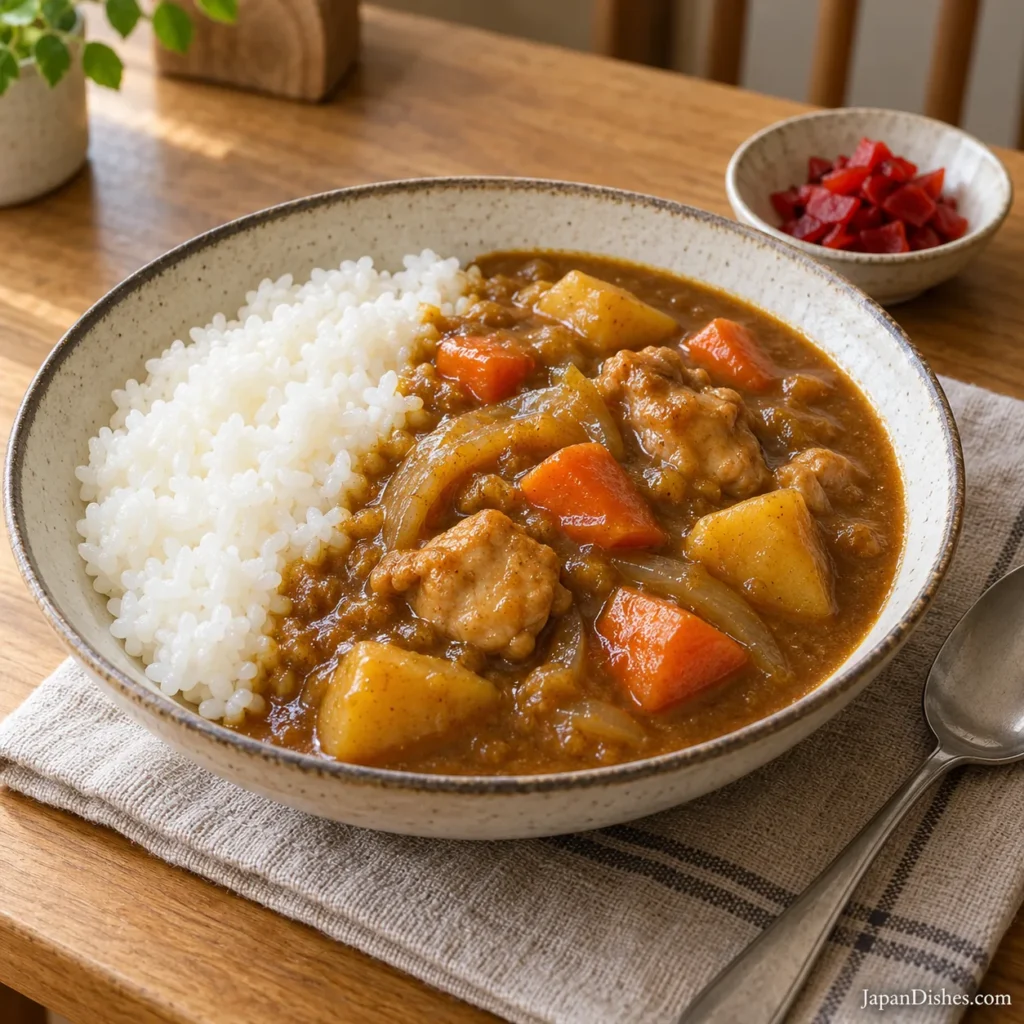
Japanese chicken curry turns everyday chicken, carrots and potatoes into a bowl of comfort. The sauce is thick enough to hug the vegetables, with warm spice, gentle sweetness and plenty of savory flavor. Spoon it beside Japanese short-grain rice for a satisfying family dinner.
Konnichiwa, I’m Hana. Shall we make a warming pot of curry together? We’ll soften the onions, simmer the chicken and vegetables, then finish with a homemade curry roux. Five cooking photos show the changes to look for along the way.
Makes 4 generous servings. Make the roux while the stew simmers; rice cooking is separate and can overlap.
Table of Contents
A comforting Japanese chicken curry from scratch
This version of chikin karē (チキンカレー) uses butter, flour and curry spices to build its sauce. Onion and a little grated apple round out the seasoning; soy sauce adds savory depth. You control the salt and spice because the roux is made in a separate small pan.
The finished Japanese chicken curry should flow slowly from a spoon. It is thicker than broth, yet loose enough to mingle with the rice. Allow about 70 minutes for the curry. The roux cooks during the vegetable simmer, and rice can cook alongside if its usual preparation fits that window.
Ingredients for Japanese chicken curry
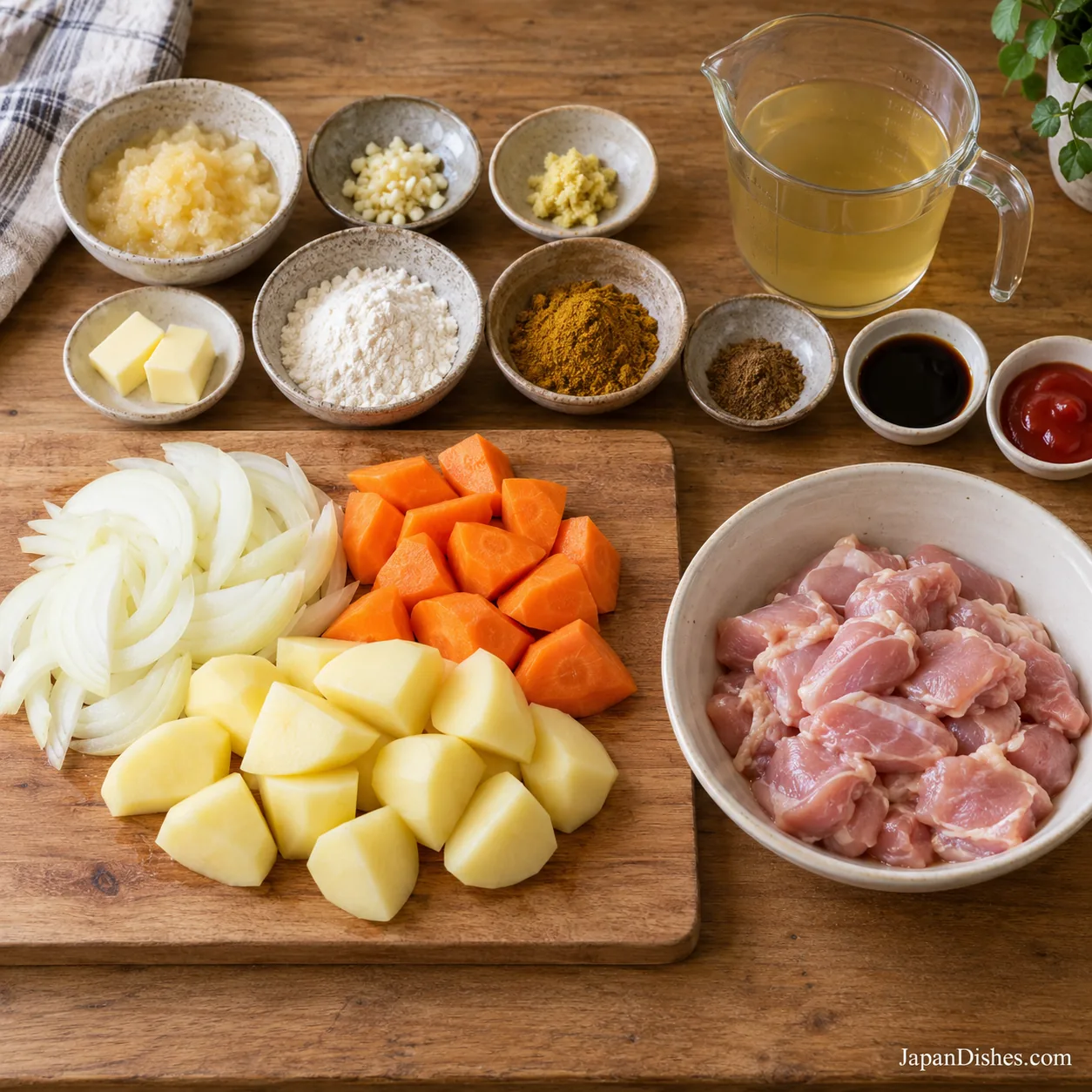
These quantities make four generous servings. Weigh the prepared vegetables where possible; onion and potato sizes vary. The printable recipe below collects every amount.
Chicken and vegetables
Prepare 600 g boneless skinless chicken thighs, 300 g peeled onions, 200 g peeled carrots and 350 g peeled waxy or Yukon Gold potatoes. Thighs suit the simmer well. Cut the carrots slightly smaller than the potatoes so both become tender together.
Stock and gentle sweetness
Use 800 ml low-sodium chicken stock, 50 g grated peeled apple, 1 tablespoon soy sauce and 1 tablespoon ketchup. The apple disappears into the sauce. Ketchup adds a little sweetness and acidity; taste the finished curry before adding salt.
Aromatics and homemade roux
For the pot, measure 1 tablespoon neutral oil, 2 chopped garlic cloves and 10 g grated ginger. For the roux, use 50 g unsalted butter, 50 g plain flour, 2 tablespoons Japanese-style curry powder, about 16 g, and 1 teaspoon garam masala, about 2 g.
Rice and pickles
Serve with four portions of cooked Japanese short-grain rice, about 600–800 g total. Fukujinzuke, the red vegetable pickle shown in the serving photos, is optional. A small spoonful adds a crisp, tangy bite; keep it beside the curry until eating.
Choosing ingredients and making swaps
A Japanese-style curry powder gives the intended flavor; another mild curry powder can work, with a different spice balance. Curry powder contains spices, while prepared roux blocks also contain fat, thickener and seasoning. S&B’s curry powder guide explains its blend. Use powder for the homemade roux here.
If using chicken breast, add its bite-size pieces for the last 8–10 minutes of the vegetable simmer and check 74°C / 165°F before serving. Cooking time can vary. For dairy-free curry, use a suitable plant-based butter. A gluten-free version needs a suitable roux flour, tamari and verified stock, spices and pickles; its thickness may differ. Standard ingredients contain wheat, milk and soy.
How to make Japanese chicken curry in 5 steps
Set out a wide heavy pot, small saucepan, wooden spoon, whisk and food thermometer. Keep raw-chicken utensils separate from the prepared vegetables. Read the roux step before beginning because it overlaps with the simmer.
Step 1: Prepare the ingredients
Slice the onions; cut carrots into 2 cm chunks and potatoes into 3 cm chunks. Grate the apple and ginger, and chop the garlic. On a separate board, trim and cut the chicken into 3 cm pieces; pat dry and add a little black pepper. Wash hands and clean the board. Measure the stock and roux ingredients. If using uncooked rice, start it in a separate cooker or pot according to its instructions.
Keep the potato chunks similar in size. If preparing them ahead, hold them briefly in cold water, then drain before adding to the pot.
Step 2: Soften the onions and cook the chicken
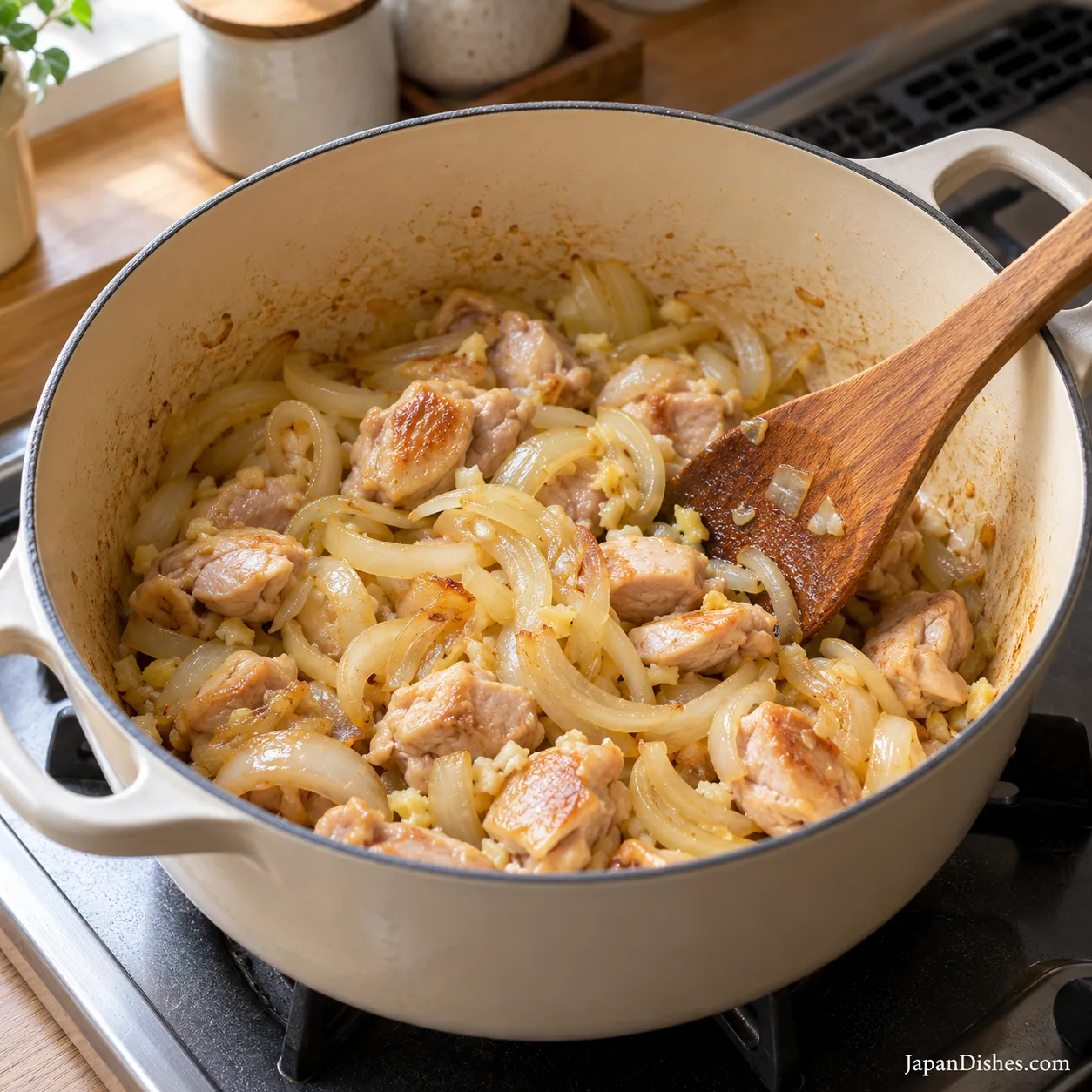
Heat the oil in a wide heavy pot over medium heat. Cook onions for 8–10 minutes, stirring, until soft and lightly golden. Add the chicken and cook for 4–5 minutes, turning until its outside is opaque. Stir in garlic and ginger for 30 seconds; the chicken is not fully cooked yet.
Stir more often as the onions begin to color. If the base darkens quickly, reduce the heat. You want soft golden onions, without burned garlic.
Step 3: Simmer the chicken and vegetables
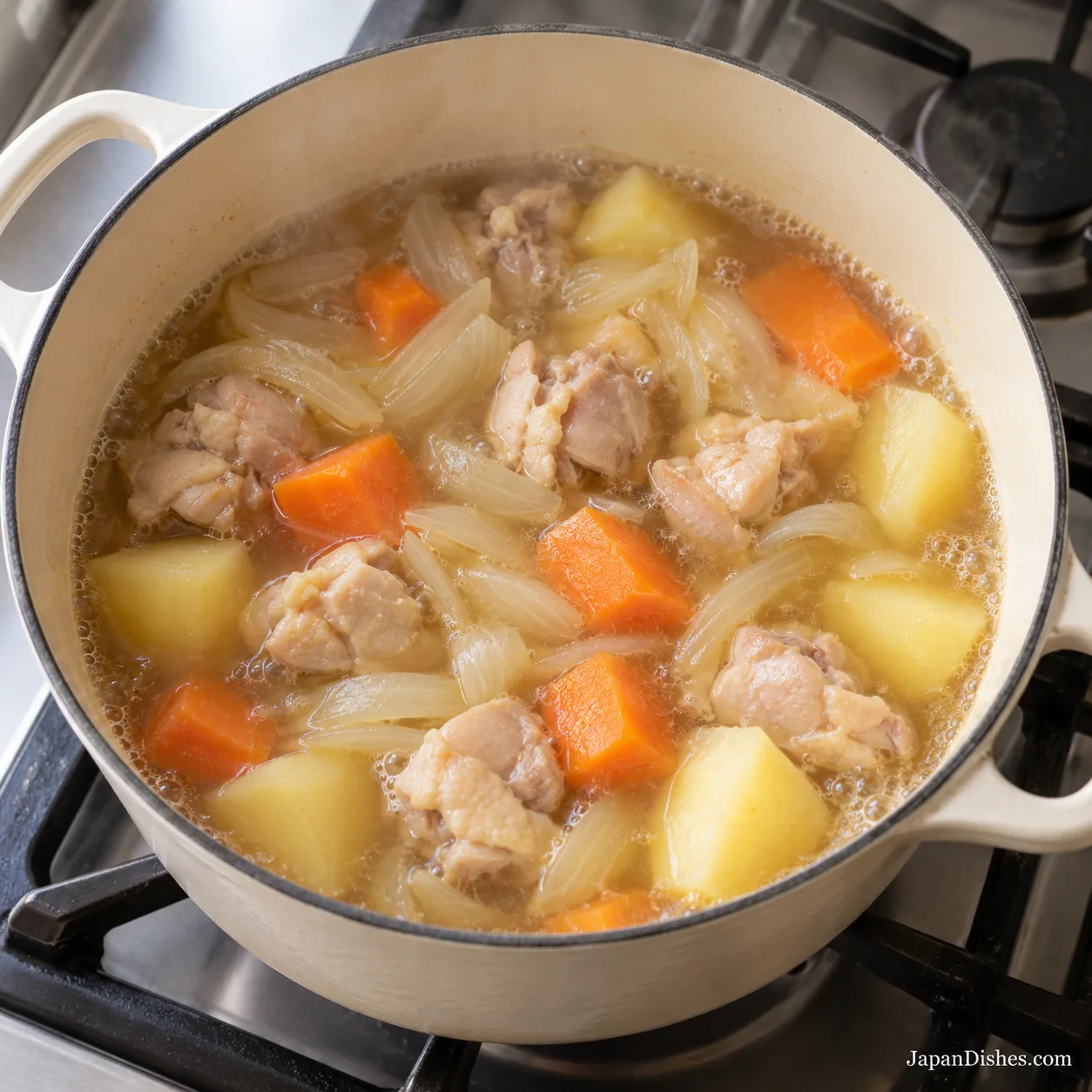
Add carrots, potatoes, 800 ml stock, grated apple, soy sauce and ketchup. Stir and bring to a gentle simmer, loosening anything stuck to the base. Cover partly and cook over low heat for 18–22 minutes, until vegetables are tender. Stir occasionally; add a little hot water if necessary to keep the ingredients nearly covered. While this simmers, make the roux in step 4.
The stock is still thin at this stage, as the photo shows. Test a potato with a small knife; it should slide in easily before you thicken the curry.
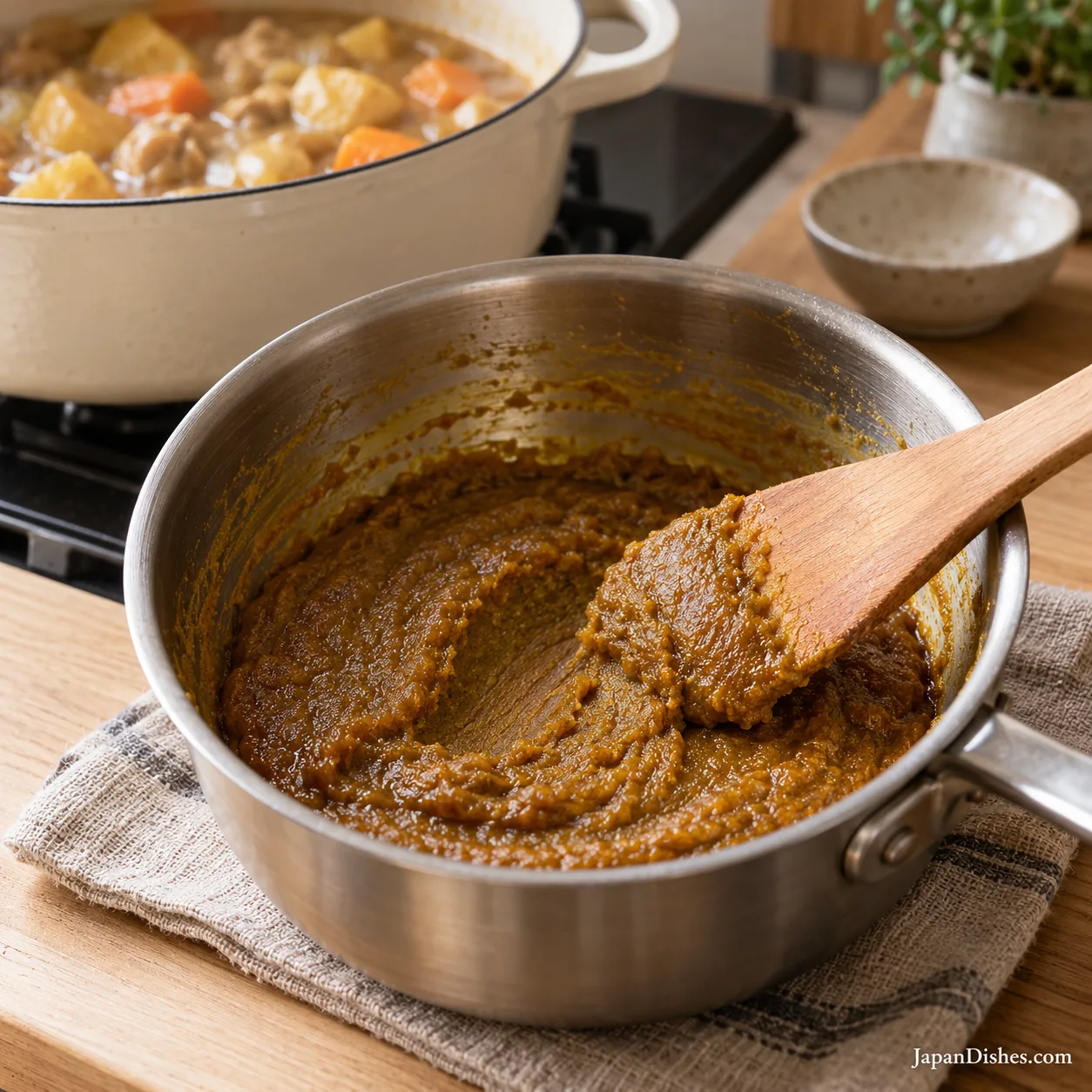
Step 4: Make and add the homemade curry roux
Melt butter in a small saucepan over medium-low heat. Stir in flour and cook for 6–8 minutes, stirring constantly, until light golden and nutty-smelling. Remove from heat; stir in curry powder and garam masala. Gradually whisk about 200 ml hot liquid taken from the curry pot into the roux to make a smooth pourable sauce. Turn off the large pot’s heat and gently stir this sauce into the stew.
Take the hot liquid from the stew rather than adding another 200 ml. Add it to the roux in small splashes, whisking after each, to keep the mixture smooth.
Step 5: Finish the sauce and serve with rice
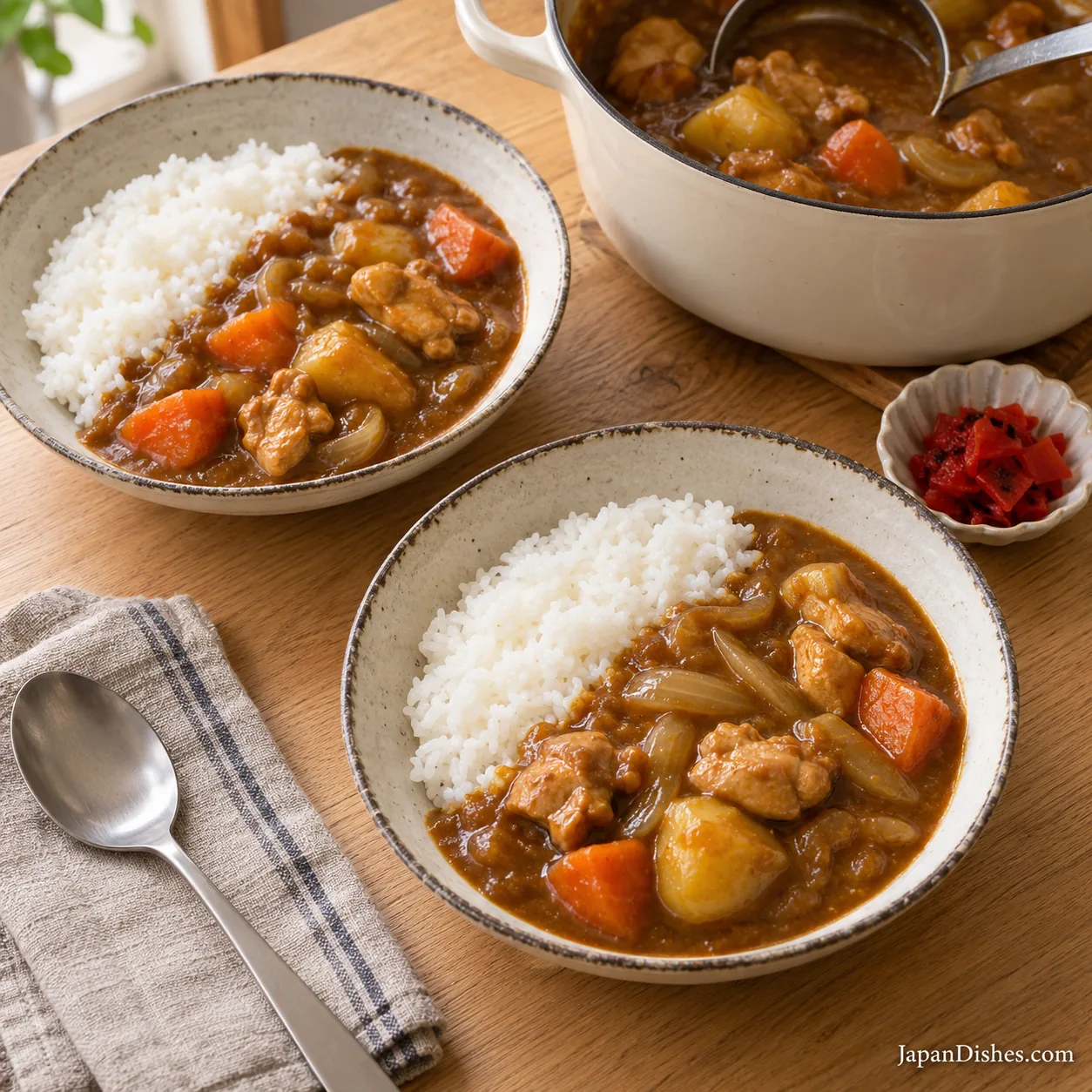
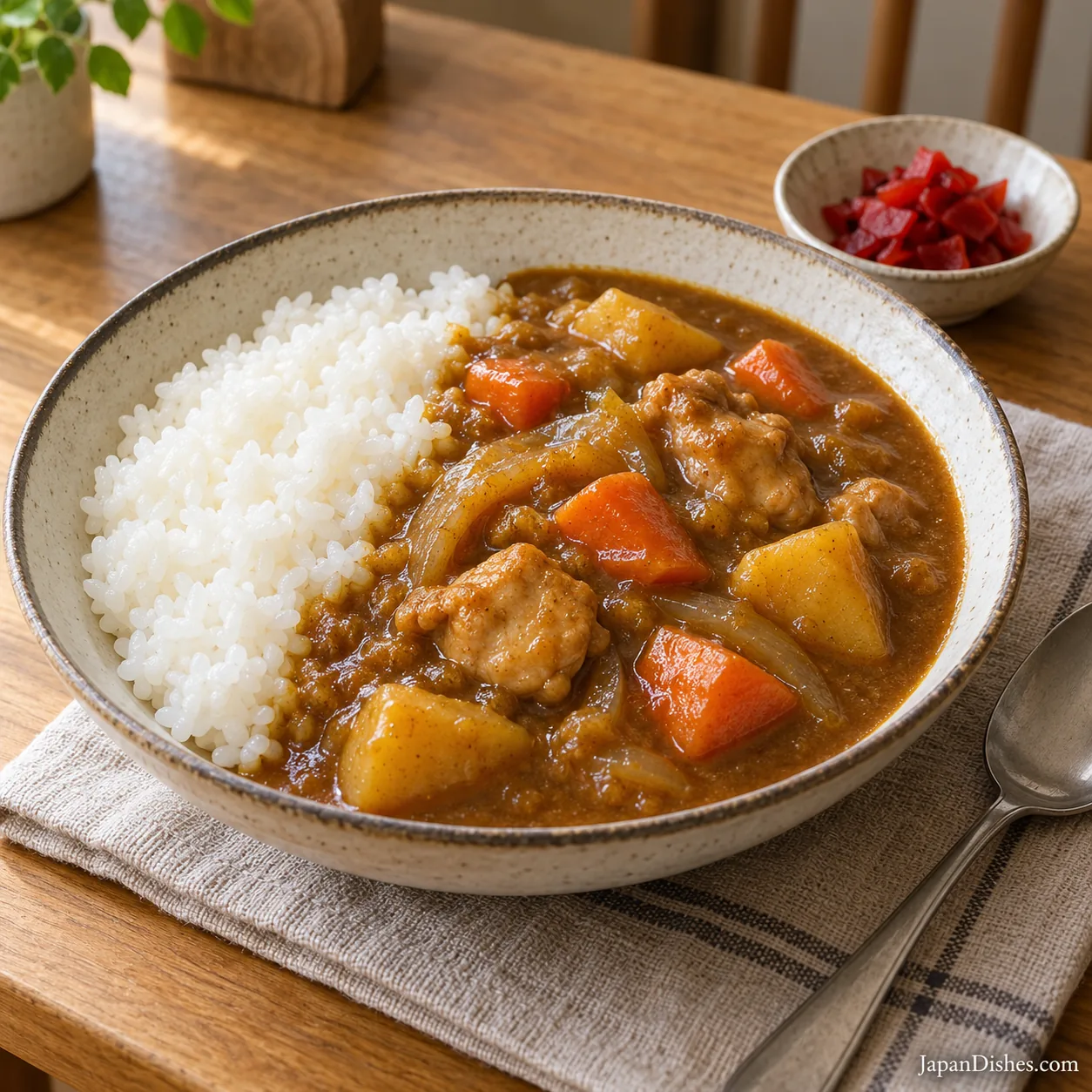
Return the curry to low heat and simmer uncovered for 8–10 minutes, stirring across the base, until the sauce coats a spoon. Check that the largest chicken pieces reach 74°C / 165°F and the vegetables are tender; cook longer if needed. Thin with hot water a tablespoon at a time if necessary. Taste and adjust salt and pepper. Divide rice between 4 bowls, spoon curry beside it, and add optional fukujinzuke.
Aim for a gentle simmer once thickened. Lift and fold the sauce around the vegetables so the potatoes keep their shape. Serve hot in warmed bowls.
Hana’s tips for rich Japanese chicken curry
Watch the roux closely
Keep stirring the butter and flour over moderate-low heat. It should become light golden before the spices go in. Remove the pan from the heat to add them. A dark, scorched roux tastes bitter and is best remade.
Adjust thickness at the end
If thick, stir in hot water a tablespoon at a time. If thin, simmer uncovered for a few more minutes, stirring along the bottom. The sauce thickens further as it cools, so leave it gently pourable.
Keep the seasoning balanced
Use low-sodium stock and taste after the sauce thickens. Add salt in small pinches. A mild curry powder suits a gentler bowl; for more heat, add a little cayenne to your own serving.
Small changes for the next pot
Add 100 g sliced mushrooms with the vegetables for an earthier version. They release moisture, so judge the final thickness before adding water. For extra fragrance, add another small pinch of garam masala at the end. Try one change at a time so you can tell which flavor you enjoy.
Storage and reheating
Divide leftover curry into shallow containers and refrigerate promptly, within two hours, or one hour when the room is above 32°C / 90°F. Keep the refrigerator at 4°C / 40°F or below and use this curry within three days. Store rice separately. Follow the government guidance for cooling and handling leftovers; do not leave the pot on the counter overnight.
Reheat curry over low heat with a splash of water, stirring, until it reaches 74°C / 165°F throughout. For longer storage, freeze cooled curry promptly in portions and use within one month for best texture. Potatoes can become grainy after freezing. Thaw in the refrigerator, then reheat thoroughly; freshly cooked rice is a good partner.
More comforting JapanDishes recipes
For another curry project, explore beef tendon curry. If you enjoy soft potatoes in a savory sauce, try nikujaga, Japanese meat and potato stew. These related recipes have their own methods and cooking times.
A different Japanese curry with its own slow-cooking method.

Another comforting way to serve potatoes and tender meat.
Frequently asked questions
Can I use boxed roux instead?
Yes, but it is a separate variation. Omit the butter, flour, curry powder and garam masala. Follow the box’s roux quantity and liquid guidance; adjust the stock if needed, and taste before adding the soy sauce. Boxed blends vary in salt and thickness.
Why did my curry turn lumpy?
Adding hot liquid all at once can leave dry pockets in the roux. Whisk the liquid in gradually in the small saucepan. If lumps appear, smooth the roux there before stirring it into the vegetable pot.
Can I make Japanese chicken curry ahead?
Yes. Cool and refrigerate it promptly, then reheat thoroughly with a little water to loosen the sauce. Make fresh rice when serving. The curry will thicken in the fridge, which is normal.
Can I double this recipe?
Double the ingredients and use a larger pot. Cook the onions and chicken in batches if crowded. The time may increase; use vegetable tenderness and the chicken’s temperature to judge doneness.
How do you like your Japanese chicken curry: mild and mellow, or with a little extra spice? Tell Hana your favorite way to serve it in the comments.
Japanese Chicken Curry チキンカレー
Course: Main courseCuisine: JapaneseDifficulty: Easy to Medium4
servings20
minutes50
minutes1
hour10
minutesJapanese chicken curry made with tender thighs, carrots, potatoes and a homemade curry roux. A comforting four-serving dinner with rice, ready in about 70 minutes.
Ingredients
600 g boneless skinless chicken thighs, trimmed and cut into 3 cm pieces
300 g peeled yellow onions (about 2 medium), sliced 5 mm thick
200 g peeled carrots, cut into 2 cm chunks
350 g peeled waxy or Yukon Gold potatoes, cut into 3 cm chunks
2 garlic cloves, finely chopped
10 g peeled fresh ginger, finely grated (about 2 teaspoons)
50 g peeled and cored apple, finely grated
1 tablespoon neutral cooking oil (15 ml)
800 ml low-sodium chicken stock, plus hot water only if needed
1 tablespoon soy sauce (15 ml)
1 tablespoon tomato ketchup (15 g)
50 g unsalted butter, for the roux
50 g plain all-purpose flour, for the roux
2 tablespoons Japanese-style curry powder (about 16 g), for the roux
1 teaspoon garam masala (about 2 g), for the roux
Salt and freshly ground black pepper, to taste
4 portions cooked Japanese short-grain rice (about 600–800 g total), for serving
Fukujinzuke pickled vegetables, optional, for serving
Directions
- Slice the onions; cut carrots into 2 cm chunks and potatoes into 3 cm chunks. Grate the apple and ginger, and chop the garlic. On a separate board, trim and cut the chicken into 3 cm pieces; pat dry and add a little black pepper. Wash hands and clean the board. Measure the stock and roux ingredients. If using uncooked rice, start it in a separate cooker or pot according to its instructions.
- Heat the oil in a wide heavy pot over medium heat. Cook onions for 8–10 minutes, stirring, until soft and lightly golden. Add the chicken and cook for 4–5 minutes, turning until its outside is opaque. Stir in garlic and ginger for 30 seconds; the chicken is not fully cooked yet.
- Add carrots, potatoes, 800 ml stock, grated apple, soy sauce and ketchup. Stir and bring to a gentle simmer, loosening anything stuck to the base. Cover partly and cook over low heat for 18–22 minutes, until vegetables are tender. Stir occasionally; add a little hot water if necessary to keep the ingredients nearly covered. While this simmers, make the roux in step 4.
- Melt butter in a small saucepan over medium-low heat. Stir in flour and cook for 6–8 minutes, stirring constantly, until light golden and nutty-smelling. Remove from heat; stir in curry powder and garam masala. Gradually whisk about 200 ml hot liquid taken from the curry pot into the roux to make a smooth pourable sauce. Turn off the large pot’s heat and gently stir this sauce into the stew.
- Return the curry to low heat and simmer uncovered for 8–10 minutes, stirring across the base, until the sauce coats a spoon. Check that the largest chicken pieces reach 74°C / 165°F and the vegetables are tender; cook longer if needed. Thin with hot water a tablespoon at a time if necessary. Taste and adjust salt and pepper. Divide rice between 4 bowls, spoon curry beside it, and add optional fukujinzuke.
Notes
- Makes 4 generous servings. Allow 20 minutes preparation and about 50 minutes cooking; the roux is made while the stew simmers. Rice cooking is separate and can overlap, but soaking or longer rice programs may add time. Contains wheat, milk and soy with standard ingredients; check spice, stock and pickle labels. Cook chicken and reheat leftovers to 74°C / 165°F. Refrigerate promptly in shallow containers at 4°C / 40°F or below and use the curry within 3 days. Store rice separately and follow its package or local food-safety guidance.