
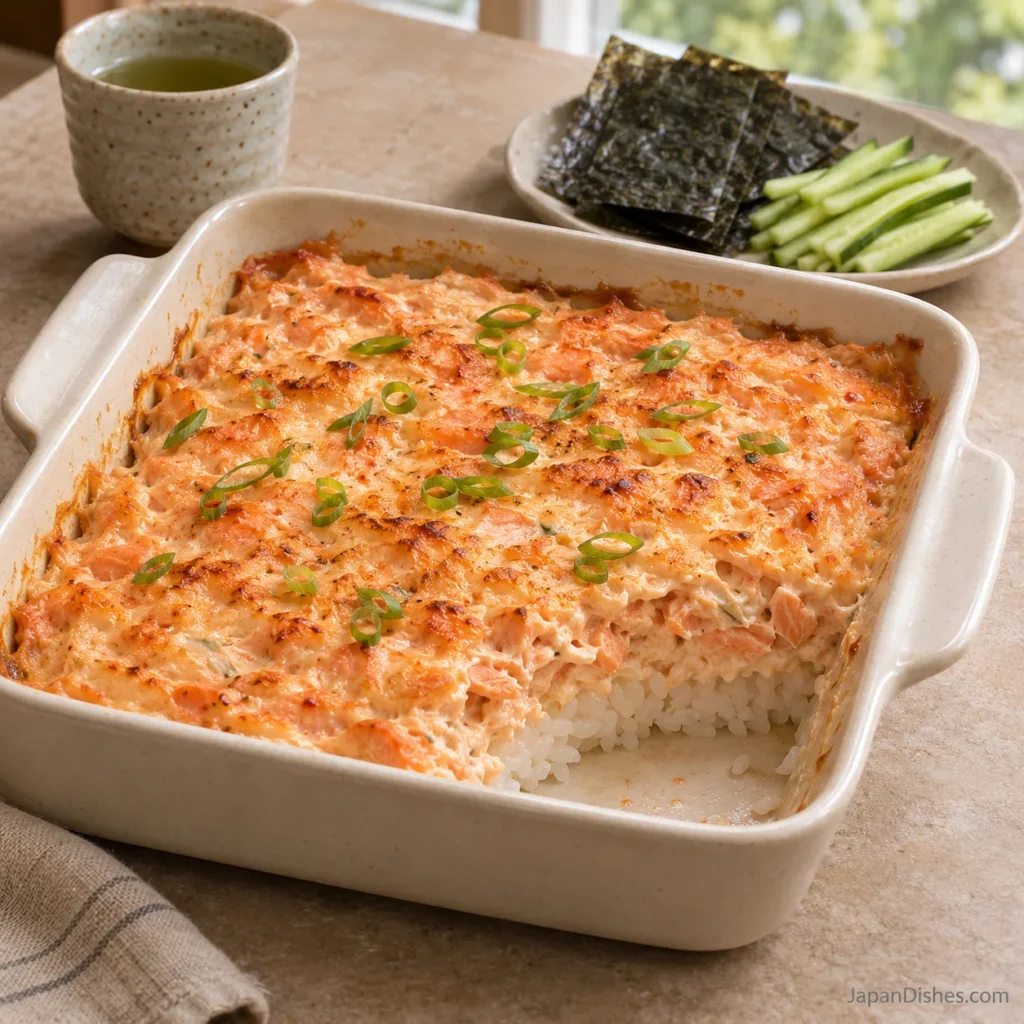
Salmon sushi bake has two layers: warm vinegared rice on the bottom and creamy flakes of cooked salmon on top. Bake it in one dish, then spoon a little of both layers onto crisp nori. A couple of cucumber sticks add crunch and keep each bite from feeling too rich.
Hello, I’m Hana (はな). If rolling sushi feels like a project, this is a good place to start. You can cook the rice while the salmon is in the oven. The key is to spread each layer evenly and keep the nori separate until everyone is ready to eat.
This version serves four from an 8-inch (20 cm) square dish. It uses fresh salmon that you cook first, a modest amount of cream cheese and mayonnaise, and just enough sriracha to warm up the topping. Leave the chili sauce out for a mild batch.
What is sushi bake?
Sushi bake is a modern, sushi-inspired casserole. It borrows seasoned rice, nori and savory toppings from sushi, then serves them warm in a shareable dish. Sushi bake became especially popular in the Philippines during the early pandemic. This salmon version is a home-cooking take on that format.
Traditional sushi is a different preparation. For a Japanese rice dish with toppings arranged over the surface, try chirashi sushi. Here, the rice goes into the oven under the salmon, and the nori stays dry on the table so it can hold the warm filling without becoming limp.
Ingredients for salmon sushi bake
- 185 g Japanese short-grain white rice (about 1 scant US cup, uncooked)
- 240 ml water (1 US cup), or the amount specified for your rice or rice cooker
- 2 tablespoons unseasoned rice vinegar
- 2 teaspoons granulated sugar
- ½ teaspoon fine sea salt, for the rice
- 340 g (12 oz) skinless salmon fillet, pin bones removed
- 1 teaspoon neutral oil, divided between the salmon and baking dish
- 60 g (about 2 oz) plain full-fat cream cheese, softened
- 3 tablespoons Japanese mayonnaise
- 1 teaspoon sriracha, optional
- 2 tablespoons nori-and-sesame furikake
- 2 green onions, thinly sliced
- 1 small cucumber, cut into thin matchsticks and patted dry
- 4 full-size toasted nori sheets, cut into about 24 pieces, or 24 sturdy snack-size pieces
Japanese short-grain rice stays together when you lift a spoonful. Avoid glutinous rice, which turns too chewy, and avoid substituting uncooked rice straight into the baking dish. If your rice bag specifies a different amount of water or a soaking step, follow it. Our sushi rice texture guide covers common grain and water problems.
Use unseasoned rice vinegar because this recipe adds its own sugar and salt. If you only have seasoned sushi vinegar, use the bottle’s guidance and omit the separate sugar and salt. Taste a little of the rice before layering; furikake and mayonnaise add more seasoning later.
Plain block cream cheese makes a thicker topping than a whipped tub spread. Japanese mayonnaise gives a tangy finish, though regular mayonnaise also works. Check your furikake label: different blends may contain fish, sesame, wheat, soy or egg, and seasoned nori snacks may contain additional allergens.
Equipment
Use a fine mesh strainer, a lidded saucepan or rice cooker, a small rimmed baking sheet, parchment, an 8-inch (20 cm) square oven-safe dish, a rice paddle or broad spatula and an instant-read thermometer.
How to make salmon sushi bake: ten photo steps
1. Rinse and cook the rice
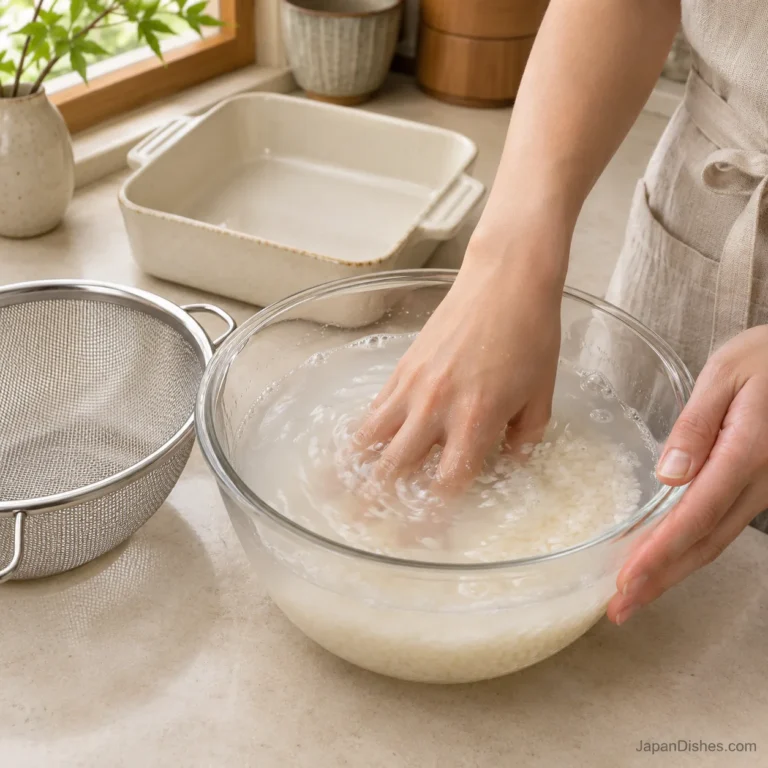
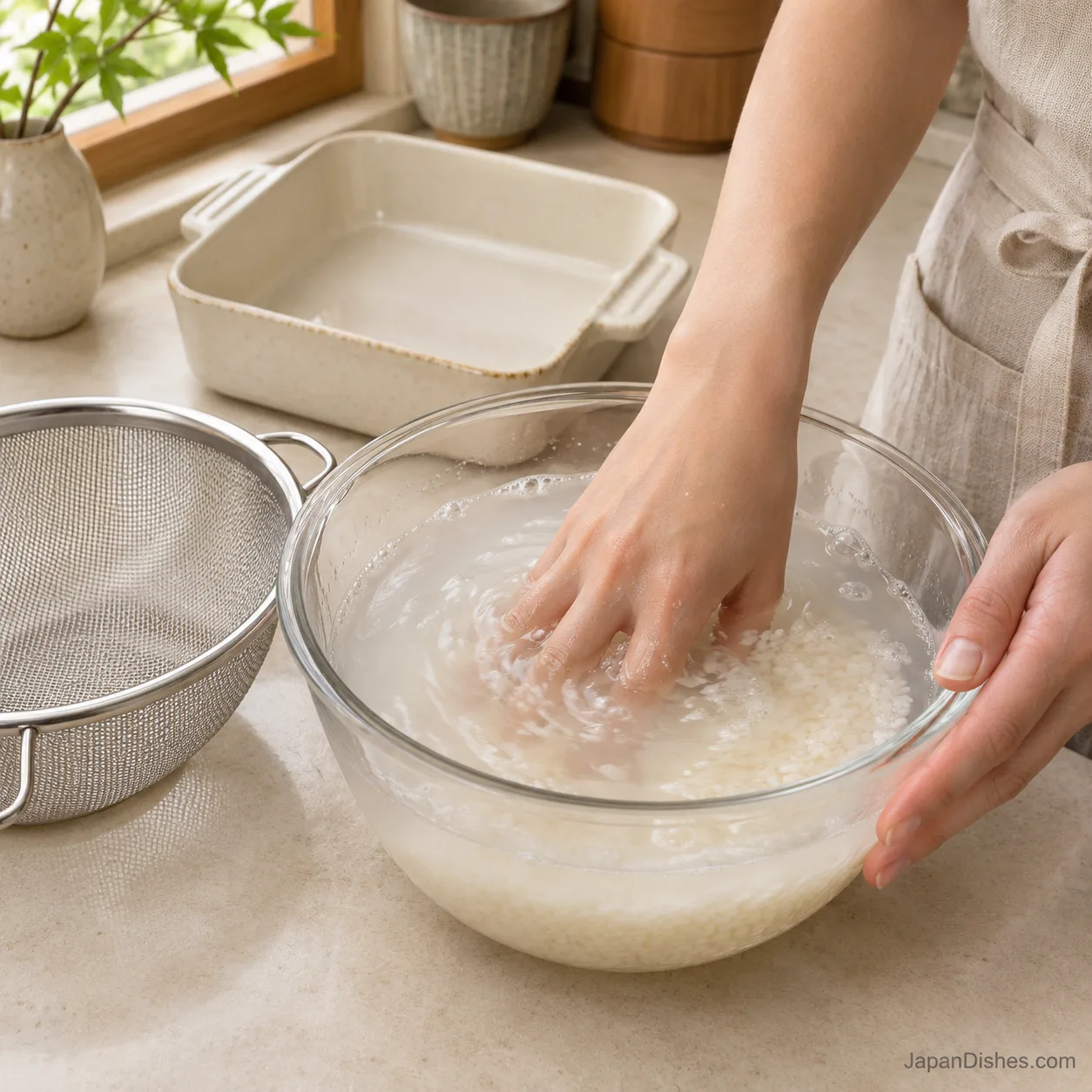
Heat the oven to 400°F (205°C). Swirl the rice in cold water, drain, and repeat until the runoff is less cloudy, usually three or four rinses. Drain well in a strainer. Cook the rice according to its package or your rice cooker. For a stovetop starting point, bring the rice and 240 ml water to a gentle boil in a small saucepan, cover, and simmer on low for 12–15 minutes, until absorbed. Turn off the heat and leave covered for 10 minutes.
2. Season the warm rice
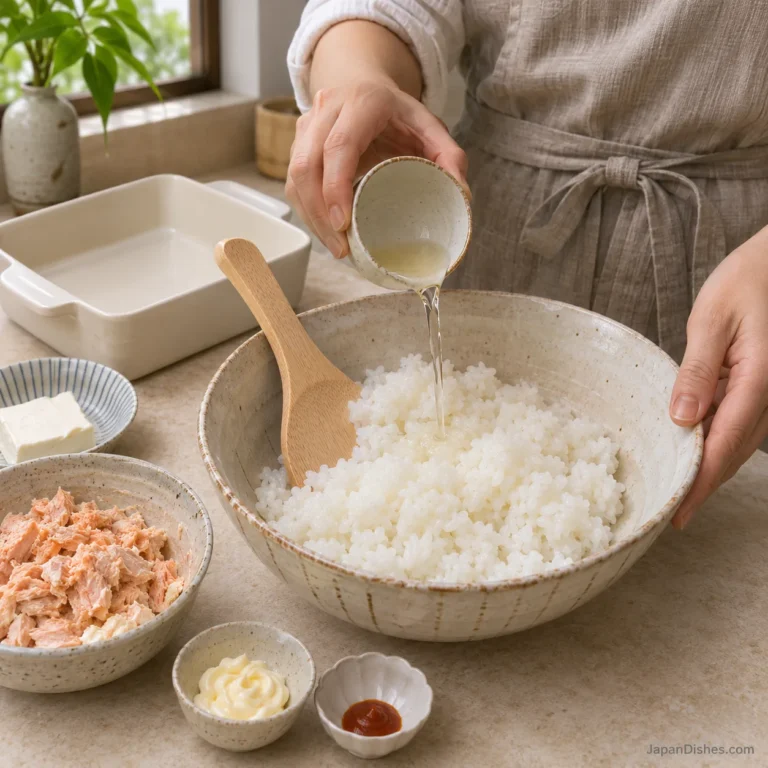
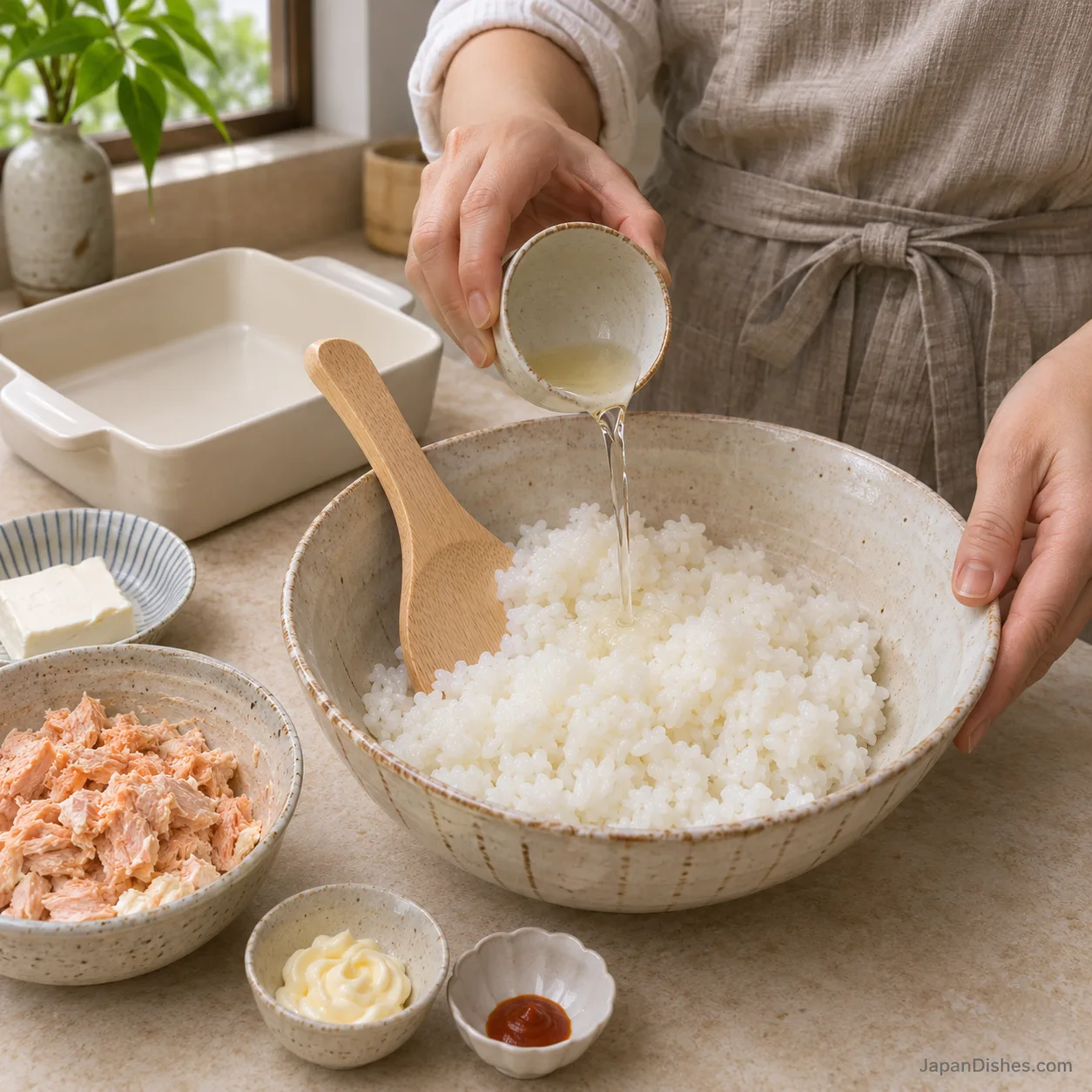
Stir the vinegar, sugar and salt until dissolved. Move the warm rice into a wide bowl, then drizzle the seasoning evenly across the surface. Use the edge of a paddle to cut through the grains and fold them over gently. Stop when the rice is evenly seasoned and the individual grains still hold their shape. Cover loosely and use it promptly.
3. Roast the salmon
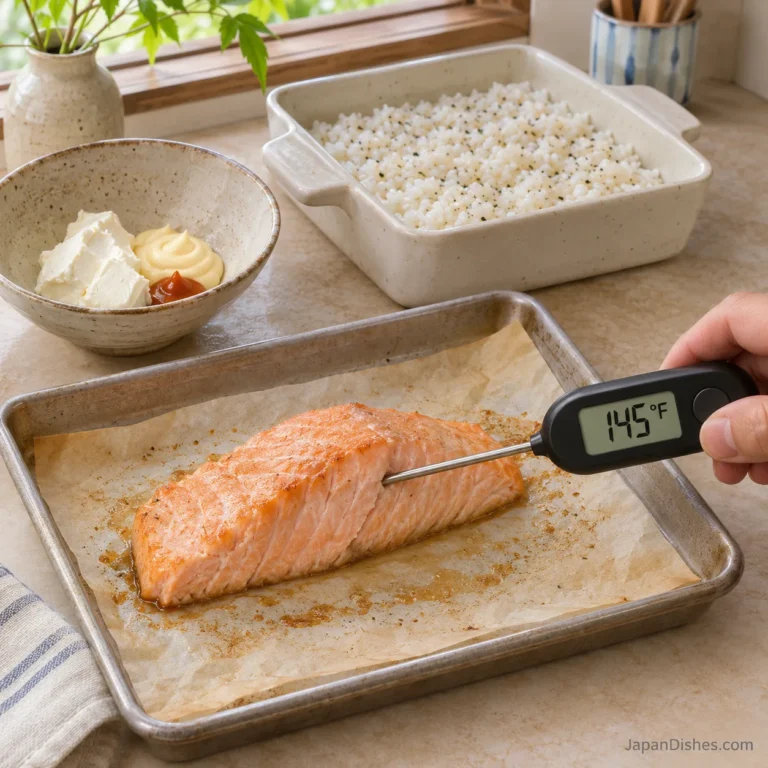
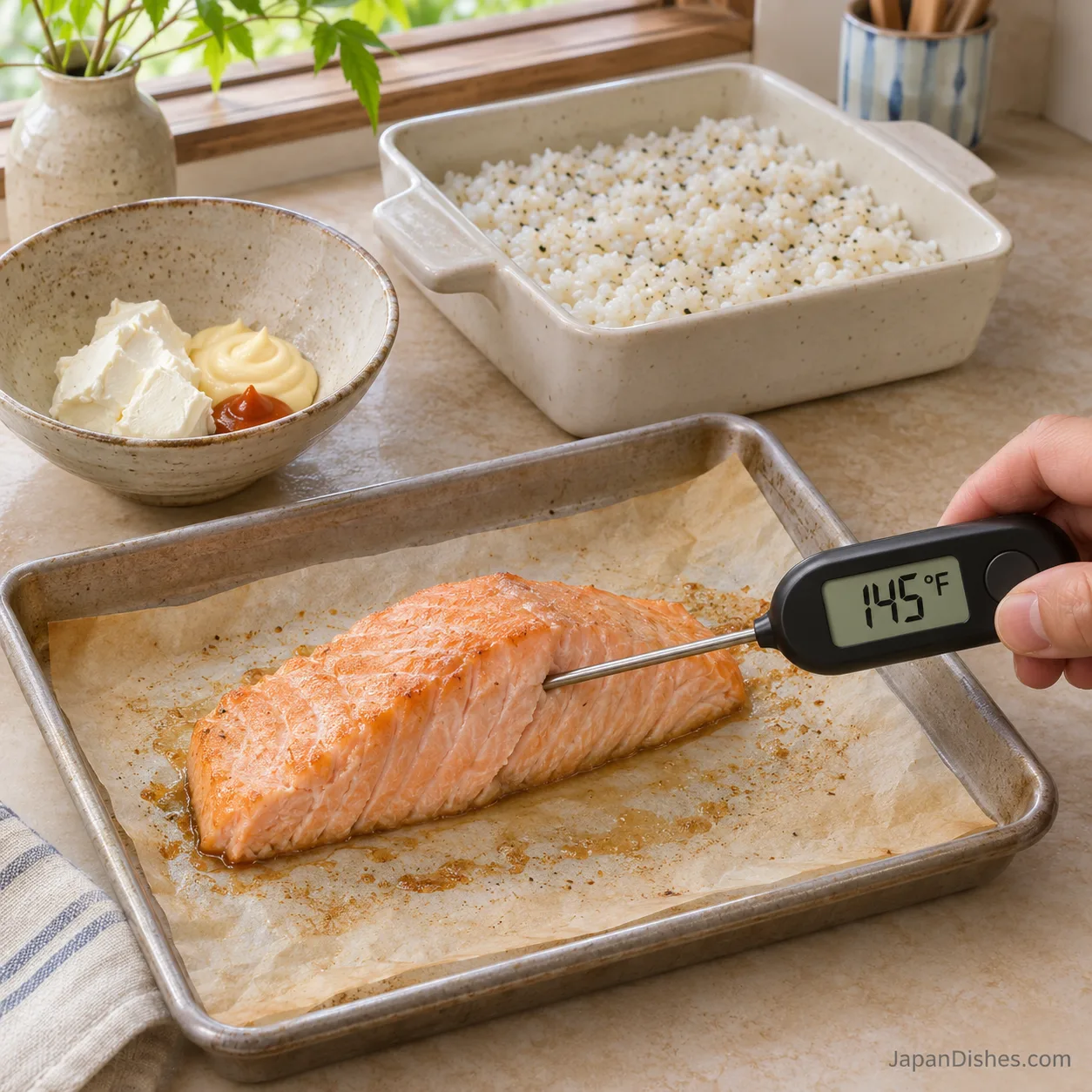
While the rice cooks, place the salmon on a parchment-lined rimmed baking sheet and lightly brush it with some of the oil. Roast at 400°F (205°C), starting to check at 12 minutes. A typical fillet may take about 12–16 minutes; thickness matters more than the clock. Insert the thermometer sideways into the thickest part and cook to 145°F (63°C). Leave the oven on for the assembled bake.
4. Flake the cooked fish
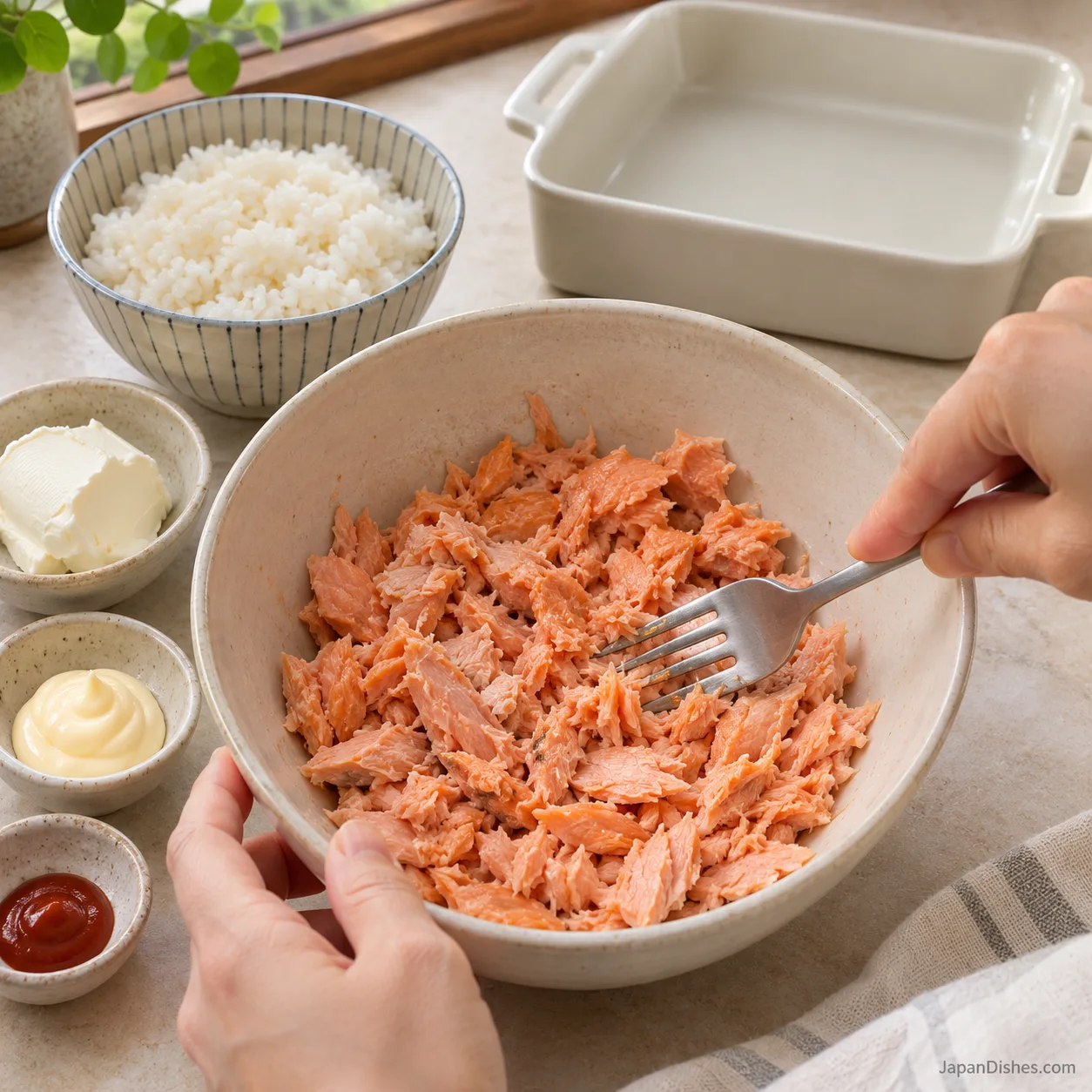
Transfer the cooked salmon to a clean bowl. Use a fork to lift the flesh apart into bite-size flakes. Check again for bones as you work, and leave behind any watery cooking juices on the tray. Keep a few larger flakes for texture; mashing the fish into a paste makes the topping feel heavier.
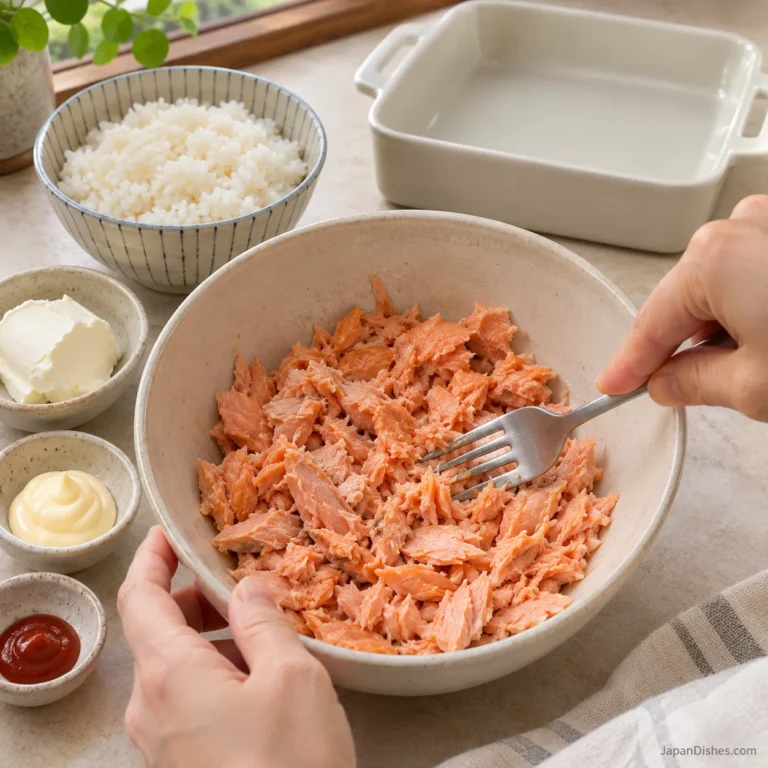
5. Mix the creamy topping
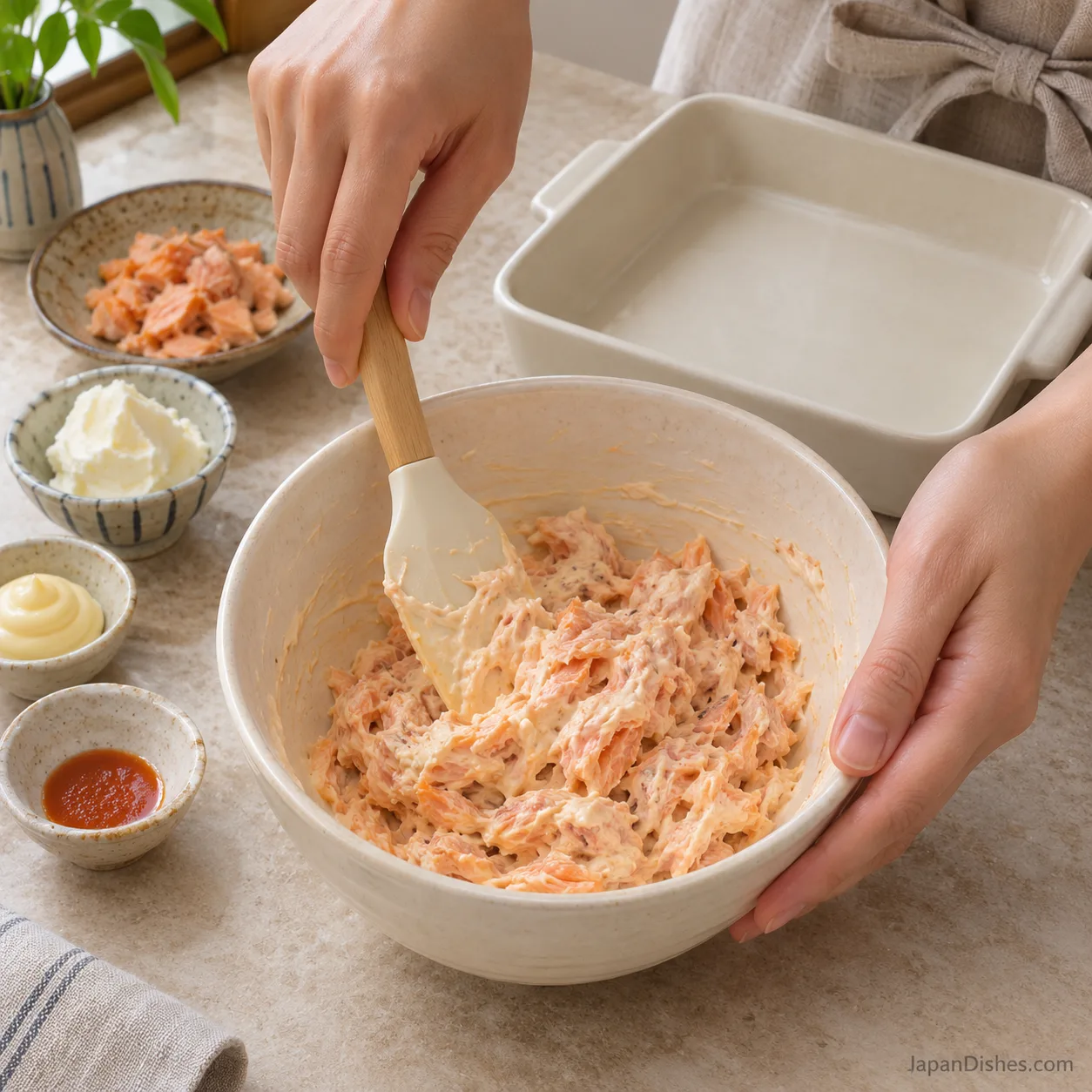
In a second bowl, stir the softened cream cheese with the mayonnaise and optional sriracha until smooth. Fold in the salmon just until coated. The mixture should spread easily without running off the spatula. If a few firm specks of cheese remain, press them against the side of the bowl rather than beating the salmon.
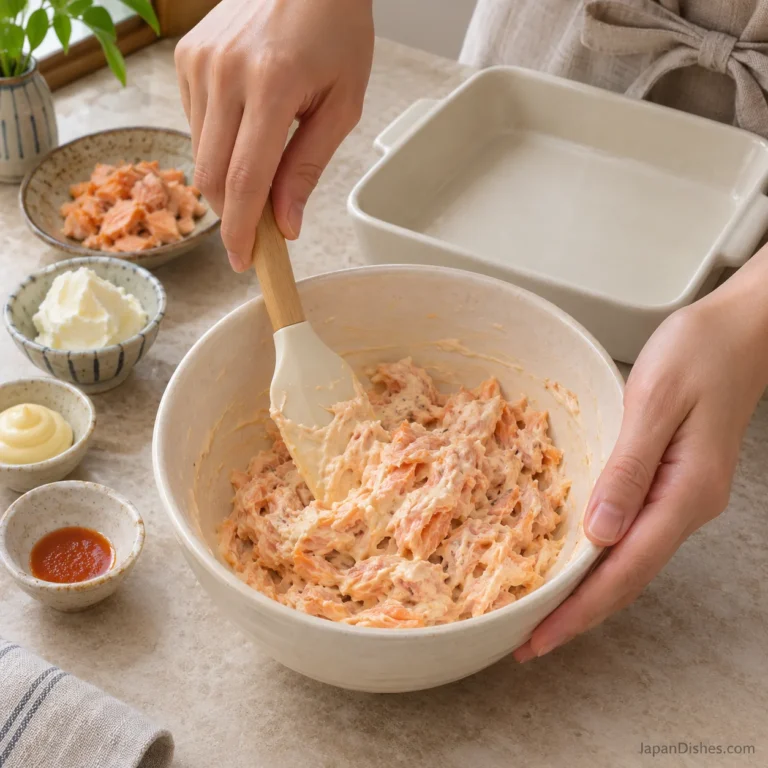
6. Spread the rice into the dish
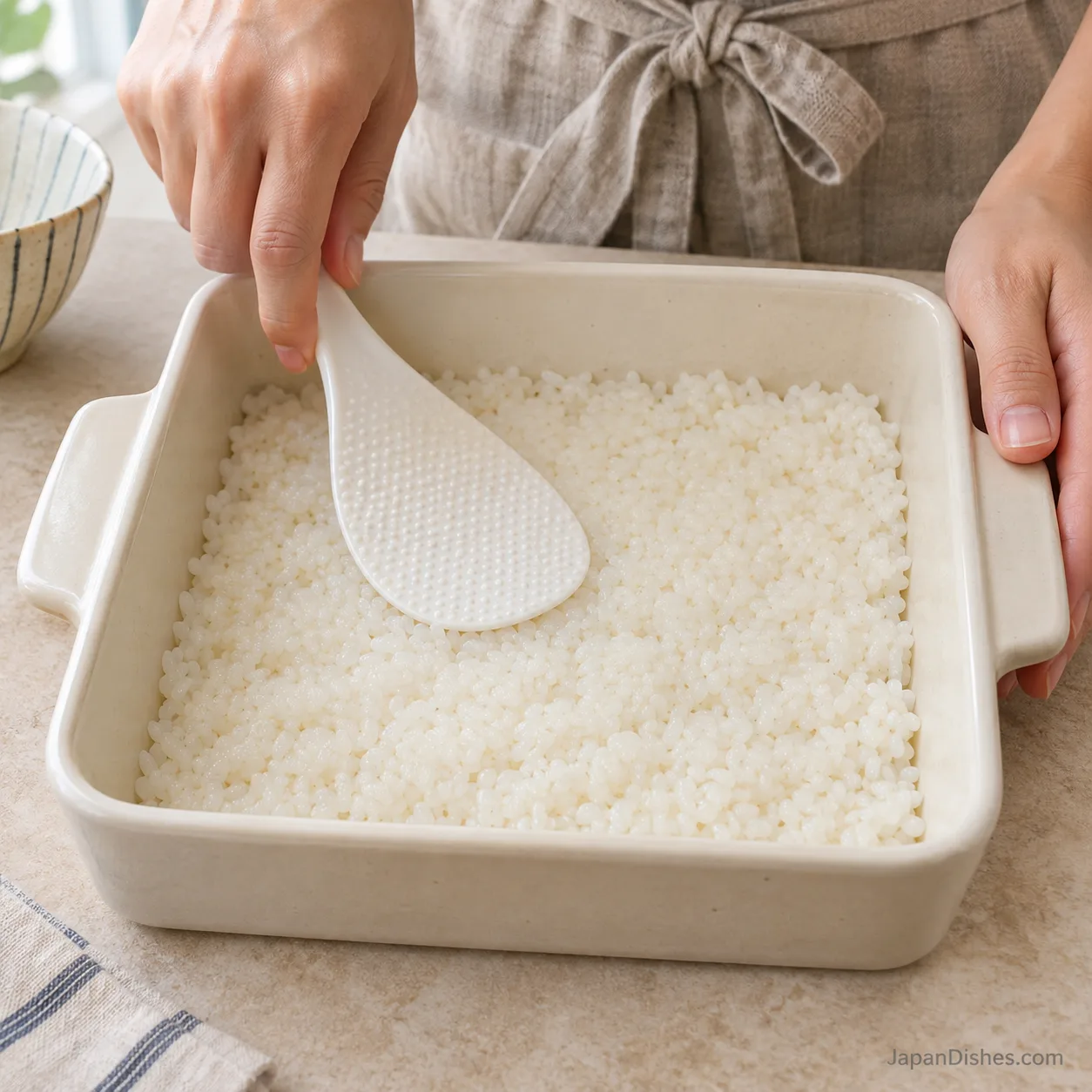
Lightly grease the 8-inch (20 cm) square baking dish with the remaining oil. Transfer the seasoned rice while it is still warm and spread it out evenly, including into the corners. Press only lightly with a damp paddle. The layer should stay together under a spoon but still have visible grains, rather than a compact, gummy surface.
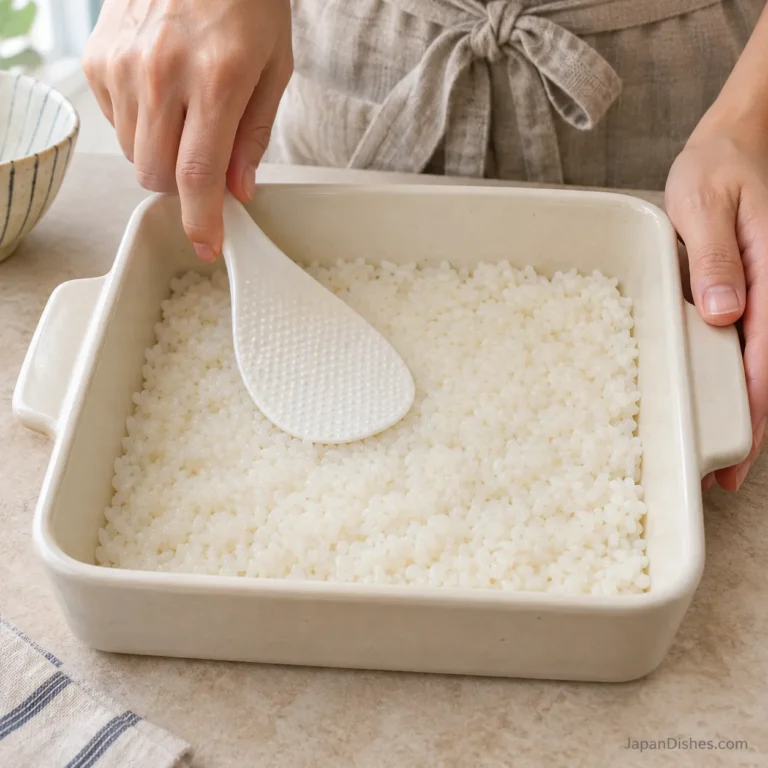
7. Scatter the furikake
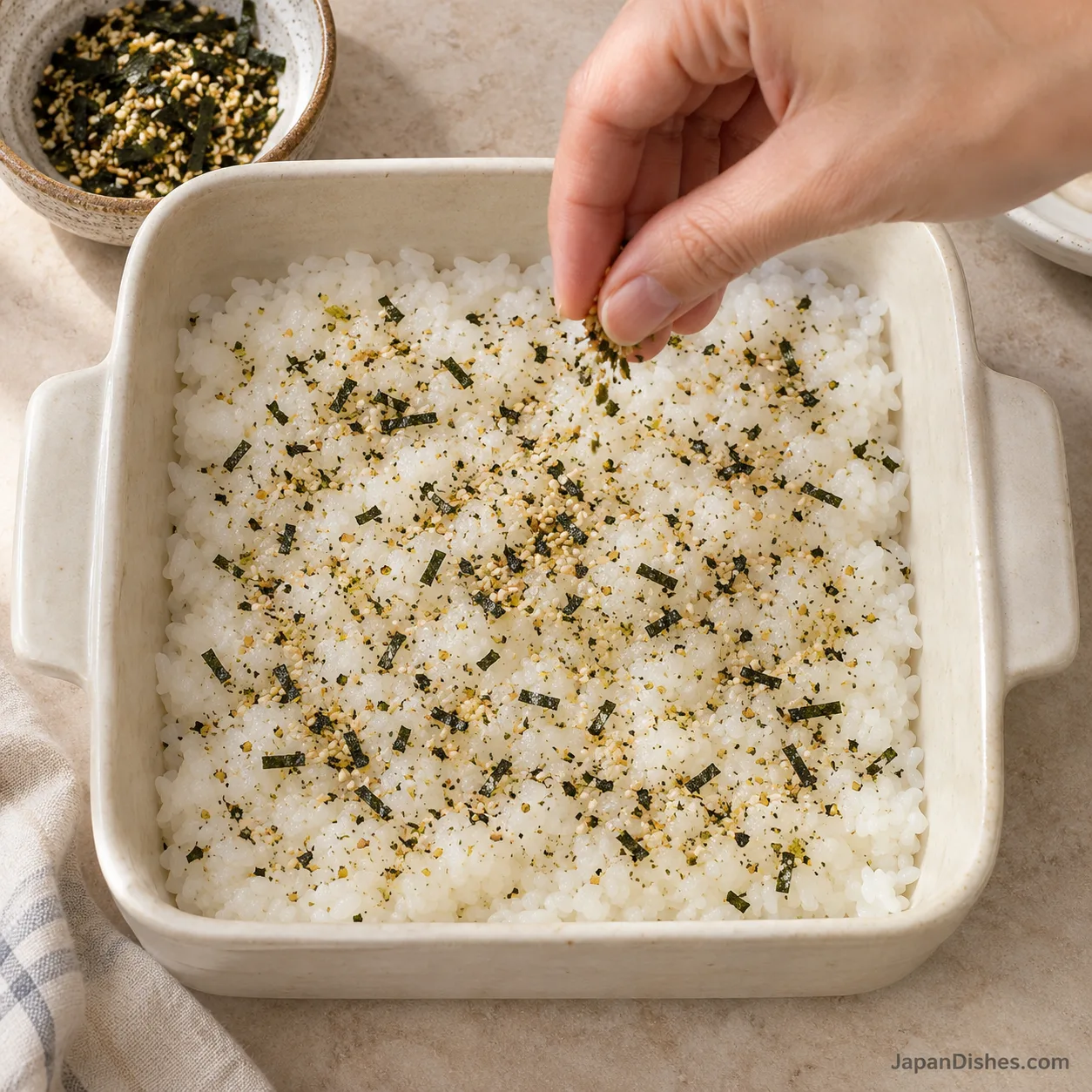
Sprinkle the furikake over the rice from corner to corner. A thin, even coating gives each scoop some seaweed and sesame flavor without creating a salty patch. Leave the rice undisturbed after sprinkling so the seasoning stays between the two layers.
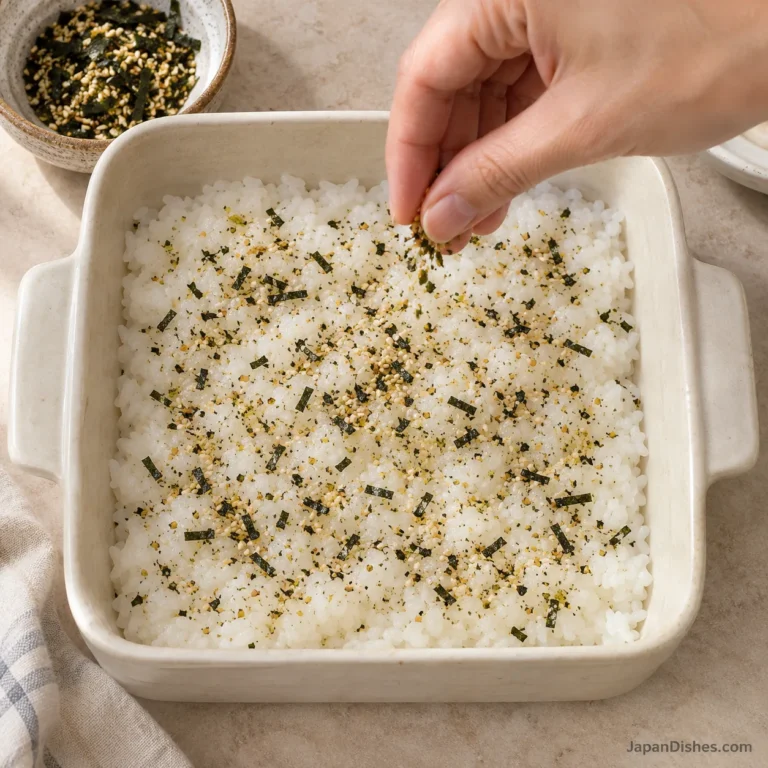
8. Add the salmon layer
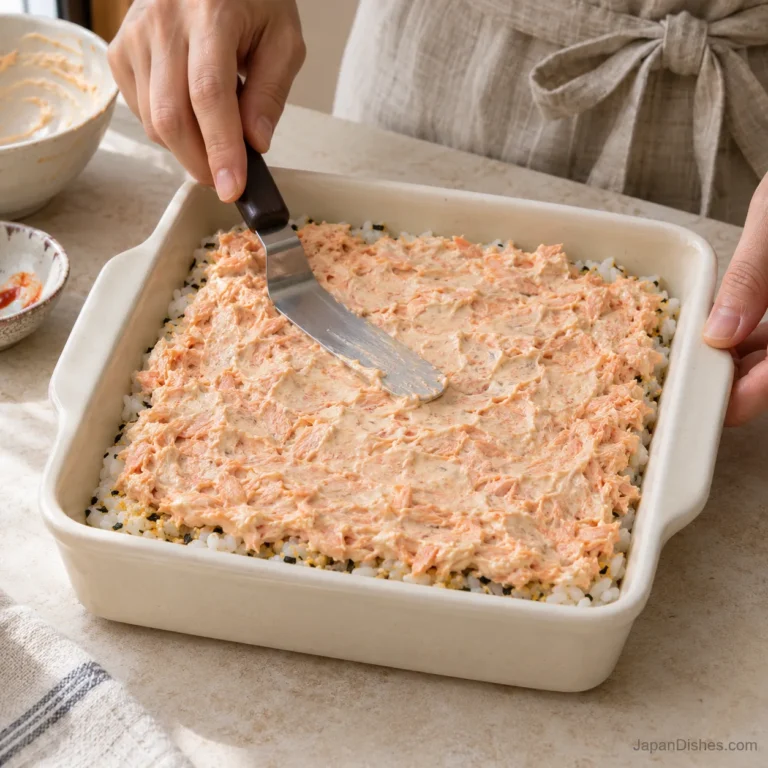
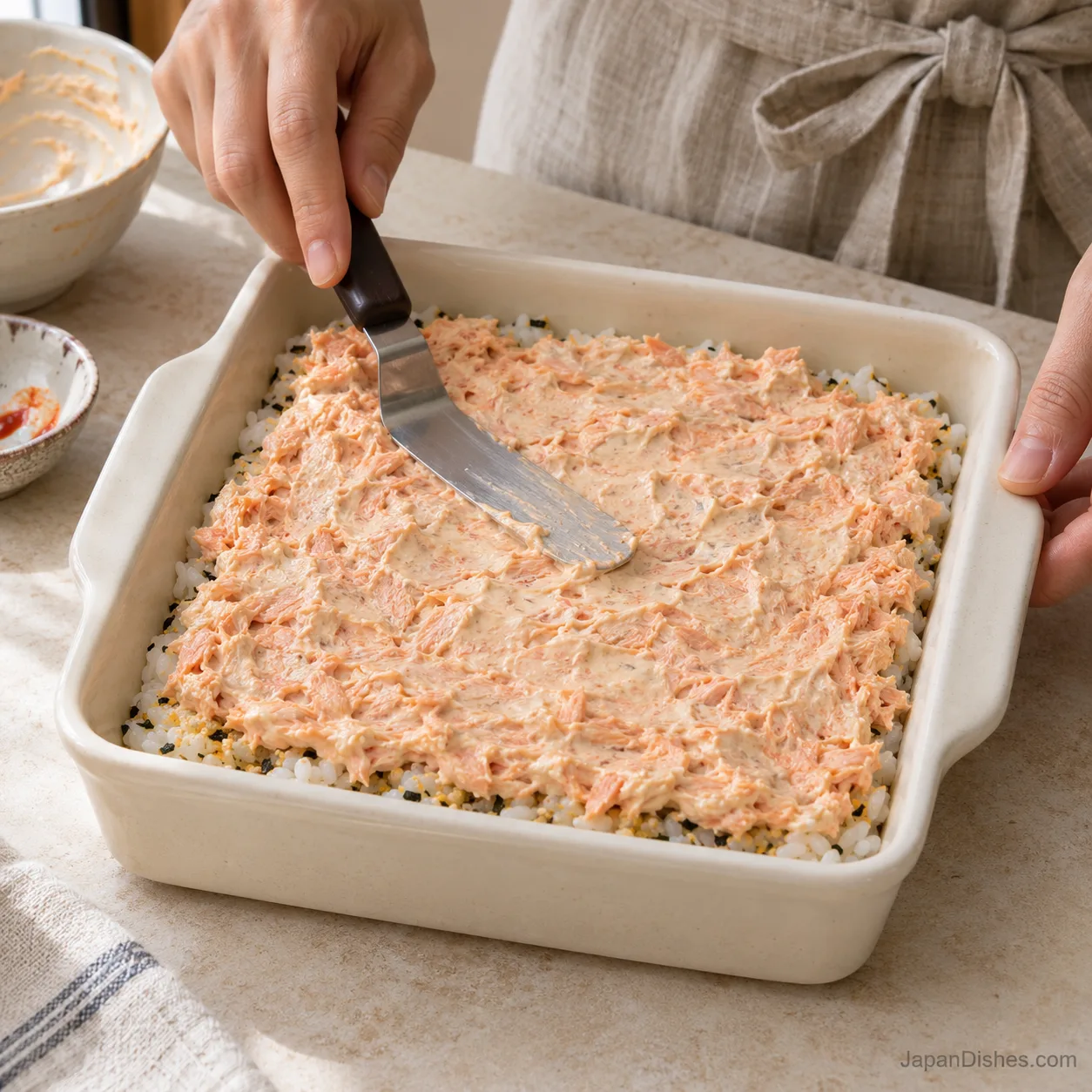
Drop small spoonfuls of the creamy salmon over the rice and gently join them with the back of a spoon or an offset spatula. Push the topping to the edges without dragging the rice underneath. Level any tall piles so the center and edges heat at a similar rate.
9. Bake until hot through
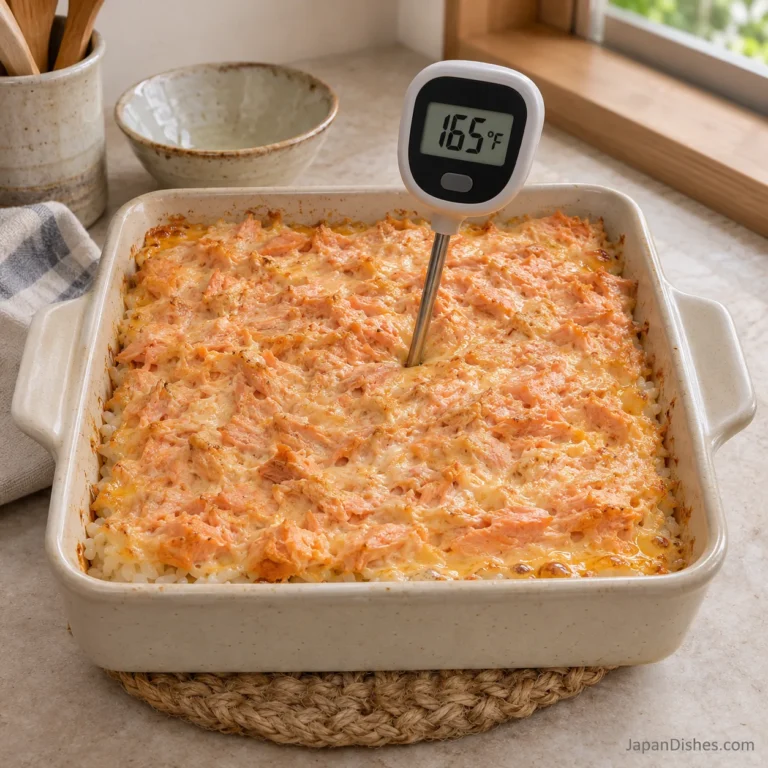
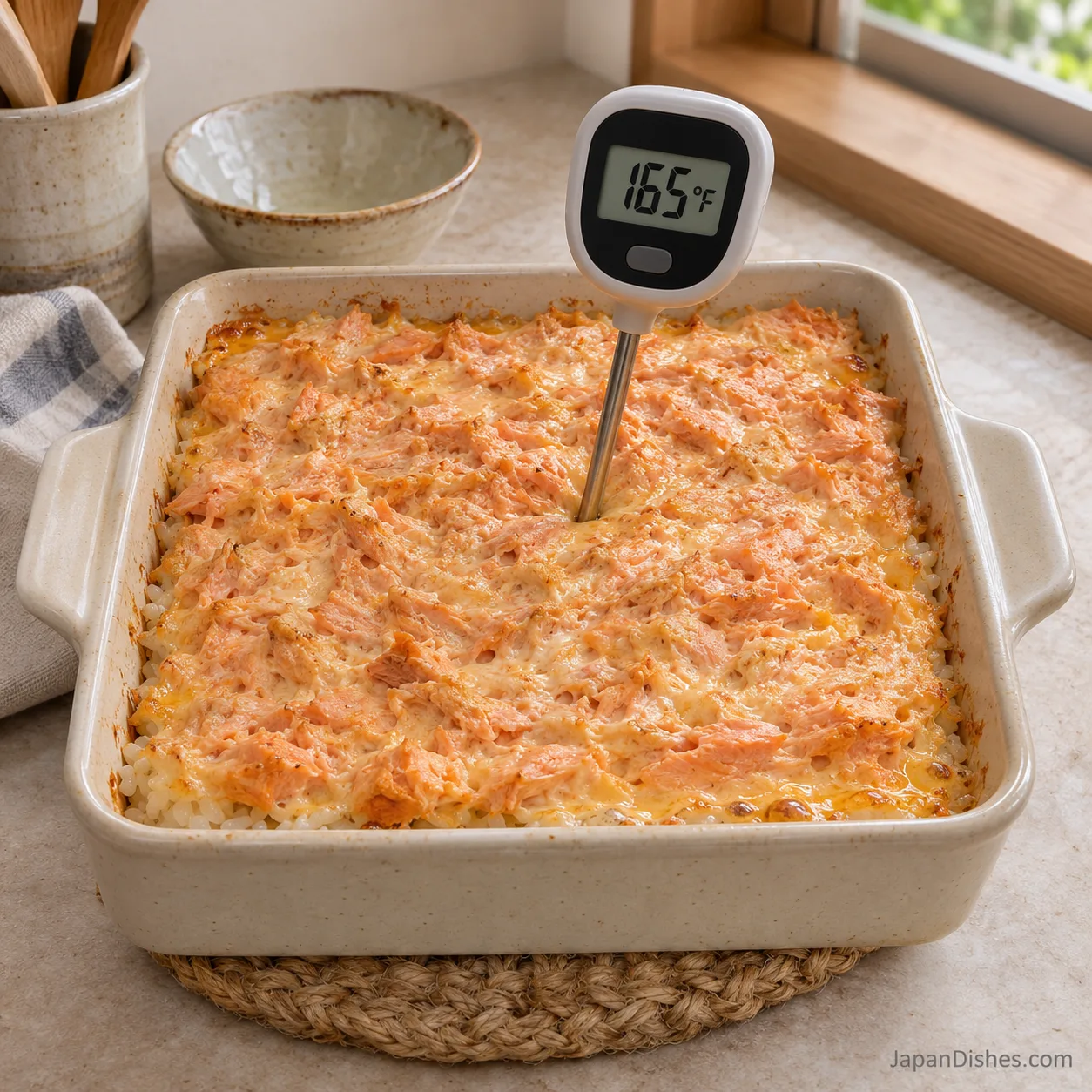
Bake uncovered at 400°F (205°C) for about 12–18 minutes. The edges may bubble and the top may turn lightly golden. Check the middle with a clean thermometer, keeping the tip in the food and off the bottom of the pan. The assembled bake should reach 165°F (74°C) in the center. If it browns before the center is hot, loosely cover it with foil and continue baking.
10. Rest, scoop and serve with nori
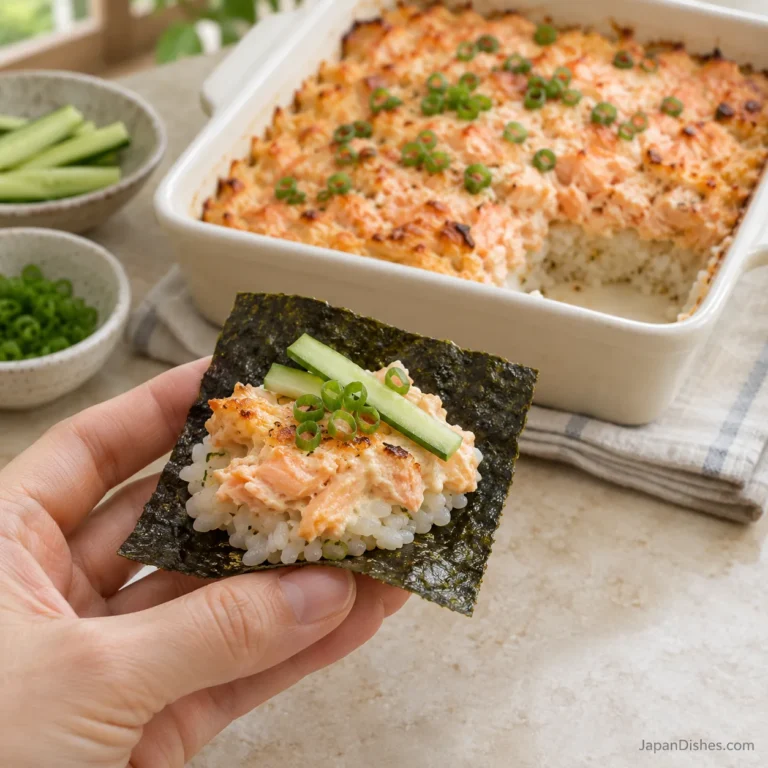
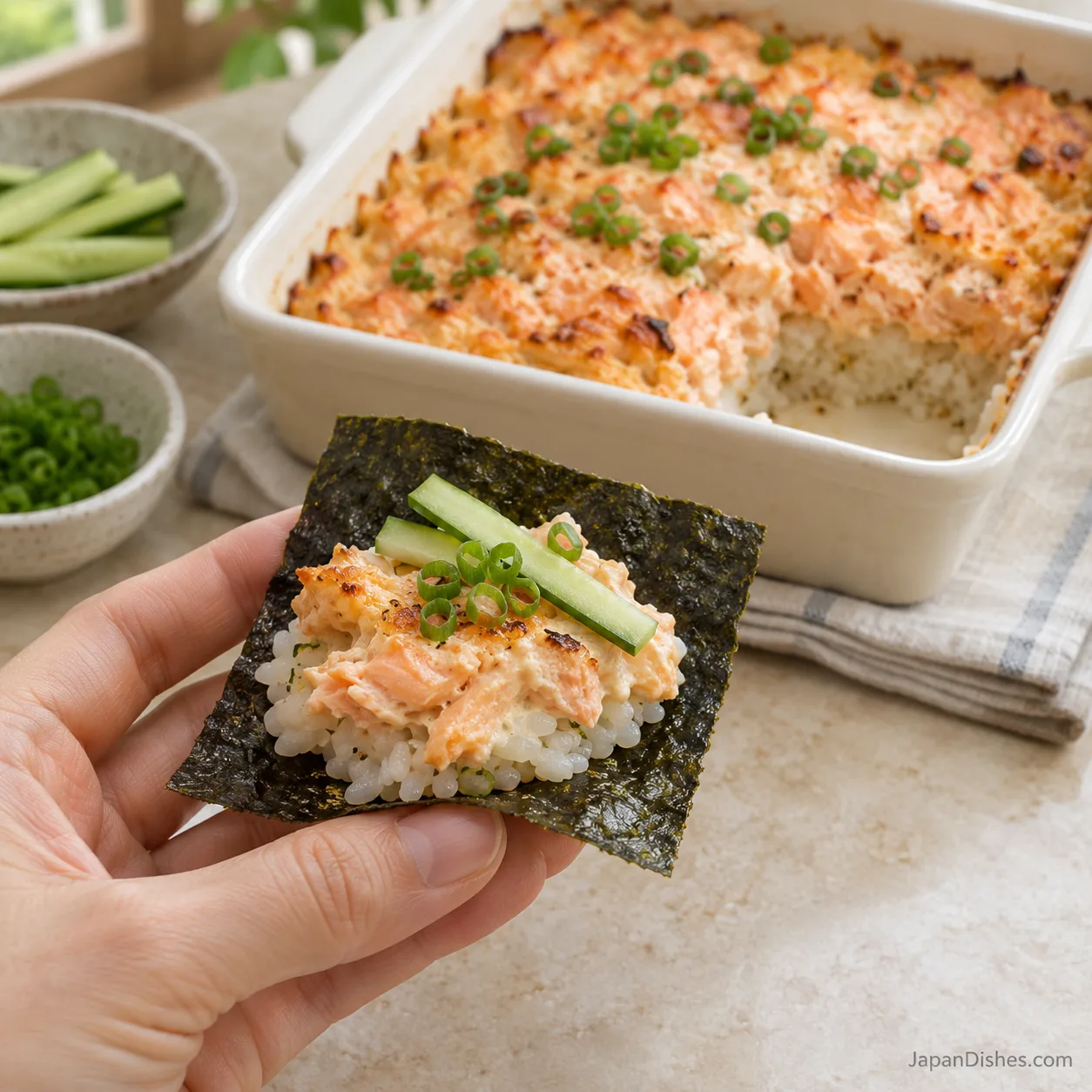
Rest the dish for 5 minutes so the topping settles, then scatter the green onions over it. Scoop down through the salmon and rice together. Set a small spoonful on one piece of nori and add a couple of dry cucumber matchsticks. Fold it loosely and eat right away. Keep the remaining nori away from the steam until serving.
Troubleshooting the rice and topping
The rice layer is dense
Start with freshly cooked short-grain rice and fold in the seasoning while the grains are warm. An aggressive stirring motion breaks the grains and releases more starch. Spread the rice with a broad paddle and press just enough to create a level base.
The topping looks watery
Leave the salmon’s cooking liquid on the tray, and use block cream cheese instead of a loose spread. Keep the cucumber out of the bake. Cucumber holds its crunch and releases less moisture into the dish when it is added directly to each serving.
The nori turns soft
Set the nori out in small batches and keep it away from the hot pan. Cut full sheets with clean kitchen scissors. A thicker sushi nori rectangle holds a larger spoonful than a thin snack sheet, which is easier to use for smaller bites.
Variations
For a mild bake, leave out the sriracha and offer it at the table. For more heat, add a little to each individual portion after baking. This lets everyone choose their level without changing the moisture of the full topping.
Plain canned salmon can replace the freshly roasted fish. Drain it thoroughly and use roughly 280 g (10 oz) of drained cooked salmon. Check for bones, skip the roasting step, and still heat the assembled casserole to 165°F (74°C).
What to serve with sushi bake
Put the dish in the center of the table with a serving spoon, cucumber and a stack of nori. A bowl of homemade miso soup makes a simple side. For another salmon dinner without rice layering, try mirin salmon.

Make ahead, storage and reheating
The rice and nori are at their best when the bake is served freshly cooked. You can cut the nori and cucumber ahead, but store the nori sealed at room temperature and the cucumber refrigerated in a separate container. Prepare fresh rice close to assembly rather than leaving a pot of cooked rice on the counter.
For leftovers, portion the bake into shallow containers and refrigerate promptly at 40°F (4°C) or colder, ideally within one hour. Use within 24 hours as a conservative rice-storage rule. Reheat only the portion you need, once, to 165°F (74°C) throughout. Add fresh cucumber and nori after reheating. Follow Food Standards Agency rice guidance and the FoodSafety.gov temperature chart.
Frequently asked questions
Do I need raw fish for salmon sushi bake?
No. This recipe roasts the salmon before flaking it, then bakes the assembled rice and topping until hot through. Ordinary fresh salmon suitable for cooking is enough.
Can I use a larger baking dish?
An 8-inch square dish gives both layers enough thickness for scooping. A larger pan makes the layers thinner and may heat faster. Start checking sooner and use the center temperature to judge doneness.
Does sushi bake need furikake?
Furikake adds a savory layer between the rice and salmon. If you cannot find it, use a little crumbled toasted nori and toasted sesame seeds if suitable for your guests, then adjust seasoning to taste.
Can I serve it without nori?
Yes. Spoon the casserole into bowls and serve with cucumber on the side. Nori gives it the scoop-and-wrap texture, but it is not needed to set the layers.
Roast the salmon to 145°F (63°C). Check the center of the assembled bake and reheated leftovers for 165°F (74°C).

Easy Salmon Sushi Bake with Nori
Course: Main courseCuisine: Japanese-inspiredDifficulty: Easy4
servings20
minutes35
minutes1
hourA scoop-and-wrap sushi bake with seasoned short-grain rice, creamy cooked salmon, furikake and crisp nori. Makes four servings in about one hour.
Ingredients
185 g Japanese short-grain white rice (about 1 scant US cup, uncooked)
240 ml water (1 US cup), or the amount specified for your rice or rice cooker
2 tablespoons unseasoned rice vinegar
2 teaspoons granulated sugar
½ teaspoon fine sea salt, for the rice
340 g (12 oz) skinless salmon fillet, pin bones removed
1 teaspoon neutral oil, divided between the salmon and baking dish
60 g (about 2 oz) plain full-fat cream cheese, softened
3 tablespoons Japanese mayonnaise
1 teaspoon sriracha, optional
2 tablespoons nori-and-sesame furikake
2 green onions, thinly sliced
1 small cucumber, cut into thin matchsticks and patted dry
4 full-size toasted nori sheets, cut into about 24 pieces, or 24 sturdy snack-size pieces
Directions
- Heat the oven to 400°F (205°C). Swirl the rice in cold water, drain, and repeat until the runoff is less cloudy, usually three or four rinses. Drain well in a strainer. Cook the rice according to its package or your rice cooker. For a stovetop starting point, bring the rice and 240 ml water to a gentle boil in a small saucepan, cover, and simmer on low for 12–15 minutes, until absorbed. Turn off the heat and leave covered for 10 minutes.

- Stir the vinegar, sugar and salt until dissolved. Move the warm rice into a wide bowl, then drizzle the seasoning evenly across the surface. Use the edge of a paddle to cut through the grains and fold them over gently. Stop when the rice is evenly seasoned and the individual grains still hold their shape. Cover loosely and use it promptly.
- While the rice cooks, place the salmon on a parchment-lined rimmed baking sheet and lightly brush it with some of the oil. Roast at 400°F (205°C), starting to check at 12 minutes. A typical fillet may take about 12–16 minutes; thickness matters more than the clock. Insert the thermometer sideways into the thickest part and cook to 145°F (63°C). Leave the oven on for the assembled bake.
- Transfer the cooked salmon to a clean bowl. Use a fork to lift the flesh apart into bite-size flakes. Check again for bones as you work, and leave behind any watery cooking juices on the tray. Keep a few larger flakes for texture; mashing the fish into a paste makes the topping feel heavier.
- In a second bowl, stir the softened cream cheese with the mayonnaise and optional sriracha until smooth. Fold in the salmon just until coated. The mixture should spread easily without running off the spatula. If a few firm specks of cheese remain, press them against the side of the bowl rather than beating the salmon.
- Lightly grease the 8-inch (20 cm) square baking dish with the remaining oil. Transfer the seasoned rice while it is still warm and spread it out evenly, including into the corners. Press only lightly with a damp paddle. The layer should stay together under a spoon but still have visible grains, rather than a compact, gummy surface.
- Sprinkle the furikake over the rice from corner to corner. A thin, even coating gives each scoop some seaweed and sesame flavor without creating a salty patch. Leave the rice undisturbed after sprinkling so the seasoning stays between the two layers.
- Drop small spoonfuls of the creamy salmon over the rice and gently join them with the back of a spoon or an offset spatula. Push the topping to the edges without dragging the rice underneath. Level any tall piles so the center and edges heat at a similar rate.
- Bake uncovered at 400°F (205°C) for about 12–18 minutes. The edges may bubble and the top may turn lightly golden. Check the middle with a clean thermometer, keeping the tip in the food and off the bottom of the pan. The assembled bake should reach 165°F (74°C) in the center. If it browns before the center is hot, loosely cover it with foil and continue baking.
- Rest the dish for 5 minutes so the topping settles, then scatter the green onions over it. Scoop down through the salmon and rice together. Set a small spoonful on one piece of nori and add a couple of dry cucumber matchsticks. Fold it loosely and eat right away. Keep the remaining nori away from the steam until serving.
Notes
- Makes 4 servings. Allow about 60 minutes; roast the salmon while the rice cooks. Use an 8-inch (20 cm) square dish. Roast fresh salmon to 145°F (63°C) and bake the assembled casserole to 165°F (74°C). Rest 5 minutes. Keep nori and cucumber separate until serving. Chill leftovers promptly, ideally within one hour, use within 24 hours and reheat once to 165°F (74°C). Contains fish, dairy, egg and sesame; check furikake and mayonnaise labels for additional allergens.