
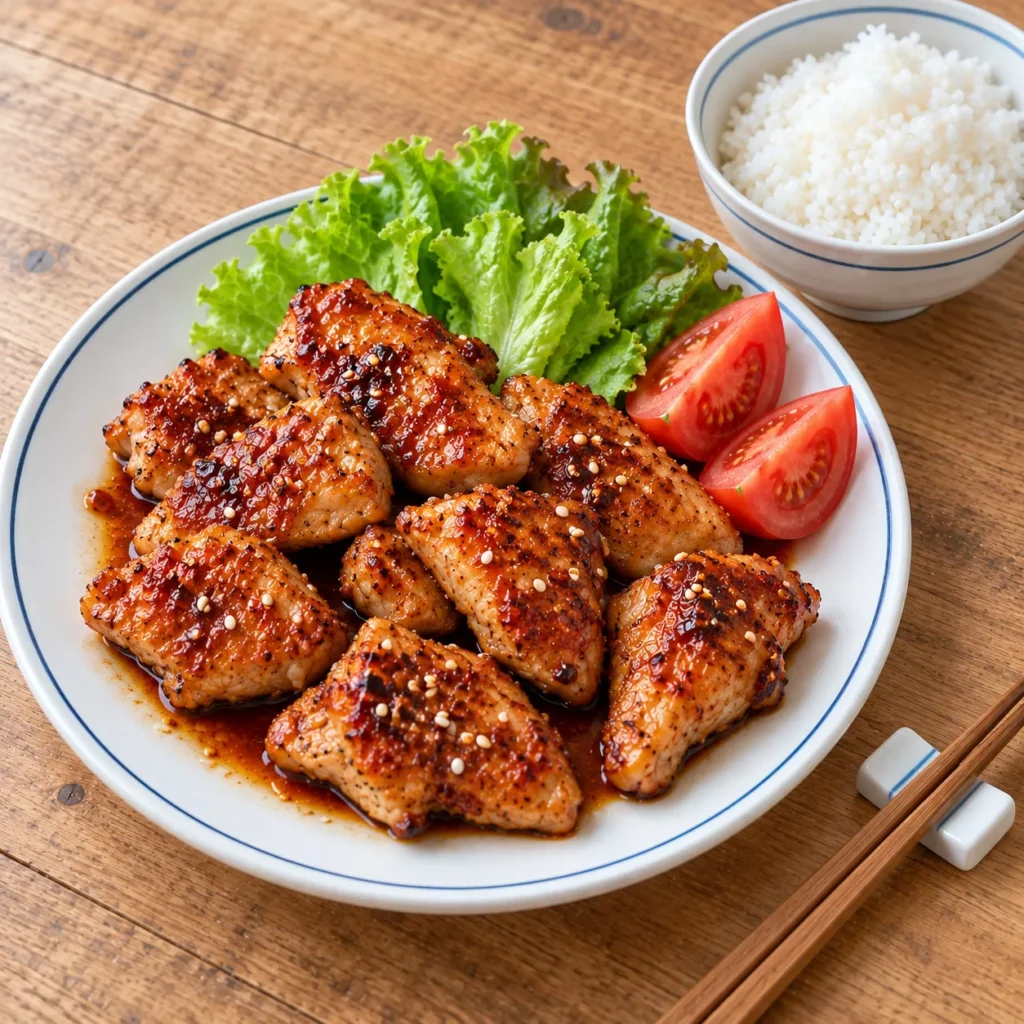
Have you ever wondered how a simple chicken breast can become a rich, spicy, glossy dish that makes a plain bowl of rice taste exciting?
This Delicious and spicy chicken that goes perfectly with rice is an easy answer. Tender pieces of chicken breast are coated with a savory gochujang sauce made with soy sauce, sake, mirin, garlic, and other simple Japanese and Korean-inspired ingredients. The sauce is spicy, slightly sweet from the mirin, deeply savory, and full of flavor.
The best part is that the active cooking time is only about 15 minutes. The chicken does need 30 minutes to 1 hour to rest in salted rice malt before cooking, but the actual work is quick and simple.
This recipe is perfect for a busy lunch, an easy weeknight dinner, or a filling rice bowl. It also uses chicken breast, which is naturally high in protein and lower in fat than many other cuts of chicken.
Once you learn the simple cooking method, you can adjust the spice level, add vegetables, or serve the chicken in many different ways.
Recipe Overview
This recipe stands out because it turns basic chicken breast into something tender, juicy, and full of bold flavor.
Chicken breast can sometimes become dry when it is cooked in a frying pan. Here, salted rice malt helps keep the meat tender while giving it gentle seasoning. A thin coating of potato starch protects the outside of the chicken and also helps the sauce stick.
The chicken is then cooked until golden before the gochujang sauce is added. The sauce quickly becomes thicker and shiny as it cooks around the chicken.
Nutritional values can change depending on the exact brands and amounts of ingredients used.
What Is Delicious and Spicy Chicken That Goes Perfectly With Rice?
Delicious and spicy chicken that goes perfectly with rice is a quick pan-fried chicken dish coated in a thick gochujang-based sauce.
The recipe combines Japanese pantry ingredients such as soy sauce, sake, mirin, and salted rice malt with Korean gochujang. Together, they create a sauce with several layers of flavor.
Soy sauce gives the dish saltiness and depth. Mirin adds gentle sweetness. Sake helps create a smooth sauce, while garlic adds a warm and savory taste. Gochujang brings the main spicy flavor along with a little sweetness and richness.
The chicken is cooked separately first and the sauce is added near the end. This is important because gochujang and other seasonings can burn if they stay over high heat for too long.
Serving the finished chicken over hot rice is one of the easiest ways to enjoy it. The rice absorbs some of the sauce, making every bite flavorful without making the dish feel too heavy.
Essential Ingredients
Key Ingredients (材料)
Spicy Gochujang ChickenA few simple ingredients turn chicken breast into a tender, savory, and spicy dish that is perfect with steamed rice. Salted rice malt helps keep the chicken moist, potato starch gives it a light coating, and gochujang creates the bold flavor and glossy finish.
How to Make Delicious and Spicy Chicken That Goes Perfectly With Rice
Step 1: Cut and Marinate the Chicken
Slice the chicken breast into small, easy-to-eat pieces.
Try cutting the pieces at a slight angle instead of making thick cubes. Thinner pieces cook more quickly and are less likely to dry out.
Place the chicken in a bowl or food-safe container.
Add 2 teaspoons of salted rice malt and gently rub it over every piece of chicken.
Cover the bowl and refrigerate for 30 minutes to 1 hour.
While the chicken is resting, prepare the sauce.
In a small bowl, combine:
- 1 tablespoon soy sauce
- 1 tablespoon sake
- 1 tablespoon mirin
- 1 1/2 teaspoons gochujang
- 1/2 teaspoon grated garlic
Stir until the gochujang is fully mixed into the liquid.
Preparing the sauce now makes the cooking process much easier because everything will be ready when the chicken finishes cooking.
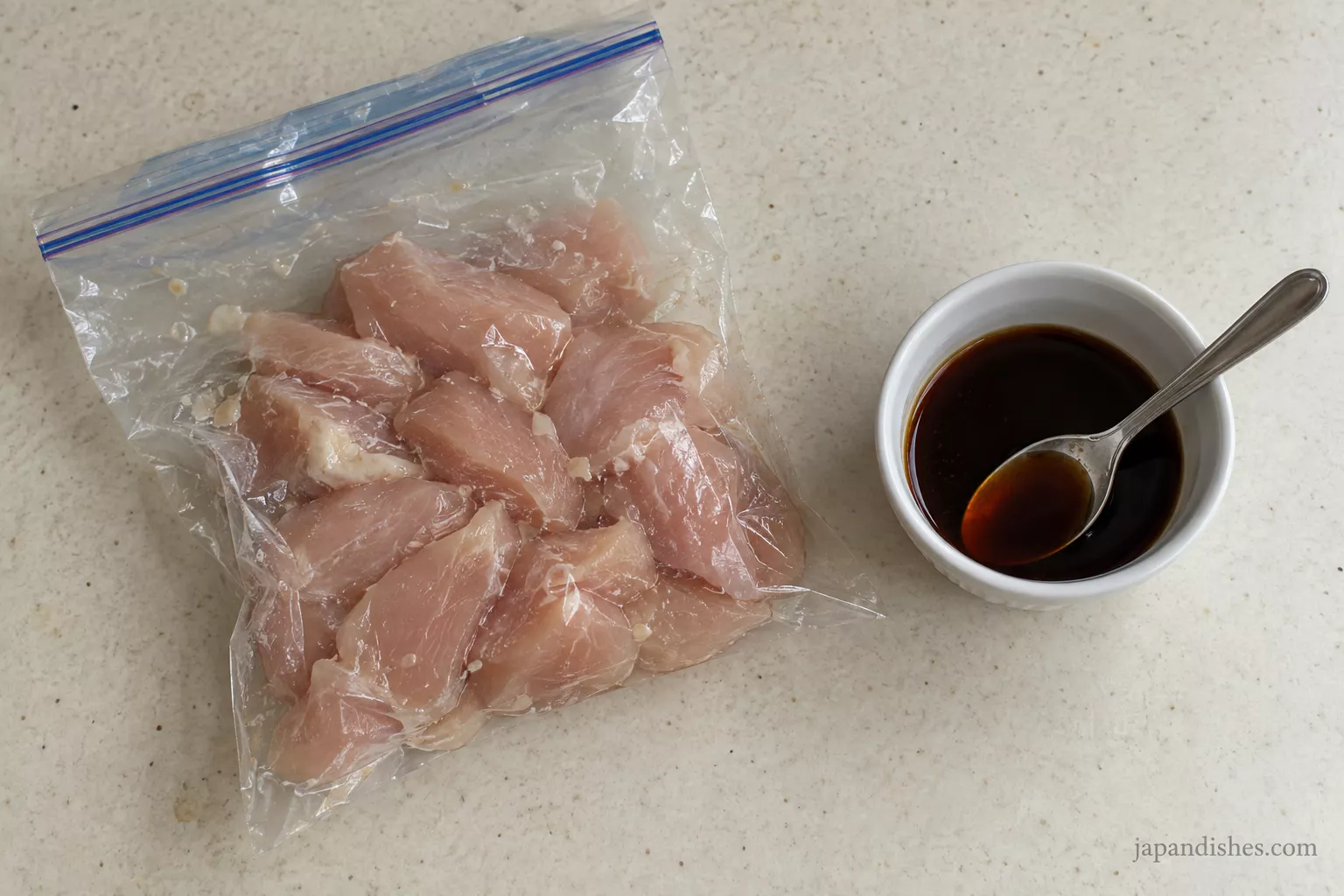
Step 2: Coat the Chicken With Potato Starch
Take the marinated chicken out of the refrigerator.
Add 1 tablespoon potato starch directly to the chicken.
Mix gently until every piece has a very light coating.
You should not see a thick layer of dry starch. The goal is simply to cover the surface of the chicken.
If too much starch collects in one place, spread it around with your hands or a spoon.
A thin coating is better than a heavy coating because it gives the chicken a tender surface while still allowing the sauce to coat it evenly later.
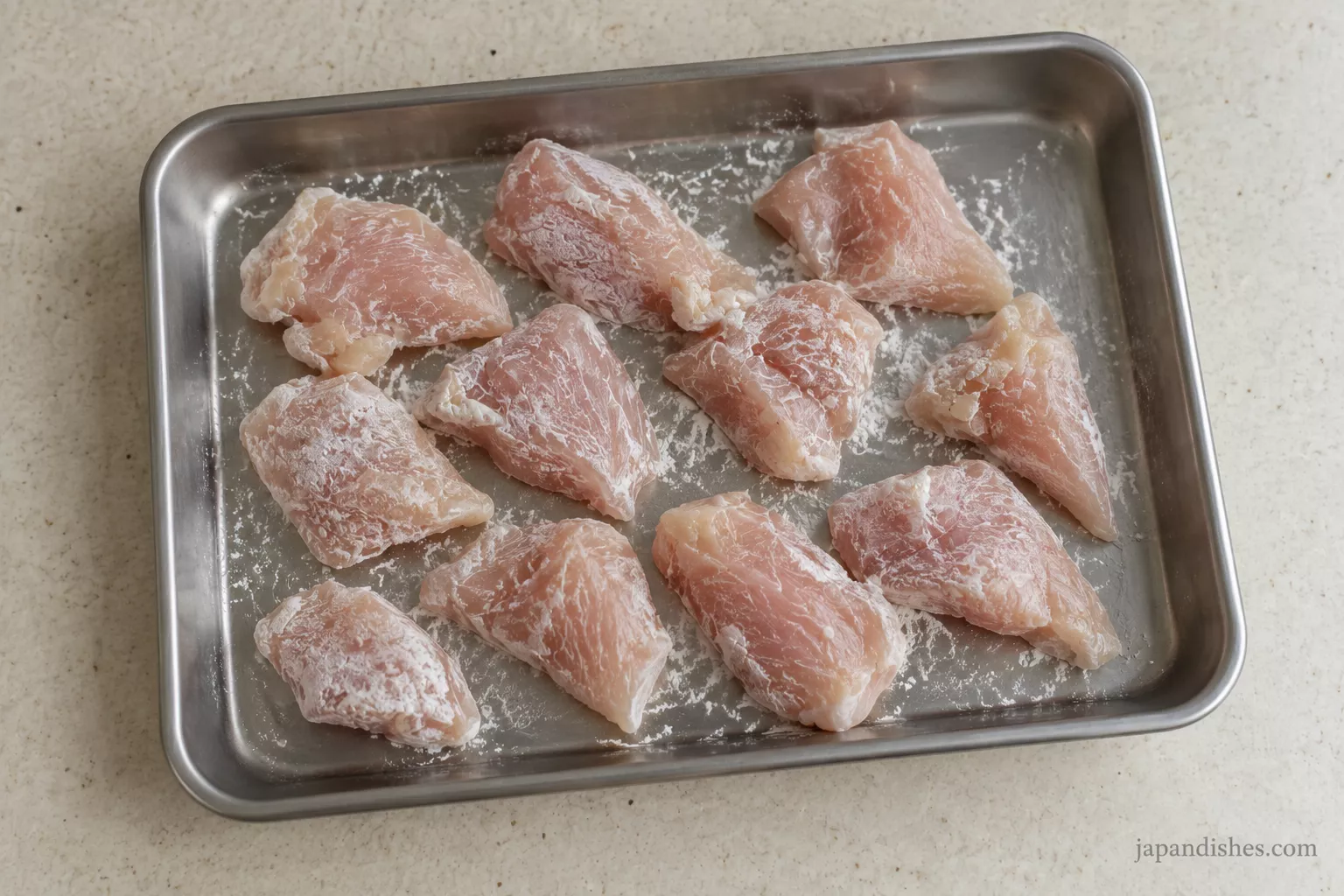
Step 3: Pan-Fry Until Golden and Fully Cooked
Heat 2 teaspoons salad oil in a frying pan over medium heat.
Once the oil is warm, place the chicken pieces in the pan in one layer.
Do not pile the chicken pieces on top of each other.
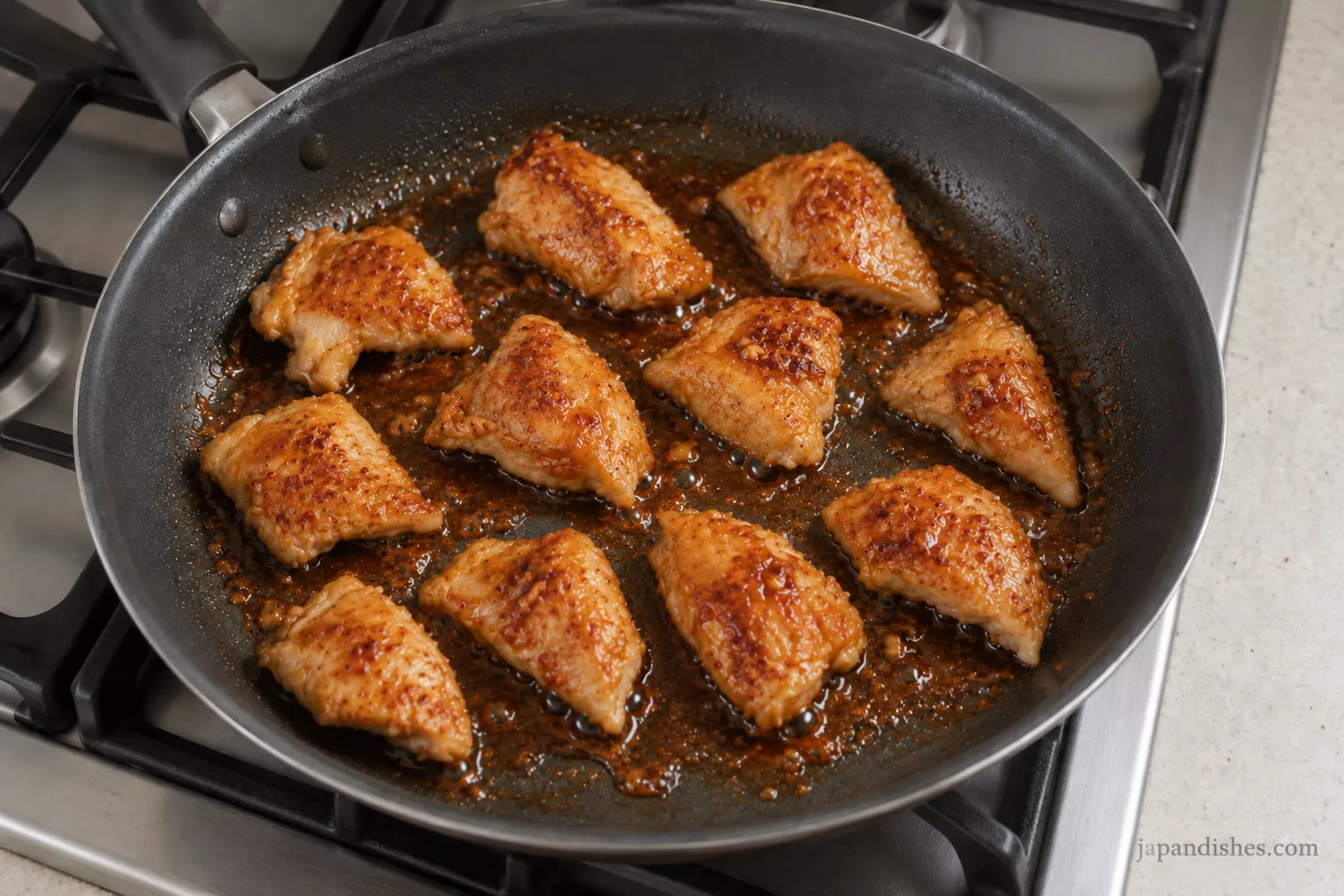
Allow the first side to cook without moving it too much. Once the bottom begins to turn golden, flip each piece.
Lower the heat to medium-low and continue cooking until the chicken is fully cooked in the center.
The exact cooking time will depend on how thick the chicken pieces are.
Avoid using very high heat. High heat can brown the starch quickly while leaving the middle of the chicken undercooked.
The chicken should be cooked through before you add the sauce.
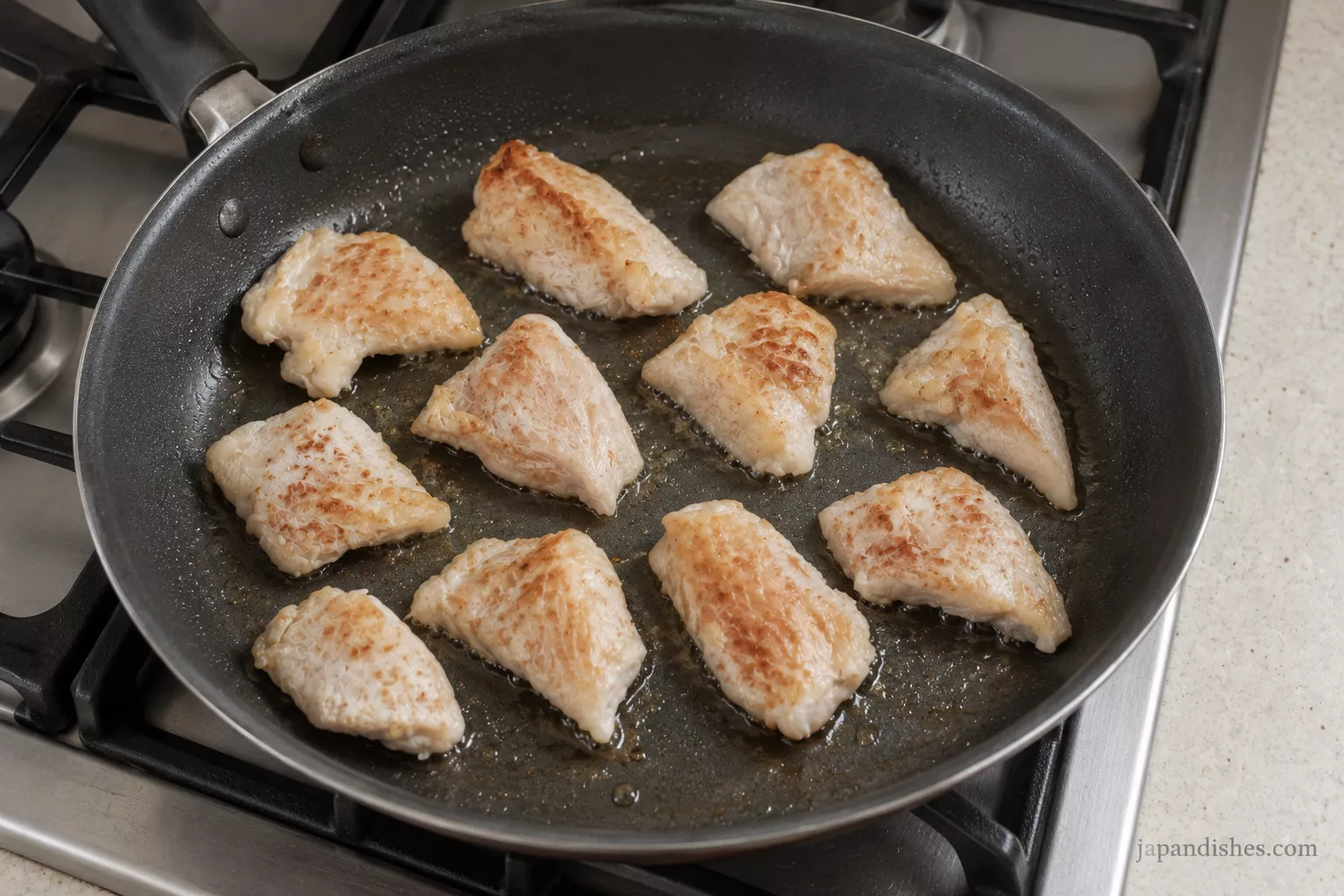
Step 4: Add the Spicy Sauce and Finish
Check the pan before adding the sauce.
If there is a large amount of oil left in the pan, carefully wipe away some of the extra oil with kitchen paper.
Lower the heat if needed.
Pour the prepared soy sauce, sake, mirin, gochujang, and garlic mixture over the cooked chicken.
Quickly stir or turn the chicken so every piece becomes covered with sauce.
Cook briefly until the sauce begins to thicken and develops a shiny finish.
Do not cook the sauce for too long. Gochujang and mirin can easily stick to the pan if the heat is too strong.
Once the sauce coats the chicken well, remove the pan from the heat.
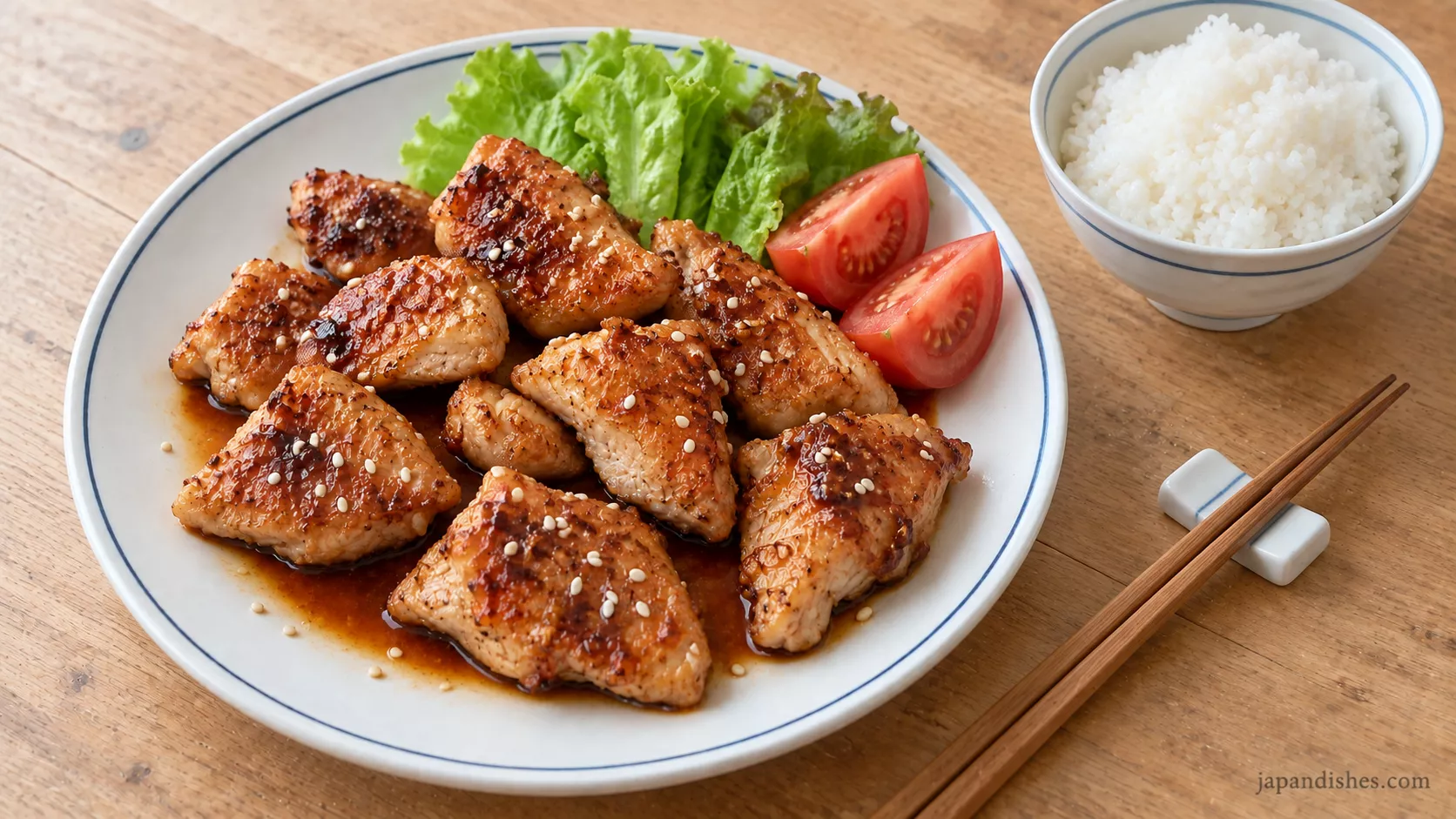
Transfer the chicken to a serving dish and sprinkle white sesame seeds over the top.
Serve immediately with freshly cooked rice.
Secrets to Success and Expert Tips
These simple tips will help you make tender, juicy, and flavorful Delicious and Spicy Chicken That Goes Perfectly With Rice with a glossy sauce and the right balance of heat and savory flavor:
-
♥
Cut the chicken into even pieces
Slice the chicken breast into similar-sized pieces so they cook at the same speed. Slightly thinner pieces are especially helpful for keeping the meat tender and preventing dry spots. -
♥
Give the salted rice malt time to work
Let the chicken marinate with salted rice malt for 30 minutes to 1 hour. This resting time adds gentle seasoning and helps the chicken breast stay moist during cooking. -
♥
Use only a light coating of potato starch
Add just enough potato starch to lightly cover the chicken without leaving a thick, powdery layer. A thin coating helps seal in moisture and allows the spicy sauce to cling evenly. -
♥
Cook the chicken before adding the sauce
Make sure the chicken is fully cooked and lightly browned first. Adding the sauce only at the end prevents the gochujang mixture from burning before the meat is ready. -
♥
Lower the heat when the sauce goes in
Gochujang, soy sauce, and mirin can thicken very quickly. Reduce the heat and stir the chicken gently so the sauce becomes shiny without sticking to the pan. -
♥
Serve it while the sauce is glossy
This chicken tastes best soon after cooking, while the meat is juicy and the sauce is still smooth and shiny. Serve it with hot steamed rice so the rice can soak up some of the spicy seasoning.
How to Assemble and Serve the Chicken
This chicken can be served on a plate beside rice, but turning it into a rice bowl makes the meal especially easy.
Start by adding freshly cooked Japanese short-grain rice or another rice you enjoy to a bowl.
Arrange the spicy chicken over the rice.
Spoon any sauce left in the pan over the chicken.
Finish with white sesame seeds.
For a more complete meal, add simple vegetables beside the chicken.
Good choices include:
- Steamed broccoli
- Shredded cabbage
- Sliced cucumber
- Blanched spinach
- Green beans
- Lettuce
- Steamed carrots
Keep the vegetables lightly seasoned because the chicken already has a strong sauce.
A simple presentation also works best. White rice creates a nice contrast with the reddish-brown chicken and sesame seeds.
Hana’s Recipe Tips
Hana’s first tip is to prepare everything before the frying pan gets hot. This recipe moves quickly once cooking begins, so having the sauce mixed and ready prevents the chicken from overcooking while you measure ingredients.
For softer chicken breast, do not cut the pieces too thick. Smaller angled slices cook faster and allow more surface area to touch the sauce.
If you are serving the chicken with rice, cook the rice before starting the chicken. The chicken tastes best immediately after the sauce becomes glossy, so it is helpful to have the rest of the meal ready.
For people who do not enjoy strong heat, begin with less gochujang. You can always add more the next time you make the recipe.
Storage and Make-Ahead Tips
This chicken is best when freshly cooked because the light starch coating and glossy sauce have their best texture right away.
However, leftovers can still be stored and enjoyed later.
Refrigerating
Allow leftover chicken to cool before placing it in a sealed food container.
Store it in the refrigerator and try to eat it within 2 to 3 days.
Do not leave cooked chicken at room temperature for long periods.
Reheating
Reheat the chicken gently in a frying pan over low heat.
Add a very small splash of water if the sauce has become too thick.
You can also microwave the chicken until it is heated completely through. Cover it loosely while reheating to help prevent it from drying out.
Make-Ahead Preparation
The chicken can be cut and mixed with salted rice malt ahead of time.
Keep it covered in the refrigerator until you are ready to cook.
The sauce can also be mixed in a separate container and refrigerated.
Do not add potato starch until shortly before cooking. Adding it too early may change the texture of the coating.
Recipe Variations
Delicious and Spicy Chicken That Goes Perfectly With Rice is easy to customize. You can change the spice level, use a different cut of chicken, add vegetables, or turn it into a complete rice bowl while keeping the same simple cooking method.
Make It Milder
If you prefer less heat, reduce the amount of gochujang while keeping the savory flavor:
- Use about 1 teaspoon of gochujang instead of 1 1/2 teaspoons
- Add a little extra mirin for a softer, slightly sweeter taste
- Serve with extra steamed rice to balance the spice
Turn Up the Heat
For a hotter version, add a little more spice to the sauce:
- Add a little extra gochujang
- Mix in Korean red pepper flakes for more heat
- Finish with a small drizzle of chili oil
Use Chicken Thighs
Boneless chicken thighs are a great alternative if you prefer richer and juicier meat. Cut them into bite-sized pieces and cook them with the same sauce.
- Chicken thighs stay naturally moist
- They add a slightly richer flavor
- Make sure the pieces are fully cooked before adding the sauce
Add More Vegetables
Add vegetables to make the dish more colorful and turn it into a fuller meal:
- Bell peppers for sweetness and crunch
- Onion for extra savory flavor
- Shiitake mushrooms for deeper umami
- Broccoli for extra texture and color
Make a Spicy Chicken Rice Bowl
Turn the chicken into an easy rice bowl for lunch or dinner:
- Add freshly steamed rice to a bowl
- Arrange the spicy chicken over the top
- Add cucumber, shredded cabbage, or steamed vegetables
- Finish with white sesame seeds
Why This Recipe Works So Well With Rice
Rice has a mild flavor, which makes it an ideal partner for strongly seasoned chicken.
The thick sauce sticks to the chicken instead of pooling at the bottom of the dish. When a piece of chicken is eaten with warm rice, the spicy and savory sauce seasons the rice at the same time.
This also means you do not need a complicated side dish.
A bowl of rice, some vegetables, and this chicken can make a satisfying meal.
More Chicken Recipes to Try
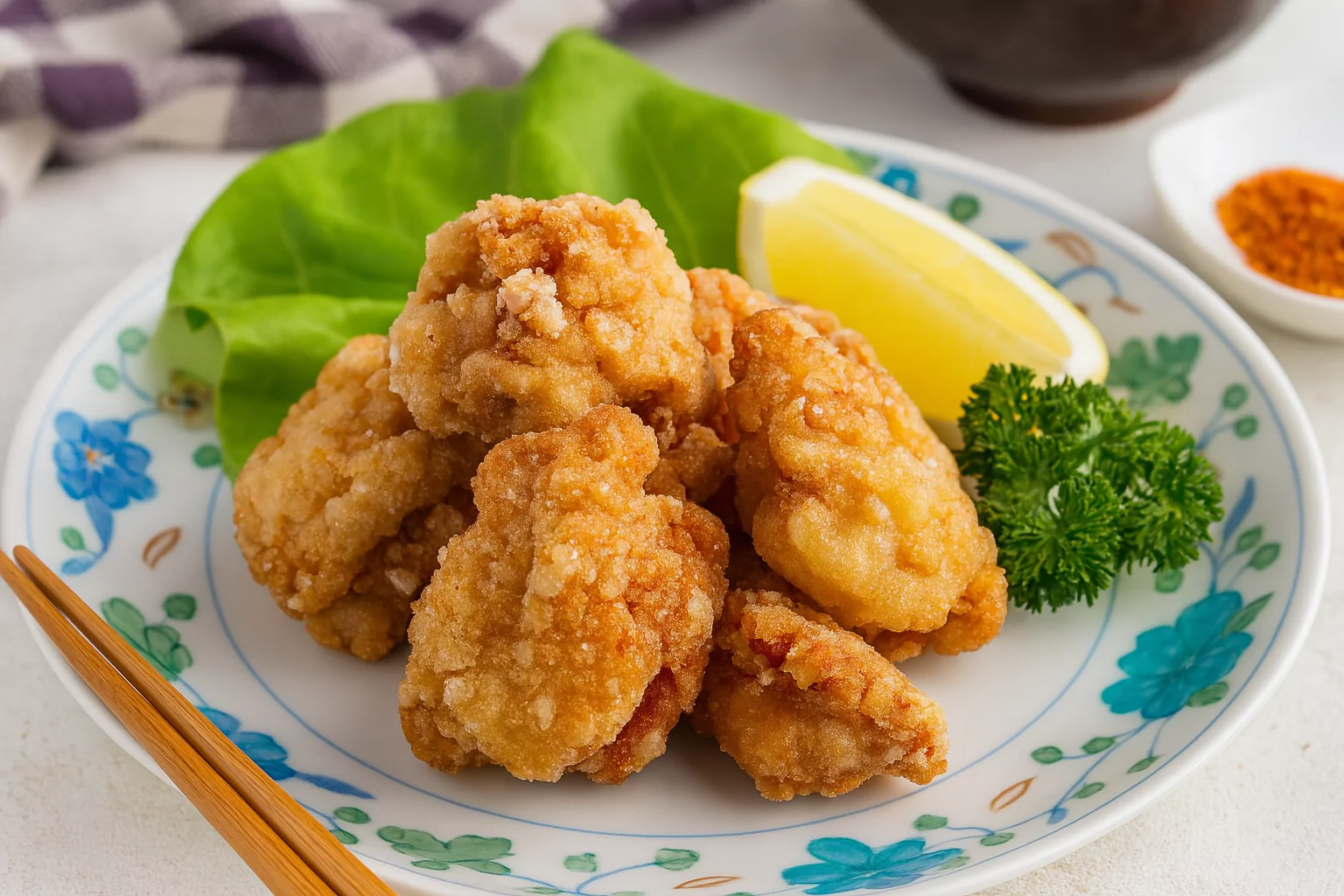
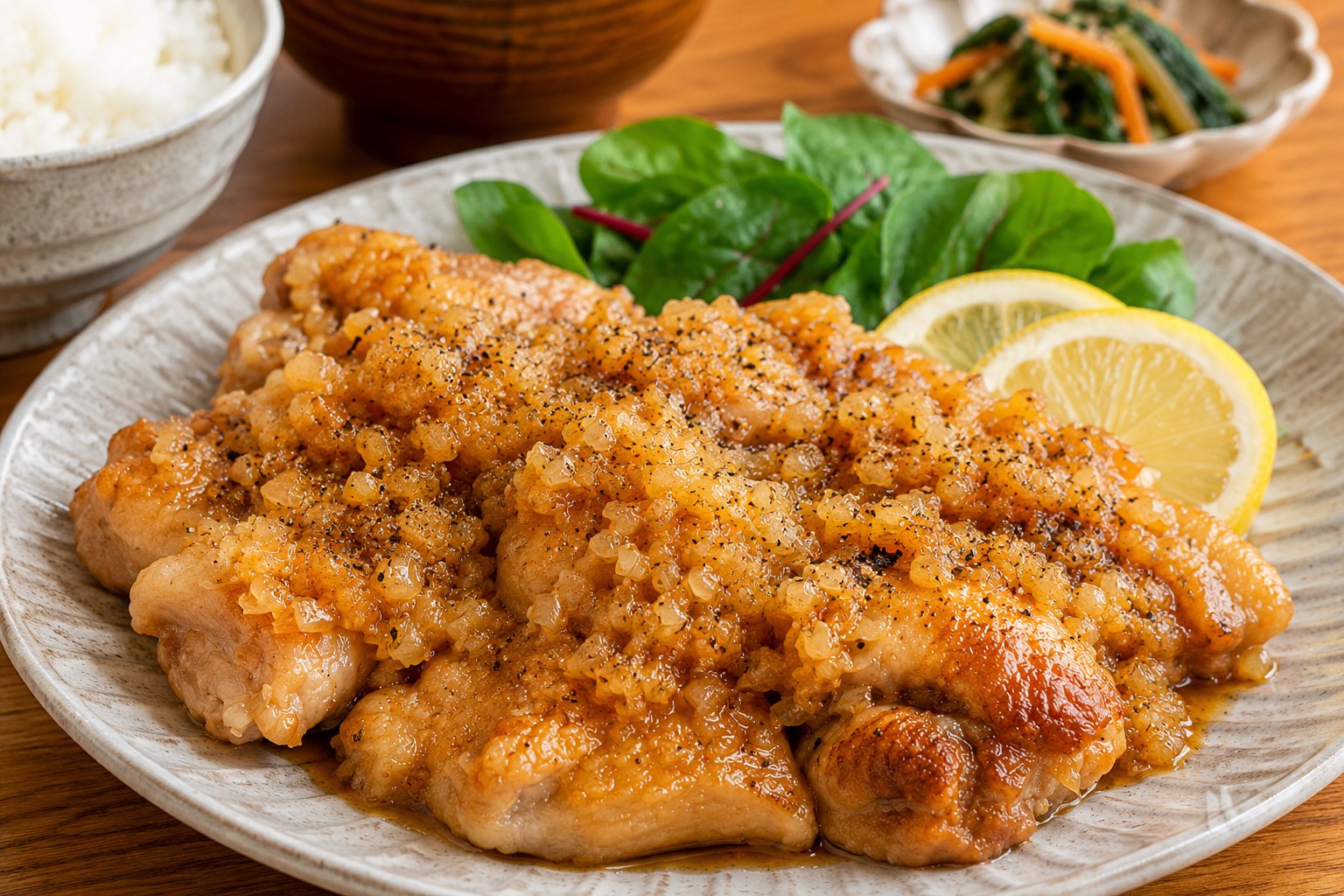
If you enjoyed this spicy chicken recipe, you may also like these flavorful chicken dishes from Japan Dishes. Try Garlic Soy Sauce Onion Sauce Chicken ガーリック醤油のオニオンソースチキン for tender chicken coated in a rich garlic and soy-based onion sauce. For something crispier, make Karaage (Japanese Fried Chicken) 唐揚げ, a classic Japanese favorite with juicy chicken and a golden, crunchy coating. Both recipes are delicious with steamed rice and are great options for an easy homemade meal.
Health Benefits
Chicken breast is an excellent source of protein.
Protein helps support muscles and also helps make meals more filling.
A serving of this recipe provides approximately 35.2 grams of protein, although the exact value depends on the chicken and seasonings used.
Using only a small amount of cooking oil also keeps the dish lighter than deep-fried chicken.
Gochujang provides a lot of flavor in a small quantity, while garlic and sesame seeds add extra taste without requiring a heavy sauce.
For a more balanced meal, serve the chicken with rice and a generous portion of vegetables.
If you need to reduce sodium, use reduced-sodium soy sauce and pay attention to the salt level of your salted rice malt and gochujang.
Frequently Asked Questions
Is this recipe very spicy?
It has a noticeable spicy taste, but 1 1/2 teaspoons of gochujang for two servings is usually manageable for many people.
If you prefer mild food, start with about 1 teaspoon.
Can I make this without gochujang?
Gochujang gives the recipe its main spicy and savory character, so leaving it out will create a very different dish.
If possible, use real gochujang for the best flavor.
Can I use chicken thighs instead of chicken breast?
Yes.
Boneless chicken thighs work very well and usually remain tender because they contain more fat.
Cut them into similar-sized pieces and make sure they are fully cooked.
Why do I need potato starch?
Potato starch forms a thin coating around the chicken.
It helps hold in moisture and gives the sauce a surface to cling to.
Can I use cornstarch instead?
Yes.
Cornstarch can be used as an alternative if potato starch is unavailable.
The texture may be a little different, but it will still work.
Why is my chicken breast dry?
The chicken may have been cut too thick or cooked for too long.
Cutting it into thinner pieces, marinating it with salted rice malt, and lowering the heat after browning can help keep it tender.
Why did my sauce burn?
The pan was probably too hot.
After the chicken is cooked, lower the heat before adding the sauce. Stir quickly and remove the pan from the heat once the sauce thickens.
Can I prepare the chicken ahead of time?
Yes.
You can cut the chicken and marinate it in salted rice malt earlier in the day.
Keep it refrigerated until you are ready to cook.
How long can leftovers stay in the refrigerator?
For the best quality, eat refrigerated leftovers within 2 to 3 days.
Store them in a tightly closed container.
What should I serve with spicy chicken?
Steamed rice is the easiest choice.
You can also add broccoli, cucumber, cabbage, spinach, carrots, or a simple salad.
Is this recipe good for meal preparation?
Yes.
You can cook the chicken and divide it into containers with rice and vegetables.
Keep everything refrigerated and reheat thoroughly before eating.
Can children eat this recipe?
That depends on how comfortable they are with spicy food.
For younger children or anyone who does not enjoy spicy flavors, reduce the amount of gochujang.
Conclusion
This Delicious and spicy chicken that goes perfectly with rice is proof that a flavorful dinner does not have to be complicated.
The salted rice malt helps keep the chicken breast tender, while potato starch gives the sauce a smooth surface to cling to. Soy sauce, sake, mirin, gochujang, and garlic come together to create a rich sauce that becomes glossy in just a few minutes.
With only four main cooking steps, this recipe is simple enough for busy days but flavorful enough to make dinner feel special.
Serve it over freshly steamed rice for an easy meal, add vegetables for extra color and nutrition, or adjust the amount of gochujang to match your preferred spice level.
Once you understand the basic method, you can easily turn this simple spicy chicken into your own favorite rice bowl dinner.

How to make delicious and spicy chicken
Course: Main CoursesCuisine: JapaneseDifficulty: Easy2
servings10
minutes15
minutes345
kcalTender chicken breast is lightly coated with potato starch, pan-fried until golden, then covered in a rich gochujang sauce made with soy sauce, sake, mirin, and garlic. Salted rice malt helps keep the chicken moist and tender, while the thick, spicy sauce makes every bite perfect with a bowl of freshly steamed rice.
Ingredients
Chicken :
— 1 chicken breast (300 g)
— 2 teaspoons salted rice malt (shio koji)
— 1 tablespoon potato starch
— 2 teaspoons salad oilSpicy Sauce :
— 1 tablespoon soy sauce
— 1 tablespoon sake
— 1 tablespoon mirin
— 1 1/2 teaspoons gochujang
— 1/2 teaspoon grated garlicFor Serving :
White sesame seeds, as needed
Directions
- Prepare and Marinate the Chicken
Cut the chicken breast into small, bite-sized pieces of similar thickness. Place the chicken in a bowl, add the salted rice malt, and gently massage it over every piece. Cover and refrigerate for 30 minutes to 1 hour. Meanwhile, combine the soy sauce, sake, mirin, gochujang, and grated garlic in a small bowl and stir until smooth. - Coat With Potato Starch
Remove the marinated chicken from the refrigerator. Add the potato starch and toss gently until each piece has a thin, even coating. The chicken should look lightly coated without any large patches of dry starch. - Pan-Fry the Chicken
Heat the salad oil in a frying pan over medium heat. Arrange the chicken in a single layer and cook until the underside develops a light golden color. Turn the pieces over, lower the heat to medium-low, and continue cooking until the chicken is completely cooked through. - Add the Sauce and Finish
If there is a lot of oil remaining in the pan, carefully remove some with kitchen paper. Pour in the prepared gochujang sauce and gently turn the chicken so every piece is coated. Cook briefly over low to medium-low heat until the sauce thickens and becomes glossy. Transfer to a serving plate and finish with white sesame seeds.
Notes
- Marinating time: The 30–60 minute marinating period is separate from the active preparation and cooking time.
Cut evenly: Keep the chicken pieces close to the same thickness so they finish cooking at the same time.
Use a light starch coating: Too much potato starch can make the outside heavy. A thin coating is enough to help keep the chicken moist and hold the sauce.
Watch the heat: Add the gochujang sauce only after the chicken is cooked. The sauce thickens quickly and may burn if the pan is too hot.
Serve immediately: This dish is best while the chicken is hot and the sauce is still shiny. Serve it with freshly steamed rice for the best combination.
Did you make this recipe?
Tag @jp.dishes on Instagram so we can see your delicious creation!