
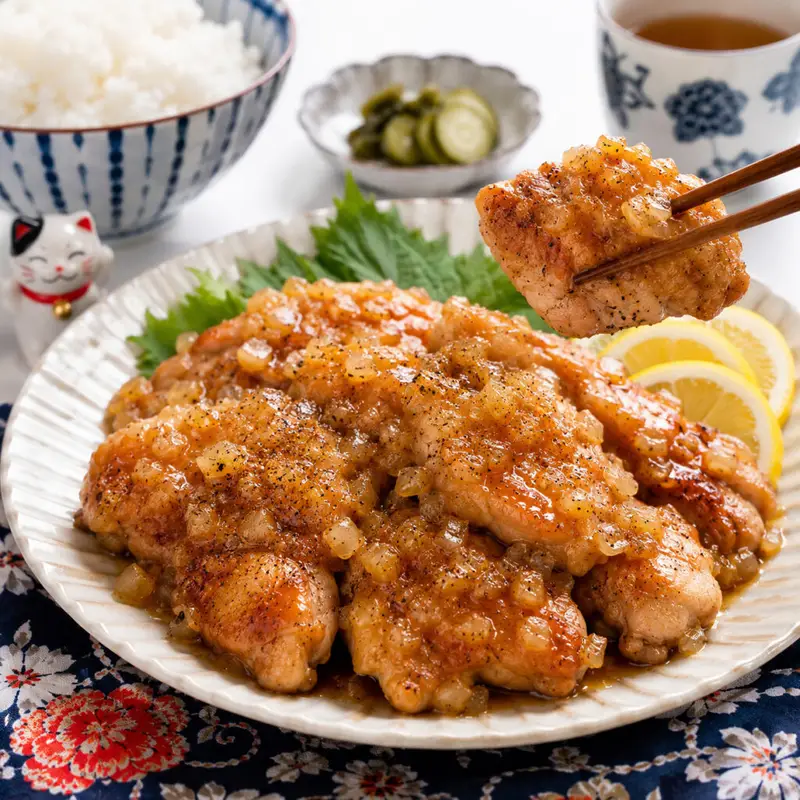
Have you ever wondered how a few simple pantry ingredients can turn plain chicken into a rich, glossy, flavor-packed dinner? Garlic Soy Sauce Onion Sauce Chicken ガーリック醤油のオニオンソースチキン is a quick Japanese-style chicken dish that does exactly that. Tender chicken thighs are lightly coated with potato starch, pan-cooked until juicy, then covered with a sweet and savory onion sauce made with soy sauce, garlic, mirin, sake, and sugar.
The sauce is simple, but every ingredient has a job. Soy sauce gives it deep savory flavor. Garlic adds a strong aroma. Onion becomes soft and slightly sweet as it cooks. Mirin and sugar balance the salty soy sauce, while sake helps bring all the flavors together.
This is a great recipe for busy evenings because it uses everyday ingredients and only one frying pan. Serve it with steamed rice, vegetables, salad, or even noodles for an easy meal.
Recipe Overview
One of the best things about Garlic Soy Sauce Onion Sauce Chicken is how much flavor you can create in a short amount of time. Chicken thighs stay juicy during cooking, while the potato starch helps form a thin coating that holds onto the sauce.
The onion is also important. Instead of making a completely smooth sauce, finely chopped onion gives it texture. Small onion pieces soak up the soy, garlic, and mirin mixture, so every spoonful has both sauce and soft onion.
You do not need special cooking skills to make this meal. As long as you avoid cooking the chicken over very high heat and give the sauce a little time to simmer, you can make a satisfying Japanese-style dinner at home.
What Is Garlic Soy Sauce Onion Sauce Chicken?
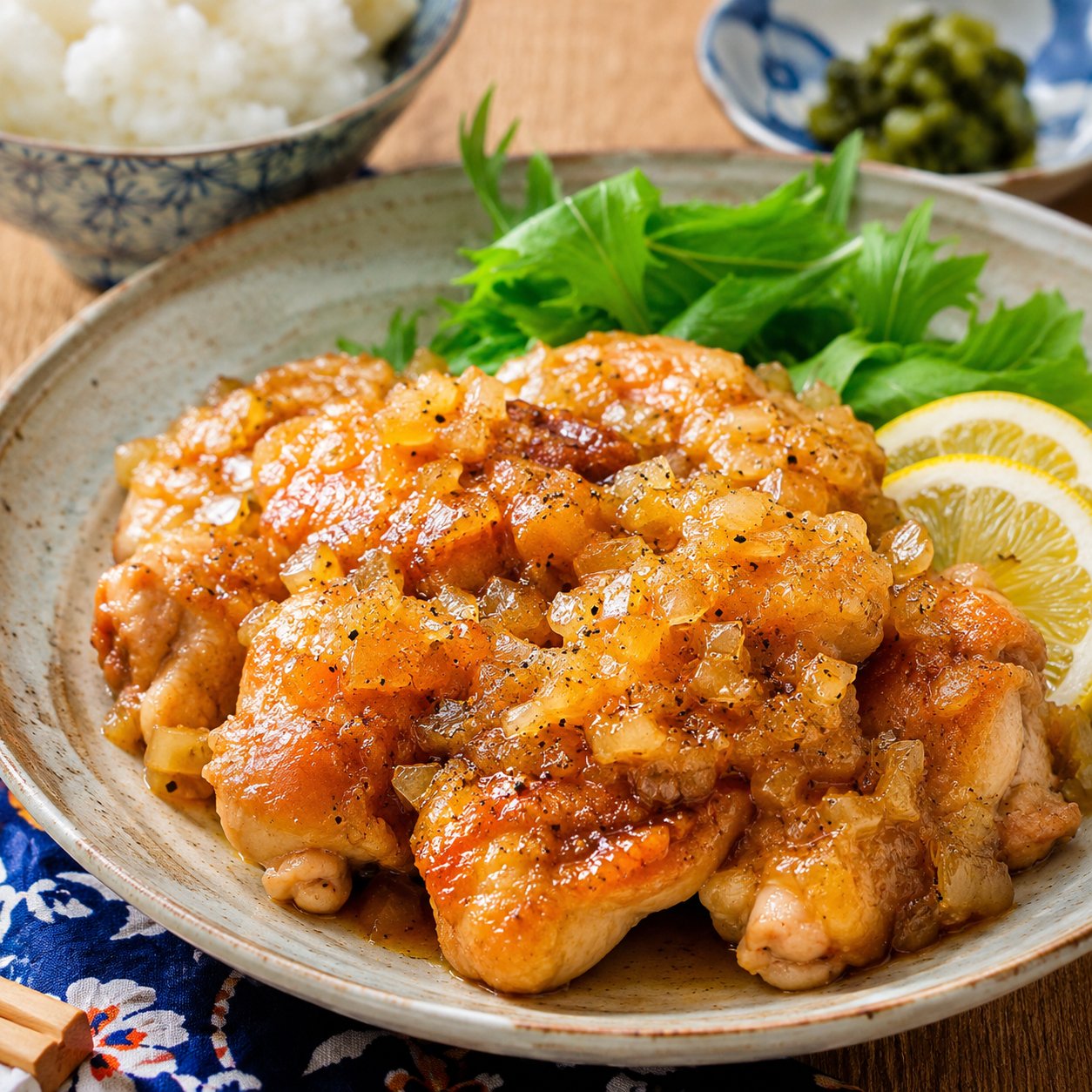
Garlic Soy Sauce Onion Sauce Chicken ガーリック醤油のオニオンソースチキン is a pan-cooked chicken dish covered in a sweet and savory onion-based sauce.
The main flavor comes from Japanese seasonings such as soy sauce, mirin, and cooking sake. Garlic gives the dish a stronger taste, while chopped onion adds natural sweetness and body to the sauce.
Unlike a thin soy sauce glaze, this recipe has bits of onion throughout the sauce. As the onion cooks, it becomes tender and mixes with the seasonings. The result is a sauce that feels richer without needing butter, cream, or a long cooking time.
Chicken thighs work especially well because they stay moist and tender. A light potato starch coating also helps protect the chicken from drying out while creating a surface that the sauce can easily cling to.
It is the kind of simple home-cooked meal that works well for lunch, dinner, meal prep, or a Japanese-inspired rice bowl.
Essential Ingredients
Key Ingredients (材料)
Garlic Soy Sauce Onion Sauce Chicken ガーリック醤油のオニオンソースチキンThese simple ingredients come together to make juicy chicken coated in a rich garlic soy onion sauce. Each ingredient has an important role, from keeping the chicken tender to creating the sweet, savory, and deeply satisfying flavor of the sauce.
How to Make Garlic Soy Sauce Onion Sauce Chicken
Step 1: Prepare the Chicken
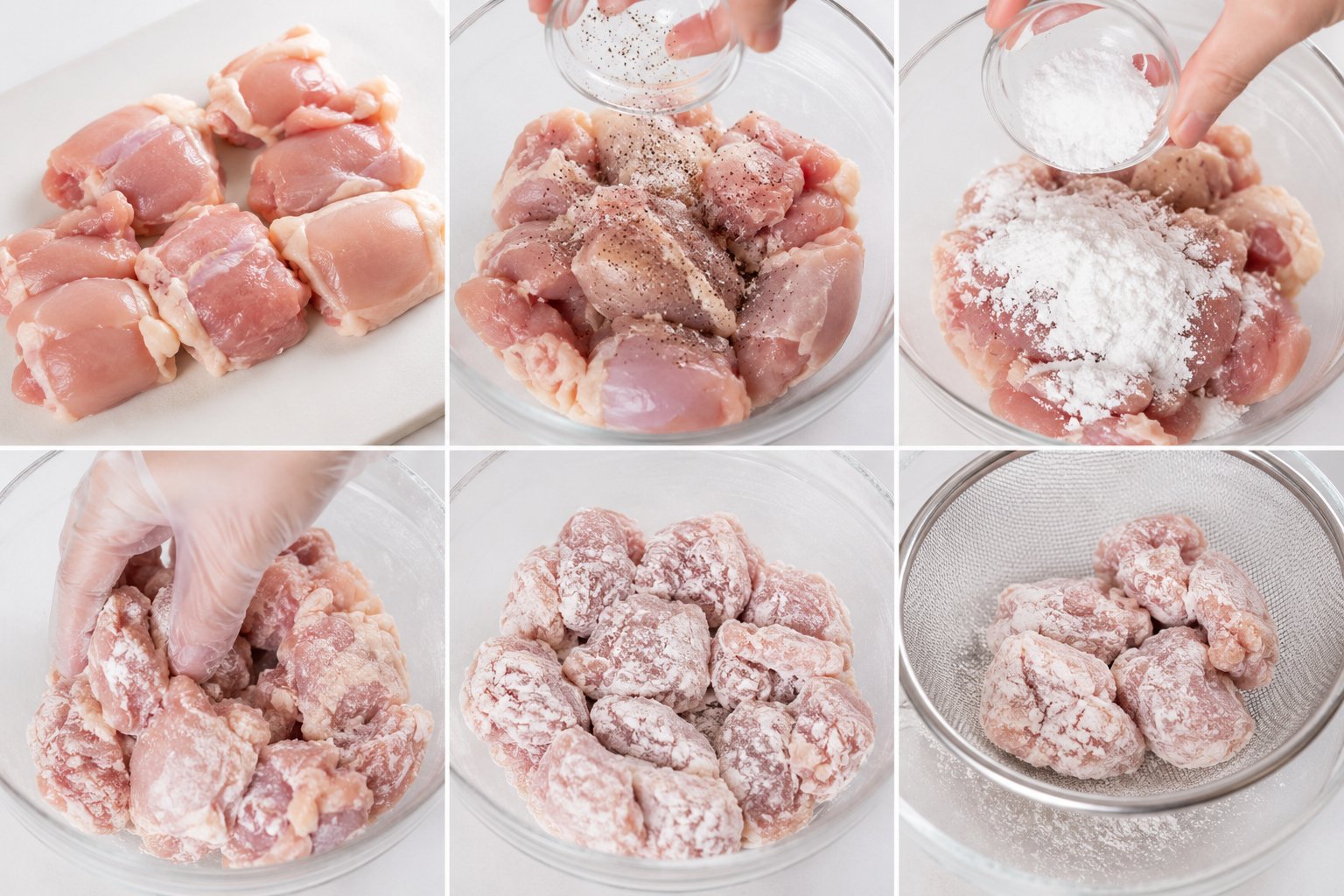
Cut the 300 g chicken thighs into large bite-sized pieces.
Try to make the pieces close to the same size. This helps them cook at the same speed.
Season the chicken lightly with salt and pepper.
Next, sprinkle potato starch over the pieces and toss them gently until every piece has a thin coating.
You do not need a thick layer of starch. A light coating is enough.
Shake off any extra starch before placing the chicken in the frying pan. Too much starch can make the oil heavy or create thick clumps.
Step 2: Pan-Cook the Chicken
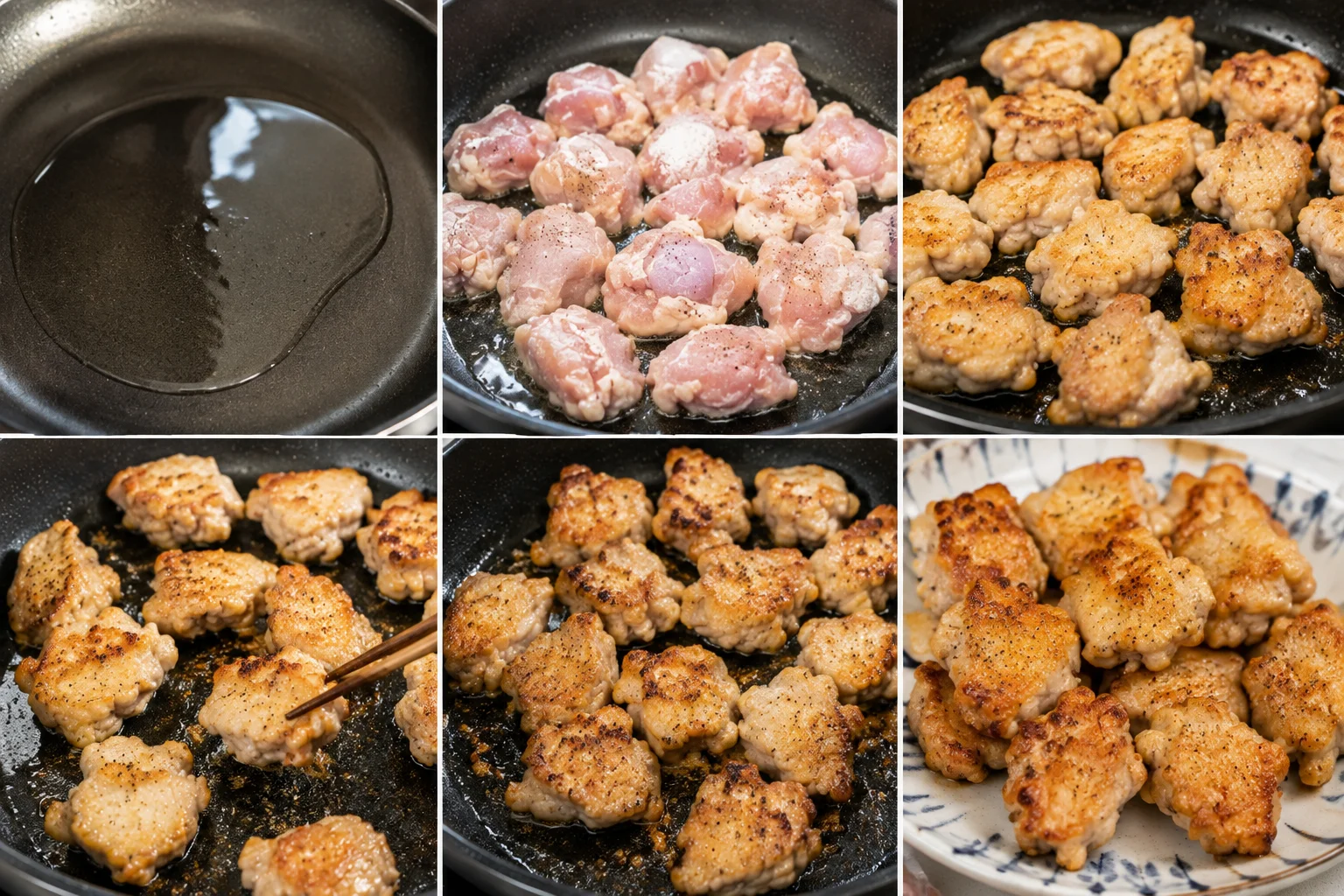
Place a frying pan over medium heat.
Add 2 tablespoons of salad oil.
Once the oil is warm, arrange the chicken pieces in a single layer.
Do not crowd the pan. Leaving a little space between the pieces helps the chicken cook more evenly.
Let the first side cook until lightly golden. Turn the chicken and continue cooking, turning when needed, until all sides are cooked and the center is no longer raw.
The chicken should be fully cooked before it is removed from the pan.
Transfer the cooked chicken to a clean plate and set it aside while you prepare the sauce.
Leaving the browned bits in the frying pan is fine. They can add extra flavor to the onion sauce.
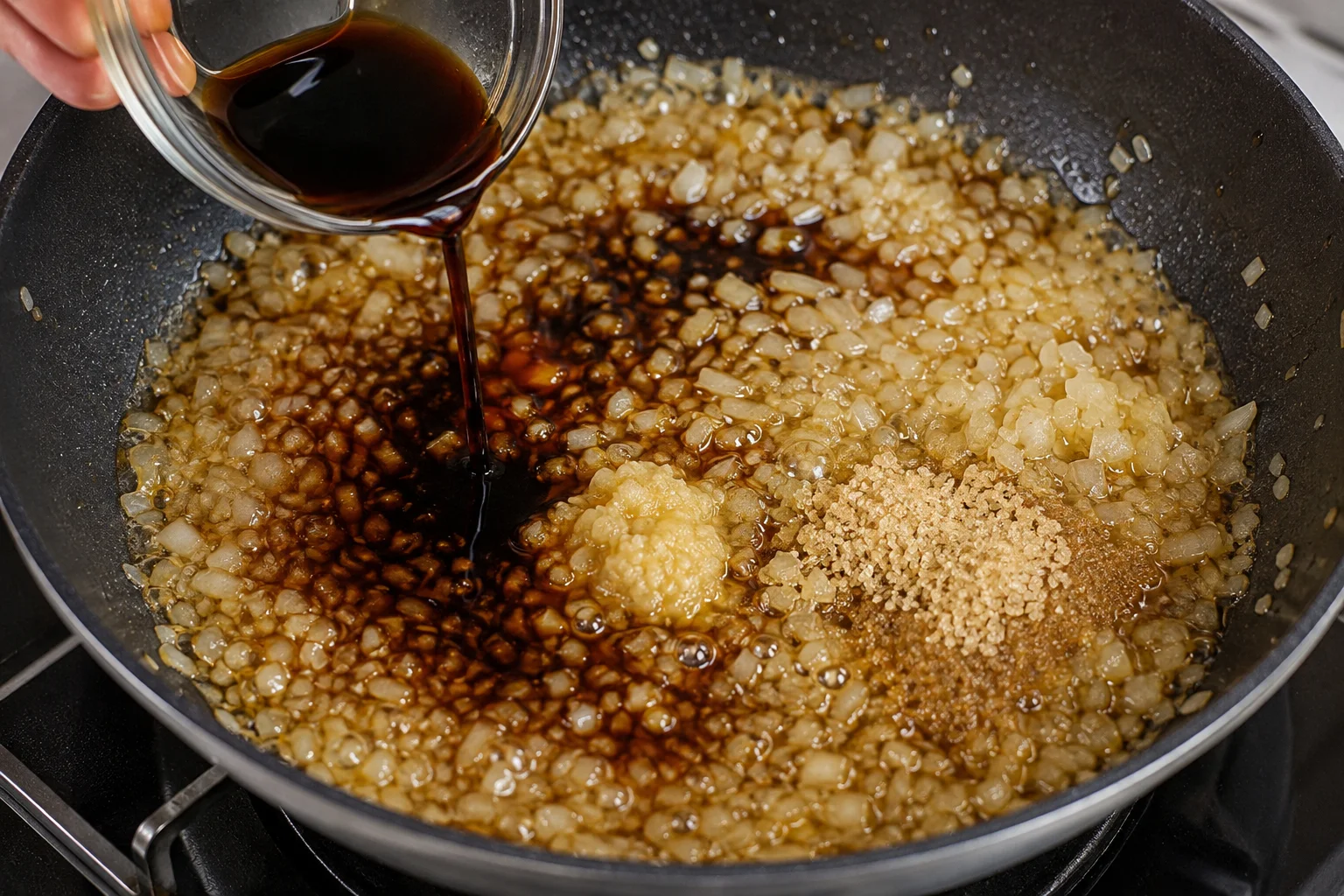
Step 3: Make the Garlic Soy Onion Sauce
Keep the same frying pan over medium to medium-low heat.
Add the 80 g chopped onion.
If you are using frozen chopped onion, cook it until it has thawed and most of the extra moisture has disappeared.
If you are using fresh onion, cook it for about 1 to 2 minutes, or until it starts to soften.
Lower the heat.
Add:
- 2 tablespoons cooking sake
- 2 tablespoons mirin
- 2 teaspoons garlic paste
- 2 teaspoons sugar
- 1 tablespoon + 2 teaspoons soy sauce
Stir everything together.
Let the sauce gently simmer until the sugar dissolves and the onion becomes tender.
Do not boil the sauce hard. A gentle simmer is enough.
As it cooks, the sauce will become slightly thicker and the garlic, onion, soy sauce, and mirin flavors will blend together.
Step 4: Combine and Finish
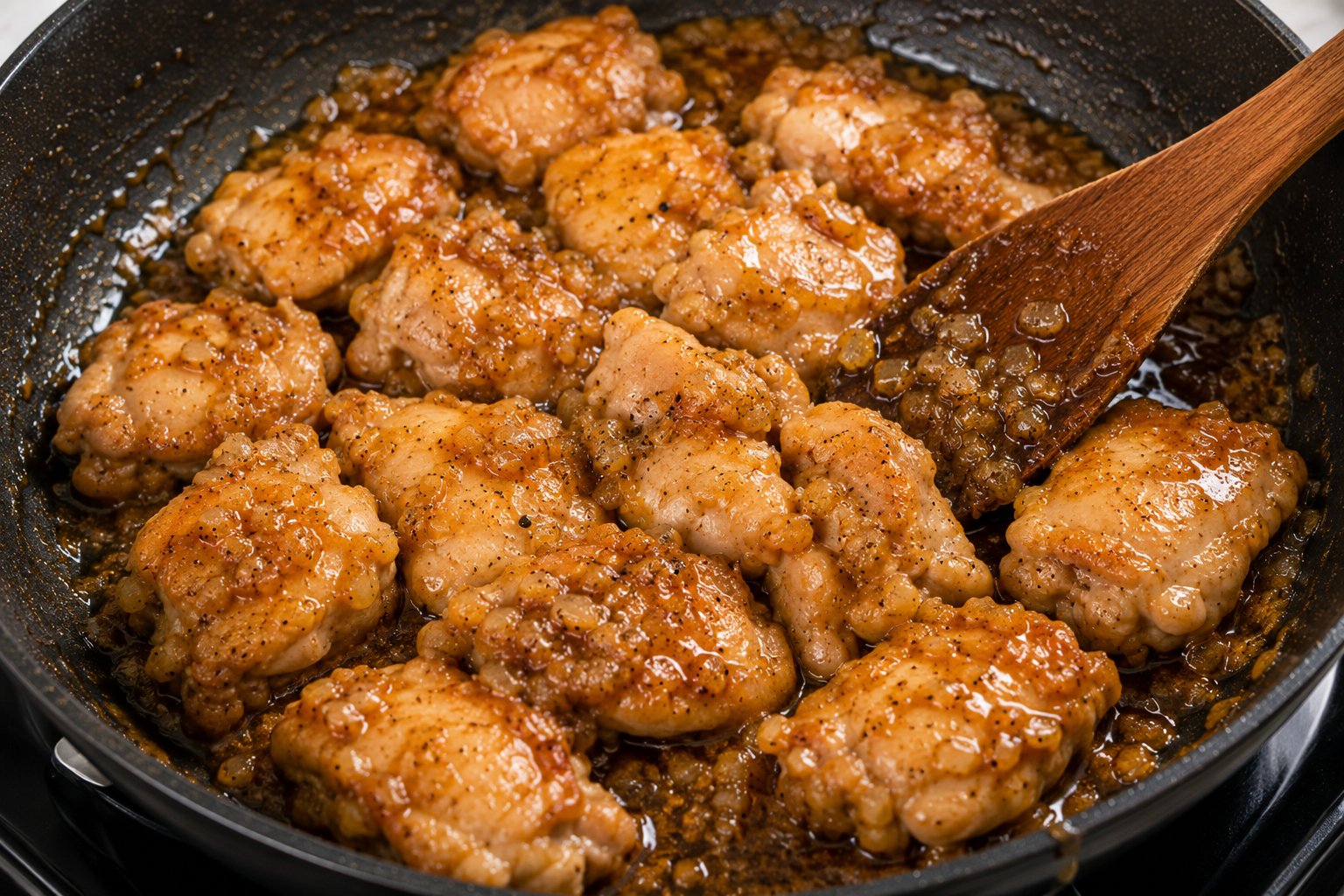
Return the cooked chicken to the frying pan.
Toss the chicken gently in the onion sauce until every piece is coated.
Cook for another minute or two over low heat so the chicken can absorb some of the sauce.
Turn off the heat.
Add black pepper to taste if desired.
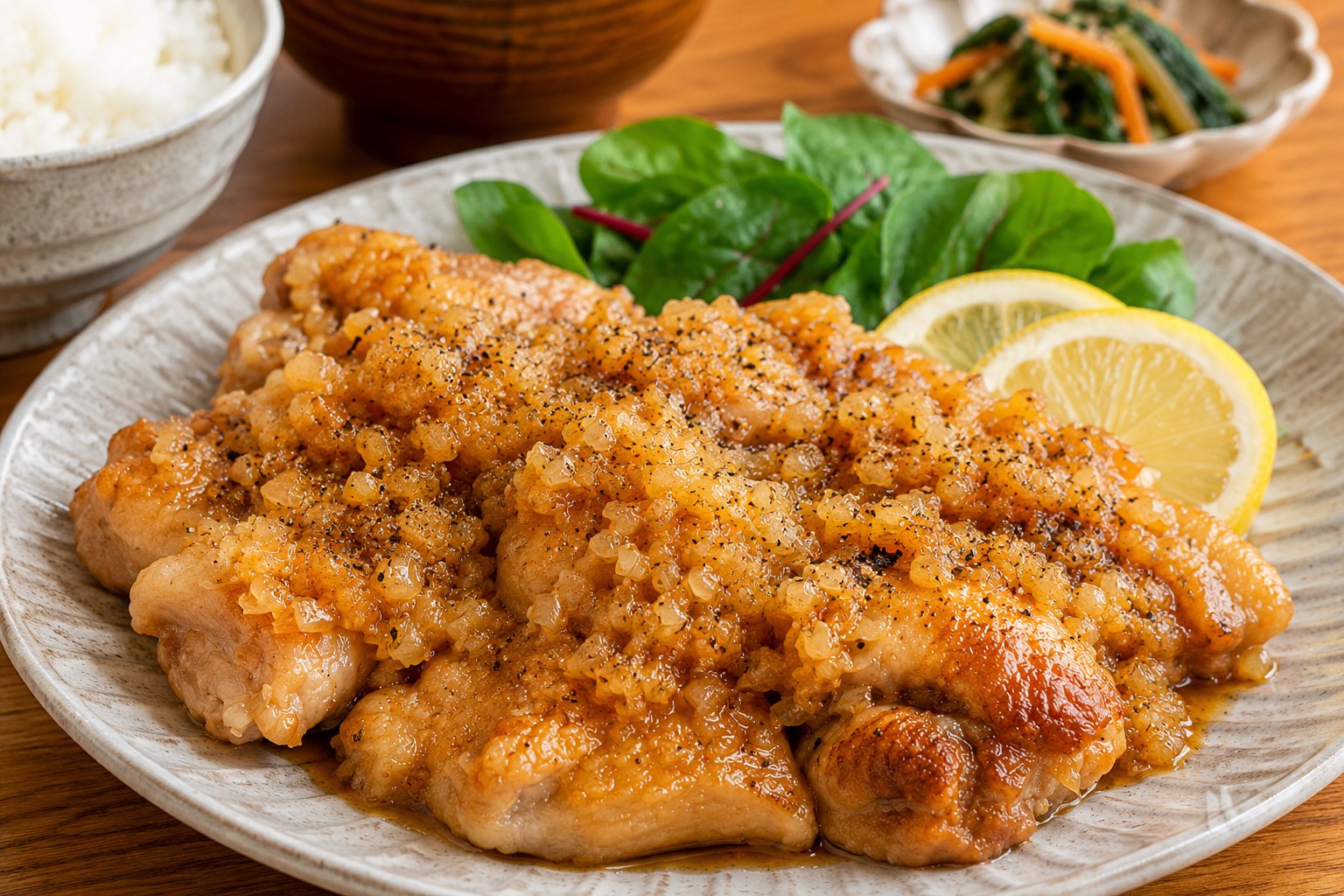
Serve the Garlic Soy Sauce Onion Sauce Chicken while warm with plenty of sauce spooned over the top.
Assembly and Serving
This chicken is very easy to turn into a complete meal.
Start with a bowl or plate of freshly cooked Japanese short-grain rice. Place the chicken beside or over the rice.
Spoon the garlic soy onion sauce generously over the chicken.
Make sure some of the soft onion pieces are included with each serving. They are one of the best parts of the dish.
For a balanced plate, add vegetables such as:
- Steamed broccoli
- Green beans
- Cabbage
- Spinach
- Carrots
- Cucumber salad
You can also serve the chicken with miso soup for a simple Japanese-style meal.
For presentation, arrange the chicken neatly instead of piling everything in the center. Spoon a little extra onion sauce over the top and finish with freshly ground black pepper.
Secrets to Success and Expert Tips
These helpful tips will help you prepare juicy and flavorful Garlic Soy Sauce Onion Sauce Chicken ガーリック醤油のオニオンソースチキン with tender chicken, a glossy sauce, and a balanced sweet and savory taste:
-
“`
-
♥
Cut the chicken into similar-sized pieces
Keeping the chicken pieces close to the same size helps them cook evenly. This prevents smaller pieces from drying out while larger pieces are still cooking. -
♥
Coat lightly with potato starch
Use just enough potato starch to form a thin coating over the chicken. It helps lock in moisture, creates a lightly golden surface, and makes the sauce cling better. -
♥
Cook the chicken over medium heat
Medium heat allows the chicken to cook through while developing a golden outside. Very high heat can brown the starch too quickly before the center is fully cooked. -
♥
Remove extra moisture from the onion
If using frozen chopped onion, cook it until the released water has mostly evaporated. This keeps the garlic soy sauce rich and flavorful instead of thin and watery. -
♥
Simmer the sauce gently
Lower the heat before adding the soy sauce, mirin, sake, garlic, and sugar. A gentle simmer helps the flavors blend smoothly and reduces the chance of the sugar or soy sauce burning.
“`
Hana’s Recipe Tips
For an extra comforting meal, Hana recommends serving this chicken over hot rice right after the sauce has finished cooking.
The rice catches the extra garlic soy onion sauce, so nothing is wasted.
If you enjoy a stronger garlic taste, use freshly grated garlic instead of prepared garlic paste. Start with a small amount because fresh garlic can be much stronger.
For sweeter onion flavor, cook fresh onion a little longer over medium-low heat before adding the seasonings.
You can also prepare the sauce ingredients in a small bowl before you start cooking. When the onion is ready, simply pour the mixture into the pan. This makes the cooking process faster and keeps you from measuring ingredients while the pan is hot.
Storage and Make-Ahead Tips
Refrigerator
Allow the chicken to cool before storing it.
Place it in an airtight container together with the sauce.
Store in the refrigerator for up to 2 to 3 days.
Keeping the chicken with the sauce helps prevent it from drying out.
Reheating
Reheat the chicken gently in a frying pan over low heat.
Add a teaspoon or two of water if the sauce has become very thick.
You can also use a microwave. Cover the container loosely and heat in short intervals until the chicken is fully hot.
Avoid heating it longer than needed because repeated cooking can make the chicken less tender.
Make-Ahead Option
You can chop the onion and cut the chicken earlier in the day.
Keep raw chicken refrigerated in a sealed container until you are ready to cook.
The sauce ingredients can also be measured and mixed in advance.
Do not coat the chicken with potato starch too far ahead. Add the starch shortly before cooking for the best texture.
Recipe Variations
Garlic Soy Sauce Onion Sauce Chicken ガーリック醤油のオニオンソースチキン is easy to customize. You can add heat, change the protein, include extra vegetables, or adjust the seasonings while keeping the same simple pan-cooking method.
Make It Spicy
If you like a little heat, add a spicy ingredient to the garlic soy onion sauce:
- Chili oil for a gentle spicy finish
- Japanese shichimi pepper for warmth and aroma
- Chili paste for a stronger kick
Try a Different Protein
The same savory onion sauce works well with several other proteins:
- Chicken breast for a leaner version
- Firm tofu for a meat-free option
- Thinly sliced pork for a richer variation
Add More Vegetables
Extra vegetables add color, texture, and more variety to the dish:
- Shiitake mushrooms for extra umami
- Bell peppers for sweetness and color
- Broccoli for a fresh and hearty addition
Change the Flavor
Small seasoning changes can give the sauce a completely different character:
- Add freshly grated ginger for a warm, fresh aroma
- Use extra chopped onion for a sweeter, thicker sauce
- Finish with toasted sesame seeds for a mild nutty flavor
Health Benefits
Garlic Soy Sauce Onion Sauce Chicken can be part of a balanced meal when served with vegetables and a sensible portion of rice.
Chicken provides protein, which helps support muscles and helps make meals satisfying.
Onions provide plant compounds as well as a small amount of fiber and nutrients.
Garlic contains natural compounds that are widely valued as part of a varied diet.
You can also make the recipe lighter by using slightly less oil or by serving it with a large portion of vegetables.
Because soy sauce contains sodium, people who are watching their salt intake can choose a lower-sodium soy sauce.
More Japanese Chicken Recipes to Try
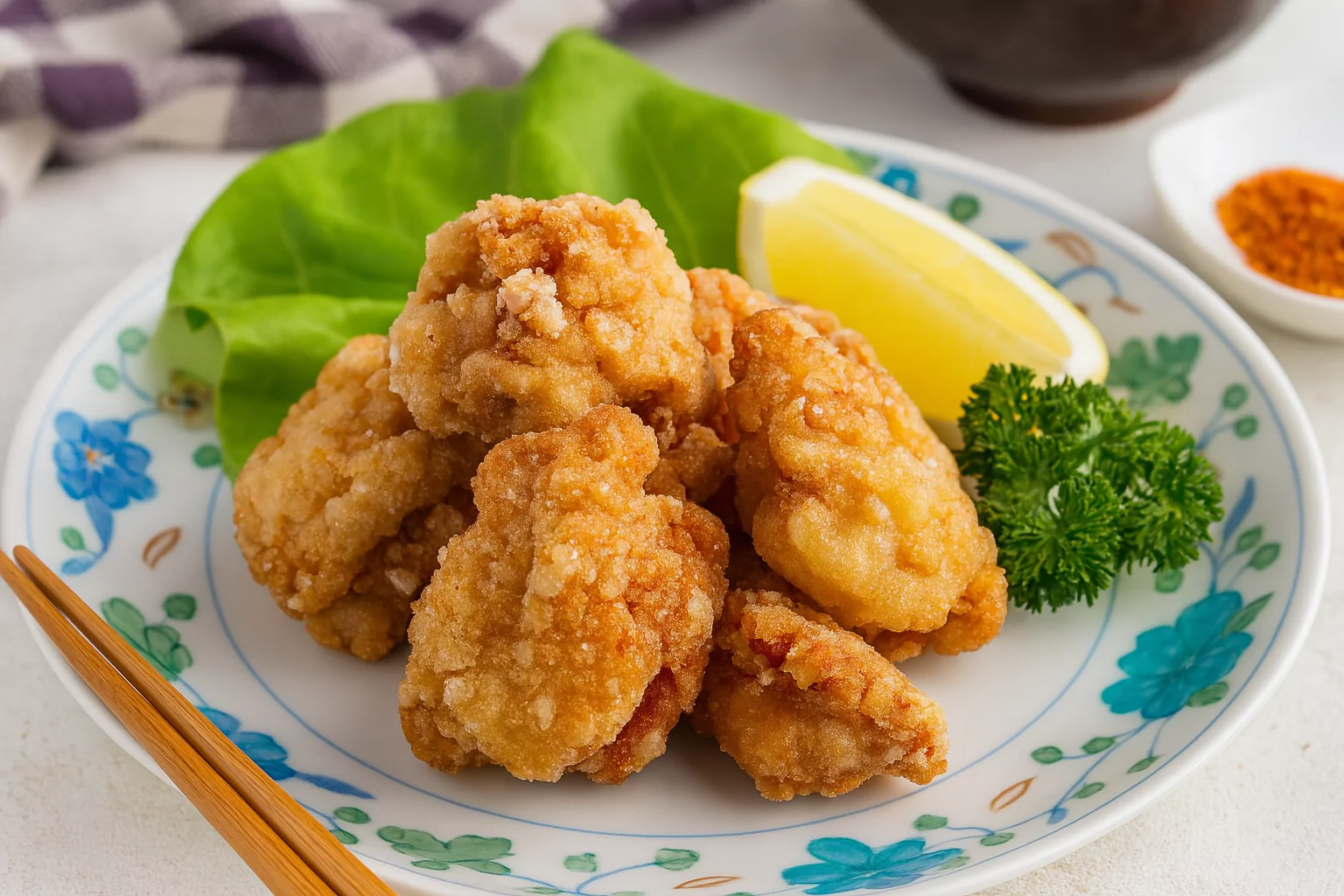
If you enjoyed this Garlic Soy Sauce Onion Sauce Chicken, you may also want to try a few other easy Japanese chicken recipes. For a simple and fun option, make Stick Chicken , which is great for a quick meal or snack. If you love crispy chicken, try Karaage (Japanese Fried Chicken) , a classic Japanese favorite with juicy chicken and a crisp, flavorful coating.
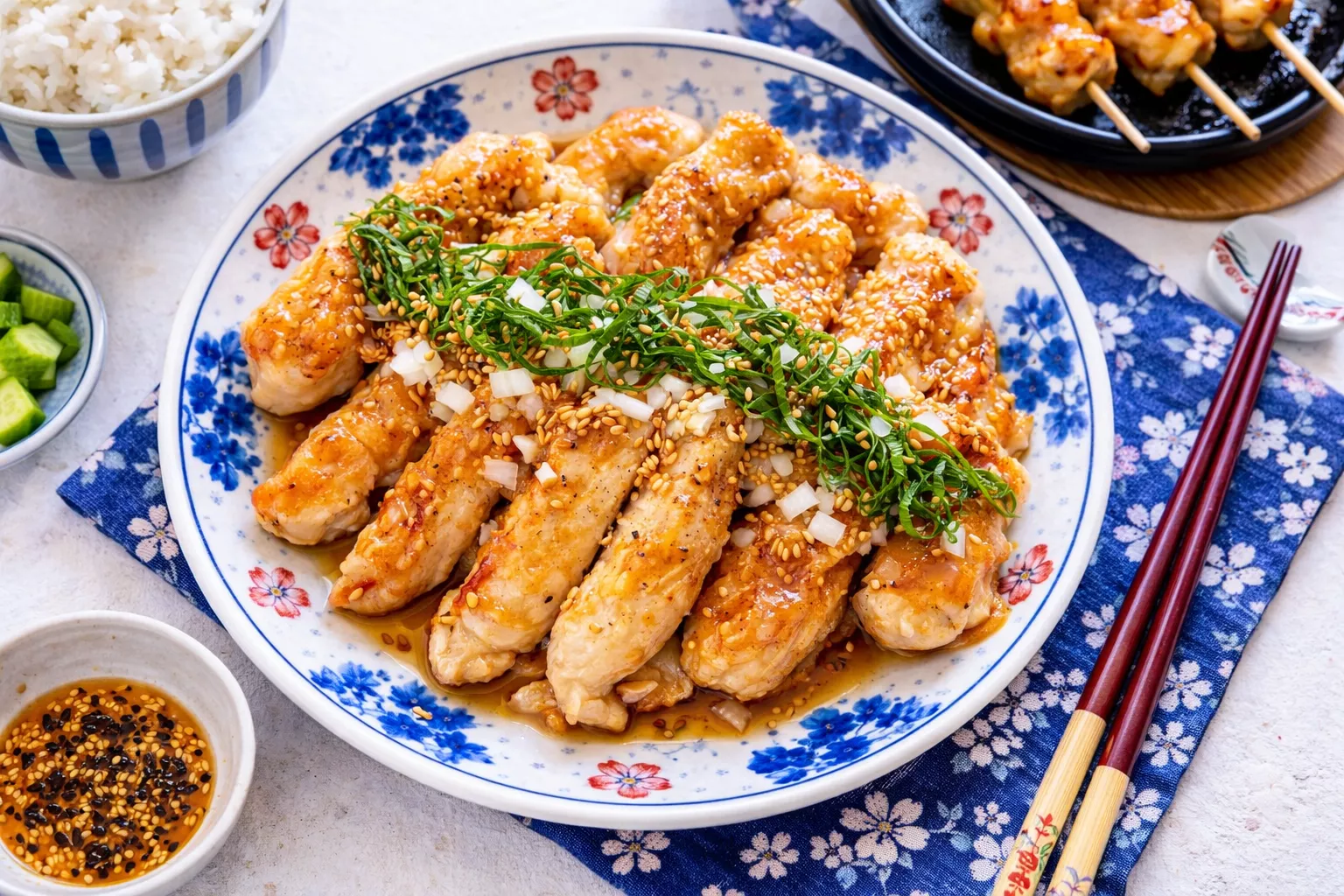
Frequently Asked Questions
Can I use chicken breast instead of chicken thighs?
Yes. Chicken breast works well, but it is leaner than chicken thigh and can dry out more easily.
Cut the breast into even pieces and cook only until fully done.
Can I use fresh onion instead of frozen onion?
Yes.
Finely chop fresh onion and cook it for about 1 to 2 minutes before adding the sauce ingredients. You can cook it a little longer if you want a softer and sweeter onion flavor.
Why do I need potato starch?
Potato starch creates a light coating around the chicken.
It helps keep the chicken moist and gives the sauce a better surface to stick to.
Can I replace potato starch with cornstarch?
Yes.
Cornstarch is a good substitute. Use just enough to create a thin coating.
Is Garlic Soy Sauce Onion Sauce Chicken spicy?
No.
The basic recipe is sweet, savory, and garlicky rather than spicy.
You can add chili pepper or chili oil if you want extra heat.
Can I make it without garlic?
Yes, but garlic is one of the main flavors of the recipe.
If you leave it out, the dish will have a softer soy-and-onion taste.
Can I make the sauce ahead of time?
Yes.
Mix the cooking sake, mirin, garlic, sugar, and soy sauce in a small covered container and refrigerate it until needed.
Stir before adding it to the pan.
How long can I store leftovers?
Cooked Garlic Soy Sauce Onion Sauce Chicken can usually be kept refrigerated in an airtight container for about 2 to 3 days.
Cool it before placing it in the refrigerator and reheat it thoroughly before serving.
What should I serve with this chicken?
Steamed Japanese rice is one of the easiest choices.
You can also serve it with:
- Brown rice
- Noodles
- Cabbage salad
- Steamed vegetables
- Miso soup
- Pickled vegetables
Can I make this recipe less sweet?
Yes.
Reduce the sugar slightly. Keep some mirin in the sauce because it provides more than sweetness; it also helps create the smooth, balanced flavor.
How do I stop the soy sauce from burning?
Lower the heat before adding the sauce ingredients.
Once soy sauce and sugar enter the pan, high heat can make them burn quickly.
Keep the sauce at a gentle simmer and stir often.
Is this recipe good for meal prep?
Yes.
The chicken keeps its flavor well because it is coated in sauce.
Store the chicken and sauce together, then prepare fresh rice or vegetables when you are ready to eat.
Conclusion
Garlic Soy Sauce Onion Sauce Chicken ガーリック醤油のオニオンソースチキン proves that a flavorful dinner does not have to be difficult.
Juicy chicken thighs, sweet onion, garlic, soy sauce, mirin, and sake come together in one frying pan to create a rich and comforting dish. The potato starch coating helps the chicken stay tender while holding onto the flavorful onion sauce.
With about 25 minutes of preparation and cooking time, it is a useful recipe for busy weekdays, simple lunches, or Japanese-style family dinners.
Once you know the basic recipe, you can easily change it to match your taste. Add ginger for warmth, chili for heat, mushrooms for extra texture, or more onion for an even richer sauce.
Serve it hot with steamed rice and vegetables, spoon the extra garlic soy onion sauce over everything, and enjoy a simple homemade meal packed with sweet, savory, and garlicky flavor.

How to make :Garlic Soy Sauce Onion Sauce Chicken ガーリック醤油のオニオンソースチキン
Course: Main CoursesCuisine: JapaneseDifficulty: Easy2
servings10
minutes15
minutes520
kcalJuicy chicken thighs are pan-fried until golden, then coated in a rich garlic soy onion sauce made with mirin, sake, soy sauce, and a touch of sugar. The soft chopped onion adds natural sweetness and texture, making this easy Japanese chicken dish perfect with a bowl of hot steamed rice.
Ingredients
Chicken
— 300 g chicken thighs
— 80 g finely chopped onion, fresh or frozen
— Salt, a small amount
— Ground pepper, a small amount
— Potato starch, as needed for coating
— 2 tablespoons salad oilGarlic Soy Onion Sauce
— 2 tablespoons cooking sake
— 2 tablespoons mirin
–2 teaspoons garlic paste
— 2 teaspoons sugar
–1 tablespoon + 2 teaspoons soy sauceTo Finish
— Black pepper, optional
Directions
- Prepare the Chicken
Cut the chicken thighs into large, even bite-sized pieces. Season lightly with salt and pepper. Sprinkle potato starch over the chicken and toss gently until each piece has a thin, even coating. Shake off any excess starch before cooking. - Cook the Chicken
Heat the salad oil in a frying pan over medium heat. Add the chicken in a single layer and cook, turning occasionally, until the outside is lightly golden and the chicken is completely cooked through. Transfer the chicken to a clean plate and set aside. - Prepare the Garlic Soy Onion Sauce
Add the chopped onion to the same frying pan. If using frozen onion, cook until thawed and most of the extra liquid has evaporated. If using fresh onion, sauté for about 1–2 minutes until it begins to soften. Reduce the heat to low, then add the cooking sake, mirin, garlic paste, sugar, and soy sauce. Stir well and allow the mixture to simmer gently until the onion is tender and the sauce is slightly reduced. - Coat and Finish
Return the cooked chicken to the frying pan. Toss gently until every piece is well covered with the garlic soy onion sauce. Cook over low heat for another 1–2 minutes so the flavors can coat the chicken. Finish with black pepper if desired and serve warm.
Notes
- Cut the chicken into similar-sized pieces so they cook evenly.
Use only a thin coating of potato starch for a light golden texture.
Fresh or frozen chopped onion can both be used.
When using frozen onion, cook away the excess moisture before adding the sauce ingredients.
Lower the heat before adding soy sauce and sugar to prevent the sauce from burning.
Chicken is safely cooked when the thickest part reaches an internal temperature of 74°C / 165°F.
Serve with steamed Japanese rice, broccoli, cabbage, spinach, or other vegetables.
Store leftovers in an airtight container in the refrigerator for up to 2–3 days.
Did you make this recipe?
Tag @jp.dishes on Instagram so we can see your delicious creation!