
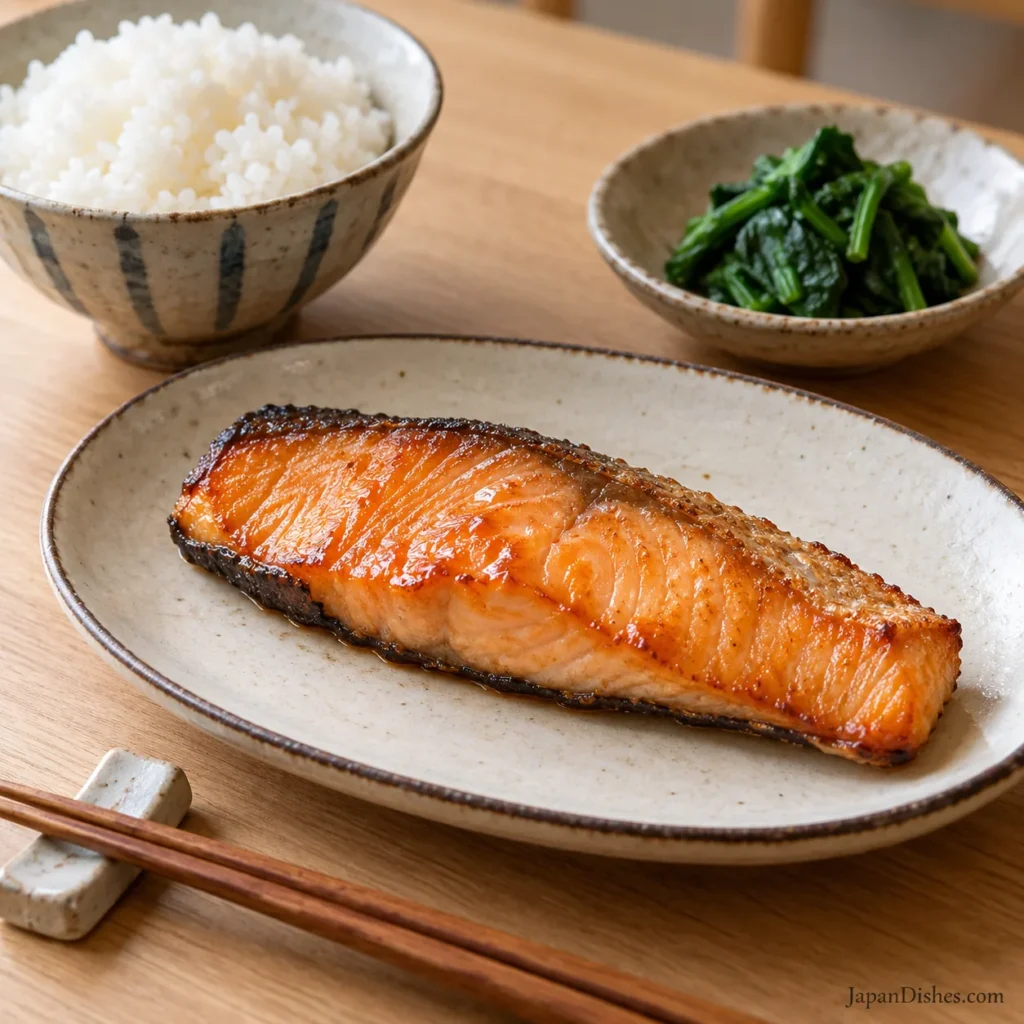
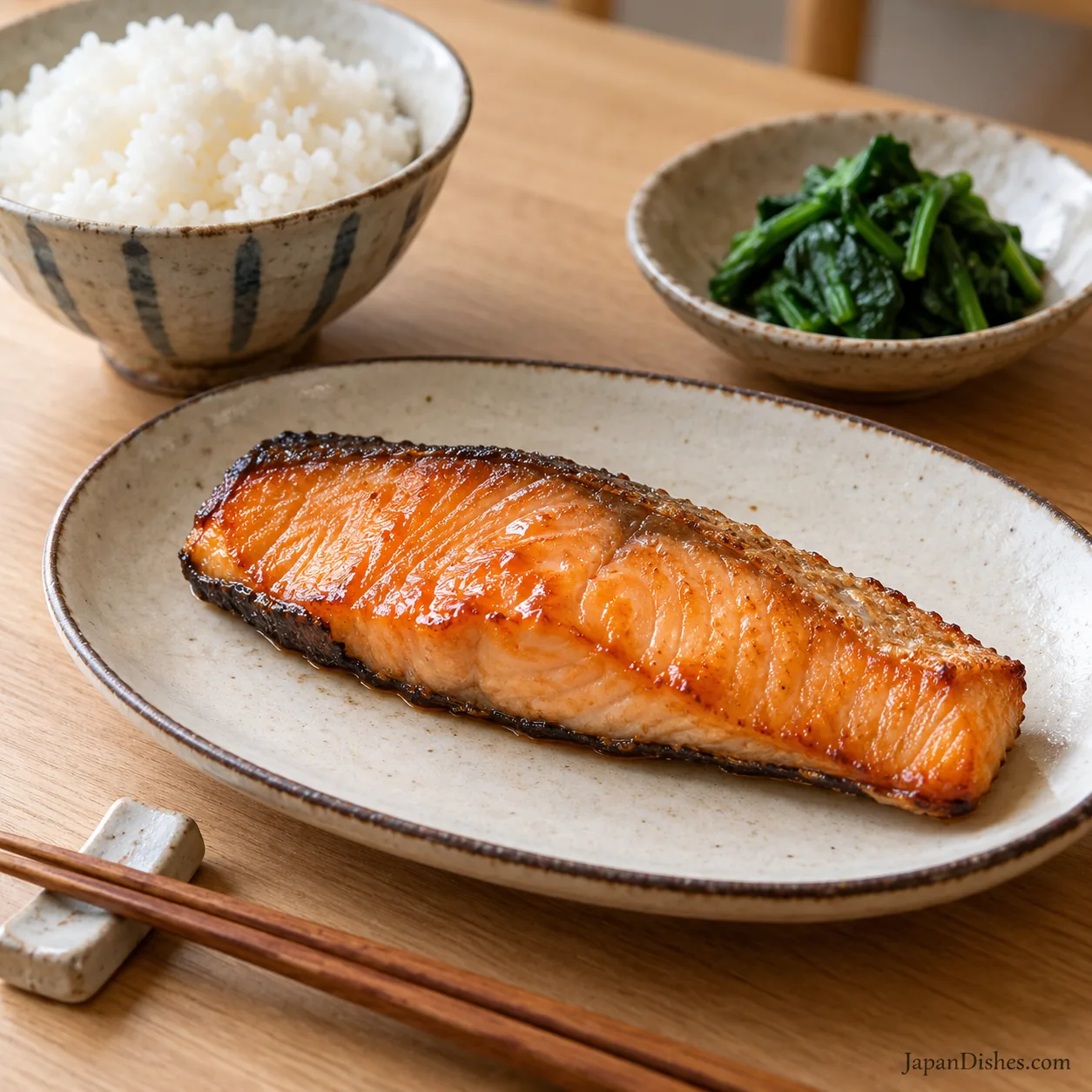
Mirin salmon brings a gentle sweet-savory flavor to a simple Japanese dinner. An overnight marinade seasons the fish, while a small spoonful of clean sauce becomes a glossy finishing glaze. Serve the tender fillets with warm rice and plain greens for a meal that feels calm and complete.
Konnichiwa, I’m Hana. Shall we prepare tomorrow’s dinner together? Tonight, we’ll mix a few pantry ingredients and tuck the salmon into the refrigerator. Tomorrow, the oven does most of the cooking. The photos show all five stages, and the printable card keeps each instruction beside its picture.
Makes 4 servings. About 45 minutes preparation and cooking, plus overnight chilling. Rice and greens are prepared separately.
Table of Contents
A simple Japanese mirin salmon dinner
The name sake no mirin-zuke (鮭のみりん漬け) describes salmon marinated with mirin. Here, mirin supplies sweetness, soy sauce adds savory depth, and a little sake rounds out the mixture. The finish should be lightly glossy, with the salmon’s own flavor still present.
This version uses an 8–12-hour refrigerated marinade. Plan ahead: the minimum total is about eight hours forty-five minutes, including preparation and cooking. The clean glaze is set aside before the raw fish enters the marinade, so there is a ready portion for the saucepan the following day.
Ingredients for mirin salmon
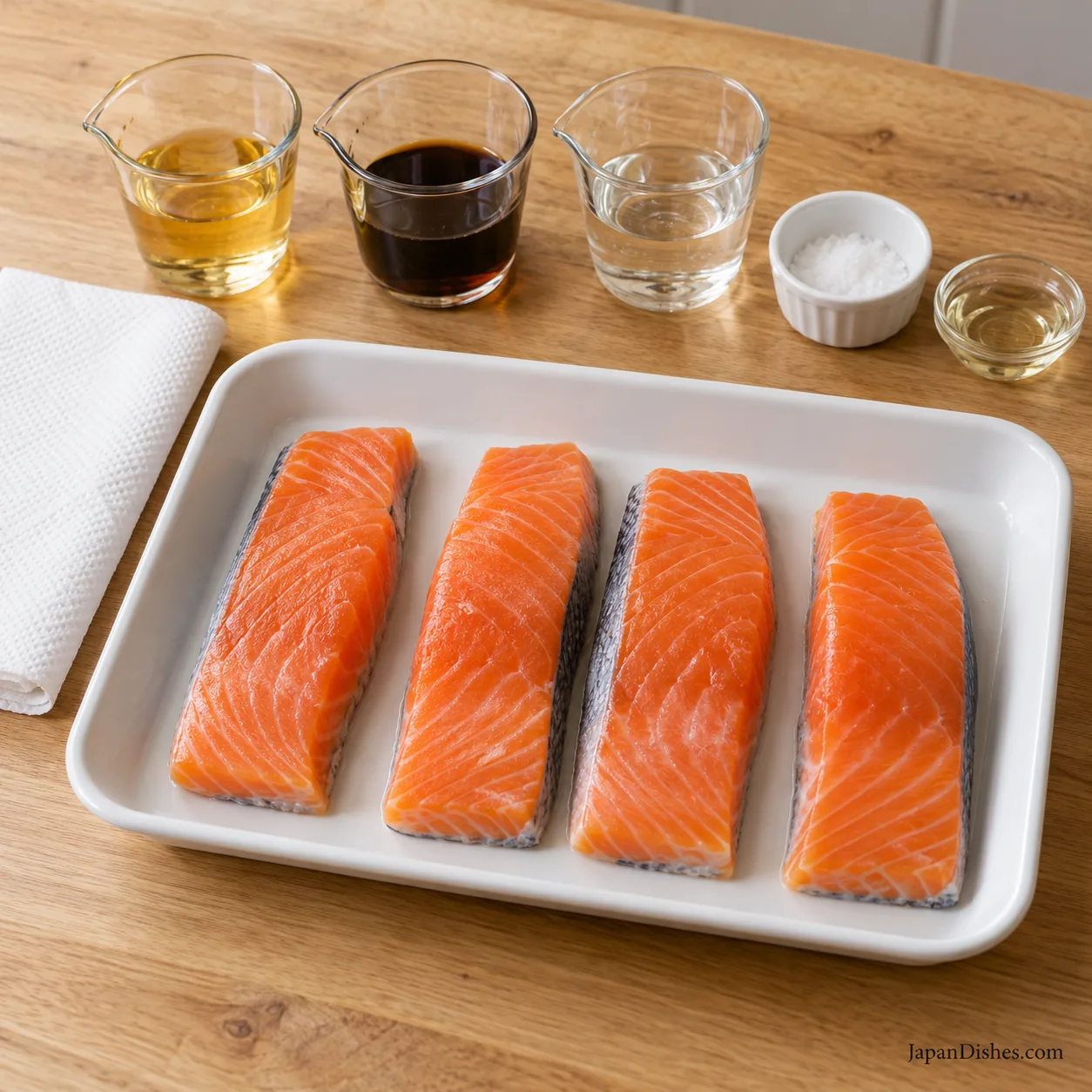
These quantities serve four. Choose fillets of similar thickness so they cook evenly. A tablespoon here means 15 ml; measuring the liquids is more reliable than guessing from a splash. The full ingredient list appears again in the printable card.
Salmon and a brief salting step
Use four boneless skin-on salmon fillets, about 150 g each, roughly 2.5 cm thick. Sprinkle with ¼ teaspoon fine salt, about 1.5 g, then blot after ten minutes. This removes surface moisture before marinating. Coarse salt measures differently, so weighing is helpful.
Mirin, soy sauce and sake
Measure 60 ml hon-mirin, 30 ml regular Japanese soy sauce and 30 ml unsalted sake. Together they make 120 ml sauce. Reserve 30 ml while it is clean; use the remaining 90 ml to coat the salmon. No extra sugar is needed.
Tray and serving ingredients
Use one teaspoon neutral oil on the foil to help release the skin. Have four portions of cooked Japanese short-grain rice ready, plus optional plain blanched spinach. These accompaniments are prepared separately; start your rice cooker according to its usual schedule.
Choosing mirin and making substitutions
Hon-mirin is a sweet Japanese rice wine and contains alcohol. Products sold as mirin-style seasoning can differ in sweetness, salt and alcohol content. Check the bottle rather than treating every product as interchangeable. Takara’s guide to mirin and cooking sake explains the differences.
For an alcohol-free variation, use a product explicitly labeled alcohol-free and replace the sake with water; the flavor will differ. The standard recipe is not guaranteed alcohol-free after cooking. For gluten-free mirin salmon, use gluten-free tamari and verify the mirin and sake labels. Standard soy sauce contains wheat; fish and soy remain allergens.
How to make mirin salmon in 5 easy steps
Set out a shallow covered container, small jug, small saucepan, rimmed metal tray, foil, pastry brush and food thermometer. Keep raw-fish equipment separate from the clean sauce. The fish can go from refrigeration onto the prepared tray while the oven heats; it does not need to sit out until room temperature.
Step 1: Prepare the salmon
Check the four salmon fillets for pin bones and remove any with clean fish tweezers. Pat dry. Sprinkle the ¼ teaspoon fine salt lightly over the flesh, then refrigerate for 10 minutes while you measure the marinade. Blot off the moisture and excess salt with fresh paper towels. Wash hands and clean any utensils that touched raw fish.
Use fresh paper towels for the final blotting. A light, even sprinkle is enough; the soy sauce will provide more seasoning overnight. Do not add more salt before baking.
Step 2: Mix the marinade and reserve clean glaze
Whisk 60 ml mirin, 30 ml soy sauce and 30 ml unsalted sake in a clean jug. Before adding any fish, measure 2 tablespoons (30 ml) of this clean mixture into a separate small covered container and refrigerate it for the glaze. Keep the remaining 90 ml for marinating.
Reserve the glaze first, then put the jug away from raw-fish utensils. A small covered glass container works well. This clean portion is the only sauce used for finishing.

Step 3: Marinate overnight in the refrigerator
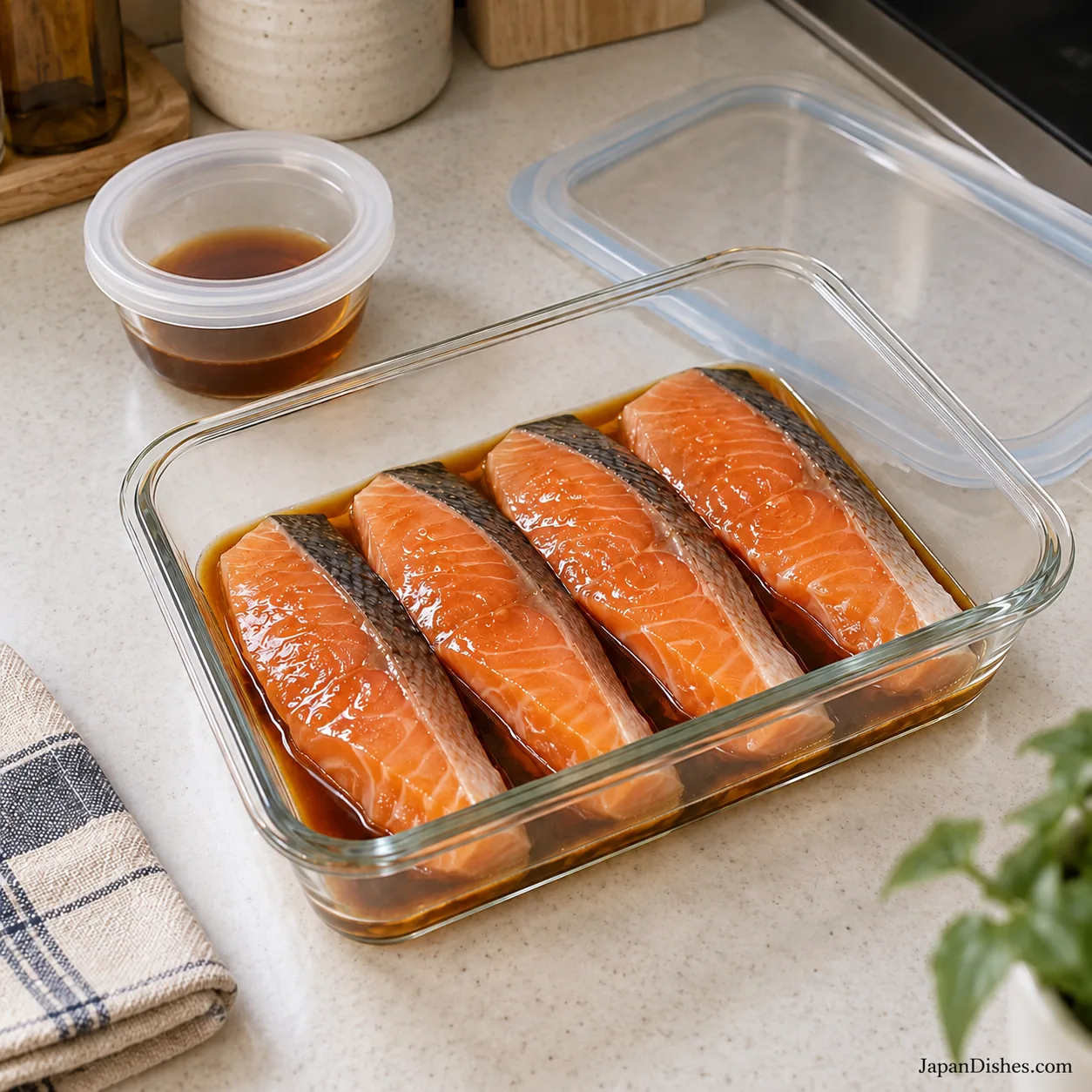
Put the salmon in a shallow covered food-safe container in one layer and coat with the remaining marinade. Refrigerate at 4°C / 40°F or below for 8–12 hours. Turn the fillets once during this time if convenient, using clean utensils. Keep the separate clean glaze covered in the refrigerator. Cook the salmon within 2 days of purchase; marinating does not extend its storage life.
The fillets need an even coating, rather than a deep bath. Keep the covered container on a low refrigerator shelf so it cannot drip onto ready-to-eat food. A thinner container helps the measured marinade reach the fish.
Step 4: Bake on a foil-lined tray
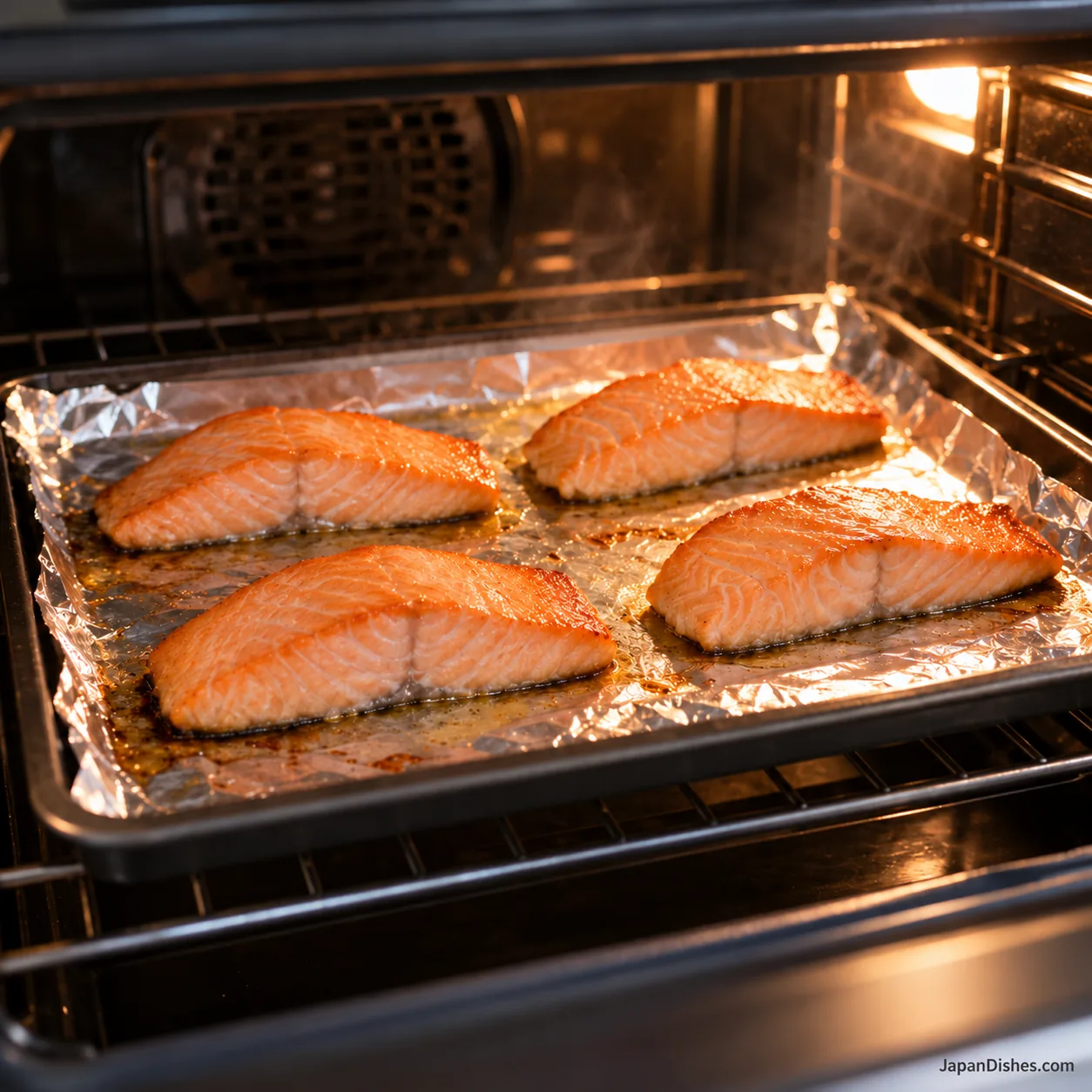
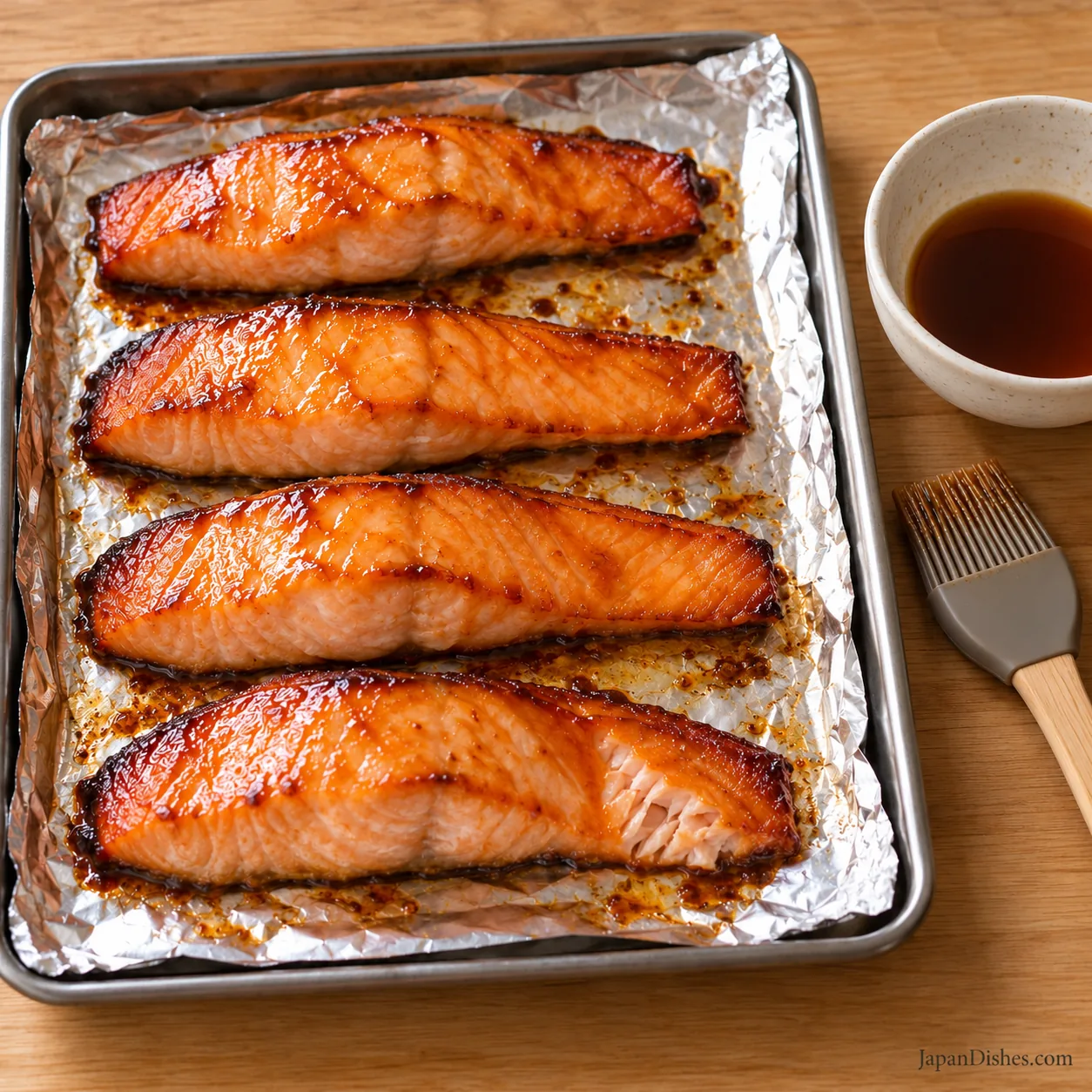
Preheat the oven to 200°C / 390°F conventional, or 180°C fan, with a rack in the middle. Line a rimmed metal tray with aluminum foil and brush with the teaspoon of oil. Lift the salmon from its marinade and gently blot away excess liquid. Discard all marinade that touched the raw fish. Arrange the fillets skin side down, spaced apart. Bake for about 12–16 minutes, checking the thickest center from 12 minutes; thickness and oven performance affect the time. While the fish bakes, begin the clean glaze in step 5.
Removing excess marinade limits scorching and helps the surface roast. Use foil on a metal tray, especially if you plan to broil. Leave gaps between the pieces; crowding traps liquid around the fish.
Step 5: Glaze, finish and serve
Pour the reserved clean 30 ml sauce into a small saucepan. Bring to a gentle boil, then simmer for 1–2 minutes, until it lightly coats a spoon; add a teaspoon of water if too thick. Brush a thin layer onto the salmon near the end of baking. For extra color, optionally broil for 1–2 minutes on the same foil-lined metal tray, watching continuously and following your oven’s rack guidance. Check that each fillet reaches 63°C / 145°F in its thickest center; bake longer if needed. Serve with the separately prepared rice and optional spinach.
A thin brush of glaze is enough. Color can develop quickly under the broiler, so stay beside the oven. The thermometer, rather than surface browning alone, tells you when the fish is ready.
Hana’s tips for tender mirin salmon
Choose thickness over a fixed timer
A thin tail piece cooks faster than a thick center portion. Begin checking at twelve minutes and lift out individual fillets as they reach 63°C / 145°F. Keep the remaining pieces in the oven until ready.
Keep the glaze light
The reserved sauce needs only a short simmer. Stop when it coats a spoon lightly; it thickens more as it cools. If it becomes sticky or overly concentrated, loosen it with a teaspoon of water.
Let the fish be the main flavor
Plain rice and greens give the sweet-savory glaze room to shine. Spoon extra clean cooked glaze sparingly. This oven method produces tender skin; it is not designed to guarantee a crisp skin crust.
Small changes for another dinner
For a ginger variation, add half a teaspoon of finely grated fresh ginger to the marinade after reserving the clean glaze. The photos show the plain version. You can also divide the ingredients in half for two portions; use a smaller container and begin checking the fish at the same time because fillet thickness, rather than serving count, controls cooking.
Storage, reheating and planning ahead
Start with properly chilled salmon and cook it within two days of purchase. Follow the package instructions if they require sooner use. Marinating adds flavor, but does not create extra storage days. Thaw frozen fillets in the refrigerator before starting. The FDA’s seafood handling guide covers chilled storage, thawing and cooking fish.
Put cooked leftovers into shallow covered containers and refrigerate within two hours, or within one hour in temperatures above 32°C / 90°F. Keep at 4°C / 40°F or below and use this salmon within three days. Store rice separately and follow its own storage guidance. Reheat salmon gently, covered with a splash of water, to 74°C / 165°F throughout. FoodSafety.gov’s temperature chart distinguishes freshly cooked fish from reheated leftovers.
More JapanDishes recipes to enjoy
For a vegetable side, try Miso Butter Mushrooms in Foil. Its savory mushrooms pair with a simple salmon-and-rice dinner; follow its own cooking method and timing. If you want another rice project, explore Yaki Onigiri, Japanese grilled rice balls. Each picture below opens the full recipe.
A savory mushroom side to share with a salmon dinner.

Crisp grilled rice balls for another Japanese home meal.
Frequently asked questions
Can I shorten the overnight marinade?
A shorter soak gives a lighter surface flavor. The main recipe uses 8–12 hours so its timing and photos follow one clear method. Do not extend the marinade beyond the fish’s safe refrigerated storage window.
Can I use skinless salmon?
Yes. Choose similar-size portions, oil the foil carefully and lift the cooked fish with a wide spatula. Begin checking at twelve minutes. Skinless pieces are more delicate, and the time still depends on thickness.
Do I have to use the broiler?
No. Brush on the clean reduced glaze near the end of baking, then finish in the oven until the salmon reaches 63°C / 145°F. The surface may have less caramelized color, but the glaze still adds flavor.
Why is my glaze burning?
Sweet mirin browns quickly in strong heat. Blot excess marinade before baking, brush on only a thin finishing layer and watch the optional broiling continuously. Skip the broiler if the edges already have enough color.
Can I reuse the salmon marinade?
Discard the portion that touched raw fish. This recipe reserves a separate clean portion at the start, then heats that sauce for glazing. Keep its container and brush separate from anything used with the raw salmon.
Would you serve mirin salmon with plain rice and spinach, or add a mushroom side? Tell Hana your favorite combination in the comments.
Mirin Salmon 鮭のみりん漬け
Course: Main courseCuisine: JapaneseDifficulty: Easy4
servings25
minutes20
minutes8
hours45
minutesTender mirin salmon with an overnight soy-mirin marinade and a light glossy glaze. A Japanese dinner for four, with five illustrated cooking steps. Allow 8–12 hours refrigerated marinating, plus about 45 minutes preparation and cooking.
Ingredients
4 boneless skin-on salmon fillets, 150 g each (600 g total), about 2.5 cm thick
¼ teaspoon fine salt (about 1.5 g), for the brief salting step
4 tablespoons hon-mirin (60 ml)
2 tablespoons regular Japanese soy sauce (30 ml)
2 tablespoons unsalted sake (30 ml)
1 teaspoon neutral cooking oil (5 ml), for the foil
4 portions cooked Japanese short-grain rice, for serving (separate preparation)
Plain blanched spinach, optional, for serving (separate preparation)
Directions
- Check the four salmon fillets for pin bones and remove any with clean fish tweezers. Pat dry. Sprinkle the ¼ teaspoon fine salt lightly over the flesh, then refrigerate for 10 minutes while you measure the marinade. Blot off the moisture and excess salt with fresh paper towels. Wash hands and clean any utensils that touched raw fish.

- Whisk 60 ml mirin, 30 ml soy sauce and 30 ml unsalted sake in a clean jug. Before adding any fish, measure 2 tablespoons (30 ml) of this clean mixture into a separate small covered container and refrigerate it for the glaze. Keep the remaining 90 ml for marinating.
- Put the salmon in a shallow covered food-safe container in one layer and coat with the remaining marinade. Refrigerate at 4°C / 40°F or below for 8–12 hours. Turn the fillets once during this time if convenient, using clean utensils. Keep the separate clean glaze covered in the refrigerator. Cook the salmon within 2 days of purchase; marinating does not extend its storage life.
- Preheat the oven to 200°C / 390°F conventional, or 180°C fan, with a rack in the middle. Line a rimmed metal tray with aluminum foil and brush with the teaspoon of oil. Lift the salmon from its marinade and gently blot away excess liquid. Discard all marinade that touched the raw fish. Arrange the fillets skin side down, spaced apart. Bake for about 12–16 minutes, checking the thickest center from 12 minutes; thickness and oven performance affect the time. While the fish bakes, begin the clean glaze in step 5.
- Pour the reserved clean 30 ml sauce into a small saucepan. Bring to a gentle boil, then simmer for 1–2 minutes, until it lightly coats a spoon; add a teaspoon of water if too thick. Brush a thin layer onto the salmon near the end of baking. For extra color, optionally broil for 1–2 minutes on the same foil-lined metal tray, watching continuously and following your oven’s rack guidance. Check that each fillet reaches 63°C / 145°F in its thickest center; bake longer if needed. Serve with the separately prepared rice and optional spinach.
Notes
- Makes 4 servings. Allow about 25 minutes preparation, including the brief salting and oven preheating, plus about 20 minutes cooking; make the glaze during baking. Add 8–12 hours refrigerated marinating: minimum total about 8 hours 45 minutes, or about 12 hours 45 minutes with a 12-hour marinade. Rice and spinach preparation is separate. Tablespoons are 15 ml. Standard ingredients contain fish, soy and wheat. Hon-mirin and sake contain alcohol; this recipe is not guaranteed alcohol-free. Reserve clean glaze before the fish goes into the marinade. Discard used raw-fish marinade. Cook fish to 63°C / 145°F; refrigerate leftovers promptly and use within 3 days. Reheat leftovers to 74°C / 165°F.