
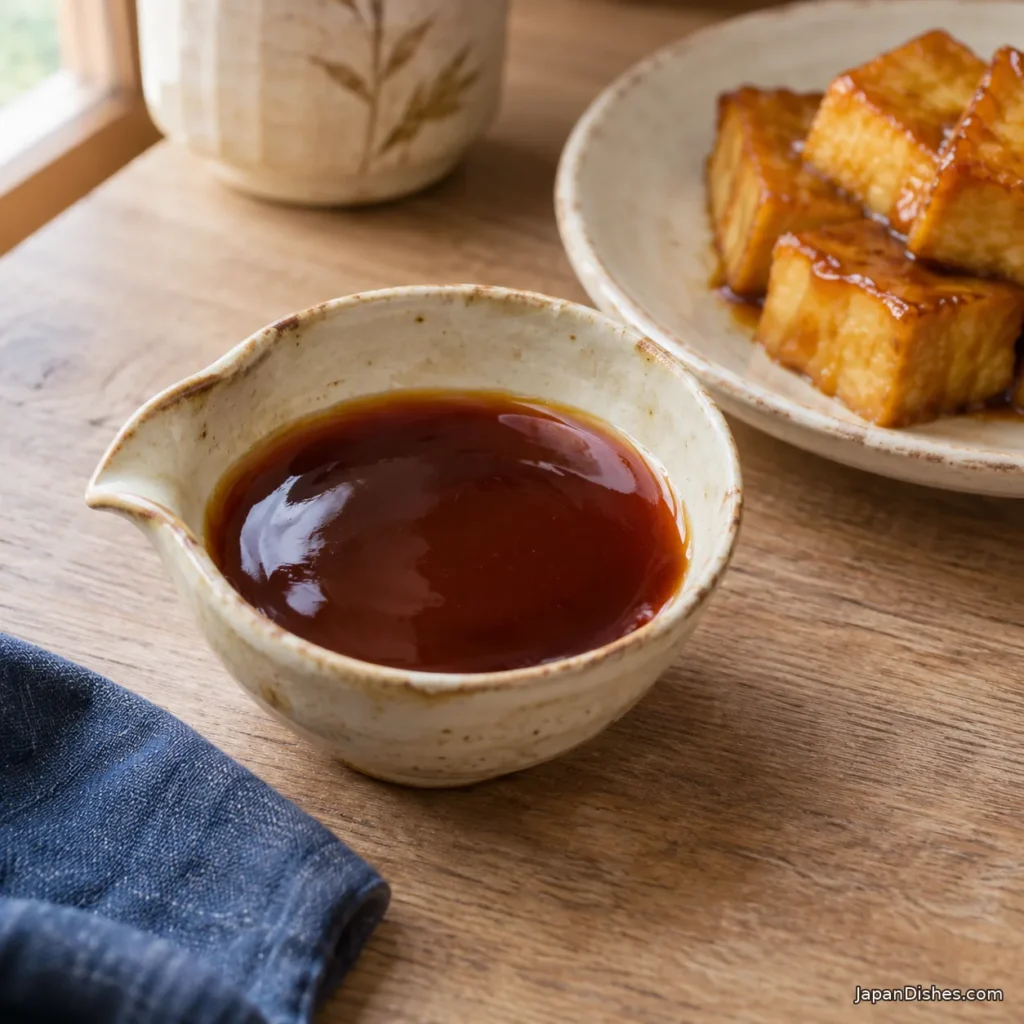
Homemade teriyaki sauce takes four ingredients and one small saucepan. Soy sauce gives it a savory backbone, mirin brings sweetness, sake rounds it out, and a little sugar helps it cling. The finished sauce should pour easily and leave a thin glossy coat on the food. If it pours like honey while it is still hot, it has probably gone too far.
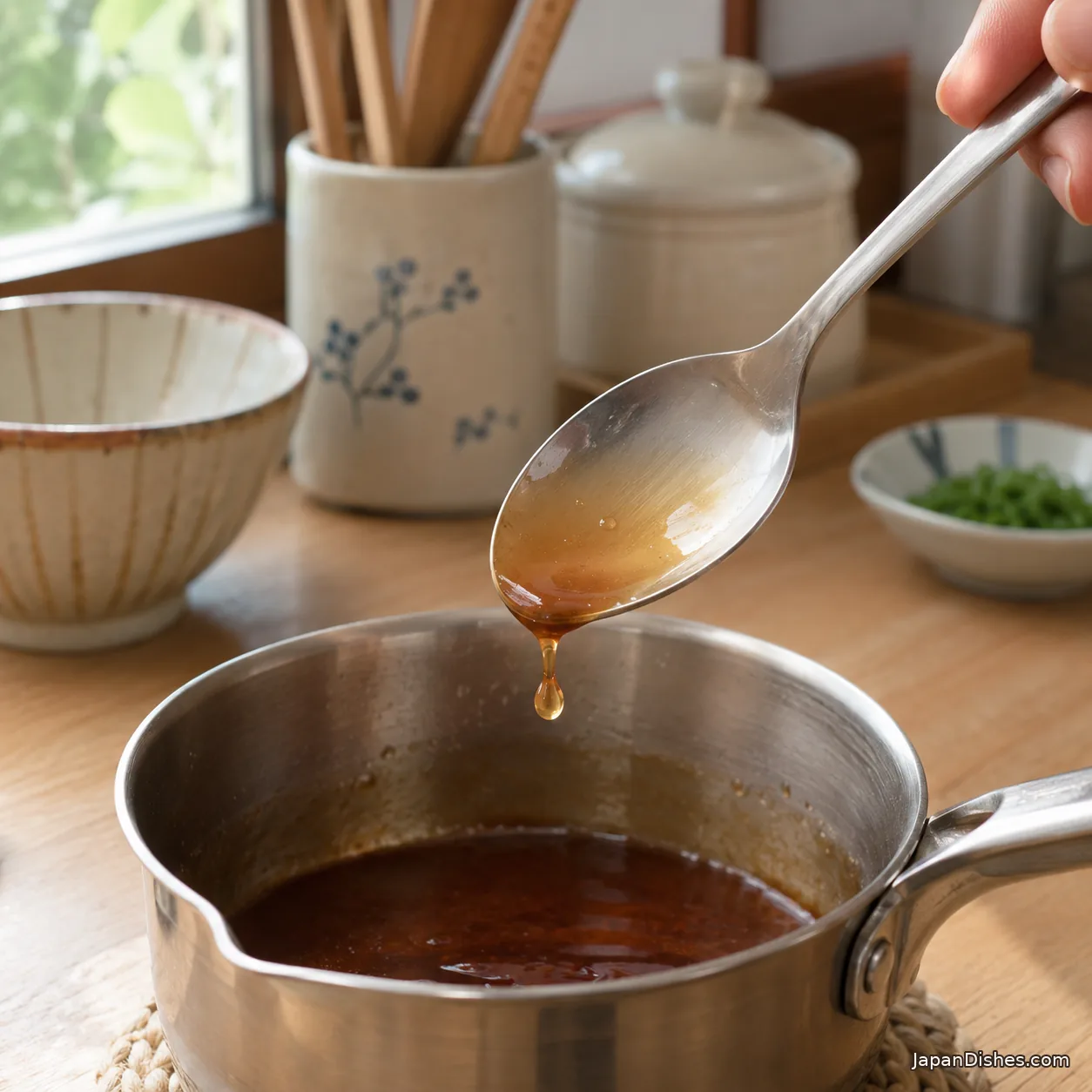
I’m Hana. The first spoonful I look at is the one I lift out of the pan: a thin coat with a drop that falls easily tells me it’s ready. The sauce thickens as it cools, so pulling it off the heat early is much easier than rescuing a sticky reduction. Below I’ll show you what to look for, plus how to use the glaze without burning it.
What is Japanese teriyaki sauce?
In Japanese cooking, teriyaki describes a way of cooking as well as the sauce used with it. Teri refers to the shine, and yaki refers to grilling or cooking over heat. The gloss comes from a sweet soy glaze applied toward the end of cooking. The same idea works in a skillet at home, where you can see the glaze collect on the surface of fish or tofu as you turn it.
This version is a small batch of pourable glaze. It gets its body from simmering and cooling, so it doesn’t need cornstarch. If your reference point is a thick bottled sauce, this one may seem thinner in the jar. That’s useful: it coats a hot piece of food in a thin layer and gives you more control over how much you use.
Ingredients for homemade teriyaki sauce
- ¼ cup (60 mL) Japanese soy sauce, such as regular koikuchi shoyu
- ¼ cup (60 mL) hon mirin (Japanese sweet rice wine)
- ¼ cup (60 mL) unsalted cooking sake or plain drinking sake
- 1 tablespoon (12 g) granulated sugar
Japanese regular soy sauce is a good starting point. Avoid Chinese dark soy sauce for this batch: its color and flavor can overpower the smaller amount of glaze. If you want a less salty version, use a reduced-sodium Japanese soy sauce and taste the finished sauce on a bite of plain rice before adding any more seasoning.
Look for hon mirin on the label. Mirin-style seasonings vary, and some include salt or extra sweeteners. If that is what you have, start with half the sugar, taste once it has dissolved, and add the rest only if you need it. Salted cooking sake can also make the reduction taste stronger than expected.
Plain drinking sake works here; there is no need to buy an expensive bottle. For an alcohol-free version, replace the sake with water and use a mirin-style seasoning explicitly labeled alcohol-free. Taste and adjust the sugar according to the label. A short simmer of regular mirin and sake does not guarantee an alcohol-free sauce.
White granulated sugar dissolves quickly and keeps the flavor clean. Brown sugar can work in the same weight if you like the molasses note, but the sauce will taste different. If you weigh the sugar, 12 grams is enough; the mirin already brings sweetness.
Equipment
Use a small, light-colored saucepan, a measuring cup and spoons, a silicone spatula, a metal spoon for checking the glaze, and a clean heatproof jar or container. A small pan gives you more control over a shallow batch of sauce.
How to make homemade teriyaki sauce: six photo steps
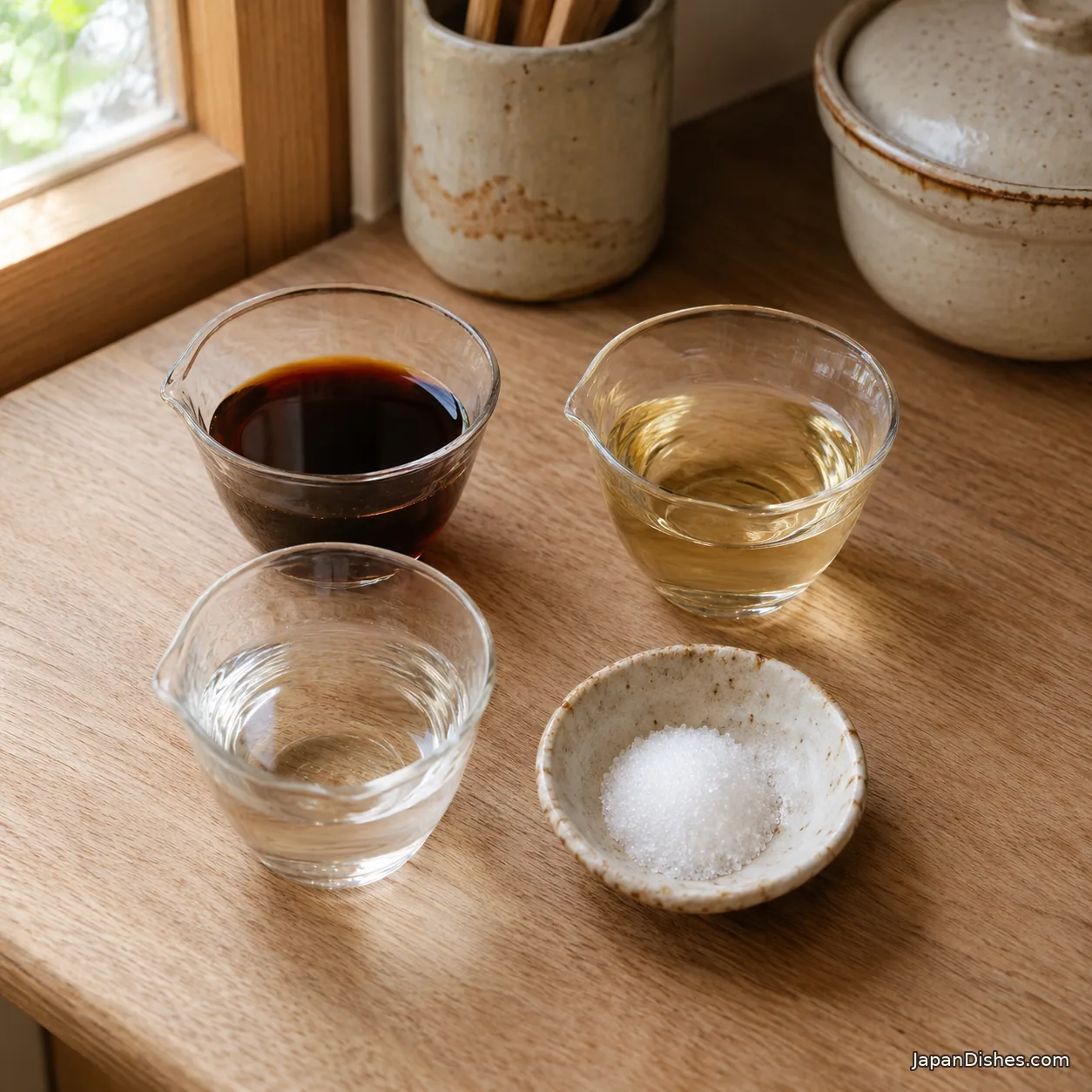
1. Measure the four ingredients
Measure ¼ cup each of soy sauce, mirin and sake. Measure 1 tablespoon of sugar separately. Check the mirin and sake labels for added salt before you start. If your mirin is already particularly sweet, begin with half the sugar so you can adjust it once it dissolves.
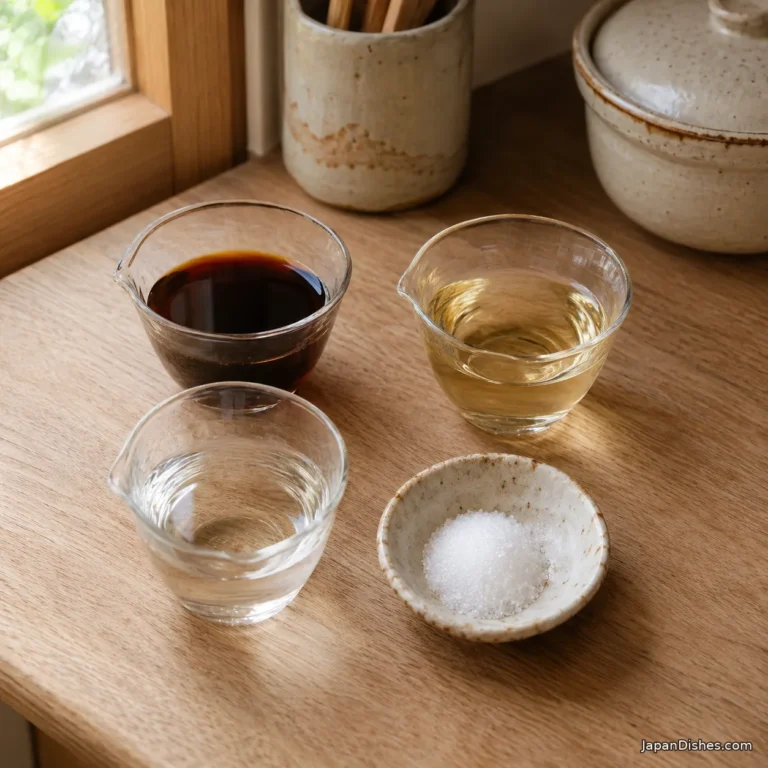
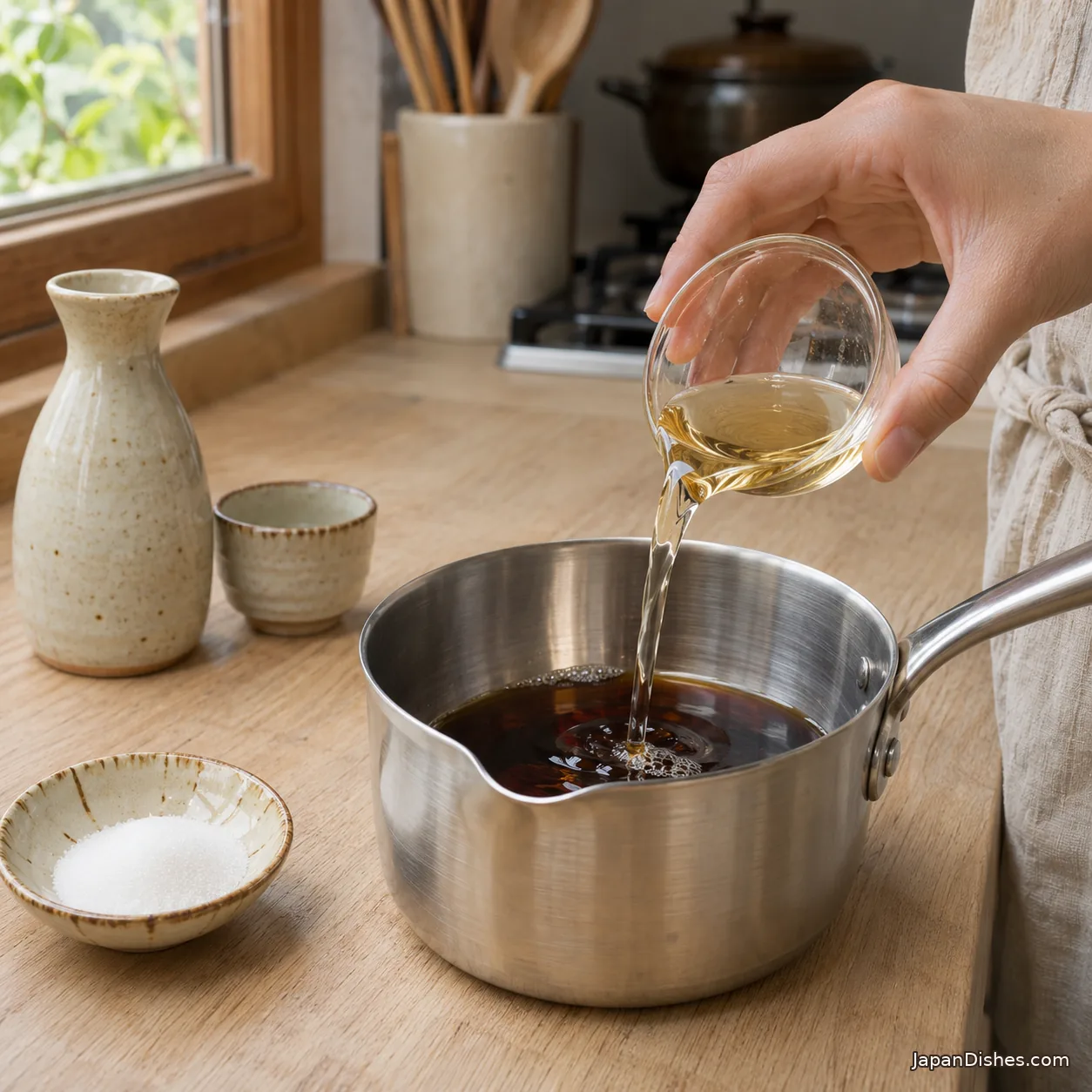
2. Combine everything in a small pan
Pour the soy sauce, mirin and sake into a small saucepan and add the sugar. Stir a few times to wet all the sugar, including any that has settled in the corners. A light-colored pan makes it easier to see how quickly the level drops and whether the edges are getting too dark.
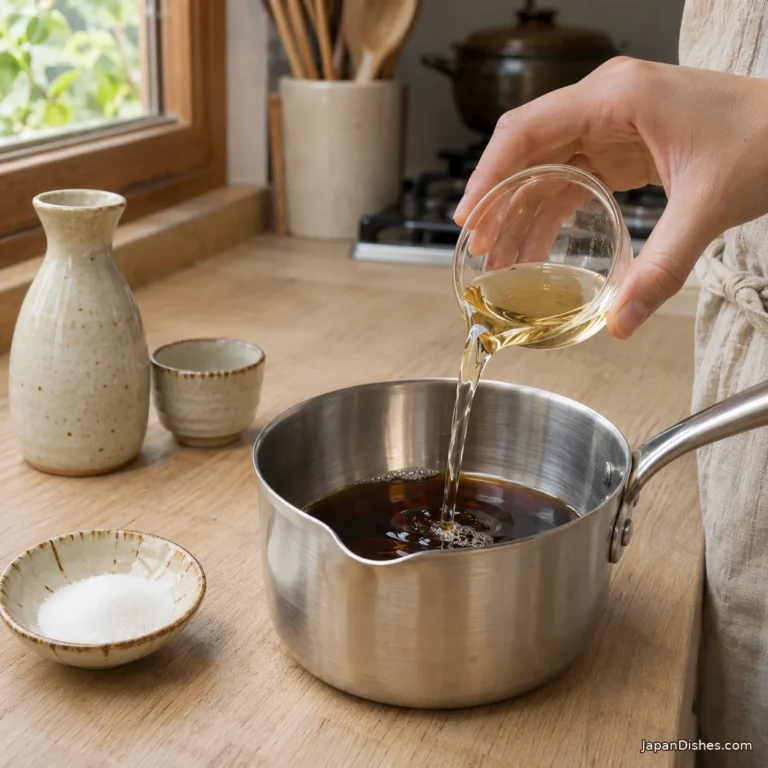
3. Dissolve the sugar over medium heat
Set the pan over medium heat and stir gently for about 1 to 2 minutes. Run the spatula across the bottom as you stir. The liquid should look smooth with no visible grains, and small bubbles will begin to show at the edge. If you started with less sugar, taste a cooled drop before deciding whether to add the rest.
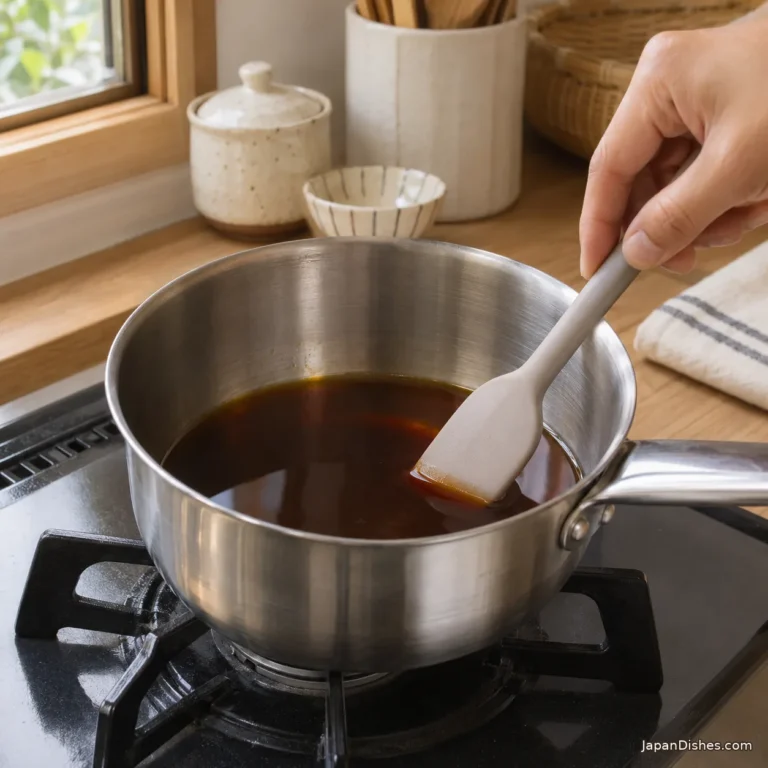
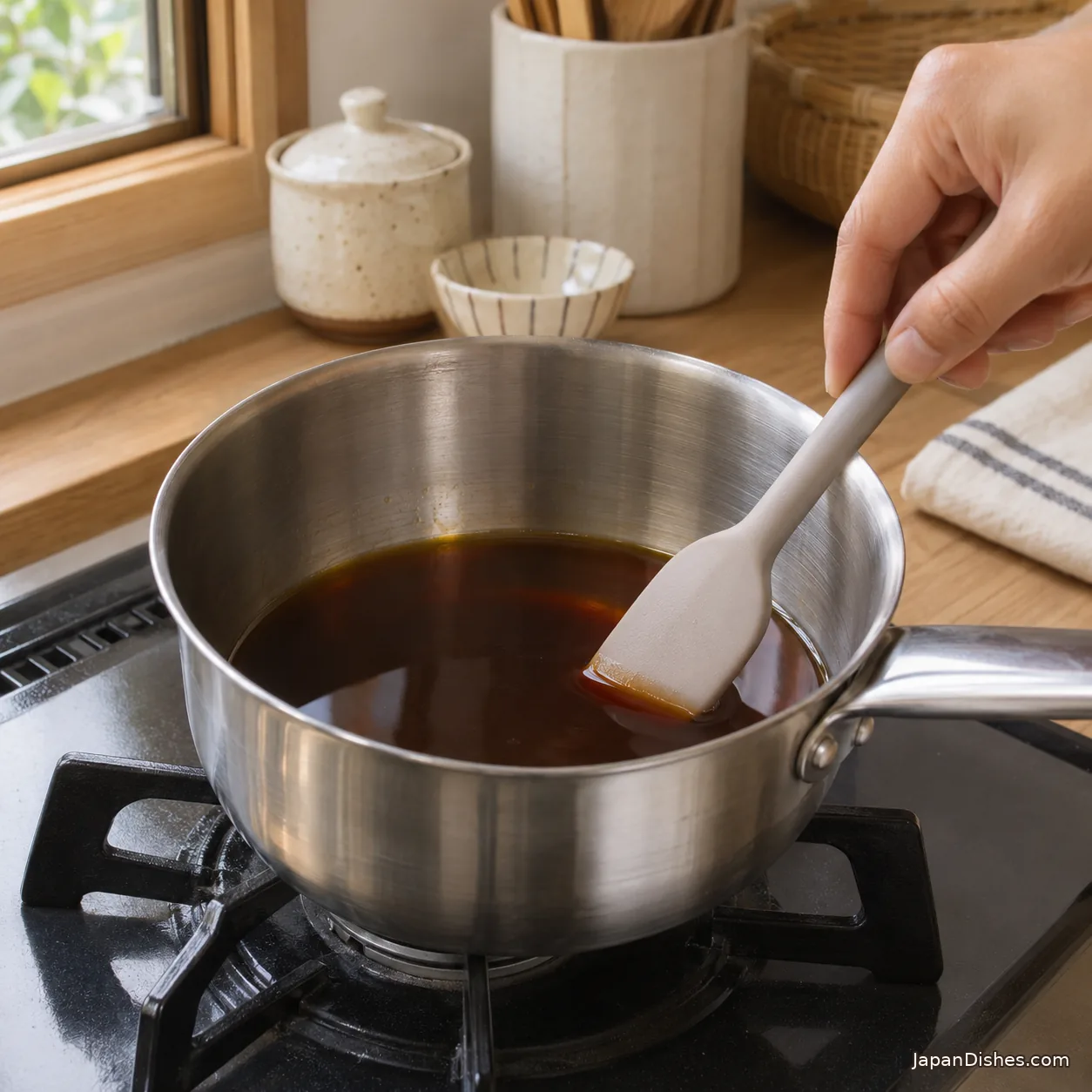
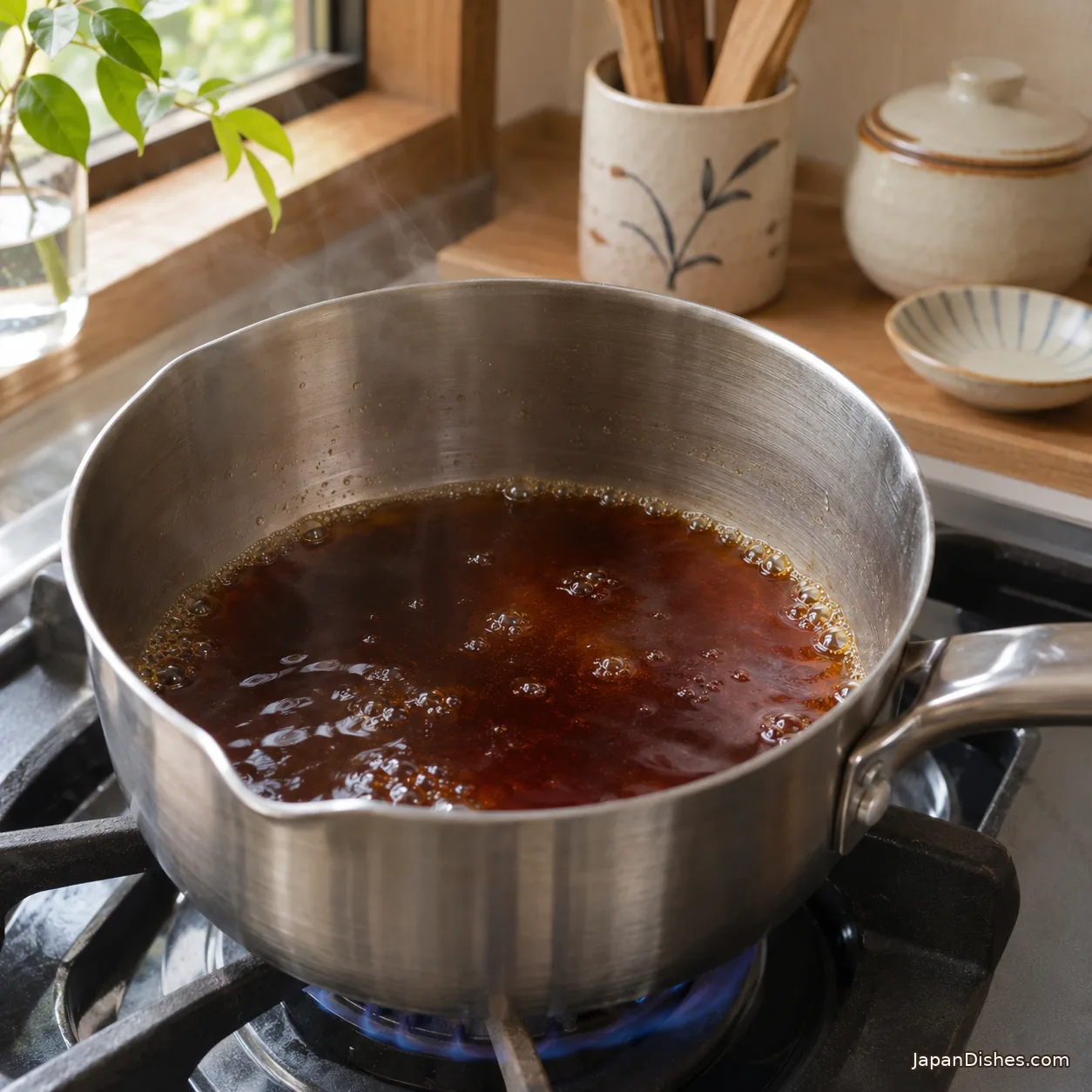
4. Simmer gently to reduce
Once small bubbles rise steadily, turn the heat down to medium-low. Simmer uncovered for about 5 to 8 minutes, stirring occasionally, until you have roughly ½ cup (120 mL). The timing depends on the width of the pan and the heat of your stove. If it starts to boil hard, lower the heat so the edges do not scorch.
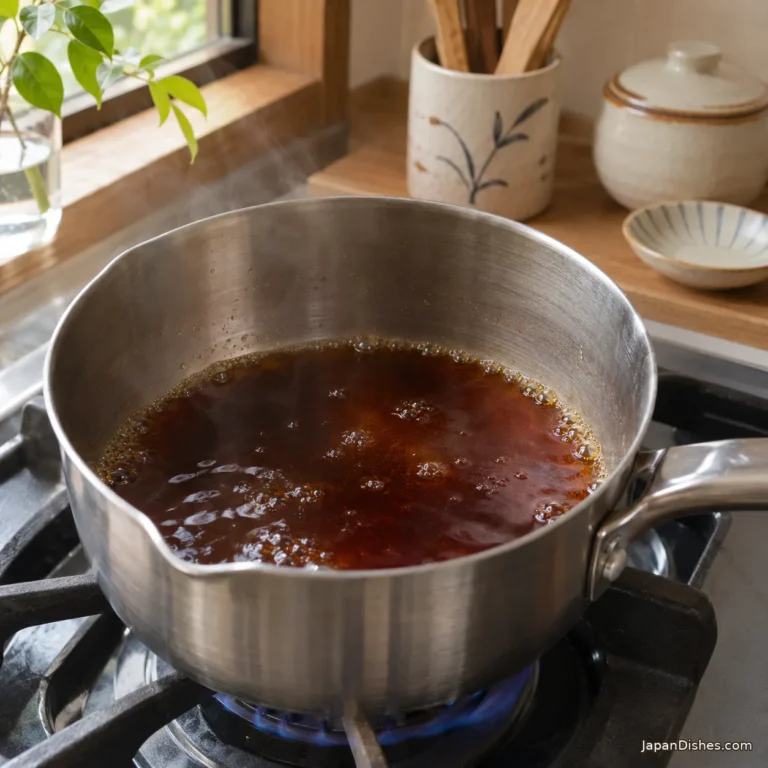
5. Check the spoon and stop while it pours
Dip in a metal spoon and lift it over the pan. Look for a thin glossy film on the back and a drop that falls freely. If the sauce still runs off like water, simmer for another 30 to 60 seconds and check again. Remove the pan from the heat before the glaze turns syrupy; it will gain body as it cools.
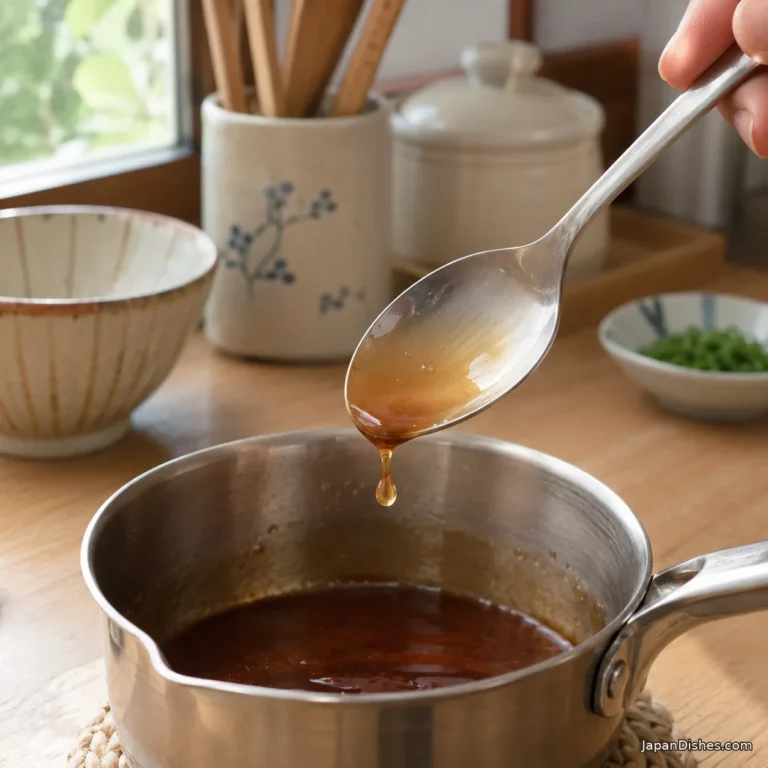
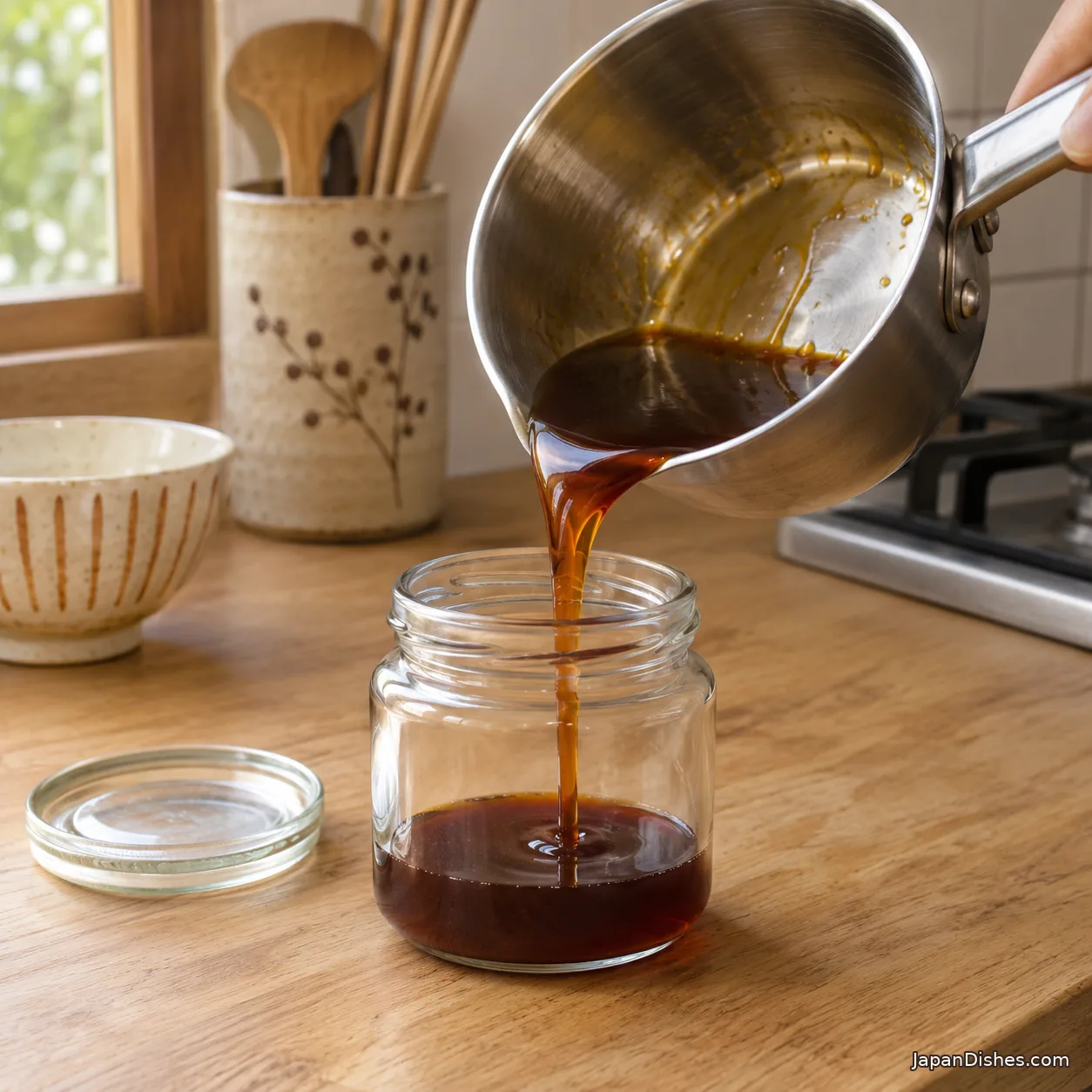
6. Use warm or cool and store
Use the sauce warm if you are glazing food right away. For storage, pour it into a clean heatproof container and let the strongest steam subside. Cover and refrigerate within two hours of cooking. If it thickens more than you want, stir a teaspoon of warm water into the portion you plan to use.
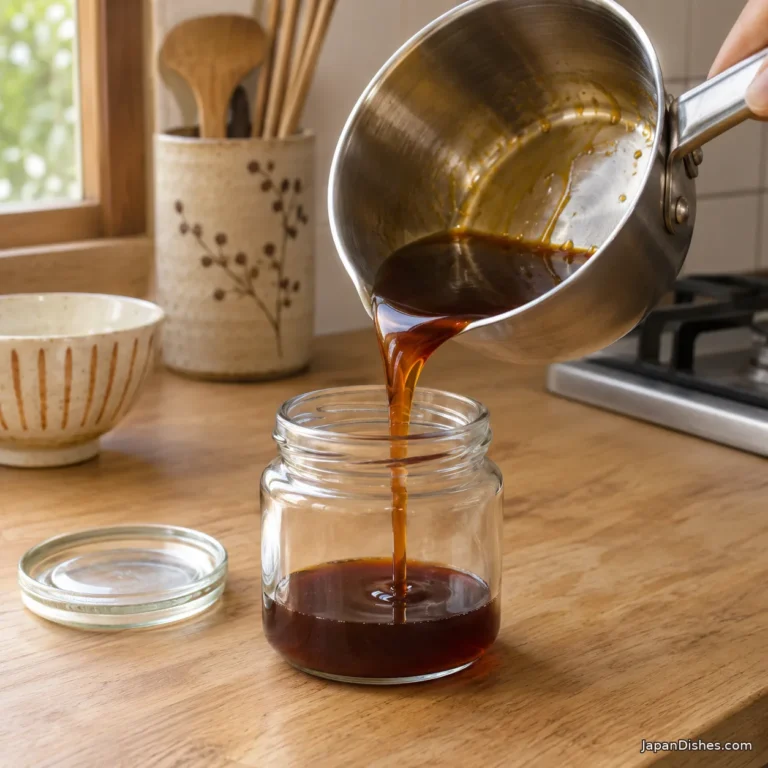
How to fix the glaze
The sauce tastes too salty
Stir a teaspoon of warm water into the batch, taste, and repeat if needed. Try it on a bite of plain rice or tofu: a spoonful by itself can seem stronger than it will taste on food. Next time, stop the reduction earlier or use reduced-sodium soy sauce.
The glaze is too thin
Let a teaspoon cool on a plate first. If it still looks watery, return the pan to a gentle simmer and check every 30 to 60 seconds. If you plan to use it in a hot skillet, leave it a little loose so it can thicken during the final toss.
It became sticky or scorched
If it is simply too thick, warm it gently with a teaspoon of water at a time. If it smells burnt or tastes bitter, start over. Lower heat and a smaller saucepan make it easier to watch the change from thin liquid to glossy glaze.
Variations
For ginger teriyaki, add two thin slices of fresh ginger at the start of the simmer and lift them out before storing. The ginger should be a background note; you should still taste the mirin and soy.
For an extra-thick glaze to drizzle from a spoon, mix ½ teaspoon cornstarch with 1 teaspoon cold water. Add the slurry near the end and simmer briefly, stirring, until clear and slightly thicker. This is optional; skip it for the classic pourable version.
To make a bigger batch, double all four amounts and use a saucepan with enough headroom for bubbling. Check the spoon and the yield instead of doubling the cooking time. Pour what you need into a separate bowl before basting.
How to use teriyaki sauce
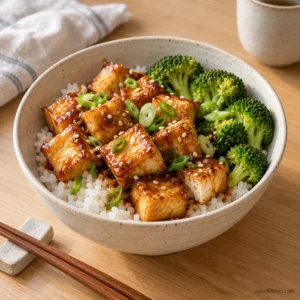
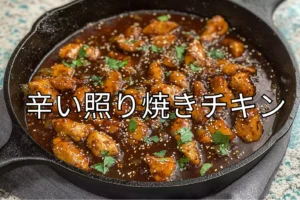
For pan-fried tofu, brown the tofu first and toss it with a spoonful or two of sauce just before serving. For chicken, cook it through before brushing on a clean portion of glaze; try this base with the technique in our spicy teriyaki chicken guide. On grilled vegetables, brush the sauce on near the end, when it has just enough time to coat the surface. Start with less than you think you need, especially if the food is already seasoned.
Make ahead and storage
Keep the sauce covered in the refrigerator at 40°F (4°C) or below and use it within 3 to 4 days. Refrigerate it within two hours of cooking, or within one hour in conditions above 90°F (32°C). This is a refrigerator sauce, not a shelf-stable preserve.
Freeze unused sauce in small portions for up to 2 months for best quality. Thaw a portion in the refrigerator and stir before using. Keep the storage jar separate from raw meat and used brushes. If you want sauce for serving as well as for marinating, set aside the serving portion before anything touches the raw ingredients.
Frequently asked questions
Can I make teriyaki sauce without cornstarch?
Yes. A short simmer concentrates the four ingredients. The glaze will coat a spoon lightly and thicken a little as it cools.
Can teriyaki sauce be gluten-free?
Use tamari or soy sauce labeled gluten-free, then check the mirin and sake labels too. Some tamari contains wheat, so go by the label.
Is teriyaki sauce the same as yakitori tare?
The two can use similar ingredients. This is a quick all-purpose glaze, while yakitori tare is a seasoning sauce made for grilled chicken skewers and varies from shop to shop.
How much sauce should I use?
Start with 1 to 2 tablespoons for two portions of cooked tofu, fish or chicken. Toss or brush on a thin layer and add more only if needed.
References: Kikkoman’s Japanese teriyaki glossary and USDA guidance on storing leftovers.

Homemade Teriyaki Sauce (Japanese Glaze) 照り焼きのたれ
Course: SauceCuisine: JapaneseDifficulty: Easy8
tablespoons5
minutes10
minutes15
minutesA Japanese teriyaki sauce made with soy sauce, mirin, sake and sugar. It takes about 15 minutes and makes roughly ½ cup, enough to glaze two to four portions.
Ingredients
¼ cup (60 mL) Japanese soy sauce, such as regular koikuchi shoyu
¼ cup (60 mL) hon mirin (Japanese sweet rice wine)
¼ cup (60 mL) unsalted cooking sake or plain drinking sake
1 tablespoon (12 g) granulated sugar
Directions
- Measure ¼ cup each of soy sauce, mirin and sake. Measure 1 tablespoon of sugar separately. Check the mirin and sake labels for added salt before you start. If your mirin is already particularly sweet, begin with half the sugar so you can adjust it once it dissolves.

- Pour the soy sauce, mirin and sake into a small saucepan and add the sugar. Stir a few times to wet all the sugar, including any that has settled in the corners. A light-colored pan makes it easier to see how quickly the level drops and whether the edges are getting too dark.
- Set the pan over medium heat and stir gently for about 1 to 2 minutes. Run the spatula across the bottom as you stir. The liquid should look smooth with no visible grains, and small bubbles will begin to show at the edge. If you started with less sugar, taste a cooled drop before deciding whether to add the rest.
- Once small bubbles rise steadily, turn the heat down to medium-low. Simmer uncovered for about 5 to 8 minutes, stirring occasionally, until you have roughly ½ cup (120 mL). The timing depends on the width of the pan and the heat of your stove. If it starts to boil hard, lower the heat so the edges do not scorch.
- Dip in a metal spoon and lift it over the pan. Look for a thin glossy film on the back and a drop that falls freely. If the sauce still runs off like water, simmer for another 30 to 60 seconds and check again. Remove the pan from the heat before the glaze turns syrupy; it will gain body as it cools.
- Use the sauce warm if you are glazing food right away. For storage, pour it into a clean heatproof container and let the strongest steam subside. Cover and refrigerate within two hours of cooking. If it thickens more than you want, stir a teaspoon of warm water into the portion you plan to use.
Notes
- Makes about ½ cup (120 mL). Simmer to a light, pourable glaze and let it thicken as it cools. Use a clean portion for glazing or serving. Keep refrigerated and use within 3 to 4 days.